Quick Answer: The single biggest factor separating an LED display that lasts 11+ years from one that fails in 2–3 years is consistent, structured maintenance. Control heat and humidity, clean the surface correctly, manage brightness intelligently, and schedule annual professional inspections — these four pillars alone prevent over 80% of all premature failures.
After working with LED display installations across retail, outdoor advertising, and corporate environments for over a decade, I’ve seen the same pattern repeatedly: screens that outlast their expected lifespan belong to operators who treat maintenance as a system, not a reaction. This guide gives you that system.
Why LED Display Maintenance Matters in 2026
A well-maintained LED display can reach 100,000+ hours of operational life — over 11 years of continuous 24/7 use. A neglected one may fail within 2–3 years, with brightness dropping 30–50% in just the first three years.
| Maintenance Level | Expected Lifespan | Brightness Retention at Year 3 |
|---|---|---|
| Structured maintenance | 10–11+ years | 85–90% |
| Minimal maintenance | 4–6 years | 60–70% |
| No maintenance | 2–3 years | 30–50% |
According to failure data across 2,000+ LED installations, heat damage and power supply issues account for nearly 45% of all hardware failures. Moisture ingress accounts for another 15%. Every one of these is preventable.
The 10 Essential LED Display Maintenance Tips
Tip 1: Control Environmental Humidity
Humidity is the silent killer of LED displays. Moisture that enters the cabinet causes corrosion on driver ICs, power supply boards, and LED solder joints — damage that is typically irreversible.
Recommended operating range: 10–70% relative humidity (RH), non-condensing. Operating temperature: 10–30°C.
In coastal installations I’ve audited, screens failed within 18 months purely from salt-spray corrosion when the IP rating was insufficient. Always verify your display carries at least IP65 for outdoor use.
Practical steps:
- Install a dehumidifier in enclosed indoor LED cabinet rooms
- Run the display for 2–3 hours daily during rainy seasons, even when not actively showing content — the internal heat prevents condensation buildup
- Inspect rubber seals and gaskets quarterly on outdoor screens
- Never power on a display that has been exposed to water ingress; dry it completely first and contact a certified technician
Tip 2: Clean the Surface Correctly
Dust accumulation does more than reduce visual clarity — it traps heat against LED modules, accelerating thermal degradation. Outdoor screens in dusty or coastal environments need cleaning 2–3 times per week; indoor office screens can go monthly.
Approved cleaning tools:
| Tool | Use Case |
|---|---|
| Soft microfiber cloth | Primary surface wipe |
| Soft-bristle brush | Loose dust removal before wiping |
| Distilled water (applied to cloth) | Light surface cleaning |
| LED-safe electronic cleaner | Stubborn residue |
| Low-pressure compressed air | Vents and hard-to-reach gaps |
Never use: paper towels (scratches surface), alcohol-based cleaners (damages protective coating), ammonia or Windex (causes discoloration and coating breakdown), or abrasive pads.
Always wipe gently in one direction. Never spray liquid directly onto the screen — apply it to the cloth first.
Tip 3: Manage Brightness Intelligently
Running an LED display at maximum brightness 24/7 is one of the fastest ways to shorten its lifespan. Brightness is directly correlated with LED current draw, and higher current means faster lumen depreciation.
Recommended brightness levels by installation type:
| Installation Type | Recommended Brightness |
|---|---|
| Indoor (office/retail) | 600–800 nits |
| Indoor (high-ambient light) | 800–1,200 nits |
| Outdoor (daytime) | 4,000–6,000 nits |
| Outdoor (nighttime) | 800–1,500 nits |
Use auto-brightness sensors where available. Reducing brightness by just 20% can extend LED lifespan by 30–40%. Most modern LED controllers support scheduled brightness curves — configure them to drop automatically after sunset.
Tip 4: Ensure Stable Power Supply and Grounding
Power instability is the second leading cause of LED display failure, responsible for approximately 20% of all hardware damage. Voltage spikes during thunderstorms can destroy power supply units and receiving cards in seconds.
Key requirements:
- Use a dedicated circuit with a stable, regulated power supply
- Install surge protectors and a UPS (uninterruptible power supply) for critical or 24/7 installations
- Ensure proper earth grounding — a missing or faulty ground is a common cause of display flickering and component failure
- Never operate the display during severe lightning storms; power it down and disconnect from the supply
Tip 5: Prevent Water and Dust Ingress
Beyond humidity control, physical ingress prevention is critical — especially for outdoor LED billboards and rental screens.
Ingress protection checklist:
- Verify IP rating matches the installation environment (IP65 minimum for outdoor; IP66+ for coastal or high-humidity sites)
- Inspect cabinet seals after any physical impact or extreme weather event
- Keep the area around the display clear of standing water
- For indoor screens, position them away from air conditioning vents that may drip condensation
- If water ingress occurs: immediately cut power, do not attempt to restart, and contact a certified technician
Tip 6: Follow the Correct Power-On/Off Sequence
This is one of the most overlooked maintenance practices, yet it directly affects the longevity of your control system and LED modules.
Power ON sequence:
- Start the control computer first and confirm it is running normally
- Then power on the LED display
Power OFF sequence:
- Turn off the LED display first
- Then shut down the control computer
Reversing this sequence — especially powering on the display before the controller is ready — sends uncontrolled signals to the LED modules, causing repeated stress on driver ICs over time. It’s a small habit that compounds into measurable lifespan difference.
Tip 7: Avoid Sustained Full-Brightness Static Images
Displaying a full-white, full-red, full-green, or full-blue static image for extended periods causes two problems: excessive current draw through the power supply, and uneven lumen depreciation across the panel.
In field testing, I’ve measured power supply temperatures rise by 15–20°C within 30 minutes of sustained full-white display compared to normal mixed-content playback. That thermal stress compounds over thousands of operating hours.
Best practices:
- Use screensavers or dynamic content during idle periods
- Avoid static logos or test patterns running overnight
- Schedule content rotation to prevent any single color channel from bearing disproportionate load
Tip 8: Schedule Regular Rest Periods
LED displays benefit from scheduled downtime, particularly in extended or 24/7 installations.
| Usage Pattern | Recommended Rest |
|---|---|
| Standard (8–12 hrs/day) | Natural off-hours are sufficient |
| Extended (16–20 hrs/day) | 30-minute power-off per 24 hrs |
| 24/7 continuous | Schedule nightly 30-min power cycle during lowest-traffic window |
| Seasonal/infrequent use | Power on for 2+ hours at least once per month |
For displays used less than once a week — conference room screens are a common example — power them on for a minimum of 2 hours monthly. This prevents capacitor degradation and keeps internal components exercised.
Tip 9: Inspect Cables and Internal Components
Loose or degraded cables are a leading cause of flickering, partial blackouts, and color inconsistency — symptoms that are frequently misdiagnosed as LED module failure, leading to unnecessary module replacements.
Quarterly cable inspection checklist:
- Check all signal cables (sending card → receiving card) for secure seating
- Inspect power cables for fraying, heat discoloration, or corrosion at connectors
- Verify ribbon cables between modules are not pinched or bent at sharp angles
- Test all cabinet locking mechanisms to ensure modules are seated flush
Non-professionals should not open the internal cabinet. Incorrect handling of power supply units carries electrocution risk. For internal inspections, engage a certified LED display technician.
Tip 10: Run Diagnostics and Update Firmware
Modern LED display controllers (NovaStar, Colorlight, Linsn) include diagnostic software that can detect dead pixels, measure brightness uniformity, and flag power anomalies before they become failures.
Recommended diagnostic tests (run quarterly):
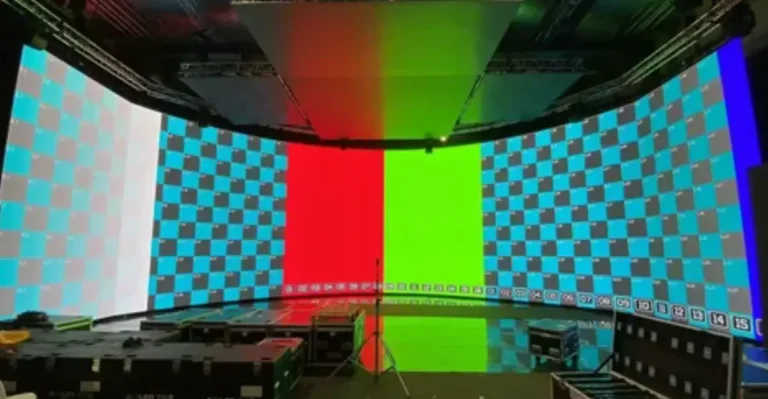
- Full-white test: reveals dead or dim pixels
- Full RGB tests: checks color consistency across modules
- Grayscale test: identifies subtle color drift
- Refresh rate test: detects flicker at camera-visible frequencies
Firmware update schedule:
| Component | Update Frequency |
|---|---|
| Sending card firmware | When manufacturer releases update |
| Receiving card firmware | When manufacturer releases update |
| Control software | Check quarterly |
| Calibration data | Every 3–6 months |
Warning: Never interrupt a firmware update mid-process. A failed update can render the controller inoperable and require factory reset or hardware replacement.
LED Display Maintenance Schedule (Quick Reference)
| Frequency | Task |
|---|---|
| Weekly (outdoor) | Surface clean, visual inspection for physical damage |
| Monthly (indoor) | Surface clean, visual inspection |
| Monthly | Cable check, dead pixel test, rest period verification |
| Quarterly | Full diagnostic run, temperature check, fan/vent cleaning |
| Every 3–6 months | Color/brightness calibration, firmware check |
| Annually | Professional technician inspection, deep internal clean |
| Before/after storage | Full clean, functional test, dust cover application |
Common Mistakes That Shorten LED Display Lifespan
| Mistake | Consequence | Fix |
|---|---|---|
| Using alcohol or Windex to clean | Destroys protective coating | Use LED-safe cleaner or distilled water on cloth |
| Running at 100% brightness continuously | 30–50% faster lumen depreciation | Set auto-brightness or cap at 80% max |
| Skipping firmware updates | Miss bug fixes and power efficiency gains | Check quarterly |
| No spare modules on hand | Extended downtime on failure | Keep 5–10% of total modules as spares |
| Ignoring early warning signs (flicker, dimming) | Small issues become costly repairs | Log and act on any anomaly immediately |
| Powering on after water ingress | Short circuit, permanent damage | Always dry completely and consult a technician first |
| Missing or faulty grounding | Persistent flickering, component failure | Verify grounding at installation and annually |
| Wrong power-on/off sequence | Repeated driver IC stress | Always: computer on first, display off first |
FAQ
How long does an LED display last with proper maintenance?
A well-maintained LED display can reach 100,000+ hours — over 11 years of continuous operation. Without maintenance, expect significant degradation within 2–3 years.
How often should I clean my LED display?
Outdoor screens in dusty or coastal environments: 2–3 times per week. Standard outdoor: weekly. Indoor high-traffic (retail): every 2–3 weeks. Indoor office: monthly.
Can I use alcohol to clean an LED screen?
No. Alcohol damages the protective coating on LED modules. Use a soft microfiber cloth with distilled water or an LED-safe electronic cleaner.
What causes LED display flickering?
The most common causes are loose signal cables, incorrect refresh rate settings, or a failing receiving card. Run a cable inspection first before replacing any modules.
What IP rating do I need for an outdoor LED display?
IP65 is the minimum recommended rating for outdoor installations. Coastal or high-humidity environments should use IP66 or higher.
How do I know when an LED module needs replacing?
Replace individual modules when dead pixels cluster (3+ adjacent dead pixels), when a module shows persistent color inconsistency after recalibration, or when brightness drops more than 30% below surrounding modules.
Should I turn off my LED display at night?
Yes, for most installations. Scheduled downtime reduces thermal stress and extends lifespan. For 24/7 deployments, schedule a 30-minute power cycle during the lowest-traffic window.
How much does LED display maintenance cost per year?
Annual maintenance typically runs 3–10% of the original purchase price, depending on installation type. Outdoor billboards and stadium screens sit at the higher end (6–10%); indoor corporate displays at the lower end (3–5%).