The Core Question Buyers Ask First
Is Micro LED worth the premium in 2026 — or is it still a technology waiting for its moment?
The honest answer: it depends entirely on your application. For a flagship retail flagship store, a broadcast control room, or a luxury hotel lobby demanding pixel-perfect image quality around the clock, Micro LED justifies its cost. For a mid-range indoor advertising wall, a conference room display, or a rental event screen, advanced COB fine-pitch LED delivers comparable visual results at a fraction of the investment. This guide maps out exactly where the line falls — so you can make the right call before committing budget.
What Is Micro LED? A Technical Baseline
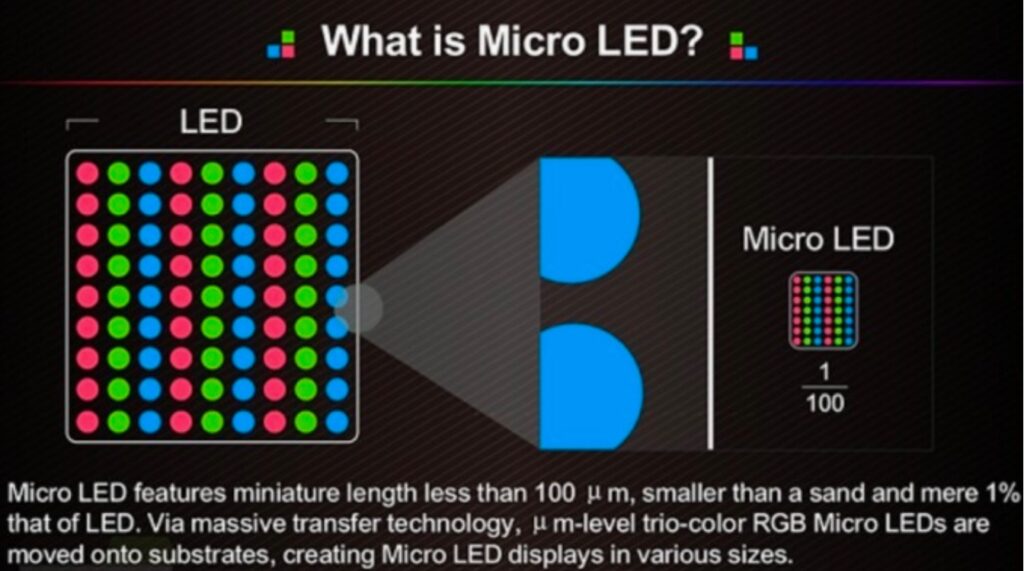
Micro LED uses inorganic LED chips smaller than 100 micrometers as individual self-emissive pixels. Unlike LCD (which relies on a backlight) or OLED (which uses organic compounds), each Micro LED pixel generates its own light independently. This architecture is the source of both its extraordinary performance and its manufacturing complexity.
Three packaging approaches dominate the 2026 market:
| Packaging Type | Chip Size | Pixel Pitch Range | Key Characteristic |
|---|---|---|---|
| True Micro LED | < 100 µm | P0.3 – P0.9 | Highest performance, highest cost |
| COB (Chip-on-Board) | 100–200 µm | P0.7 – P1.9 | Best balance of quality and yield |
| MIP (Micro LED in Package) | 100–150 µm | P0.9 – P1.5 | Easier repair, emerging standard |
| SMD Fine-Pitch | > 200 µm | P1.2 – P2.5 | Mature, cost-effective, widely available |
COB and MIP are the commercially dominant forms of “Micro LED-class” technology in 2026. True sub-100µm Micro LED remains largely confined to premium installations and R&D deployments.
Advantages of Micro LED Technology
1. Contrast and Brightness That No Other Technology Matches
Each pixel switches off completely, producing absolute black. Contrast ratios exceed 100,000:1 — a figure LCD cannot approach and OLED can only match in controlled conditions. Brightness ranges from 1,000 nits for indoor installations to 10,000+ nits for semi-outdoor or high-ambient-light environments. In practice, this means content remains vivid and legible under direct sunlight or in brightly lit retail spaces where LCD video walls wash out.
2. Refresh Rate and Motion Performance
Micro LED pixels respond in microseconds, supporting refresh rates of 3,840Hz and above. Motion blur is effectively eliminated. For live sports broadcasts, fast-cut advertising content, and interactive installations, this matters — ghosting artifacts that appear on lower-refresh displays are absent entirely.
3. Longevity: 100,000+ Hours, Zero Burn-In
Inorganic LED chips degrade far more slowly than organic OLED compounds. Rated lifespan exceeds 100,000 hours (roughly 11 years of continuous operation). Static images — logos, tickers, persistent UI elements — cause no burn-in. For 24/7 control rooms, airport information displays, and always-on advertising boards, this eliminates a major operational risk.
4. Modular Scalability and Form Factor Freedom
Pixel-level modularity means Micro LED panels can be assembled into any size, aspect ratio, or shape without visible seams. Curved surfaces, cylindrical columns, irregular polygons, and floor-to-ceiling video walls are all achievable. This is a structural advantage over LCD, which is constrained by fixed panel sizes and visible bezels.
5. Energy Efficiency
Pixels that are off consume zero power. In content with significant dark areas — which describes most video advertising — actual power draw is substantially below rated maximum. Compared to LCD backlit displays of equivalent brightness, Micro LED typically consumes 30–50% less energy in real-world operation.
6. Color Gamut and HDR Performance
Micro LED covers 100%+ of the DCI-P3 color space and supports HDR10, Dolby Vision, and HLG formats natively. Color accuracy (Delta E < 2) is achievable without aggressive post-processing. For cinema, broadcast, and premium brand environments where color fidelity is non-negotiable, this is a decisive advantage.
Micro LED vs. Competing Technologies: Full Specification Comparison
| Specification | Micro LED | OLED | LCD (Direct-View) | COB Fine-Pitch LED | SMD Fine-Pitch LED |
|---|---|---|---|---|---|
| Contrast Ratio | > 100,000:1 | > 100,000:1 | 1,000–5,000:1 | > 50,000:1 | 3,000–10,000:1 |
| Peak Brightness | 1,000–10,000 nits | 500–1,500 nits | 500–2,000 nits | 800–5,000 nits | 800–6,000 nits |
| Lifespan | 100,000+ hrs | 30,000–50,000 hrs | 50,000–70,000 hrs | 80,000–100,000 hrs | 80,000–100,000 hrs |
| Burn-In Risk | None | Moderate–High | None | None | None |
| Pixel Pitch Range | P0.3–P1.9 | Fixed panel sizes | Fixed panel sizes | P0.7–P1.9 | P1.2–P2.5 |
| Seamless Tiling | Yes | No (bezels) | No (bezels) | Yes | Yes |
| Energy Efficiency | Excellent | Good | Moderate | Very Good | Good |
| Repairability | Moderate | Low | Moderate | Good (module swap) | Excellent |
| 2026 Cost Index | $$$$$ | $$$$ | $$ | $$$ | $$ |
Disadvantages of Micro LED Technology
1. Cost Remains the Primary Barrier
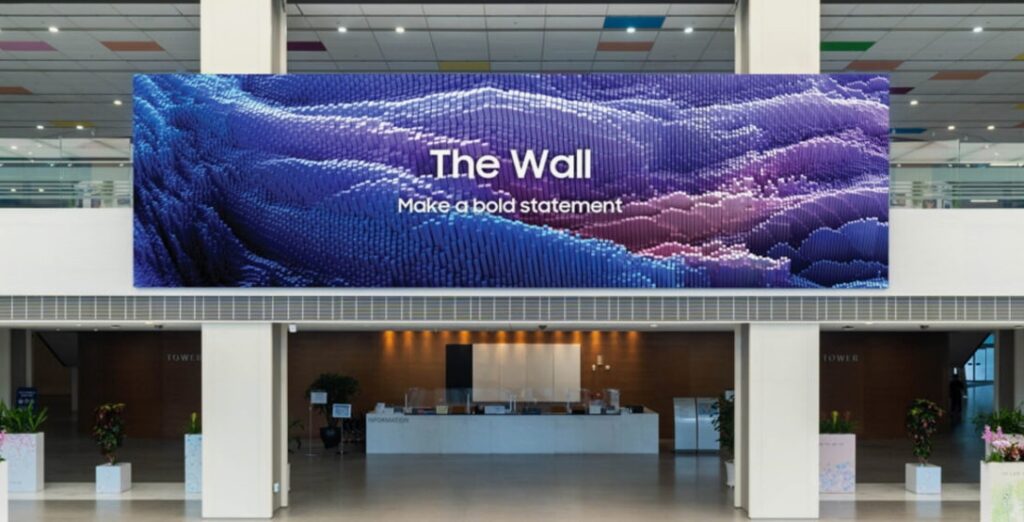
A large-format true Micro LED video wall (P0.9 and below) in 2026 costs 50,000–500,000+ depending on size and pitch. Samsung’s The Wall commercial configurations, Sony Crystal LED, and LG MAGNIT all sit in this tier. COB fine-pitch at P1.2–P1.5 has brought costs down to 8,000–25,000 per square meter for premium configurations, but the gap versus standard SMD remains significant.
2. Mass Transfer Yield: The Manufacturing Bottleneck
Placing billions of chips smaller than a human hair onto substrates with nanometer precision is the core manufacturing challenge. Yield rates for sub-P0.7 pitches remain below 99.99% at scale — which sounds high until you calculate that a single 4K panel contains over 24 million individual chips. One defective chip per 10,000 still means thousands of defects per panel. This is why COB (which bonds chips directly to PCB in bulk) has become the dominant commercial approach.
3. Repair Complexity
Individual pixel replacement on true Micro LED panels requires specialized equipment and trained technicians. A defective pixel cluster on a P0.6 panel is not a field-serviceable repair. COB and MIP packaging improve this situation — module-level replacement is practical — but pixel-level repair remains a limitation compared to traditional SMD LED.
4. Color Uniformity at Scale
Achieving consistent color temperature and brightness uniformity across large multi-panel installations requires sophisticated calibration. Variations between panels from different production batches are visible without factory-level calibration. This is manageable with proper commissioning but adds cost and complexity to large installations.
5. Limited Consumer Availability
Consumer Micro LED TVs (Samsung’s 89″–114″ The Frame Pro line) exist in 2026 but remain priced above $20,000. Mass-market consumer adoption is projected for 2028–2030 as yields improve. The 2026 market is still predominantly professional AV, digital signage, and broadcast.
2026 Market Landscape: Who Makes Micro LED?
| Manufacturer | Product Line | Pitch Range | Primary Market | 2026 Status |
|---|---|---|---|---|
| Samsung | The Wall / IF Series | P0.6–P1.6 | Enterprise, Broadcast | Market leader, widest SKU range |
| Sony | Crystal LED (CLED) | P0.6–P1.26 | Broadcast, Cinema, Luxury | Premium positioning, DCI-certified options |
| LG | MAGNIT | P0.6–P1.25 | Corporate, Broadcast | Strong in EMEA and North America |
| BOE | Direct-View LED | P0.9–P1.5 | Commercial, Government | Aggressive pricing, growing share |
| Leyard | CLO Series | P0.7–P1.5 | Control Rooms, Broadcast | Strong in mission-critical verticals |
| SoStron | COB Fine-Pitch | P0.9–P1.9 | Commercial, Retail, Events | Competitive COB alternative, 14+ yrs experience |
Real-World Applications: Where Micro LED Wins (and Where It Doesn’t)
Applications Where Micro LED Is the Right Choice
- Broadcast control rooms and NOCs — 24/7 operation, static UI elements, zero burn-in tolerance
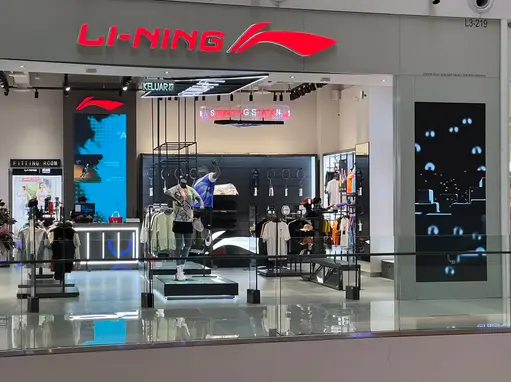
- Flagship retail and luxury brand environments — color accuracy and brightness justify premium
- Cinema and immersive entertainment — DCI-P3 coverage, HDR, seamless large-format
- Transportation hubs (airports, metro stations) — high ambient light, continuous operation
- Creative architectural installations — irregular shapes, curved surfaces, seamless tiling
Applications Where COB Fine-Pitch Is the Smarter Buy
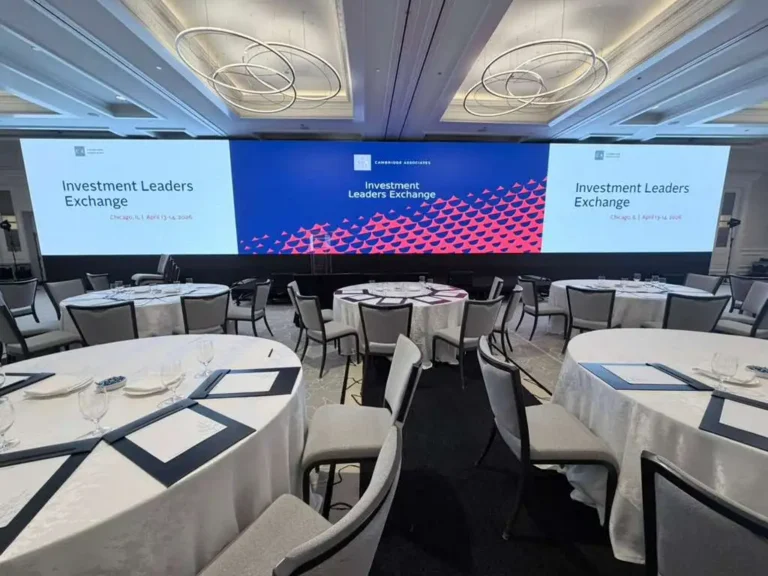
- Corporate meeting rooms and boardrooms — P1.2–P1.5 COB delivers equivalent visual quality at lower cost
- Indoor advertising and retail video walls — ROI calculation favors COB at most budget levels
- Conference and exhibition displays — rental-grade SMD or COB is more practical
- Education and hospitality — standard fine-pitch covers all requirements
Total Cost of Ownership: 5-Year Projection
| Cost Category | True Micro LED (P0.9) | COB Fine-Pitch (P1.2) | SMD Fine-Pitch (P1.5) |
|---|---|---|---|
| Hardware (per m²) | 15,000–40,000 | 5,000–12,000 | 2,000–5,000 |
| Installation | 3,000–8,000/m² | 1,500–3,000/m² | 800–1,500/m² |
| Annual Maintenance | 500–1,500/m² | 200–600/m² | 150–400/m² |
| Energy (5yr, 12hr/day) | 800–1,200/m² | 900–1,400/m² | 1,100–1,800/m² |
| 5-Year TCO (per m²) | 22,000–55,000 | 9,000–22,000 | 5,000–12,000 |
Energy costs slightly favor Micro LED at high brightness settings; hardware and installation dominate the TCO gap. For most commercial projects, the 5-year TCO difference between COB fine-pitch and true Micro LED is 2–3×.
Buying Decision Framework: 4 Questions to Ask
1. What is your operational profile? 24/7 mission-critical → Micro LED or COB. Scheduled hours, controlled environment → SMD fine-pitch is sufficient.
2. What pixel pitch do you actually need? Calculate: minimum viewing distance (meters) × 1,000 ÷ 3,438 = recommended pitch (mm). Most corporate and retail applications land at P1.2–P1.9, where COB is cost-competitive.
3. What is your 5-year maintenance budget? If on-site repair capability is limited, COB module-level serviceability is a practical advantage over true Micro LED pixel-level complexity.
4. What is your timeline? If deploying in 2026, COB fine-pitch offers mature supply chains and proven installation bases. True Micro LED at sub-P0.9 still involves longer lead times and fewer qualified installers.
Conclusion
Micro LED is the most capable display technology available in 2026 — and for the right applications, the premium is justified. Broadcast studios, flagship retail, and mission-critical control rooms benefit from its unmatched contrast, longevity, and form factor flexibility.
For the majority of commercial LED advertising and digital signage projects, advanced COB fine-pitch LED delivers 80–90% of Micro LED’s visual performance at 40–60% of the cost. The technology gap is narrowing; by 2028–2030, broader price parity is realistic.
SoStron’s engineering team works with clients to match the right technology tier to each project’s actual requirements — not the highest-spec option, but the highest-value one. With 14+ years of production experience and a full COB fine-pitch portfolio from P0.9 to P2.5, we help you get the visual performance you need at a total cost of ownership that makes commercial sense.