Quick Answer: How Much Does an LED Billboard Truck Cost?
An LED billboard truck is a vehicle equipped with one or more digital LED displays for mobile advertising, brand promotions, public events, and digital out-of-home (DOOH) campaigns. Its purchase price depends on whether you are buying a complete vehicle, an LED display system for an existing vehicle, or a trailer-mounted advertising solution.
Sostron’s previously published guide listed a broad preliminary price range of $15,000 to $250,000+. However, this range has not been independently verified as a current market benchmark and should not be treated as a confirmed quotation. The actual cost depends on the vehicle chassis, screen area, display configuration, control system, structural engineering, transportation, and local compliance requirements.
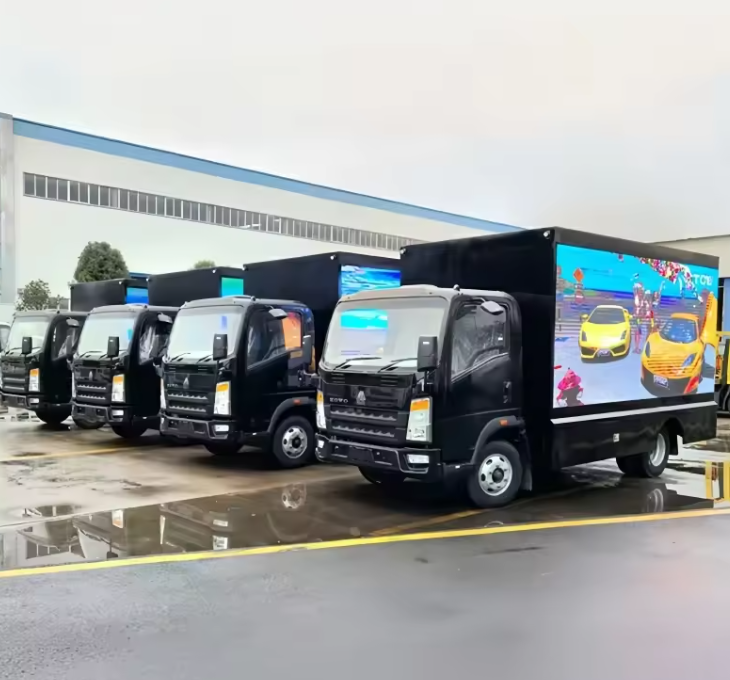
Before requesting a quote, determine which of these purchasing options fits your business:
| Purchasing Option | Main Cost Drivers | Best Suited For |
|---|---|---|
| Complete LED billboard truck | Vehicle, LED screens, electrical system, integration, and testing | Advertising operators building a mobile media fleet |
| LED screen system only | LED modules, cabinets, controller, power supply, and mounting design | Buyers who already have a suitable vehicle or integration partner |
| Existing vehicle retrofit | Screen system, structural modifications, electrical integration, and inspection | Businesses looking to reuse an existing vehicle |
| LED billboard trailer | Trailer chassis, display system, power supply, and towing requirements | Event companies and operators needing a movable display without a dedicated self-propelled truck |
| Advertising truck rental | Campaign duration, vehicle type, location, driver, and service scope | Brands running occasional promotional campaigns |
The most important purchasing decision is to compare the same scope of supply. A low-priced LED screen package is not directly comparable with a fully integrated, road-ready advertising truck.
What Determines the Price of an LED Billboard Truck?
An LED billboard truck combines two different systems: a road vehicle and a digital display installation. Each has its own technical requirements, costs, and maintenance responsibilities.
1. LED Screen Specifications
The display system is one of the main factors influencing the overall quotation. Buyers should evaluate more than the screen’s advertised price per square meter.
| Specification | What to Evaluate | Cost Implications |
|---|---|---|
| Screen area | Total active display area and dimensions of each display face | Larger screens generally require more display hardware and structural support |
| Pixel pitch | Distance between adjacent pixels, measured in millimeters | Finer pitch increases pixel density and can raise hardware costs |
| Brightness | Required luminance under actual daylight and nighttime conditions | Higher output may affect power demand, thermal management, and component selection |
| Refresh rate | Display driving characteristics and camera compatibility | Relevant for video production, filmed advertising, and broadcast applications |
| Cabinet construction | Material, dimensions, weight, and service access | Affects payload, mounting requirements, and maintenance |
| Environmental protection | Applicable ingress protection rating and environmental test evidence | Must match the actual exposure conditions and the complete installation design |
| Maintenance access | Front access, rear access, or replaceable modules | Influences service procedures and downtime |
Which Pixel Pitch Should You Choose?
Pixel pitch affects image detail, viewing distance, and budget. A smaller pitch is not automatically the best choice for a mobile billboard.
For example, a screen intended for close-range pedestrian viewing may require different pixel density from a large display viewed across a road. The appropriate specification also depends on screen dimensions, content design, viewing angles, and the distance at which important text must remain readable.
P4, P6, P8, and P10 are useful starting points for discussing outdoor LED configurations with suppliers, not universal recommendations for particular vehicle types. Confirm the actual resolution and viewing requirements before finalizing the specification.
2. Brightness and Outdoor Visibility
Outdoor LED screens must remain legible under changing daylight conditions while avoiding unnecessary brightness at night.
Sostron’s outdoor LED display product range includes displays designed for outdoor advertising applications. The appropriate brightness, cabinet construction, power requirements, and environmental protection depend on the selected model and the installation conditions.
When specifying a truck-mounted display, consider:
- Direct sunlight and the angle at which sunlight reaches the screen.
- Viewing distance and the intended audience.
- Screen contrast, surface reflections, and content design.
- Automatic brightness adjustment, where supported.
- Nighttime brightness limits and local advertising regulations.
- The relationship between brightness, power demand, and heat dissipation.
A higher brightness rating alone does not guarantee better real-world visibility. Buyers should request the proposed screen’s technical specification and evaluate it against the actual operating environment.
3. Vehicle Chassis and Structural Integration
The display is only one part of the installation. The vehicle must safely accommodate the screen, its mounting structure, electrical equipment, and any lifting or rotating mechanisms.
Important checks include:
- Vehicle payload and gross vehicle weight limits.
- Axle loads and weight distribution.
- Mounting frame design and attachment points.
- Center of gravity and vehicle stability.
- Wind loading on exposed display surfaces.
- Vibration and shock resistance during road travel.
- Hydraulic mechanisms, locking systems, and emergency procedures, where applicable.
- Access for inspection and maintenance.
Do not select a chassis solely because its available mounting area appears large enough. A qualified vehicle or structural professional should verify the proposed installation against the vehicle manufacturer’s limits and applicable local requirements.
A design that works for a stationary billboard may need substantial changes before it can be safely installed on a moving vehicle.
4. Power Supply and Thermal Management
An LED billboard truck may use a vehicle electrical system, a generator, a dedicated battery arrangement, or another engineered power solution. The correct choice depends on the vehicle, screen configuration, operating schedule, and local requirements.
Ask suppliers to provide:
- Maximum and typical screen power consumption.
- Power requirements for controllers and auxiliary equipment.
- The proposed power-generation or electrical integration design.
- Cooling and ventilation requirements.
- Protection against electrical faults and environmental exposure.
- Noise and emissions considerations if a generator is used.
- Safe shutdown and maintenance procedures.
Maximum power consumption should not be confused with typical operating consumption. Actual demand varies with display content, brightness settings, configuration, and operating conditions.
A lower screen power requirement can reduce operating costs, but the comparison should be based on equivalent display specifications and documented power data.
5. Control Systems and Remote Content Management
A mobile advertising screen generally needs a controller and a reliable method of delivering content. More advanced systems may support remote updates, network connectivity, monitoring, scheduling, or fleet management.
The quotation should specify whether it includes:
- LED sending and receiving equipment.
- Playback hardware or a compatible media player.
- Content management software.
- Network connectivity hardware.
- Remote content updates.
- User access and fleet management.
- Software licensing or recurring service fees.
- Technical support and software maintenance.
Do not assume that every truck includes cloud management, GPS tracking, or mobile connectivity. Confirm the exact functions, hardware, service fees, and network requirements in writing.
What Hidden Costs Should You Budget for?
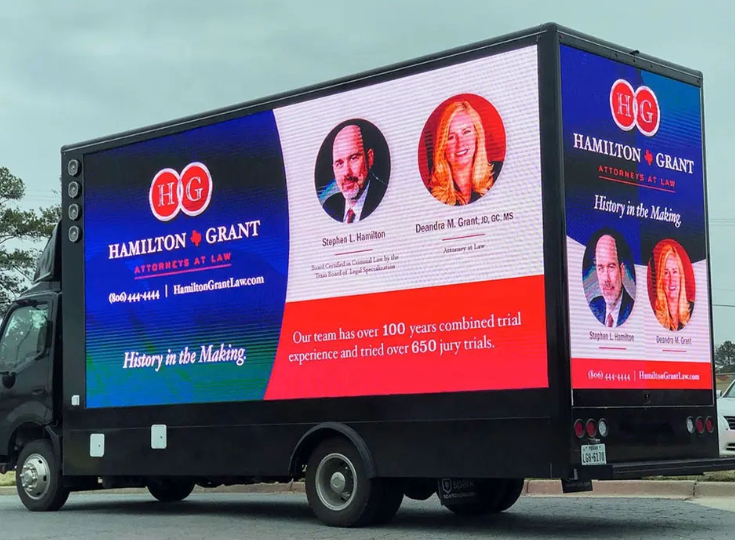
The purchase price is only one part of the total cost of owning and operating an LED billboard truck. Some expenses are paid once, while others recur throughout the vehicle’s operating life.
Total Cost of Ownership: A Practical Checklist
| Cost Category | Items to Confirm | Why It Matters |
|---|---|---|
| Hardware | LED modules, cabinets, controllers, power supplies, and media equipment | Establishes the actual display-system scope |
| Vehicle | Chassis, vehicle preparation, and any required modifications | Determines the road-vehicle component of the purchase |
| Structure | Mounting frame, reinforcement, lifting mechanisms, and engineering | Affects safety, payload, and installation complexity |
| Integration | Electrical installation, wiring, commissioning, and testing | Determines whether the equipment works as a complete system |
| Shipping | Packaging, freight, cargo insurance, and inland delivery | Can materially change the delivered cost |
| Customs and taxes | Import duties, applicable taxes, customs clearance, and fees | Depends on the destination, product classification, and shipping terms |
| Local compliance | Registration, inspections, permits, and approvals where required | Varies by jurisdiction and operating model |
| Electricity and fuel | Vehicle fuel, generator fuel, charging, or other energy costs | Depends on actual operating hours and equipment requirements |
| Maintenance | Vehicle servicing, screen repairs, electrical work, and inspections | Influences availability and ongoing expenditure |
| Spare parts | Modules, power supplies, receiving cards, cables, and other components | Helps reduce repair delays |
| Content and control | Creative production, playback, connectivity, and software services | Supports ongoing campaign delivery |
| Staffing and insurance | Driver, operator, commercial vehicle coverage, and applicable business insurance | Depends on local employment and insurance arrangements |
| Storage and downtime | Parking, storage, repairs, and periods when the truck cannot operate | Affects utilization and operating economics |
Not every cost applies to every project. For example, a buyer purchasing only an LED screen system may not be responsible for the vehicle chassis, while a turnkey buyer may contract with an integrator to coordinate most of these items.
How Should You Compare International Supplier Quotes?
When sourcing an LED display system internationally, confirm whether the quotation is factory-gate, FOB, CIF, DAP, DDP, or another agreed delivery arrangement. These terms do not represent the same cost or allocation of responsibility.
Request written clarification of:
- What equipment is included in the quoted price.
- Whether the vehicle or chassis is included.
- Who is responsible for mounting and local integration.
- Which transportation and import charges are excluded.
- Who handles destination-country inspections and approvals.
- Where commissioning takes place.
- Who provides warranty service and replacement parts.
A supplier’s equipment price should not be presented as a confirmed delivered-and-operational cost unless the quotation actually covers that scope.
LED Billboard Truck vs. LED Trailer: Which Is Better?
A self-propelled truck and a trailer-mounted LED display can serve similar advertising objectives, but they have different deployment requirements.
| Decision Factor | LED Billboard Truck | LED Billboard Trailer |
|---|---|---|
| Mobility | Can travel under its own power when road-legal and operational | Requires a suitable towing vehicle |
| Vehicle requirements | Chassis, driving, registration, and maintenance | Trailer specifications and towing compatibility |
| Deployment | Suitable for mobile campaigns and route-based advertising | Suitable for events, temporary installations, and selected fixed locations |
| Parking | Requires suitable vehicle parking and operating access | Requires suitable trailer parking and deployment space |
| Power | Depends on the engineered vehicle and display power system | Depends on the trailer’s power configuration |
| Maintenance | Vehicle and display systems both require attention | Trailer, display, and towing-related components require attention |
| Initial investment | Depends on whether a complete vehicle is included | Depends on trailer design, display size, and power configuration |
| Compliance | Vehicle, display, and advertising rules must be checked | Trailer, towing, display, and advertising rules must be checked |
Neither option is universally cheaper. A trailer may be appropriate when the operator already has a suitable towing vehicle, while a self-propelled truck may better suit businesses that need an integrated mobile platform.
Compare the full equipment scope, deployment requirements, local regulations, and expected utilization before choosing.
Is Buying an LED Billboard Truck Better Than Renting?
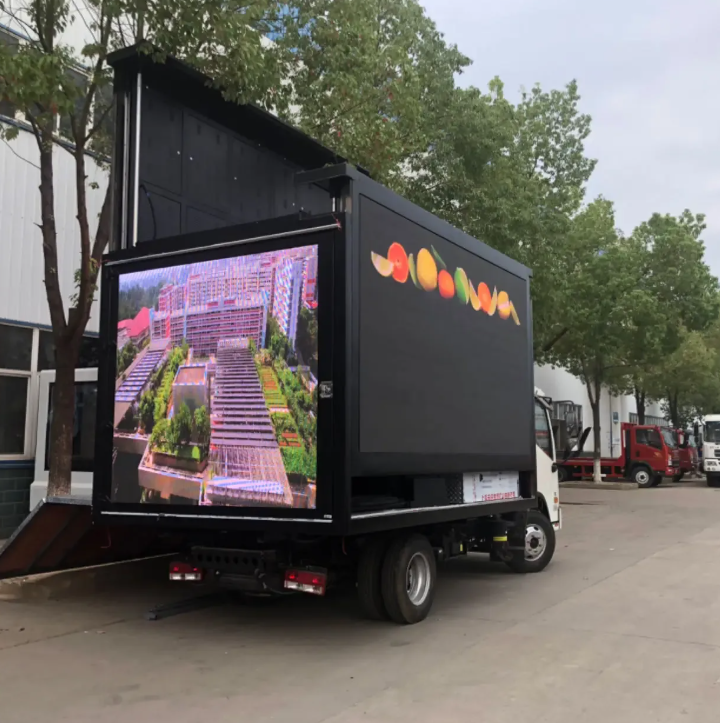
Buying and renting solve different business problems. The right decision depends on how frequently the equipment will be used, who will operate it, and whether the buyer can generate sufficient value from ownership.
Buying May Suit These Businesses
- Advertising operators planning recurring campaigns.
- Fleet owners with established sales and customer relationships.
- Companies requiring control over routes, schedules, and creative content.
- Businesses with the technical resources to maintain the vehicle and display system.
- Operators planning to use the equipment across multiple campaigns or customers.
Ownership also creates responsibilities. The buyer must manage maintenance, insurance, compliance, storage, staffing, and periods when the vehicle is not generating revenue.
Renting May Suit These Businesses
- Brands planning a short-term launch or promotional event.
- Businesses testing mobile advertising before committing capital.
- Event agencies with irregular campaign schedules.
- Organizations that prefer to outsource driving and daily operations.
- Companies that need a particular truck configuration only temporarily.
Rental quotations must be compared carefully. Some include a driver, fuel, route planning, and campaign support, while others may charge these items separately.
What About Leasing?
Leasing or financing can spread payments over time, but it introduces financing charges and contractual obligations. Buyers should examine the full repayment schedule, ownership terms, maintenance responsibilities, and early termination conditions before signing.
There is no universal number of campaign days at which ownership becomes more economical than renting. That point depends on actual purchase and rental quotations, utilization, staffing, maintenance, financing, and resale assumptions.
How Can You Evaluate the ROI of an LED Billboard Truck?
The business case depends on the way the vehicle will be used.
An operator selling advertising space to third-party brands has a different revenue model from a company using its own truck to promote its products. The latter may value campaign reach and marketing outcomes rather than direct advertising revenue.
Before purchasing, document the following:
| Business Variable | Questions to Answer |
|---|---|
| Utilization | How frequently will the truck operate, and how many days will it remain idle? |
| Revenue | Are campaigns sold by day, route, duration, audience, or another pricing model? |
| Operating costs | Who pays for drivers, fuel, electricity, insurance, maintenance, and storage? |
| Sales pipeline | Are there existing customers or signed campaigns, or is future demand only projected? |
| Campaign delivery | How will routes, display operation, content playback, and campaign completion be documented? |
| Asset value | What are the expected maintenance requirements and potential resale conditions? |
| Risk | How will downtime, cancellations, seasonal demand, and regulatory restrictions affect the business? |
Avoid relying on a single assumed audience count or a promised payback period. Mobile advertising exposure depends on routes, traffic, operating hours, audience measurement methods, and campaign conditions.
If an operator uses impression-based pricing, ask how impressions are measured and whether the methodology is independently validated. Estimated exposure should not be presented as audited audience data.
A responsible business assessment should compare conservative, expected, and optimistic operating scenarios using actual supplier quotations and realistic commercial assumptions.
How Do You Choose an LED Billboard Truck Supplier?
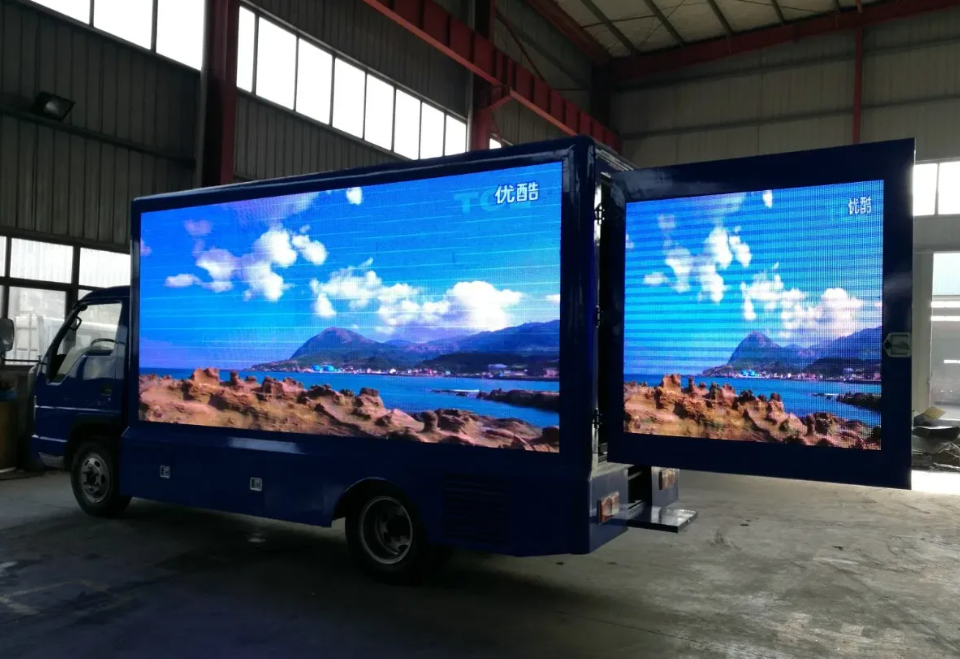
A professional supplier should be able to explain not only the display specification, but also how the proposed equipment fits the intended installation.
Technical Documentation to Request
Before placing an order, ask for:
- Display dimensions, resolution, pixel pitch, and brightness specifications.
- Maximum and typical power consumption.
- Cabinet weight and mounting requirements.
- Environmental protection documentation for the applicable equipment.
- Controller, playback, and connectivity specifications.
- Service-access requirements and recommended spare parts.
- Warranty terms, exclusions, and repair procedures.
- Integration drawings and responsibilities for vehicle modifications.
- Testing and acceptance documentation relevant to the project.
Do not treat a product-level IP rating as proof that the complete vehicle installation has the same protection level. Seals, connectors, wiring, access panels, and mounting interfaces can affect the protection of the assembled system.
Manufacturing, Testing, and Acceptance
For a customized installation, agree on acceptance requirements before production begins.
Depending on the project scope, these may include display operation, brightness settings, image uniformity, content playback, control-system communication, electrical safety checks, and inspection of mounting components.
For vehicle-integrated systems, the responsible vehicle or integration specialist should also address structural integrity, load limits, electrical integration, and applicable roadworthiness requirements.
Clarify which tests are performed at the factory, which are completed after installation, and which documents will be delivered with the equipment.
Warranty and After-Sales Support
A warranty should specify the covered components, duration, exclusions, and process for handling defects. Ask whether replacement modules and other spare parts are available, who pays transportation costs for warranty parts, and whether remote technical support is included.
A low purchase price may be less attractive if repairs require lengthy international shipping or if the supplier cannot provide compatible replacement components.
What Regulations Apply to LED Billboard Trucks?
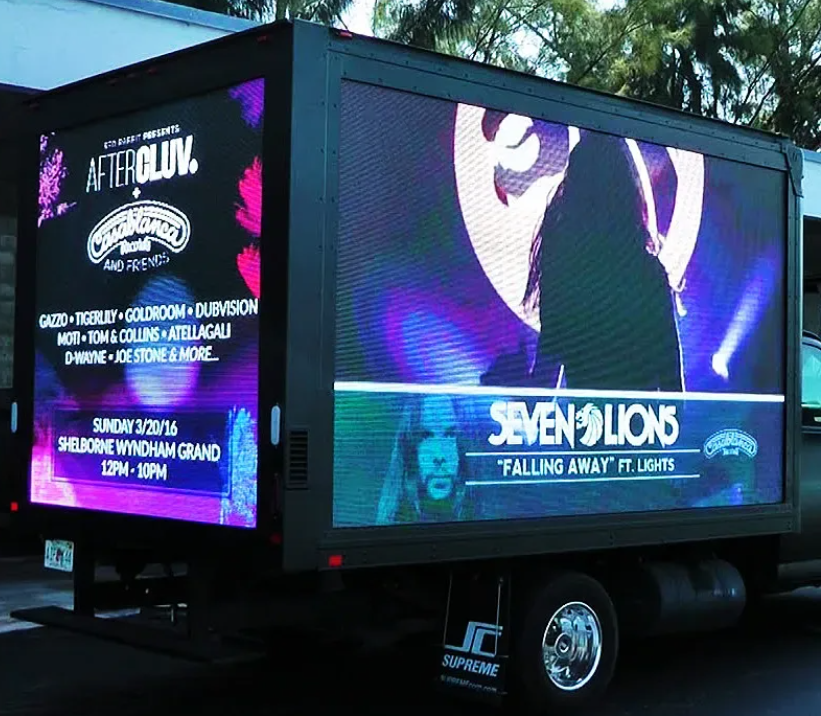
Requirements depend on the destination country, state or province, municipality, vehicle classification, and intended operation. A truck that is legally registered is not automatically permitted to display advertisements everywhere.
In the United States, buyers can begin with the following official resources:
- Federal Highway Administration — Outdoor Advertising Control: information on the federal outdoor advertising control framework and its scope.
- Federal Motor Carrier Safety Administration — Safety Regulations FAQ: guidance for determining whether particular motor-carrier safety requirements apply.
- Manual on Uniform Traffic Control Devices: official information on traffic control devices and their intended use.
These references do not establish that a particular mobile advertising truck is permitted in every jurisdiction. Buyers should separately verify vehicle registration, modifications, applicable inspections, local advertising restrictions, parking rules, brightness limits, and insurance requirements with the relevant authorities.
For international projects, the same principle applies: confirm local requirements before finalizing the vehicle and display design.
Frequently Asked Questions
How much does an LED billboard truck cost?
The price depends on whether the purchase includes a complete vehicle, an LED screen system, a retrofit, or a trailer. Sostron’s previously published guide listed a preliminary range of $15,000 to $250,000+, but this has not been independently verified as a current market benchmark. Obtain itemized quotations based on the actual configuration and delivery scope.
Can I buy an LED screen without the truck chassis?
Yes. Some buyers purchase the LED display system separately and work with a vehicle manufacturer or qualified integration partner. The quotation should specify the screens, cabinets, controller, power supply, mounting requirements, and installation responsibilities. The vehicle and display system must be engineered to work together safely.
What affects the cost of a mobile LED billboard?
The main factors include screen area, pixel pitch, brightness, number of display faces, cabinet construction, control system, vehicle chassis, structural reinforcement, power supply, installation, shipping, and destination-country compliance. Warranty coverage and the availability of replacement parts can also influence long-term ownership costs.
Is an LED billboard truck better than an LED trailer?
A truck may suit operators needing a self-propelled mobile platform, while a trailer may suit businesses with a suitable towing vehicle and appropriate deployment locations. Neither is automatically cheaper. Compare the complete purchase scope, towing or driving requirements, storage, power, maintenance, and applicable regulations.
What should an LED billboard truck quotation include?
Request a detailed specification covering the display dimensions, resolution, brightness, power requirements, controller, mounting structure, vehicle scope, installation, transportation, warranty, spare parts, testing, and delivery responsibilities. Confirm which items are excluded so that quotations from different suppliers can be compared consistently.
How long does an LED billboard truck last?
There is no single reliable service-life figure for every truck. Vehicle life depends on the chassis, maintenance, mileage, loading, and operating conditions. LED display life depends on component quality, temperature, brightness settings, operating hours, maintenance, and repairability. Ask suppliers for documented component specifications and warranty conditions rather than relying on a universal lifespan estimate.
Do LED billboard trucks need permits?
They may require vehicle registration, approval for modifications, inspections, advertising permits, or compliance with local restrictions, depending on the jurisdiction and operating model. Verify the applicable requirements with local authorities before purchase and deployment.
Can the display content be updated remotely?
Remote updates are possible when the selected controller, playback system, software, and connectivity support them. Confirm network requirements, subscription fees, content scheduling, access permissions, and monitoring features in the supplier’s quotation.
Expert Verdict: Choose by Scope, Engineering, and Total Cost
An LED billboard truck is not simply an LED screen mounted on a vehicle. It is an integrated system whose value depends on display performance, structural safety, electrical design, local compliance, serviceability, and commercial utilization.
For buyers, the most effective approach is to define the intended advertising use, establish the required display specifications, compare equivalent quotations, and identify all costs that fall outside the initial purchase price.
For advertising operators, a realistic business plan should account for utilization, staffing, maintenance, campaign demand, and downtime. For companies purchasing only the LED display system, the responsibilities of the vehicle manufacturer and integration partner should be clearly defined before production begins.
How Sostron Can Support LED Display Projects
Sostron is an LED display manufacturer providing outdoor LED display products, product development, customized display solutions, engineering support, installation guidance, and after-sales technical support for international projects.
For buyers evaluating an LED system for a mobile advertising application, Sostron can help clarify display specifications and discuss relevant hardware options. The vehicle chassis, structural integration, electrical system, and local road compliance must be confirmed according to the actual project scope and the parties responsible for delivery.
Explore Sostron’s outdoor LED display products or review the three-sided LED delivery box display for a different mobile advertising format. These products are references for display-system selection, not evidence that a complete road-ready billboard truck is included.
The goal is to specify a system that fits the application, can be maintained over its service life, and has a clearly defined delivery and support scope.
Price note: All prices discussed in this article should be treated as preliminary estimates unless supported by a current, itemized supplier quotation. Actual costs vary with configuration, order quantity, delivery terms, destination-country taxes, integration requirements, and local regulations. Confirm the final scope and price in writing before placing an order.
References:
FHWA — Outdoor Advertising Control
FMCSA — Commercial Motor Vehicle Safety Regulations