With the rapid advancement of LED display technology, the P10 outdoor LED display remains one of the most widely deployed solutions in commercial outdoor advertising, event production, and public information systems. As a 10mm pixel pitch product, it sits at the entry-level end of the outdoor LED pricing spectrum — but “entry-level” does not mean simple. Pixel density, brightness, cabinet material, control systems, and total cost of ownership all interact to determine what a P10 project actually costs. This guide breaks down the technology, the real-world pricing, and the procurement factors that experienced buyers evaluate before signing a purchase order.
What Is a P10 Outdoor LED Display?
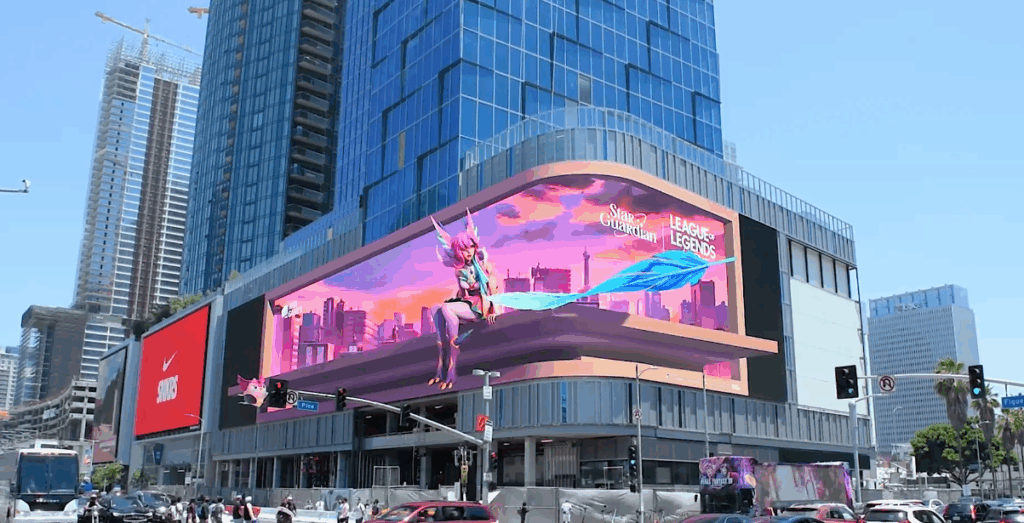
P10 refers to an LED display with a 10mm pixel pitch — the center-to-center distance between adjacent LED pixels. At this density, a P10 panel delivers approximately 10,000 pixels per square meter, which is sufficient resolution for viewing distances of roughly 10 meters or more. As a general industry rule of thumb, the minimum comfortable viewing distance in meters is roughly equal to the pixel pitch in millimeters — so a P10 screen is optimized for audiences standing 10 meters or farther away, while a P5 screen would be used closer to 5 meters. This makes P10 the standard choice for highway billboards, building facades, stadium perimeter boards, and large public plazas, where viewers rarely stand close to the screen.
P10 Outdoor LED Display Price: Cost Breakdown
Price by Project Size
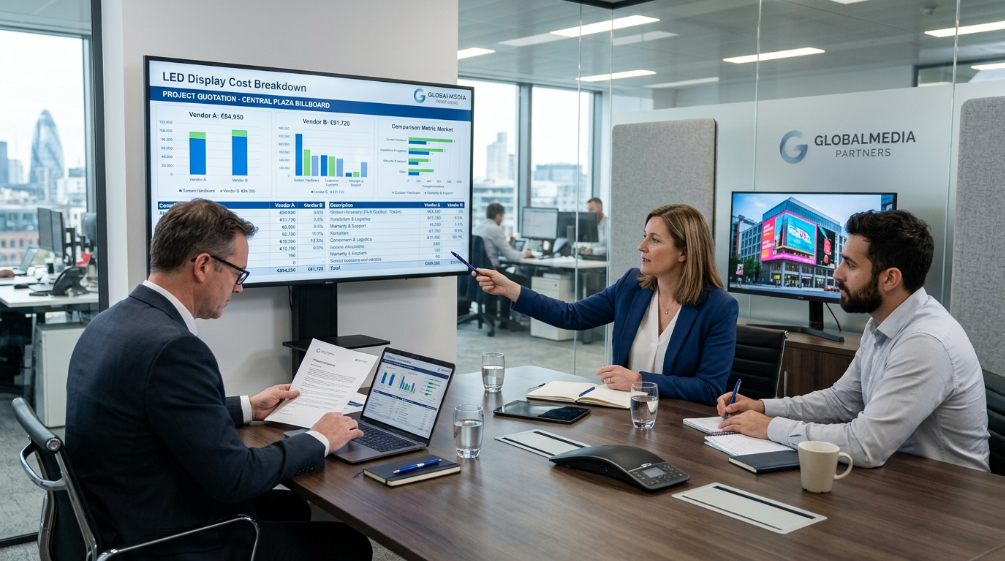
Pricing for a complete P10 outdoor LED display varies significantly with project scale, specification level, and manufacturer:
- Small installations (a few square meters): approximately $5,000–$20,000
- Medium-sized displays (around 10 square meters): approximately $10,000–$60,000
- Large installations (over 20 square meters): can exceed $60,000, with large-format commercial projects commonly reaching $150,000+
Price Per Square Meter
Because commercial LED walls are modular — built from standardized cabinets — the industry standard way to quote a project is by price per square meter rather than a flat total. For P10 specifically, the market range typically falls between $380 and $950 per square meter, though it can extend up to roughly $1,200/m² for premium brightness, aluminum cabinets, and advanced control systems. This makes P10 the most affordable option across the outdoor pixel pitch range, since it requires far fewer LED chips and driver ICs per square meter than finer-pitch products like P6 or P4.
What’s Included in the Quoted Price — and What Isn’t
A common source of confusion for first-time buyers is that two quotes for the same screen size can differ by 200–300%, simply because they cover different scope. A base LED panel quote typically includes the cabinet, LED modules, power supplies, and receiving cards, but usually excludes:
- The control system (sending cards and video processor): typically $500–$2,000 depending on resolution and 4K support
- Steel structure and mounting hardware
- On-site installation and commissioning labor
- Shipping and import duties
Always ask suppliers to itemize these separately — a “cheap” per-square-meter quote that excludes the control system and structure is not actually cheaper once the full project is assembled.
Key Factors That Influence P10 LED Display Cost
Brightness (Nits) Requirements
Outdoor screens must overcome ambient sunlight, so brightness is a primary cost driver. Most outdoor P10 displays operate in the 5,000–6,000 nits range, while locations with intense direct sunlight — such as tropical or high-altitude regions — often require 7,000–10,000 nits. Higher brightness demands stronger LED chips and more capable driver ICs, both of which increase the unit price. Increasingly, P10 displays also include ambient light sensors that automatically scale brightness from full output at midday down to 30–40% at night, which both improves visual comfort and meaningfully reduces long-term energy consumption.
Cabinet Material: Iron vs. Die-Cast Aluminum
The cabinet frame affects durability, weight, and heat dissipation. Iron cabinets are lower-cost but heavier and dissipate heat less efficiently. Die-cast aluminum cabinets cost more upfront but are lighter, corrosion-resistant, and cool more effectively — an important factor for LED lifespan in high-heat outdoor environments, and often the deciding factor for projects with strict structural load limits.
SMD vs. DIP LED Packaging
Most modern P10 outdoor displays use SMD (Surface Mounted Device) packaging, which offers better color uniformity, wider viewing angles, and a more refined visual finish. DIP (Dual In-line Package) technology remains in use where maximum raw brightness is the dominant requirement, since exposed-chip DIP LEDs can achieve very high nits and tend to tolerate rough handling well, though at the cost of a less refined pixel appearance. For most current commercial installations, SMD is the default recommendation.
Refresh Rate and Grayscale
Refresh rate determines how smoothly the display renders motion and how well it performs on camera. Standard displays run at 1920Hz, while premium configurations reach 3840Hz or 7680Hz, virtually eliminating scan lines and flicker during video capture — an important consideration for broadcast backdrops or displays that will appear in photographs and livestreams. Higher refresh rates require more capable driver chips, which adds cost. Alongside refresh rate, 16-bit grayscale processing determines color depth and contrast fidelity; higher grayscale support produces smoother gradients and more accurate color reproduction, which matters for brand-critical advertising content.
Control System and Software Platform
The control system is the “brain” of the display, and the brand you choose affects both reliability and long-term operating cost:
- NovaStar — the most widely adopted platform globally, known for its NovaLCT configuration software and VNNOX cloud management suite, which enables remote brightness scheduling, fault alerts, and multi-zone content control without on-site visits
- Colorlight — competitive pricing, commonly used in rental and event applications
- Linsn — popular in budget and mid-tier fixed installations
For multi-screen networks or unattended remote installations, cloud-based management is not a luxury feature — it materially reduces truck-roll maintenance costs over the display’s lifespan.
IP Rating and Waterproofing
For any screen exposed to rain, dust, humidity, or temperature swings, IP65 is the minimum acceptable standard — indicating the enclosure is fully dust-tight and protected against low-pressure water jets from any direction. Achieving IP65 requires tighter cabinet seals, waterproof connectors, and sealing glue, all of which add to manufacturing cost but are non-negotiable for outdoor durability.
Total Cost of Ownership: Beyond the Purchase Price
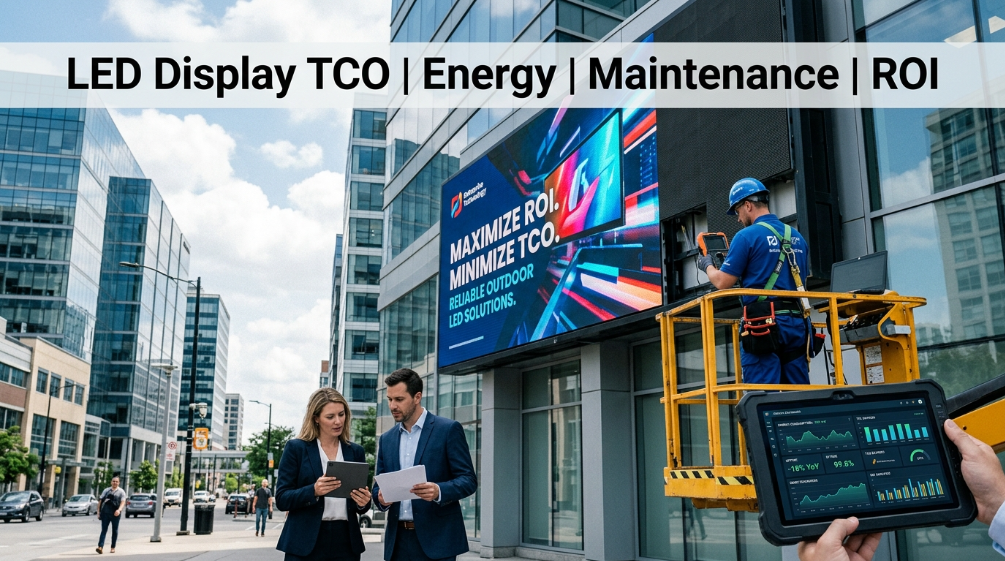
Experienced buyers evaluate P10 projects on Total Cost of Ownership (TCO), not just the initial quote. Several cost categories are frequently underestimated:
Energy Consumption and Running Costs
For a 10 sqm P10 outdoor display running 12 hours a day, annual energy costs typically fall in the range of $1,300–$1,600 (at approximately $0.12/kWh), though this varies with brightness settings and local electricity rates. Displays built with common cathode driving technology can reduce power consumption by 30–40% compared to conventional circuit designs — a saving that compounds meaningfully over a 5–8 year operating lifespan.
Structural and Installation Costs
Outdoor LED walls function as large wind-load surfaces, and structural engineering is a real budget line item, not an afterthought. Depending on local wind zone requirements, structural certification can add several thousand dollars, and many large installations also require power infrastructure upgrades to support the display’s electrical load. Skipping proper wind-load engineering is a leading cause of premature structural failure in outdoor installations.
Maintenance, Spare Parts, and Warranty
LED lifespan depends heavily on component quality. Premium outdoor screens use gold wire encapsulation in the LED package rather than copper wire, which resists oxidation and heat degradation and can extend rated lifespan beyond 100,000 hours. This raises upfront cost but lowers long-term maintenance spend. Buyers should also confirm what warranty terms cover (typically 2–3 years on P10 products), whether spare modules and power supplies are included, and whether the cabinet design supports front or rear access for servicing — front-access maintenance is significantly cheaper to operate on facades where rear access isn’t possible.
Additional Technical Features
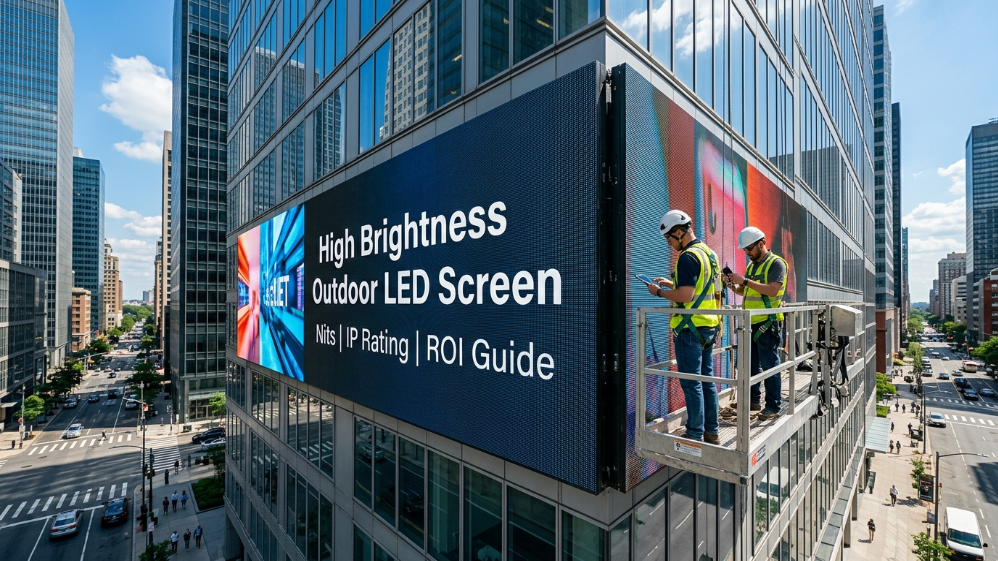
- Wide Viewing Angle: Quality P10 panels achieve up to 160° horizontal and 120° vertical viewing angles, maintaining color consistency and brightness across a wide audience footprint.
- Weatherproof, Modular Design: Beyond IP65 sealing, module-based construction allows individual sections to be swapped without dismantling the full display, minimizing downtime.
- Energy-Adaptive Operation: Ambient light sensing and scheduled dimming reduce both energy cost and long-term LED degradation from unnecessary peak-brightness operation at night.
Market Applications of P10 Outdoor LED Display
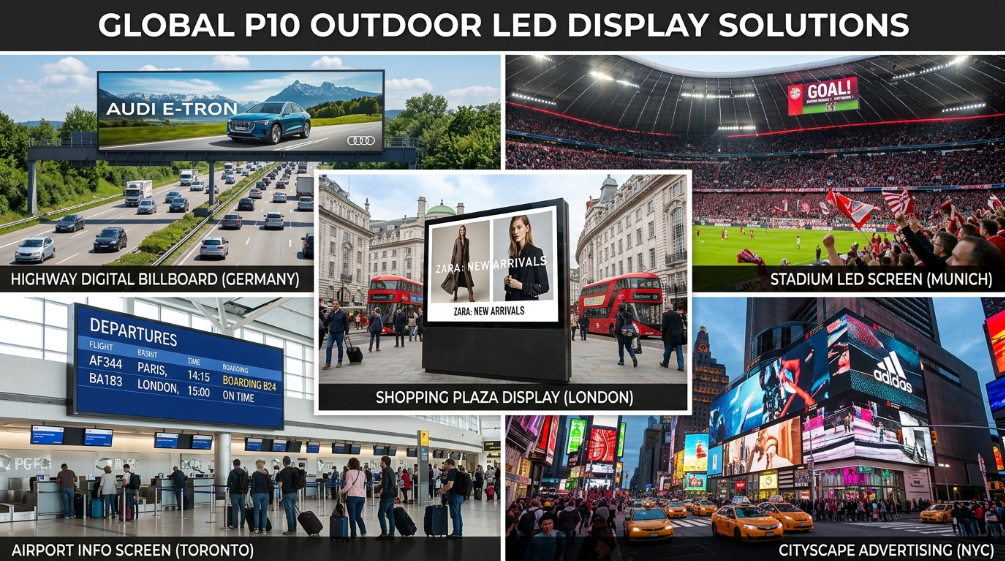
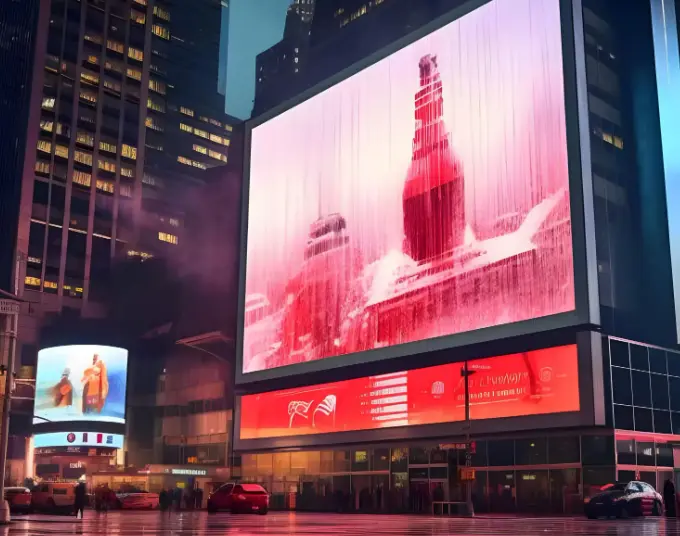
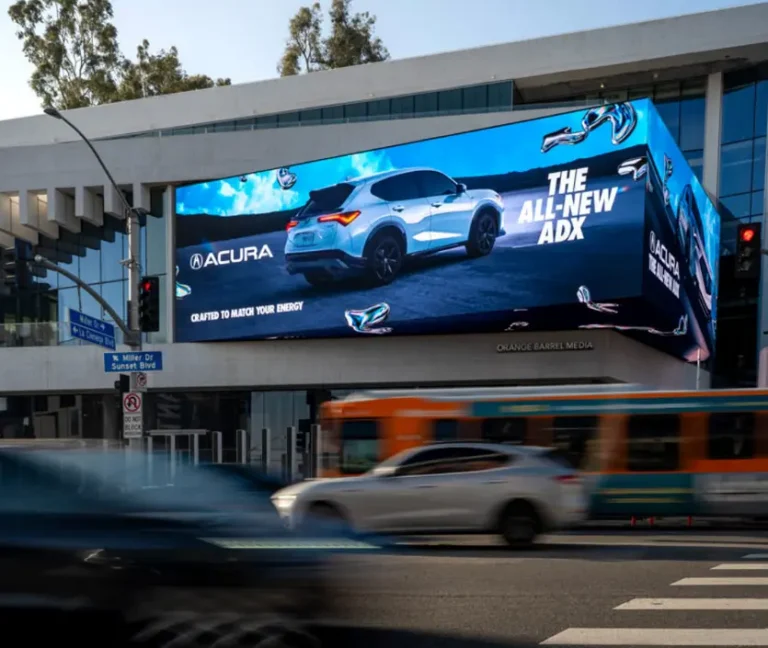
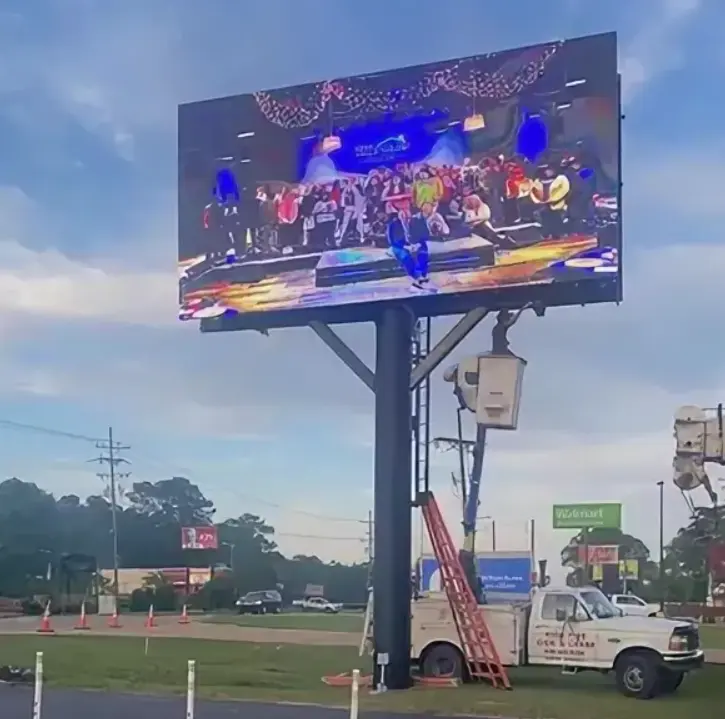
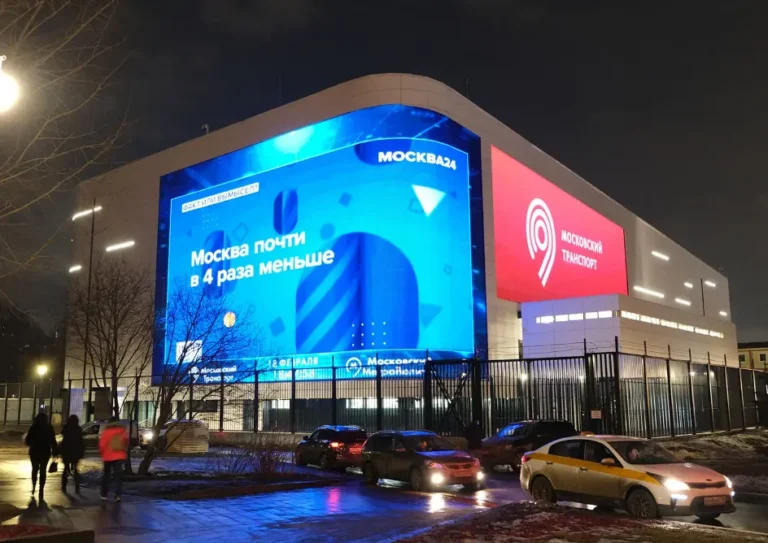
Outdoor Advertising: P10 displays are widely deployed on roadside billboards, building facades, and large outdoor plazas for commercial advertising and brand campaigns, where their brightness and pitch balance cost-effectiveness with visibility from vehicle and pedestrian traffic.
Event Venues: At outdoor concerts, sporting events, and large public gatherings, P10 screens serve as stage backdrops and jumbotron-style displays, delivering clear video and graphics visible across large crowds — a use case where refresh rate above 3840Hz matters if the screen will be filmed or broadcast.
Traffic Guidance: Transit hubs, stations, and airports use P10 displays for wayfinding systems showing schedules, directions, and real-time information, where reliability and 24/7 uptime matter more than fine pixel detail.
P10 vs. Other Outdoor Pixel Pitches
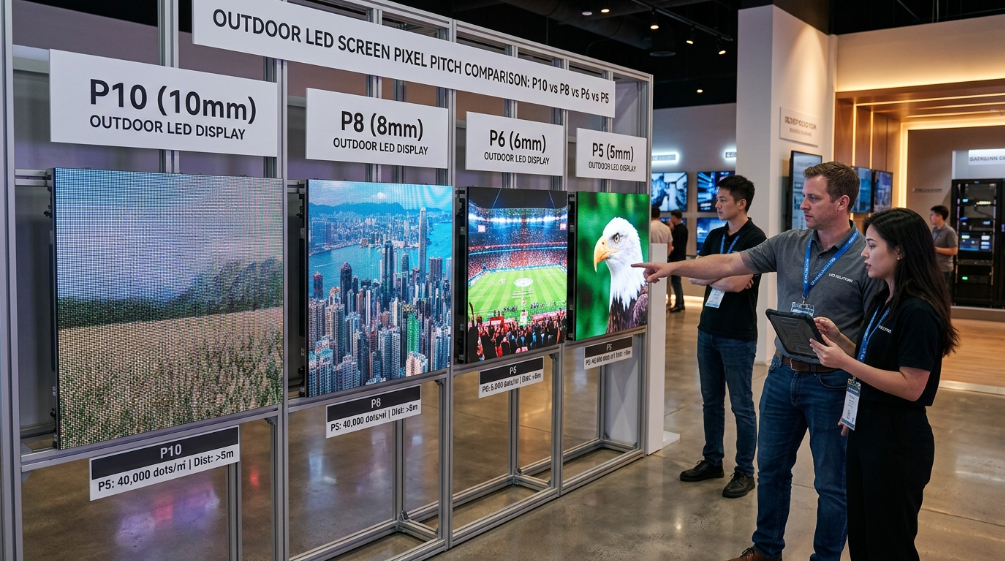
| Pixel Pitch | Typical Viewing Distance | Approx. Price Range | Best For |
|---|---|---|---|
| P10 | 10m+ | $380–$950/m² | Highway billboards, large plazas, long-distance viewing |
| P8 | 8m+ | $500–$950/m² | Building facades, stadium boards |
| P6 | 6m+ | $580–$1,000/m² | Public squares, mid-distance advertising |
| P5 | 5m+ | $580–$1,200/m² | Shopping mall facades, closer pedestrian viewing |
As pixel pitch decreases, LED and driver IC density rises sharply, which drives cost up correspondingly — a P5 screen can cost noticeably more per square meter than P10 for the same physical area, since it packs several times as many LEDs.
Actionable Advice for Procurement Decision-Makers
For B2B buyers evaluating P10 outdoor LED display suppliers, a purely price-per-square-meter comparison is not sufficient. Before finalizing a purchase order:
- Request an itemized quote that separates panel cost, control system, structure, and installation — this is the only way to compare suppliers on equal terms.
- Confirm the IP rating and cabinet material in writing, not just verbally, since these directly affect field failure rates.
- Ask which control platform is used (NovaStar, Colorlight, Linsn) and whether cloud management is included — this affects your long-term operating overhead more than the initial hardware price.
- Calculate 5-year TCO, including energy consumption, expected maintenance visits, and spare parts availability, rather than evaluating only the upfront quote.
- Verify wire encapsulation and warranty terms — gold wire and a documented 2–3 year warranty with accessible spare modules are reasonable baseline expectations for a commercial-grade P10 product.
- Validate structural requirements with a local engineer for large installations — wind load calculations should be based on local building codes, not assumed from the supplier’s default mounting kit.
Frequently Asked Questions
How much does a P10 outdoor LED display cost per square meter?
Typically between $380 and $950 per square meter for standard configurations, with premium brightness and aluminum-cabinet builds reaching higher.
Do P10 outdoor displays always need 7,000+ nits?
No. 5,000–6,000 nits is standard for most locations; 7,000–10,000 nits is reserved for sites with intense, direct sunlight exposure.
What’s the difference between P10 and P8?
P8 has a tighter pixel pitch, delivering higher resolution at shorter viewing distances, but at a higher cost per square meter since it requires more LEDs and driver ICs per unit area.
Is IP65 sufficient for outdoor use?
IP65 is the accepted minimum standard for outdoor LED displays exposed to rain and dust. Some manufacturers offer IP66 or higher for extreme environments.
Conclusion
The P10 outdoor LED display remains one of the most cost-effective solutions for long-distance outdoor viewing, but “cost” extends well beyond the initial per-square-meter quote. Brightness requirements, cabinet material, control system choice, IP rating, and total cost of ownership all shape what a project truly costs over its operating lifespan. Buyers who evaluate suppliers on itemized specifications — not just headline pricing — consistently end up with more reliable, lower-maintenance installations. As demand for outdoor digital advertising and public information systems continues to grow, P10 will remain a foundational choice for large-format commercial display projects.
References:
IEC 62717:2014+AMD1:2015+AMD2:2019 — LED modules for general lighting – Performance requirements
Outdoor Lighting Principles and Responsible Lighting Practices