In the global LED display trade environment of 2026, a “CE RoHS certified LED display manufacturer” is no longer an optional bonus, but a statutory entry ticket to mainstream markets in Europe, the Middle East, and North America.
To help B2B procurement decision-makers quickly identify compliance, the table below summarizes the core technical requirements of these two certifications for bulk LED display procurement:
| Certification Type | Core Compliance Dimension | Technical Threshold | Business Value |
|---|---|---|---|
| CE (EMC & LVD) | Electromagnetic compatibility and low-voltage safety | Must pass harmonic current, electrostatic discharge (ESD), and insulation dielectric strength tests. Ensures equipment does not interfere with other electronic systems and poses no fire or electric shock risk. | |
| RoHS 2.0/3.0 | Restriction of hazardous substances | The content of 10 substances such as lead (Pb), mercury (Hg), cadmium (Cd) must be below 0.1%. | Avoid environmental compliance fines, enhance brand ESG image, and facilitate future dismantling and recycling. |
If you are responsible for a DOOH (Digital Out-of-Home) project worth hundreds of thousands of dollars or a large-scale rental business, choosing a supplier lacking these certifications is no different from placing a gamble at the customs clearance stage. Once goods are randomly inspected at the ports of Rotterdam or Hamburg and found to exceed electromagnetic interference limits or lead content standards, you will face not only confiscation of the entire shipment, but also expensive port detention fees and commercial credit losses caused by contract breaches.
Based on our 15 years of experience assisting global system integrators with bulk cargo logistics, compliance itself is productivity.
Cutting Through the Fog: Why CE and RoHS Are the “Lifeline” of B2B Procurement
In the LED industry, many buyers easily fall into the “parameter trap,” over-focusing on nits or refresh rate while ignoring the underlying compliance architecture. According to the latest industry data from EU Market Surveillance Authorities, approximately 15% – 20% of imported electronic equipment is detained or required to be forcibly withdrawn due to lack of valid compliance documentation.
Deep Dive into CE Certification: The Essence of LVD and EMC Directives
CE certification is not a single certificate, but a combination of multiple directives. For LED displays, the two most important sub-directives are LVD (Low Voltage Directive) and EMC (Electromagnetic Compatibility).
LVD (Low Voltage Directive)
Applicable to equipment with input voltage between 50-1000V AC. For LED manufacturers, this means internal power supplies, cable layouts, and grounding protection must pass stringent leakage and short-circuit simulation tests.
FAB Logic: Using high-grade flame-retardant power cables and insulating materials that pass LVD testing (Feature) can effectively prevent electrical fires caused by overheating during continuous operation (Advantage), which is critical for shopping mall screens operating 24/7 (Benefit).
EMC (Electromagnetic Compatibility Directive)
This is the dividing line that measures a manufacturer’s R&D capability. High-performance LED displays consist of thousands of PWM driver ICs, which generate significant electromagnetic radiation during high-frequency switching.
Professional Insight: If the manufacturer does not adopt multilayer shielding or proper decoupling capacitor configurations in PCB design, the screen may interfere with surrounding wireless networks, elevator control systems, or even medical equipment.
RoHS Compliance: The Hidden Factor Behind Long-Term Durability
On the surface, RoHS restricts hazardous substances, but in actual production, it directly affects the quality of solder paste and electronic components.
To meet RoHS standards, we must use lead-free soldering processes. Although lead-free solder joints have higher melting points and greater process difficulty, they significantly reduce environmental pollution caused by electronic waste. More importantly, compliant components usually come from first-tier suppliers (such as Macroblock driver ICs and Nationstar LEDs), and their failure rates are far lower than those of small workshops using non-compliant materials to cut costs.
Core Technical Analysis: The “Internal Strength” of High-Performance LED Displays
As an engineer, I often tell clients: the front of the screen is for the audience, but the back is for professional buyers. To determine whether a manufacturer truly possesses E-E-A-T (Expertise, Experience, Authority, Trustworthiness), one must examine its core hardware architecture in depth.
Pixel Packaging Technology: Evolution from SMD to COB
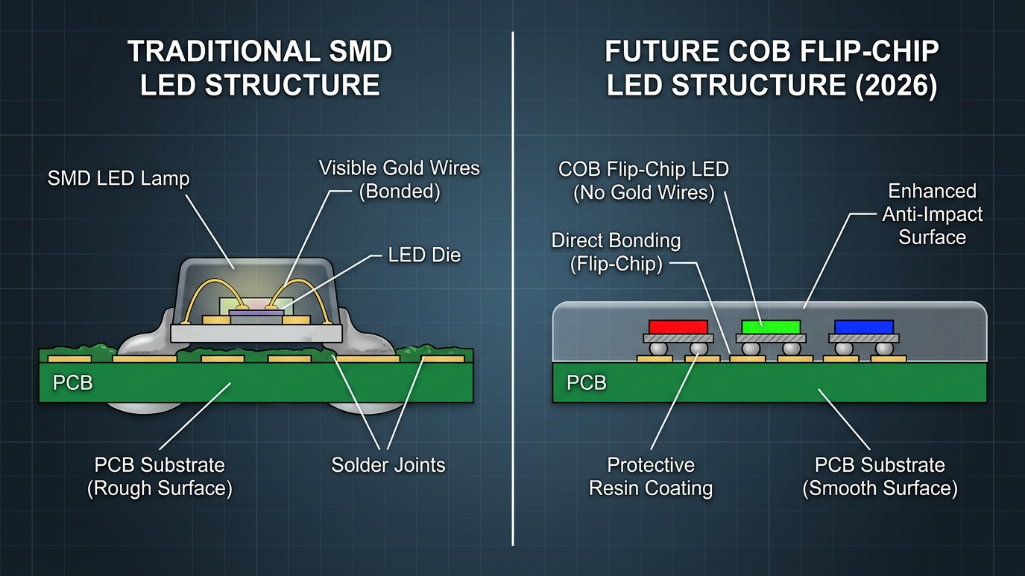
Currently, the mainstream packaging technology in the market is still SMD (Surface Mounted Devices), but for micro-pitch demands below P1.2, COB (Chip on Board) is becoming the industry benchmark.
SMD Packaging
Mature technology and easy maintenance. High-quality manufacturers use gold wire instead of copper wire for LED encapsulation.
Engineering Recommendation: Gold wire has far superior conductivity and chemical stability compared to copper wire, reducing the probability of LED failure (“dead pixels”) in humid environments.
COB Packaging
Directly encapsulates LED chips onto the PCB board.
Benefit: COB has stronger anti-collision and anti-static capabilities. By eliminating pin packaging, it shortens the heat dissipation path, effectively extending the lifespan of semiconductor components. Let you know the 6 differences between SMD LED display and COB LED display.
Driver Architecture: PWM IC and the Commercial Value of High Refresh Rates
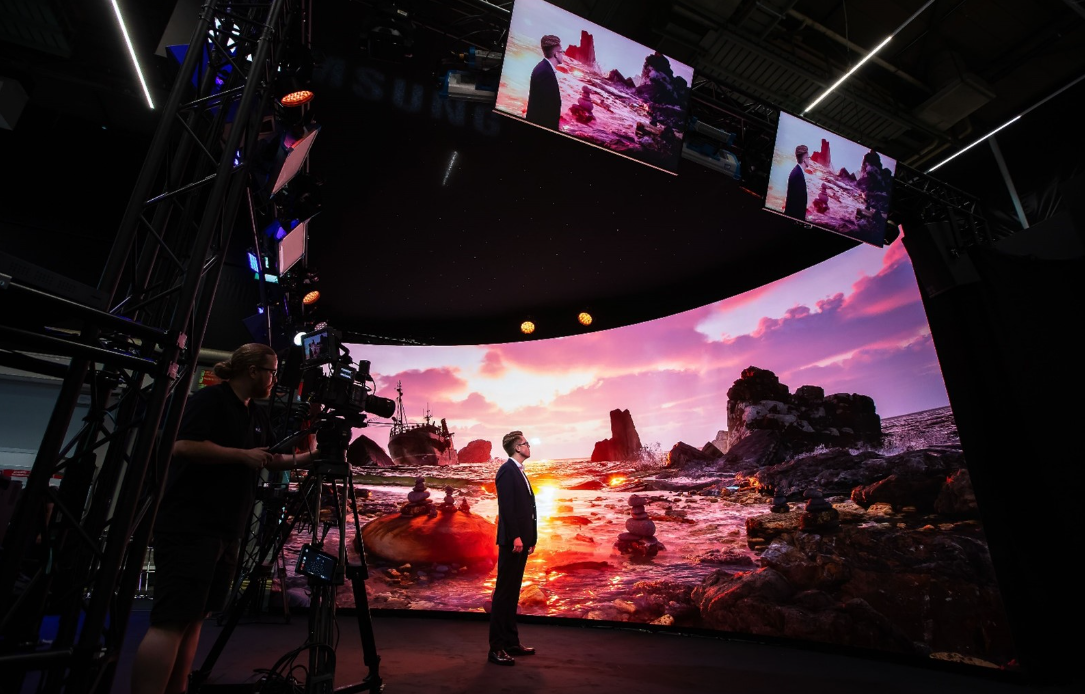
- Camera Flicker: Visible black bars (rolling shutter effect) when filmed.
- Content Loss: Fast-moving content may appear blurry or tearing.
- Not Broadcast Ready: Unsuitable for professional live streaming or TV.
- Flicker-Free: Crystal clear image on all cameras (1/2000s+ shutter speed).
- Smooth Motion: Perfect for fast video playback and sports.
- XR Ready (7680Hz): Essential for virtual production and XR studios.
In the B2B field, especially for TV broadcasting or professional e-sports events, refresh rate is a hard requirement.
Technical Depth: Ordinary driver ICs may only achieve 1920Hz refresh rates. By using high-end PWM driver ICs (such as MBI5252 or ICN2053 series), displays can easily reach 3840Hz or even 7680Hz.
Why does this matter? When smartphones or professional cameras capture the screen, low refresh rates cause visible black scan lines. For premium advertisers, this visual defect directly damages brand image. By adopting high-end PWM drivers, we ensure stable, smooth, flicker-free images at any shutter speed.
Cabinet Design: Advantages of Die-Casting Aluminum
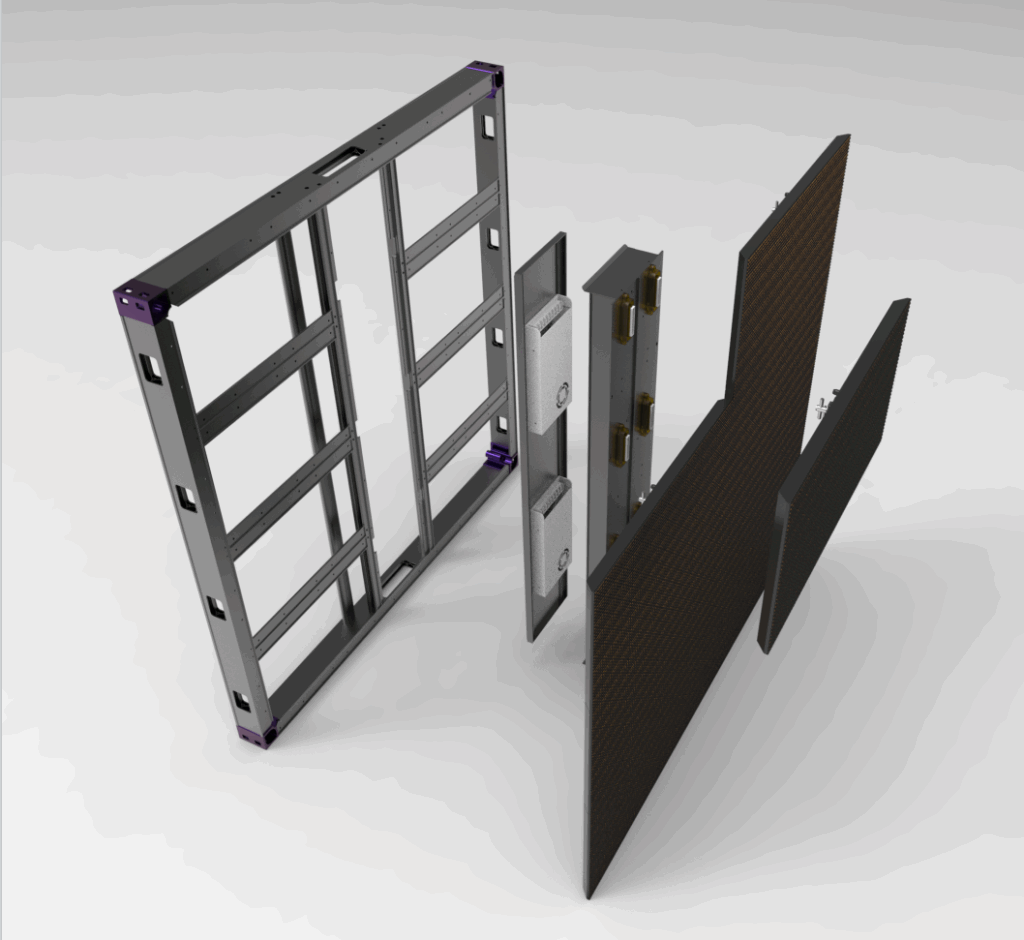
For contractors engaged in rental or fixed installation projects, the physical precision of the cabinet determines installation efficiency.
Material Comparison: Traditional iron cabinets are heavy, low in precision, and prone to rust in humid environments.
Industrial Choice: Modern high-end manufacturers widely use die-casting aluminum cabinets.
Precision: Through CNC machining, flatness tolerance between cabinets can be controlled within 0.1 mm. This means that when assembling thousands of square meters of screens, there will be no “dark lines” or “bright lines” caused by physical gaps.
Thermal Logic: Aluminum is an excellent thermal conductor. Combined with proper aerodynamic airflow design, passive heat dissipation can be achieved without additional fans, significantly reducing operating noise.
Procurement Guide: 5 Key Technical Dimensions for Evaluating Suppliers
When screening suppliers on Alibaba, Made-in-China, or Google, besides checking certificate images, you should also request the following verifiable parameters:
- Consistency of optoelectronic parameters: Request wavelength distribution data of LEDs from the same batch. High-quality manufacturers can control color deviation within pm 1.5 nm.
- Grayscale performance: Ask about grayscale processing capability under low brightness. Inferior screens may perform well at high brightness but show graininess and color loss when dimmed.
- Protection level (IP Rating): For outdoor projects, IP65 is the baseline. Confirm whether modules are coated with conformal coating (“three-proof paint”: moisture-proof, dust-proof, salt-spray-proof).
- Power conversion efficiency: Ask about power factor (PFC). High-efficiency power supplies reduce reactive power loss and can save thousands of dollars annually for large-scale screens.
- Pixel-by-pixel calibration: Confirm whether the factory performs brightness and chromaticity calibration before shipment. This is the final defense against patchy display effects.
Application Scenarios: Matching the Best Specifications to Project Goals
As a senior engineer, I have seen too many B2B buyers overspend due to blindly pursuing high configurations, or fail projects due to ignoring environmental variables. Below is a selection matrix based on mainstream 2026 application scenarios:
Digital Out-of-Home (DOOH)
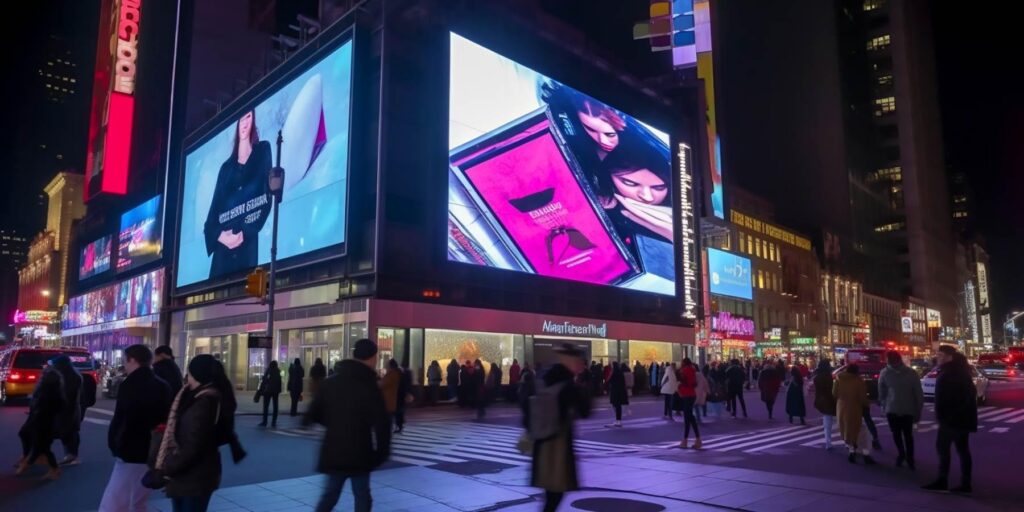
Core pain points: High energy consumption from 24/7 operation, light pollution complaints, color shift due to high temperatures.
Engineer Recommendations:
- Brightness dynamic range: Choose models with auto-brightness adjustment. Switching between 10,000 nits (day) and 800 nits (night) extends LED lifespan and saves up to 30% in electricity costs.
- Thermal redundancy: For tropical or humid regions, prioritize common cathode LED technology, reducing heat generation by 20%-30%.
- Protection level: Ensure both front and rear meet IP65 or above to prevent salt corrosion.
Rental & Events
Core pain points: Frequent assembly/disassembly damage, seams, transportation weight.
Engineer Recommendations:
- Physical protection: Choose cabinets with corner protectors, reducing module edge failure rates by 80%.
- Installation efficiency: Look for single-person quick-lock systems to reduce labor costs.
- Flatness control: Ensure cabinets support curvature adjustment (-15^\circ to +15^\circ) for creative stage designs.
Control Rooms & High-End Conference Rooms
Core pain points: Visual fatigue, moiré patterns, low grayscale performance.
Engineer Recommendations:
- Visual comfort: Prefer P1.2 or P0.9 fine-pitch displays.
- Color depth: Must support 16-bit grayscale control for smooth low-brightness rendering.
- Silent operation: Fanless design using aluminum passive cooling is essential.
Post-Procurement “Deep Waters”: Customs Clearance and Logistics Risk Control
For B2B procurement, especially LED orders exceeding 200kg or 2CBM, logistics is not just transportation—it is the core of supply chain risk management.
Packaging Engineering
Rental orders: Must use flight cases with high-density foam, 6–8 cabinets per case.
Fixed installation orders: Use fumigation-free plywood crates. Install ShockWatch indicators externally to trace damage caused by rough handling.
Customs Clearance & Incoterms
DDP (Delivered Duty Paid): For SMEs without import teams, DDP is recommended. Reliable manufacturers handle tariffs, VAT, and AEO requirements via freight partners.
Logistics tracking: Qualified suppliers should provide full visibility tracking from origin ports (Shenzhen, Ningbo, Shanghai) to destination ports.
FAQ
Q1: Why are some CE certificates offered at extremely low prices?
A: This often involves “certificate leasing” or forgery. Some factories test only a single component instead of the whole system. Always verify the certificate number and scope on the issuing body’s official website. CE certificates without EMC reports are meaningless at EU customs.
Q2: How does RoHS affect LED display maintenance?
A: RoHS requires lead-free solder. Lead-free joints are harder but less ductile, so strict reflow soldering temperature control is necessary, especially for rental screens subject to frequent handling.
Q3: Beyond certification, how to quantify manufacturer reliability?
A: Check the BOM (Bill of Materials). Require written confirmation of LED brands (e.g., Nationstar, Kinglight), IC brands (e.g., MBI, ICN), and power supply brands (e.g., Meanwell). Any opaque BOM indicates risk of component downgrading.
Q4: For LED cargo over 200kg air or sea freight?
A: If the project timeline exceeds 45 days, sea freight (FCL/LCL) is preferred, costing about 1/5 of air freight. For time-sensitive events, air freight or China-Europe rail is optimal.
Expert Verdict
In the competitive landscape of 2026, simple price comparison has given way to the competition of “total lifecycle value.” A qualified CE RoHS certified LED display manufacturer provides not just a functioning screen, but a compliant, durable, low-maintenance investment.
Final Procurement Recommendations:
- Verification first: Obtain full EMC test reports (PDF), not just certificate covers, before paying large deposits.
- Focus on thermal management: Heat dissipation determines color stability over the next 3 years.
- Long-term thinking: Choose manufacturers willing to disclose BOM lists and offer 3-5 year warranties. In the LED industry, “low price” is often a prepayment for future repair costs.
References:
Restriction of Hazardous Substances (RoHS) Directive 2011/65/EU
Low Voltage Directive 2014/35/EU