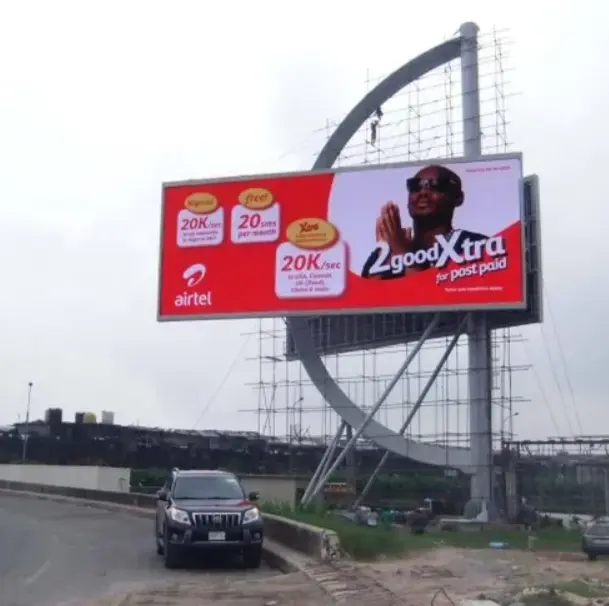
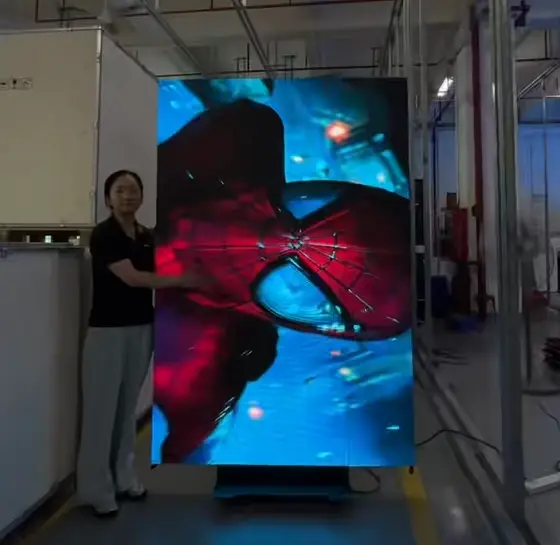
A 3m x 6m outdoor LED billboard provides an 18 m² digital advertising surface, but the purchase price depends on more than screen size. For a B2B buyer, a realistic budget must account for pixel pitch, daylight brightness, weather protection, the supporting structure, shipping, and installation. As an initial planning reference, supplier-published 2026 guides show outdoor LED display hardware prices ranging from approximately US$250 to US$1,100 per m² across several common pixel pitches and product configurations. This is an industry benchmark, not a verified quotation for a complete 18 m² billboard.
The first purchasing decision is whether you need the LED display hardware alone or a complete installation-ready solution. A factory quotation may cover LED cabinets, receiving cards, power supplies, and a control system while excluding steelwork, foundations, freight, customs duties, and local construction. Comparing quotations without checking these inclusions can make a cheaper offer considerably more expensive by the time the billboard is operational.
1. How Much Does a 3m x 6m Outdoor LED Billboard Cost?
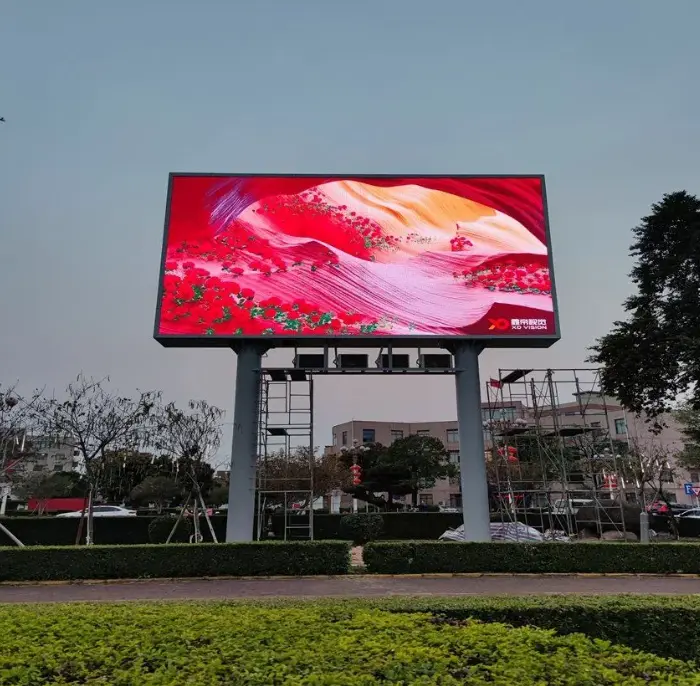
The 3m x 6m outdoor LED billboard price varies according to image resolution, component quality, brightness, cabinet construction, and project scope. A highway advertising screen viewed from a substantial distance may use a different configuration from a roadside display intended for closer viewing.
For preliminary budgeting, published supplier guides provide useful reference points. The figures below are indicative hardware benchmarks from 2026 supplier publications, not confirmed SoStron prices or guaranteed offers.
| Outdoor LED configuration | Indicative hardware price (USD/m²) | Estimated hardware budget for 18 m² | Typical application |
|---|---|---|---|
| P10 outdoor LED display | $250–$600 | $4,500–$10,800 | Highway and long-distance advertising |
| P8 outdoor LED display | $300–$950 | $5,400–$17,100 | Large roadside billboards |
| P6 outdoor LED display | $350–$1,100 | $6,300–$19,800 | Urban advertising and medium-distance viewing |
| P5 outdoor LED display | $450–$1,050 | $8,100–$18,900 | Commercial facades and closer viewing |
Source basis: published 2026 price guides from RMG LED and NPL. The ranges reflect different supplier estimates and product configurations, not a unified market quotation. Hardware budgets are derived from the published per-square-meter ranges and an 18 m² display face.
The price ranges overlap because pixel pitch is not the only cost driver. Cabinet materials, LED components, power supplies, brightness specifications, maintenance design, order quantity, and warranty terms can all change the final quotation. The table is therefore a starting point for supplier discussions, not a substitute for a bill of materials.
Outdoor LED Billboard Price by Pixel Pitch: P6, P8, and P10
Pixel pitch is the distance, measured in millimeters, between the centers of adjacent pixels. A smaller pitch produces a denser image and improves detail at closer viewing distances, but it generally requires more LEDs and increases hardware cost.
For a 3 m × 6 m digital billboard, the right specification should follow the audience’s viewing conditions rather than the assumption that the highest resolution is always best.
| Evaluation factor | P6 outdoor LED billboard | P8 outdoor LED billboard | P10 outdoor LED billboard |
|---|---|---|---|
| Pixel density | Approximately 27,778 pixels/m² | Approximately 15,625 pixels/m² | Approximately 10,000 pixels/m² |
| Relative image detail | Higher | Medium | Lower |
| Suitable viewing conditions | Relatively closer viewing | Medium-to-long viewing distances | Longer viewing distances |
| Budget implication | Typically higher hardware cost | Middle-ground configuration | Often more economical |
| Commercial consideration | Useful when image detail matters at closer range | Balances resolution and budget for many roadside sites | Can reduce unnecessary resolution costs for distant audiences |
Pixel densities are theoretical values for square pixel grids and may vary slightly by product implementation. Viewing suitability is indicative; actual results depend on content, viewing angle, traffic speed, and the minimum viewing distance.
LED Billboard Hardware Cost vs. Turnkey Installation Cost
An LED display is only one part of an outdoor advertising installation. A complete project may require civil engineering, structural steel, electrical distribution, lifting equipment, networking, and site-specific approvals.
| Cost component | Hardware-only supply | Complete project considerations | Why it matters to buyers |
|---|---|---|---|
| LED display cabinets and modules | Usually included | Must match the specified dimensions and pixel pitch | Determines image quality and basic display functionality |
| Control system and power supplies | Depends on the quotation | Verify controller capacity, connectivity, and electrical requirements | Avoids unexpected equipment purchases |
| Steel structure and foundations | Usually excluded | Requires site-specific engineering and construction | Supports the screen safely under local environmental loads |
| Freight and insurance | Depends on Incoterms | Includes international transport and any agreed cargo insurance | Affects landed cost and delivery risk |
| Customs, taxes, and permits | Usually destination-dependent | Varies by country and project | Can materially change the overall investment |
| Installation and commissioning | Usually excluded from hardware-only pricing | May require cranes, access equipment, electricians, and local contractors | Determines whether the display can be safely operated |
| Warranty and spare parts | Depends on the offer | Check coverage, response arrangements, and replacement logistics | Affects maintenance risk and downtime |
A useful purchasing rule: Compare quotations on the same technical specification and delivery scope. A hardware-only price should never be compared directly with a turnkey price as though both cover the same product.
What Is Included in a Manufacturer’s Price Quote?
Before placing an order, ask the manufacturer to identify the exact supply scope in writing. The phrase “outdoor LED billboard price” can describe anything from display cabinets supplied at the factory to a fully installed digital advertising system.
A comparable quotation should specify the display dimensions, pixel pitch, brightness, cabinet material, control system, power requirements, warranty, spare parts, delivery terms, and installation responsibilities. For international B2B buyers, the delivery term matters: EXW, FOB, and DAP describe different allocations of transport responsibilities, costs, and risks.
Based on our experience with outdoor LED display project planning, an itemized quotation is more valuable than an attractive headline price. It allows procurement teams to identify missing components before they become additional expenses.
2. Which Pixel Pitch Is Best for an 18 m² Outdoor LED Screen?
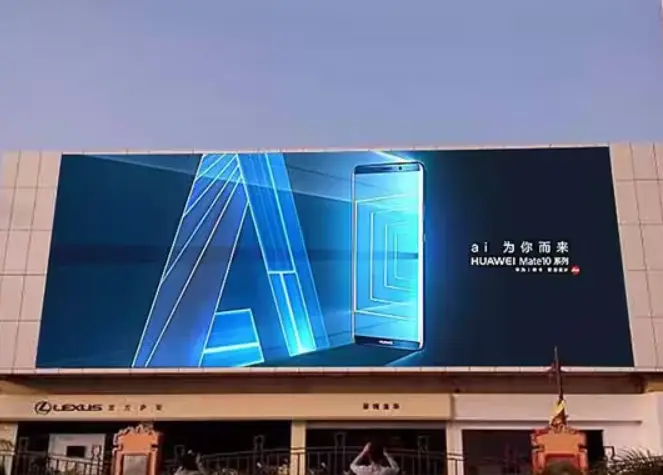
Selecting the correct pixel pitch is one of the most consequential decisions when specifying an outdoor LED billboard. It determines how much image detail the audience can see at a given distance and influences the display’s hardware cost.
For a 3m x 6m outdoor LED billboard, P6, P8, and P10 are useful configurations to compare. However, the appropriate choice depends on whether the screen faces highway traffic, an urban road, a pedestrian plaza, or a commercial building.
P6 vs. P8 vs. P10 Outdoor LED Billboard Resolution
The following comparison illustrates the practical differences between three common outdoor configurations.
| Specification | P6 | P8 | P10 |
|---|---|---|---|
| Pixel pitch | 6 mm | 8 mm | 10 mm |
| Approximate pixel density | 27,778 pixels/m² | 15,625 pixels/m² | 10,000 pixels/m² |
| Approximate pixel matrix for an exact 3 m × 6 m face | 500 × 1,000 | 375 × 750 | 300 × 600 |
| Image detail | Higher | Intermediate | Lower |
| Relative hardware cost | Generally higher | Intermediate | Generally lower |
| Typical consideration | Urban roadside advertising | General outdoor advertising | Long-distance advertising |
Pixel matrices are theoretical examples assuming exact dimensions and uniform pixel spacing. Actual cabinet and module dimensions may require adjustments to the nominal screen size.
The commercial trade-off is straightforward. P6 can deliver finer detail when pedestrians or nearby traffic need to read smaller text. P8 offers a compromise between resolution and investment for many roadside applications. P10 may be appropriate when viewers are farther away and the content uses large text, bold graphics, and simple messages.
However, pixel pitch alone does not determine readability. Content design, contrast, screen brightness, viewing angle, and the time available to see an advertisement also matter.
How Viewing Distance and Traffic Speed Affect Pixel Pitch
A billboard beside a highway has a different viewing environment from a screen outside a shopping mall. Drivers may see the display for only a few seconds, while pedestrians can remain nearby for longer.
| Installation environment | Main viewing consideration | Specification priority | Commercial implication |
|---|---|---|---|
| Highway or freeway | Long-distance viewing and short exposure time | Legible content, suitable pitch, high outdoor visibility | Avoid paying for resolution that viewers cannot meaningfully appreciate |
| Urban roadside | Mixed viewing distances and moving traffic | Balanced pitch, brightness, contrast | Support both message recognition and reasonable hardware costs |
| Shopping center exterior | Potentially closer viewing | Greater image detail where needed | A finer pitch may improve the presentation of product imagery and promotional content |
| Building facade | Mounting height, viewing angle, and distance | Pixel pitch matched to the actual sightlines | Prevent unnecessary resolution expenditure |
| Pedestrian plaza | Close viewing and longer dwell time | Fine text and image detail where commercially relevant | Higher resolution may support more detailed creative content |
According to published outdoor billboard guidance from Aurora Signage, highway installations commonly use coarser pitches than urban applications with closer viewers. These are application-specific recommendations rather than universal engineering rules.
For procurement, the better approach is to provide the manufacturer with the nearest expected viewing distance, the primary audience, the installation height, and representative advertising content. This allows the supplier to recommend a suitable pitch rather than simply quote the most expensive configuration.
How to Confirm Resolution and Cabinet Compatibility
An exact 3 m × 6 m display is not automatically compatible with every cabinet or module format. Standard LED cabinets have fixed dimensions, and the selected configuration must accommodate those dimensions while delivering the required screen area and resolution.
Before approving a drawing, confirm:
- The finished visible display area and overall external dimensions.
- The number of cabinets and modules required.
- The actual horizontal and vertical pixel resolution.
- The mounting method and maintenance access.
- The position of power and data connections.
- Whether the quoted dimensions include the cabinet frame or refer only to the visible display face.
This check protects buyers from ordering a screen whose nominal dimensions, actual pixel matrix, and supporting structure do not match the intended installation.
3. What Outdoor LED Billboard Specifications Should Buyers Check?
Pixel pitch establishes the image resolution, but it does not establish whether the screen will perform reliably outdoors. A commercial billboard must also maintain visibility in daylight, resist environmental exposure, dissipate heat, and remain practical to service.
For system integrators and DOOH operators, the goal is to select specifications that support dependable operation without paying for features that the site does not require.
Brightness in Nits: Is 5,000–10,000 Nits Necessary?
Brightness is measured in nits, equivalent to candelas per square meter. Outdoor LED displays need sufficient luminance to remain visible against ambient daylight, but the required level depends on direct sunlight, screen orientation, surrounding buildings, and the intended operating schedule.
Published outdoor display guides commonly identify approximately 5,000–6,500 nits as a reference range for conventional outdoor applications, with higher outputs considered for demanding sunlight conditions. These figures are starting points for product selection, not a universal minimum for every installation.
| Site condition | Brightness selection consideration | Commercial benefit |
|---|---|---|
| Shaded exterior | Assess actual ambient light and contrast requirements | Avoid unnecessary brightness expenditure |
| Open roadside with direct sunlight | Verify daylight visibility and maximum luminance | Help advertisements remain legible during daytime |
| High-glare or highly exposed location | Evaluate orientation, reflections, and available brightness control | Reduce the risk of washed-out content |
| Urban location with nighttime operation | Check dimming capability and applicable local restrictions | Balance visibility, operating costs, and neighboring properties |
A higher brightness specification can improve visibility under demanding conditions, but it may also increase power requirements and thermal-management demands. The benefit depends on whether the additional output is actually needed at the site.
For this reason, request the manufacturer’s rated brightness, measurement conditions, and applicable product datasheet. Do not compare headline brightness figures without confirming that the quoted products use comparable measurement methods.
IP65 Protection, Weatherproofing, and Operating Temperature
Outdoor billboards face rain, dust, humidity, temperature fluctuations, and potentially corrosive environments. A suitable enclosure and protection design help reduce failures, protect internal components, and limit maintenance interruptions.
The IP code is defined by IEC 60529. An IP65 rating indicates dust-tight protection and protection against water jets under specified test conditions. It does not mean that a display can be submerged or that every part of a completed installation automatically meets IP65.
When evaluating an outdoor LED billboard, verify the following:
- Front and rear protection: Confirm which sections of the assembled display carry the stated rating.
- Sealing and drainage: Check how water is prevented from entering or accumulating in vulnerable areas.
- Thermal management: Confirm the rated operating temperature and cooling design.
- Corrosion resistance: Consider the local climate, cabinet coating, fasteners, and supporting structure.
- Electrical protection: Verify grounding, power distribution, and other safety requirements with the responsible electrical professionals.
These specifications have direct business consequences. Better-matched environmental protection can reduce weather-related service calls, while an appropriate thermal design helps the screen operate within its documented limits.
Do not assume that an outdoor product’s IP rating alone guarantees reliability. The quality of the enclosure, installation, cable entries, maintenance practices, and site preparation also affects real-world performance.
Cabinet Material, Maintenance Access, and Serviceability
Cabinet design influences weight, heat dissipation, installation requirements, and the time needed to replace a failed component. These details become particularly important for billboards mounted at height or in locations where maintenance access is restricted.
| Design consideration | What buyers should verify | Potential business benefit |
|---|---|---|
| Steel cabinet | Weight, corrosion protection, structural compatibility | May suit installations where the structure and budget support the selected design |
| Aluminum cabinet | Weight, rigidity, thermal design, and environmental suitability | Can simplify handling or support heat dissipation, depending on the design |
| Front maintenance | Access to modules and components from the display face | Useful where rear access is limited |
| Rear maintenance | Required clearance and safe service access | May suit installations with accessible rear working space |
| Spare modules and components | Availability, compatibility, and replacement lead time | Helps reduce potential downtime |
| Modular construction | Replacement procedures and component interchangeability | Can make maintenance more manageable |
The lowest-weight cabinet is not automatically the best option, and a front-service design is not always necessary. Selection should reflect the structural design, available access, maintenance frequency, and local service arrangements.
For a billboard operator earning revenue from advertising inventory, maintenance accessibility is an operational consideration rather than a minor product detail. A display that is difficult to service may create avoidable labor costs and extended periods of lost advertising availability.
4. Which Installation Costs Can Increase Your 3m x 6m LED Billboard Budget?
The display hardware is only one component of the total project investment. The installation method, local construction requirements, freight arrangements, and electrical infrastructure can substantially change the final cost.
A supplier should therefore distinguish the price of the screen from the cost of making the entire billboard ready for operation.
Freestanding Steel Structure vs. Wall-Mounted Installation
A freestanding billboard generally requires a purpose-designed supporting structure and foundation. A wall-mounted installation may use an existing building structure, but that structure must still be assessed for its suitability to support the additional loads.
| Installation factor | Freestanding billboard | Wall-mounted billboard |
|---|---|---|
| Primary support | Dedicated steel structure and foundation | Existing building structure or engineered mounting framework |
| Structural assessment | Site-specific wind and foundation design | Building capacity, attachment points, and wind loading |
| Civil work | May require excavation and foundation construction | May require reinforcement or mounting modifications |
| Installation access | May require cranes or lifting equipment | Depends on height, facade access, and equipment requirements |
| Maintenance planning | Access to the rear or front of the display | Clearance and access may be constrained by the building |
| Main cost uncertainty | Foundation, steelwork, and site conditions | Building reinforcement, access, and mounting complexity |
The correct installation method depends on the property, local wind conditions, screen weight, mounting height, and maintenance requirements. Structural dimensions and connection details must be established by qualified professionals for the actual site.
For buyers, the commercial lesson is to establish the installation scope before accepting a hardware price. An inexpensive screen does not compensate for an unsuitable mounting design.
Wind Load, Foundation Design, and Structural Approval
Wind loading is a significant engineering consideration for outdoor advertising structures. The loads acting on a billboard depend on its location, height, geometry, exposure, supporting arrangement, and applicable design requirements.
A 3 m × 6 m screen has an 18 m² visible face, but that figure alone cannot establish the required foundation size, steel dimensions, or structural safety. Those decisions require site-specific engineering.
Before the structure is designed, provide the project team with:
- The installation address and available site information.
- The display dimensions, cabinet weight, and mounting configuration.
- The proposed installation height and orientation.
- Existing structural drawings, where applicable.
- Local wind-design requirements and relevant approval procedures.
- Access conditions for installation and future maintenance.
The commercial benefit of addressing these requirements early is straightforward: it reduces the risk of redesign, unexpected construction work, delayed approvals, and disputes over responsibility between the display supplier and local contractor.
Shipping, Customs, Electrical Work, and Local Permits
International procurement adds another layer of cost uncertainty. The factory price may exclude international freight, cargo insurance, import duties, destination taxes, electrical installation, and local permits.
The final scope should clearly identify who is responsible for each item and whether the quotation is based on EXW, FOB, DAP, or another agreed Incoterm. Buyers should also confirm delivery schedules, packaging requirements, destination voltage and frequency, control-system compatibility, and commissioning responsibilities.
Local approvals depend on the jurisdiction and site. Roadside billboards may be subject to advertising permits, zoning restrictions, road-safety requirements, or limits on nighttime brightness and display behavior. These must be checked with the relevant authorities before construction begins.
A well-prepared procurement package gives the manufacturer enough information to price the display accurately while allowing local contractors to estimate the work that falls outside the factory supply.
5. How Much Electricity Does a 3m x 6m Outdoor LED Billboard Use?
Electricity is an ongoing operating expense that should be evaluated alongside the initial purchase price. For an 18 m² outdoor LED display, actual consumption depends on the LED components, brightness settings, content, operating hours, ambient temperature, and control strategy.
The key distinction is between maximum rated power and average operating power. Maximum power helps determine electrical infrastructure requirements, while average power is more useful for estimating routine electricity expenses. Neither figure should be substituted for the other in a supplier comparison.
Maximum Power vs. Average Power Consumption
When comparing outdoor LED billboard specifications, ask the manufacturer to provide both maximum and typical power consumption under clearly defined conditions.
| Power specification | What it describes | How buyers should use it |
|---|---|---|
| Maximum power consumption | Potential demand under specified high-load conditions | Assess power distribution, circuit capacity, and electrical infrastructure |
| Average power consumption | Expected demand under a stated operating scenario | Estimate routine energy use and electricity expenses |
| Standby consumption | Power used when the display is not actively showing content but remains energized | Evaluate overnight or low-activity operating costs |
| Brightness setting | The luminance level at which the display operates | Understand how display settings affect visibility and energy demand |
| Operating schedule | Daily operating hours and brightness profile | Build a realistic electricity budget |
For a meaningful comparison, the manufacturer’s figures should refer to the actual model and configuration being quoted. Content brightness and operating conditions can significantly affect consumption, so a generic watts-per-square-meter figure is not sufficient for a reliable operating-cost forecast.
How Brightness Scheduling Affects Electricity Costs
An outdoor billboard does not necessarily need to operate at maximum brightness throughout the day. A suitable brightness-control strategy can maintain daytime visibility while reducing unnecessary output during darker periods.
For DOOH operators, the commercial value comes from matching display performance to the environment rather than simply specifying the highest possible brightness.
Consider these operating practices:
- Use ambient-light sensors or scheduled brightness settings where supported.
- Establish appropriate nighttime brightness limits based on local requirements.
- Avoid running maximum brightness when the environment does not require it.
- Monitor operating temperature and display status to identify potential issues.
- Review electricity consumption against actual operating hours and the local tariff.
These measures should be implemented according to the display’s documented capabilities. Automatic brightness control is useful only when it is correctly configured and compatible with the operating requirements of the site.
Maintenance, Spare Parts, and Long-Term Operating Expenses
Electricity is only one component of the total cost of ownership. Maintenance labor, replacement modules, power supplies, control components, access equipment, and advertising downtime can also affect the economics of an outdoor LED billboard.
| Operating expense | What should be assessed | Business impact |
|---|---|---|
| Electricity | Average power, operating hours, local tariff | Recurring energy expenditure |
| Preventive maintenance | Inspection frequency and service accessibility | Helps identify problems before they become major failures |
| Spare parts | Availability, compatibility, delivery lead time | Affects repair time and inventory requirements |
| Technical support | Response arrangements and troubleshooting capability | Influences the time needed to restore operation |
| Downtime | Lost advertising availability and potential revenue | Affects commercial performance |
| Software and connectivity | CMS licensing, network connectivity, and support where applicable | Influences ongoing management costs |
For a billboard operator selling advertising inventory, the financial impact of downtime can exceed the cost of an individual replacement component. Buyers should therefore evaluate serviceability, spare-parts availability, and support arrangements before selecting a supplier.
6. How Do You Choose a 3m x 6m LED Billboard for Your Application?
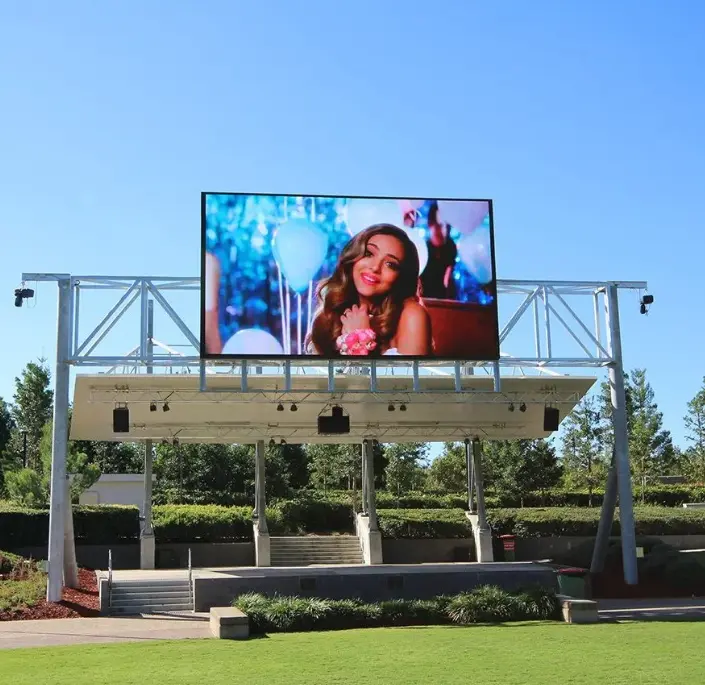
The most suitable outdoor LED billboard is the one that meets the viewing, environmental, structural, and commercial requirements of its intended location. A specification suitable for a highway may not be appropriate for a shopping center, while a building-mounted screen may require a different engineering approach from a freestanding roadside display.
Highway and Long-Distance DOOH Advertising
Highway and long-distance advertising installations generally prioritize visibility, clear messaging, structural safety, and maintainability.
When evaluating a screen for this environment, consider:
- Whether P8 or P10 provides sufficient detail at the actual viewing distance.
- Whether the brightness specification is appropriate for direct sunlight.
- Whether the supporting structure has been engineered for the site’s wind conditions.
- Whether the installation meets applicable road-safety and advertising regulations.
- Whether technicians can safely access the display for maintenance.
The business objective is not to maximize every specification. It is to deliver a clear advertising message while controlling acquisition, installation, and operating costs.
Urban Roadside, Shopping Centers, and Commercial Facades
Urban commercial locations may expose the display to mixed viewing distances, pedestrians, nearby buildings, reflections, and nighttime operating restrictions.
A finer pixel pitch may be justified when viewers can approach the screen closely or when the advertising content contains detailed product imagery. However, a finer pitch does not automatically improve commercial results if most viewers see the display from far away or only briefly.
For facade installations, the mounting structure, attachment points, building condition, and access for future maintenance require particular attention. A visually attractive display is only a sound investment when the installation is also practical to operate and service.
Single-Sided vs. Double-Sided Outdoor LED Billboards
A single-sided display may be sufficient when the audience approaches from one direction. A double-sided billboard can provide advertising exposure to traffic or pedestrians approaching from different directions, but it introduces additional hardware and engineering considerations.
| Comparison factor | Single-sided billboard | Double-sided billboard |
|---|---|---|
| Display faces | One | Two |
| Initial hardware investment | Generally lower | Generally higher |
| Structural requirements | Depend on the screen and mounting design | Must accommodate both faces and the complete assembly |
| Power requirements | Based on one display face and its operating conditions | Higher potential demand when both faces operate simultaneously |
| Maintenance | One display face to service | Two display faces and associated components to maintain |
| Advertising opportunity | One primary viewing direction | Potential exposure from two directions |
| Best evaluation criterion | Suitability for the site’s main sightline | Whether the additional exposure justifies the incremental investment |
For double-sided configurations, request a separate power budget and itemized quotation. The commercial decision should reflect actual audience visibility and advertising demand, not simply the number of display faces.
7. How Can You Calculate the Return on an Outdoor LED Billboard?
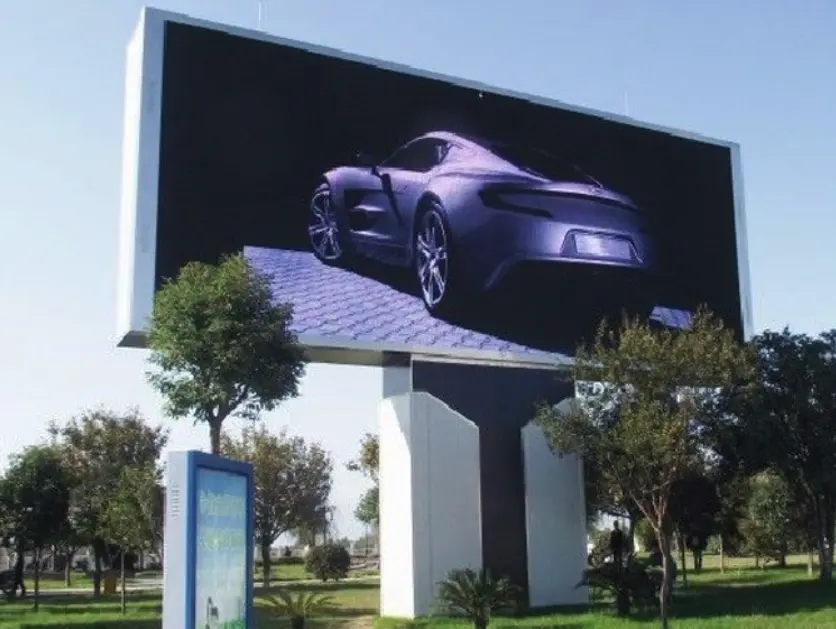
An outdoor LED billboard is both a display system and a potential revenue-generating asset. Its commercial performance depends on the local advertising market, occupancy, pricing, operating expenses, and the total investment required to launch the site.
A credible ROI assessment begins with verified business assumptions. Supplier estimates alone cannot establish how quickly a billboard will recover its cost.
Digital Billboard Revenue, Occupancy, and Advertising Inventory
For DOOH operators, potential revenue depends on the number of advertising slots offered, the selling price per slot, occupancy, campaign duration, and the proportion of inventory sold directly or through advertising networks.
Before committing to a purchase, investigate:
- Local advertiser demand and competitive inventory.
- Expected occupancy based on actual market evidence.
- The selling price achievable for each advertising slot.
- The number of campaigns the operating schedule can support.
- Site lease expenses and any revenue-sharing arrangements.
- The permissions required to display commercial advertising.
A screen in a high-traffic location does not automatically produce high revenue. Audience exposure, advertiser demand, campaign pricing, and the ability to sell available inventory must all support the business case.
Total Cost of Ownership vs. Initial Purchase Price
The initial display quotation should be evaluated against the full cost of operating the billboard over the intended ownership period.
Relevant expenses include the LED display, supporting structure, installation, freight, customs charges, electricity, maintenance, spare parts, connectivity, and any applicable software or service fees.
For a fair comparison, request the same technical scope and operating assumptions from each supplier. This makes it easier to identify whether a lower purchase price reflects genuine efficiency or simply excludes costs that another supplier has already included.
Which Project Assumptions Must Be Verified Before Investing?
A reliable financial assessment should distinguish confirmed expenses from estimates and projected revenue.
Use documented quotations for hardware and installation where possible. Obtain the applicable electricity tariff, confirm lease and permit costs, and use evidence-based advertising assumptions rather than optimistic occupancy forecasts.
If the business case depends on an assumed advertising rate or future occupancy level, identify it explicitly as an estimate. Scenario analysis can help investors understand how changes in occupancy, operating costs, or advertising prices affect the project’s financial performance.
8. Why Choose SoStron for a 3m x 6m Outdoor LED Billboard?
Selecting a manufacturer involves more than comparing the price of the LED cabinets. Buyers also need confidence in the product configuration, manufacturing process, documentation, delivery scope, and technical support available throughout the project.
SoStron positions itself as a global LED display manufacturer and commercial display solution provider, offering product design, manufacturing, engineering support, installation guidance, and after-sales technical services.
Ares 3 Outdoor LED Display: Configuration and Application Suitability
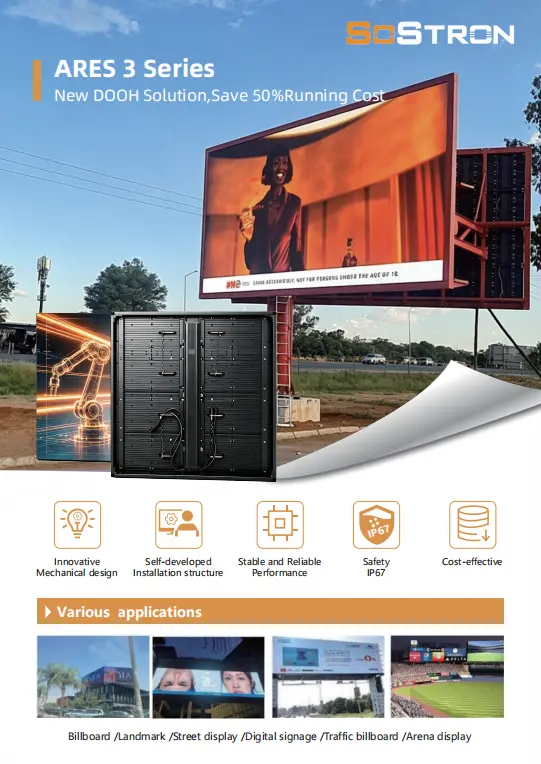
SoStron’s Ares 3 series is positioned for outdoor LED billboard applications, including digital advertising and other outdoor commercial displays.
For a proposed 3 m × 6 m installation, the appropriate configuration should be confirmed against the current product datasheet and project requirements. Buyers should verify:
- Available pixel pitches and compatible cabinet dimensions.
- Rated brightness and the conditions under which it is specified.
- Weather-protection ratings for the relevant components.
- Maximum and typical power consumption.
- Cabinet material, weight, and maintenance method.
- Control-system compatibility and spare-parts availability.
The Ares range should be evaluated on the basis of the actual model offered rather than assumptions about the entire product family. This gives procurement teams a clear technical basis for comparing it with competing products.
Engineering Support, Manufacturing, Testing, and Installation Guidance
An outdoor LED billboard project typically involves several stages, from initial requirements through production, delivery, installation, and commissioning.
SoStron’s stated service scope includes solution design, manufacturing, engineering support, installation guidance, and after-sales technical assistance. The precise deliverables should be confirmed in the quotation and project agreement.
Ask the supplier to clarify whether the proposed scope includes:
- Product configuration and technical drawings.
- Cabinet layout and power-distribution information.
- Production inspection and documented testing.
- Export packaging and shipping coordination.
- Installation instructions and remote technical support.
- Warranty terms and replacement-component arrangements.
Where a project requires structural calculations, foundation design, or local regulatory approval, confirm which tasks belong to SoStron and which must be completed by qualified local contractors or engineering professionals.
What Information Does SoStron Need to Prepare an Accurate Quote?
A complete request for quotation helps the manufacturer recommend an appropriate display configuration and reduces the risk of repeated revisions.
Prepare the following project information before requesting a price:
| Information required | Example of what to provide | Why it matters |
|---|---|---|
| Display dimensions | 3 m × 6 m visible display area | Establishes the required screen size |
| Destination | Country and delivery city | Supports freight and delivery planning |
| Application | Highway, urban roadside, facade, or commercial property | Determines the relevant design considerations |
| Viewing conditions | Approximate viewing distance and screen height | Helps determine pixel pitch |
| Environment | Direct sunlight, temperature range, dust, rain, and wind exposure | Informs product selection and site engineering |
| Mounting arrangement | Freestanding, wall-mounted, or existing structure | Clarifies the installation scope |
| Commercial scope | Hardware only, delivered supply, or turnkey installation | Makes quotations comparable |
| Operating requirements | Daily operating hours and brightness expectations | Supports power and operational planning |
| Project schedule | Target delivery and installation dates | Helps assess manufacturing and logistics requirements |
A well-defined request makes it easier to compare offers on a like-for-like basis. It also gives the manufacturer a better opportunity to identify missing requirements before they affect the project budget.
9. Frequently Asked Questions About 3m x 6m Outdoor LED Billboards
How much does a 3m x 6m outdoor LED billboard cost?
A 3 m × 6 m display has a nominal face area of 18 m². Published supplier guides provide indicative outdoor LED hardware price ranges, but the final cost depends on pixel pitch, brightness, cabinet design, control equipment, and quotation scope. A complete installation may also require steelwork, foundations, freight, electrical work, and permits. Request an itemized quotation based on the intended location and installation method rather than relying on a single generic price.
What is the best pixel pitch for an 18 m² LED billboard?
P6, P8, and P10 are useful configurations to compare. P6 offers greater pixel density for closer viewing, P8 provides an intermediate option, and P10 may be suitable for more distant audiences. The correct choice depends on viewing distance, traffic speed, advertising content, and budget. Ask the manufacturer to recommend a pitch using the actual site dimensions and expected viewing conditions.
How many pixels does a 3m x 6m P8 LED screen have?
For a theoretical 3,000 mm × 6,000 mm display with an 8 mm pixel pitch, the nominal matrix is 375 × 750 pixels, or 281,250 pixels in total. Actual resolution may differ because LED cabinets and modules have fixed dimensions. Confirm the final pixel matrix in the manufacturer’s technical drawing before placing an order.
How much power does a 3m x 6m outdoor LED billboard consume?
There is no single reliable consumption figure for every 18 m² display. Power demand depends on the model, brightness setting, content, operating hours, and environmental conditions. Request the rated maximum and average power consumption for the exact configuration. Use average consumption to estimate routine electricity expenses, and use the manufacturer’s electrical requirements when planning the power supply and distribution system.
Does the quoted LED billboard price include the steel structure and installation?
Not necessarily. Many manufacturer quotations cover the display hardware and selected control components but exclude structural steel, foundations, freight, customs duties, electrical work, installation labor, and local permits. Confirm the included equipment, delivery terms, warranty, and installation responsibilities in writing. For international projects, an itemized quotation with a clearly defined Incoterm helps prevent costly misunderstandings.
Expert Verdict: Specify the Site Before You Specify the Screen
For a 3 m × 6 m outdoor LED billboard, start with the viewing distance, installation method, environmental conditions, and total project budget. Then compare P6, P8, and P10 configurations using verified product specifications and equivalent quotation scopes.
My recommendation: Do not select a billboard solely because it has the lowest price per square meter. Choose the configuration that meets the site’s visibility and engineering requirements, has manageable operating costs, and can be maintained reliably over its service life.
For an accurate SoStron quotation, provide the destination, mounting arrangement, viewing distance, preferred specifications, and required delivery scope. Those details are what turn a generic price estimate into a useful purchasing decision.
Price Disclaimer
Please note that all prices and cost ranges mentioned in this article are indicative estimates based on published supplier information and general industry references. They are provided for preliminary budgeting purposes only and do not constitute a formal quotation or guaranteed selling price. Actual costs may vary depending on pixel pitch, product configuration, component quality, order quantity, shipping terms, local taxes, installation requirements, and project-specific conditions. Please contact the manufacturer for a customized quotation based on your technical specifications and delivery requirements.
References:
FHWA — Manual on Uniform Traffic Control Devices (MUTCD)
U.S. Department of Energy — LED Basics