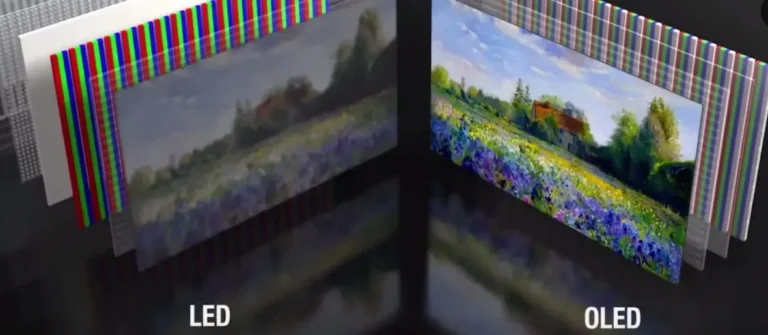
Which Display Uses the Least Power?
If the primary purpose is displaying static content, E-paper (electronic paper) is generally the display technology with the lowest power consumption. However, if continuous video playback, dynamic advertising, or high-brightness commercial content is required, LCD, OLED, and direct-view LED displays may be more suitable.
The energy consumption of different display technologies depends on display area, brightness, image content, pixel density, driving systems, and operating hours. Therefore, when choosing an energy-efficient display, you should not focus on a single power consumption figure. Instead, you should evaluate the actual application scenario and long-term operating costs.
| Display Technology | Light Emission Method | Power Consumption Characteristics | Typical Applications |
|---|---|---|---|
| E-paper | Reflects ambient light | Extremely low power consumption when maintaining static images, with power required during refreshing | Electronic shelf labels, e-readers |
| LCD | Backlight illumination | The backlight system operates continuously, and power consumption depends on backlight brightness | Commercial monitors, televisions, information displays |
| OLED | Self-emissive pixels | Power consumption is closely related to image content and average brightness | High-end televisions, smartphones, professional displays |
| Direct-view LED | Direct light emission from LED pixels | Affected by brightness, pixel pitch, display content, and driving architecture | LED billboards, outdoor large-format displays, stage screens |
1. Power Consumption Principles of Four Mainstream Display Technologies
1. E-paper: A Low-Power Choice for Static Display Applications

E-paper uses bistable display technology. Electrical energy is required when updating the displayed image. However, once an image has been formed, the content can remain visible without continuous power supplied to the display-driving system.
This gives E-paper a significant energy-efficiency advantage in static information display applications.
Typical applications include:
-
Electronic shelf labels.
-
E-book readers.
-
Static public information boards.
-
Information display systems with infrequent updates.
However, E-paper is not an ideal choice if frequent image refreshing or continuous dynamic content playback is required.
2. LCD: Power Consumption Mainly Comes from the Backlight System
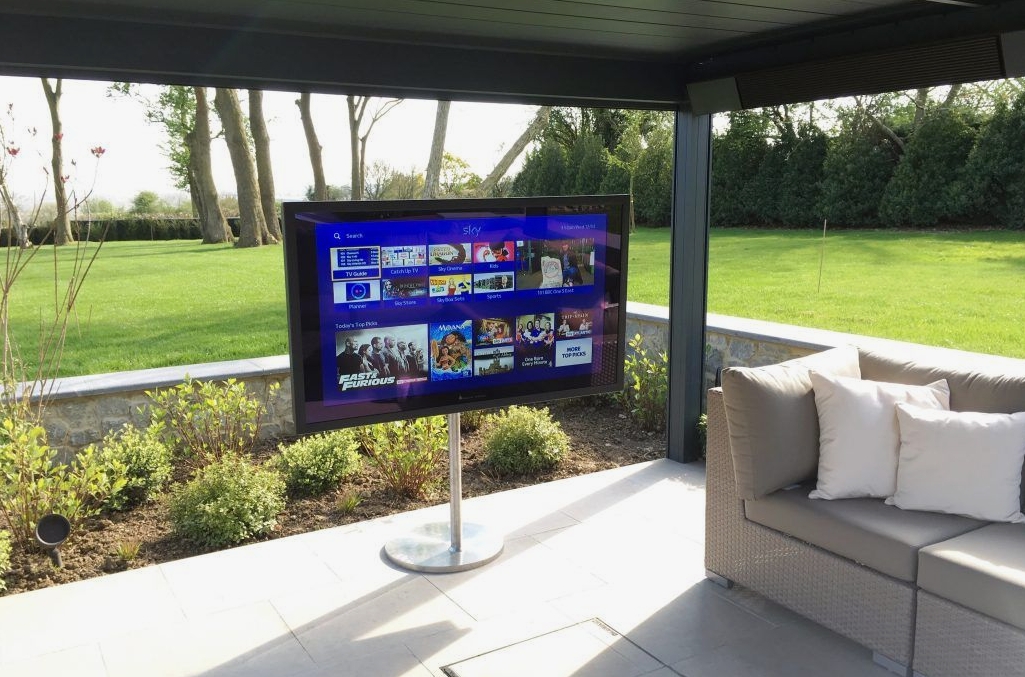
LCD pixels do not emit light independently. Instead, they require a backlight system to provide illumination.
Therefore, LCD power consumption is generally closely related to backlight brightness, screen size, backlight efficiency, and power supply design.
The power consumption of traditional LCD displays is relatively less affected by image content because the backlight usually operates continuously. However, products using local dimming or dynamic backlight control may have different energy consumption characteristics.
LCD displays are commonly used in:
-
Indoor commercial information displays.
-
Office monitors.
-
Televisions.
-
Indoor digital signage.
3. OLED: Power Consumption Is Directly Related to Display Content
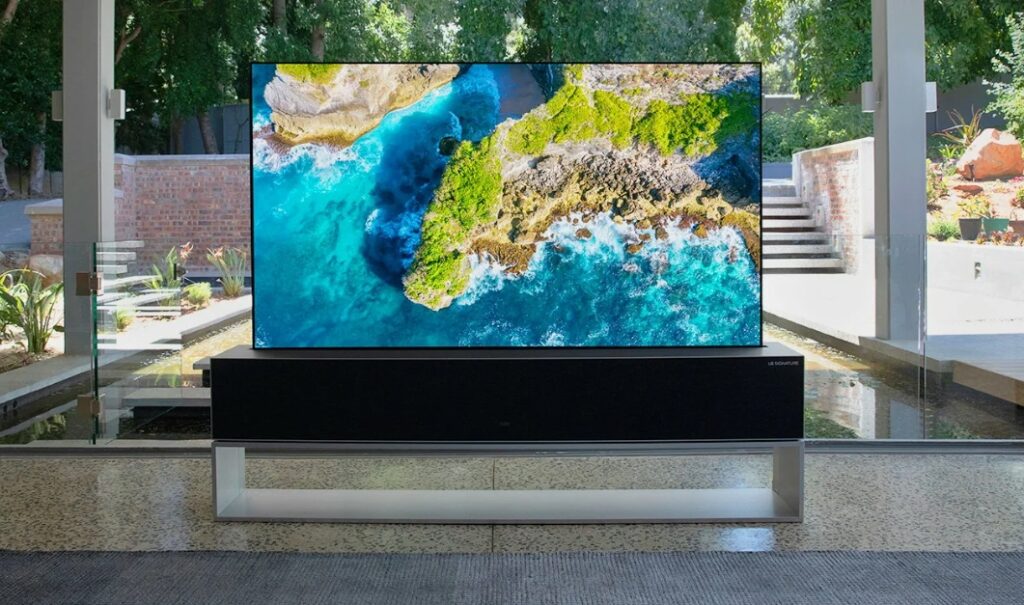
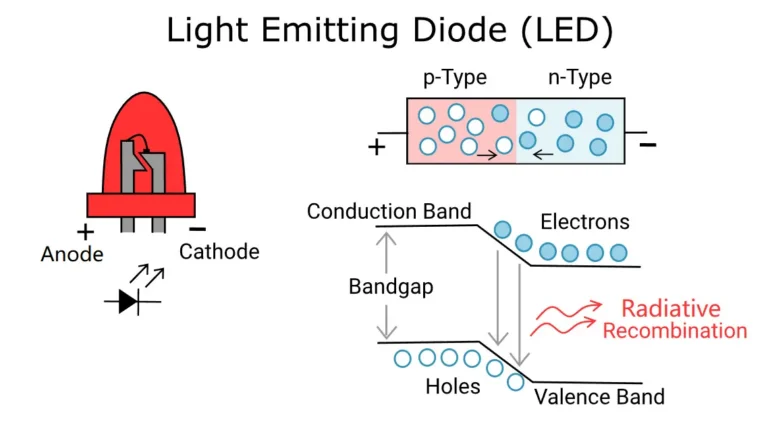
OLED uses self-emissive pixel technology, meaning each pixel can emit light independently.
When an image contains large black areas, the corresponding pixels can be turned off or have their brightness reduced. Therefore, displaying dark content is generally more favorable for reducing power consumption.
However, if large areas of bright white content are displayed at high brightness for extended periods, OLED power consumption may increase significantly.
OLED displays are commonly used in:
-
High-end televisions.
-
Professional visual displays.
-
High-contrast display equipment.
-
Applications requiring excellent black levels and color performance.
4. Direct-view LED: Suitable for Large-Format, High-Brightness Commercial Displays
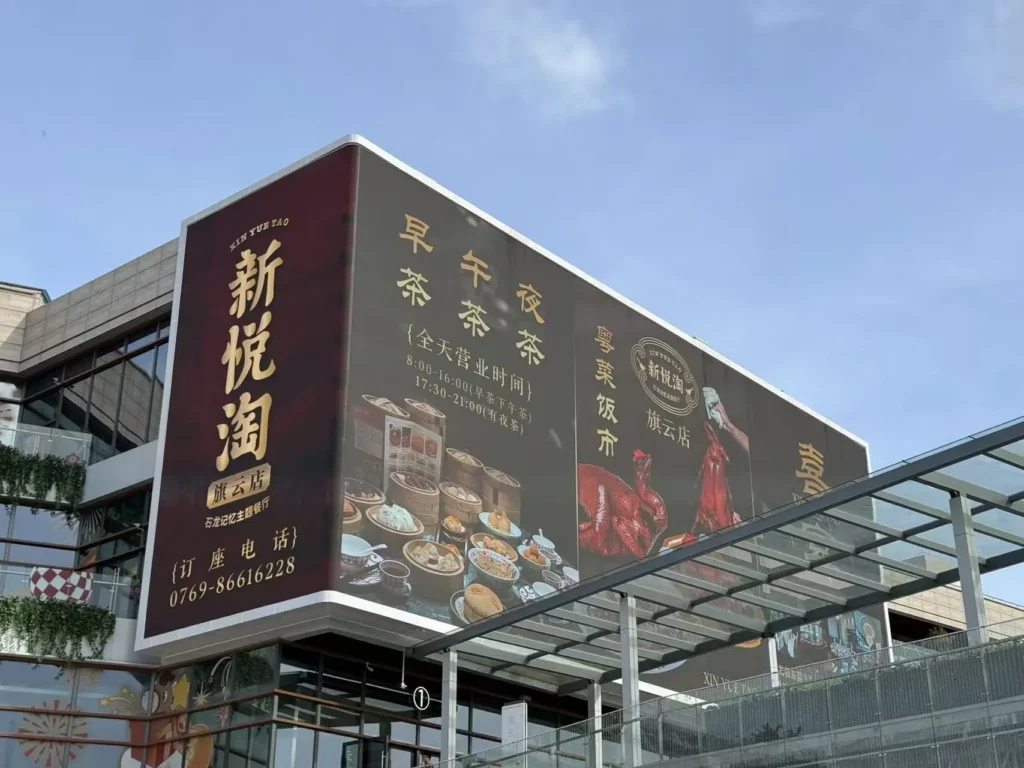
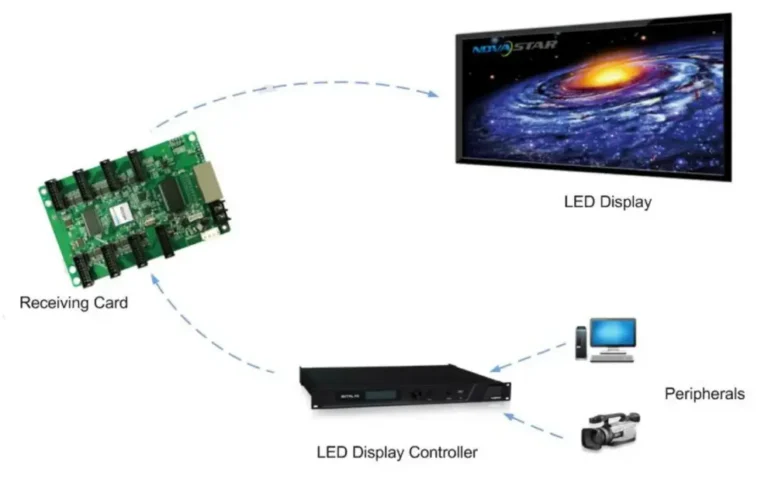
Direct-view LED displays produce light directly through LED pixels and do not rely on traditional LCD backlight systems.
Their power consumption is affected by several factors:
-
Pixel Pitch.
-
LED packaging type.
-
Display brightness.
-
Average image brightness.
-
Driving ICs and scanning methods.
-
Power conversion efficiency.
-
Thermal management design.
-
Playback content and operating hours.
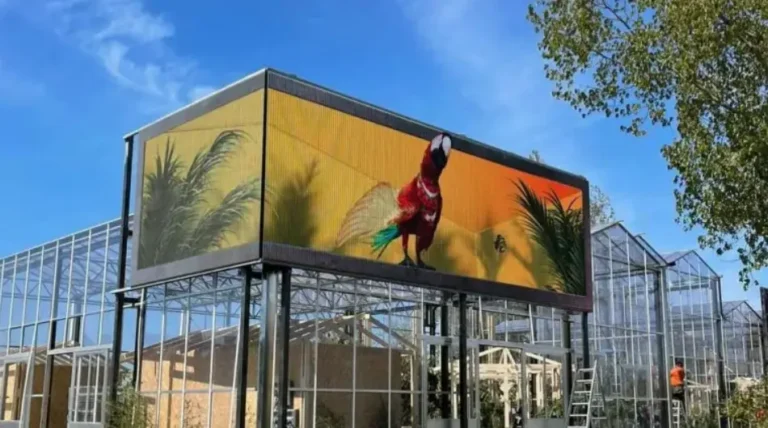
For outdoor advertising displays, brightness is an important factor affecting power consumption. Screens must maintain good visibility under natural lighting conditions. Therefore, brightness, image quality, and energy efficiency need to be balanced.
Direct-view LED displays are commonly used in:
-
Outdoor digital billboards.
-
Commercial building facade displays.
-
Sports stadium displays.
-
Stage and event displays.
-
Large-scale commercial display projects.
2. Six Key Factors Affecting Actual Display Power Consumption
1. Screen Size and Pixel Pitch
The larger the display area, the more display components are generally required, resulting in higher overall power consumption.
Pixel Pitch refers to the distance between the centers of two adjacent pixels. A smaller pixel pitch generally means more pixels per unit area, increasing the number of pixels that the driving system needs to control.
However, Pixel Pitch is not the only factor determining power consumption. Different LED packaging types, driving ICs, brightness configurations, and circuit designs also affect the final results.
2. Brightness (Nits)
Nits is an important unit used to measure display brightness.
Outdoor LED displays generally require higher brightness than indoor displays to overcome sunlight and ambient light interference. Higher brightness requirements usually increase the energy consumption of the display system.
When purchasing a display, the appropriate brightness should be determined according to the actual installation environment to avoid unnecessary electricity costs caused by excessive brightness.
3. Display Content
Different types of image content affect the average power consumption of a display.
For example:
-
Large areas of white content generally require higher light output.
-
Dark content may reduce the average power consumption of OLED and certain LED display systems.
-
High-brightness video advertisements may consume more electricity than dark static images.
Therefore, maximum power consumption does not directly represent average energy consumption during long-term operation.
4. Refresh Rate and Driving System
Refresh rate affects image presentation and driving methods, but it is not a simple standalone indicator for measuring display power consumption.
For LED displays, driving ICs, scanning methods, grayscale processing, and control systems all affect actual power requirements. When purchasing a display, these factors should be evaluated together with product specifications and actual operating conditions.
5. Power Supply Efficiency
The power supply converts incoming AC electricity into the DC power required by the display system. Energy losses occur during this conversion process.
High-efficiency power supplies help reduce system losses. Therefore, when comparing LED displays, power supply quality and overall power system design are also important evaluation factors.
6. Thermal Management Design
LED display systems generate heat during operation. A reasonable thermal management design helps maintain stable equipment operation and supports long-term reliability.
For outdoor LED displays, structural materials, heat dissipation paths, protection design, and installation environments all need to be considered together.
3. Average Power Consumption vs. Maximum Power Consumption: An Essential Distinction When Purchasing LED Displays
LED display specification sheets typically include Average Power Consumption and Maximum Power Consumption.
These two parameters serve different purposes.
| Parameter | Meaning | Main Application |
|---|---|---|
| Average Power Consumption | Average electrical power consumption | Estimating daily operating electricity costs |
| Maximum Power Consumption | Maximum electrical power consumption | Designing power distribution, cables, and power supply capacity |
For example, if a product specifies a maximum power consumption of 650 W, this does not mean that it continuously consumes 650 Wh every hour.
Actual electricity costs must be calculated based on the real operating power.
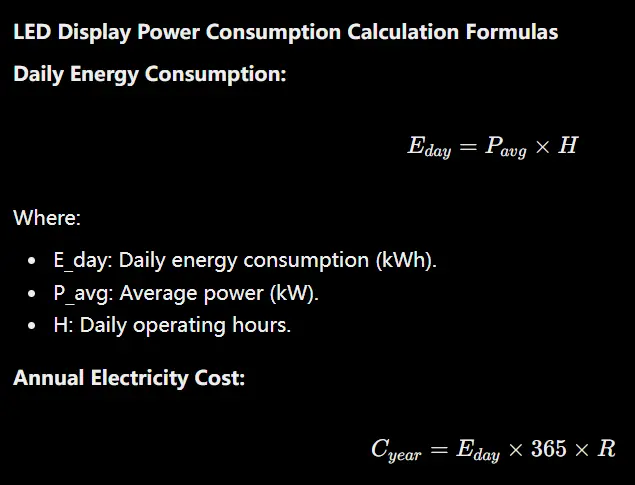
Where R represents the local electricity rate (cost per kWh).
When evaluating LED display energy consumption, it is recommended to focus on the following factors:
-
Average power consumption.
-
Maximum power consumption.
-
Display area.
-
Target brightness.
-
Display content.
-
Daily operating hours.
-
Power supply efficiency.
4. How Does Common Cathode Technology Help Reduce LED Display Power Consumption?
Common Cathode is an electrical connection and power supply architecture used in LED displays.
Its core principle is to manage the power supply for different LED colors, providing red, green, and blue LEDs with voltage conditions more suitable for their operating requirements, thereby reducing certain unnecessary voltage losses.
Differences Between Common Anode and Common Cathode
| Comparison Dimension | Common Anode | Common Cathode |
|---|---|---|
| Electrical Structure | RGB LEDs share a common anode | RGB LEDs share a common cathode |
| Power Supply Management | Uses the corresponding common anode driving architecture | Can optimize power supply for different LED colors |
| Voltage Control | Depends on the specific driving solution | Voltage management can be optimized through different power supply rails |
| Energy Efficiency Design | Depends on overall system design | Helps reduce circuit losses in specific system configurations |
The Common Cathode solution improves the energy efficiency of display systems by optimizing how LEDs receive electrical power.
For commercial LED displays that need to operate for extended periods, driving architecture, power supply efficiency, and brightness control are all important factors affecting long-term operating costs.
SoStron ARES 3: An Energy-Efficient LED Solution for Outdoor Commercial Displays
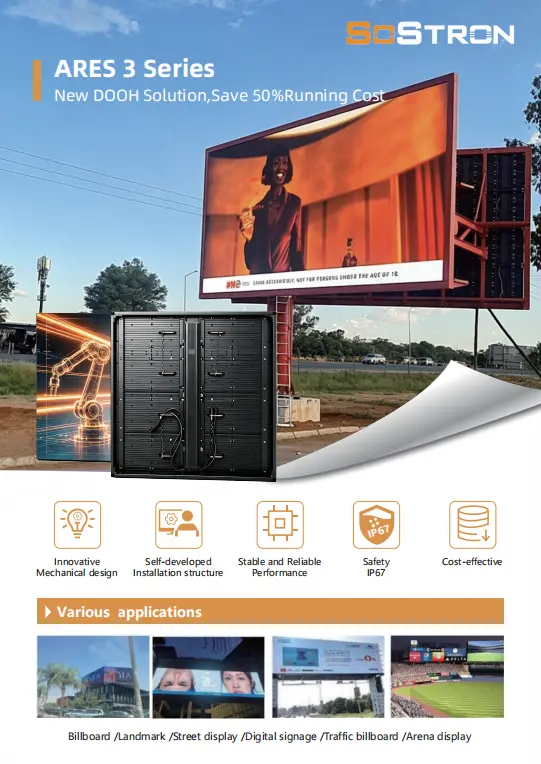
SoStron ARES 3 is an outdoor LED display product featuring a modular structure and Common Cathode technology. Combined with high-brightness display performance, an independently developed installation structure, and an aluminum cabinet design, it is suitable for various commercial outdoor display projects.
Its main product features include:
-
Common Cathode technology.
-
High-brightness LED display.
-
Independently developed installation structure.
-
All-aluminum structure and back panel.
-
Front and rear maintenance design.
-
IP67 protection rating.
-
Multiple Pixel Pitch configurations.
ARES 3 Product Technical Specifications
| Parameter | ARES 3 Product Specifications |
|---|---|
| Pixel Pitch | P2.9 / P3.9 / P4.8 / P6.2 / P7.8 / P10.4 |
| LED Type | SMD1415 / SMD1921 / SMD2727 |
| Pixel Density | 113,367 / 65,410 / 43,222 / 25,600 / 16,394 / 9,226 dots/m² |
| Module Size | 500 × 250 mm |
| Module Resolution | 168×84 / 128×64 / 104×52 / 80×40 / 64×32 / 48×24 |
| Panel Resolution | 336×336 / 256×256 / 208×208 / 160×160 / 128×128 / 96×96 |
| Panel Material | Aluminum (structure and back panel) |
| Panel Weight | 20 kg/m² |
| Service | Front & Rear |
| IP Rating | IP67 |
| Brightness – White LEDs | 5,000 / 6,500–7,500 / 6,500–8,000 nits |
| Refresh Rate | 3,840–7,680 Hz |
| Grey Level | 14 bit |
| Viewing Angle | 160° / 140° |
| Input Voltage | 110–220 V, 50–60 Hz |
| Operating Temperature | -20°C to 50°C |
| Operating Humidity | 10%–90% |
| Power Consumption (Avg./Max.) | 230 W / 650 W |
ARES 3 features an aluminum structure and back panel design, helping achieve a lightweight cabinet structure and effective heat dissipation performance. Its front and rear maintenance options provide flexibility for project installation and subsequent maintenance.
The product offers multiple Pixel Pitch options, allowing configurations to be selected according to viewing distance, screen size, and project display requirements.
For outdoor advertising, commercial building displays, and large-scale public display projects, ARES 3 combines high-brightness display performance, modular design, and Common Cathode energy-saving technology to provide a solution for commercial LED display applications.
5. How to Calculate the Daily Electricity Cost of an LED Display
When evaluating the long-term operating costs of an LED display, you should not focus solely on the equipment purchase price. Electricity costs are another important operating expense that needs to be considered.
Assume that a project has confirmed the following values through actual measurement:
-
Average power: 5 kW.
-
Daily operating hours: 12 hours.
-
Local electricity rate: $0.15/kWh.
Daily Energy Consumption:
5 × 12 = 60 kWh.
Annual Energy Consumption:
60 × 365 = 21,900 kWh.
Annual Electricity Cost:
21,900 × 0.15 = $3,285.
This example demonstrates that the average power consumption of a display and its daily operating hours directly affect long-term electricity costs.
For large-scale commercial LED projects, it is recommended to estimate annual energy consumption during the design stage and include it in the overall project budget.
6. Total Cost of Ownership (TCO) of LED Displays
Low power consumption is an important consideration for commercial LED display projects, but it is not the only evaluation criterion.
Purchasers also need to assess the costs throughout the entire product lifecycle.
| Cost Item | What Needs to Be Evaluated |
|---|---|
| Initial Purchase Cost | LED modules, cabinets, power supplies, and control systems |
| Structural Cost | Steel structures, mounting brackets, and infrastructure |
| Transportation | International shipping, packaging, insurance, and logistics |
| Installation | On-site construction, commissioning, and labor |
| Electricity | Long-term operating electricity costs |
| Maintenance | Routine inspections, cleaning, and maintenance |
| Spare Parts | Spare components and consumable parts |
| Downtime Risk | Operating losses caused by equipment failures and downtime |
For outdoor LED billboards, maintenance convenience, protection ratings, structural stability, and on-site repairability are equally important.
When comparing different suppliers, it is recommended to consider product purchase costs, operating energy consumption, maintenance requirements, and expected service life together, rather than simply choosing the product with the lowest initial quotation.
7. Which Display Technology Should You Choose for Different Applications?
| Application Scenario | Preferred Technology | Main Reasons |
|---|---|---|
| Electronic Shelf Labels | E-paper | Low power consumption when maintaining static content |
| E-book Readers | E-paper | Suitable for extended reading |
| Indoor Digital Signage | LCD / LED | Suitable for continuous commercial content playback |
| High-end Visual Displays | OLED | High contrast and self-emissive characteristics |
| Outdoor Digital Billboards | Direct-view LED | Suitable for large-format and high-brightness displays |
| Stage and Event Displays | Direct-view LED | Suitable for dynamic video and large-scale visual content |
| Large Commercial Outdoor Screens | Direct-view LED | Can be configured according to project size, brightness, and viewing distance |
If a project requires continuous playback of dynamic advertisements outdoors, E-paper should not automatically be considered the best solution simply because its static display power consumption is lower.
Display performance, viewing distance, ambient brightness, installation conditions, and content type must all be included in the evaluation.
8. Checklist for Purchasing Low-Power LED Displays
When comparing different LED display suppliers, purchasing teams are advised to pay particular attention to the following specifications:
-
Average Power Consumption.
-
Maximum Power Consumption.
-
Pixel Pitch.
-
Brightness.
-
LED Type.
-
Driving IC.
-
Power Supply Efficiency.
-
Refresh Rate.
-
IP Rating.
-
Cooling Design.
-
Maintenance Method.
-
Operating Temperature.
At the same time, the product configuration should be selected according to the project installation environment, target viewing distance, screen size, and operating hours.
9. FAQ: Frequently Asked Questions About Display Power Consumption
1. Which display consumes the least power?
E-paper generally consumes the least power when displaying static content because its bistable display technology can retain an image without continuous display-driving power. However, for dynamic video and high-brightness commercial applications, LCD, OLED, and direct-view LED displays should be compared under equivalent operating conditions.
2. Is LED display more energy-efficient than LCD?
Not necessarily. LED displays and LCD screens use different display architectures. Their energy consumption depends on screen size, brightness, content, pixel configuration, power supply efficiency, and operating conditions. A fair comparison should use the same display area, target brightness, content, and operating hours.
3. Does common cathode technology reduce LED display power consumption?
Common cathode architecture can reduce certain electrical losses by allowing more appropriate voltage management for different LED colors. Its energy-efficiency benefits make it an important consideration when selecting LED display systems for long-term commercial operation.
4. How do I calculate the electricity cost of an LED display?
First, determine the display’s average power in kilowatts. Multiply it by daily operating hours to calculate daily energy consumption in kWh. Then multiply the daily energy consumption by 365 and the local electricity rate to estimate annual electricity costs.
5. What should I check before buying an energy-efficient outdoor LED display?
Check average and maximum power consumption, brightness, pixel pitch, IP rating, power supply efficiency, maintenance design, and operating temperature range. Also consider the installation environment, viewing distance, operating hours, and total cost of ownership.
10. Conclusion: Choose Energy-Efficient Display Technology Based on Your Application
If an application mainly displays static content, E-paper generally offers the lowest display-maintenance power consumption.
If a project requires high brightness, dynamic video, and large-scale commercial advertising displays, the energy consumption and display performance of LCD, OLED, and direct-view LED technologies should be compared according to the actual environment.
For commercial LED display projects, the most important consideration is not a single energy-saving specification, but the average power consumption, target brightness, image content, operating hours, maintenance costs, and total cost of ownership throughout the entire lifecycle.
SoStron ARES 3 adopts Common Cathode technology and combines high-brightness display performance, an aluminum cabinet structure, an IP67 protection rating, and front and rear maintenance design to provide a product option for outdoor advertising, commercial buildings, and large-scale commercial display projects.
If you are planning an outdoor LED billboard, commercial display, or large-scale LED display project, you can visit the official SoStron website to learn more about its products and select a suitable LED display solution according to your project installation environment, viewing distance, and operating requirements.
Price Note
Please note that the prices of LED displays and other display technologies may vary depending on pixel pitch, screen size, brightness, LED configuration, control systems, structural requirements, installation conditions, shipping costs, and local market conditions. The electricity cost examples provided in this article are for reference only and do not represent fixed operating costs or guaranteed savings. Actual energy consumption and total project costs should be calculated based on the final product configuration, measured operating power, local electricity rates, and installation requirements. For an accurate quotation and customized energy-efficient LED display solution, please contact SoStron directly.
References:
U.S. Department of Energy — OLED Basics
ENERGY STAR — Displays Key Product Criteria