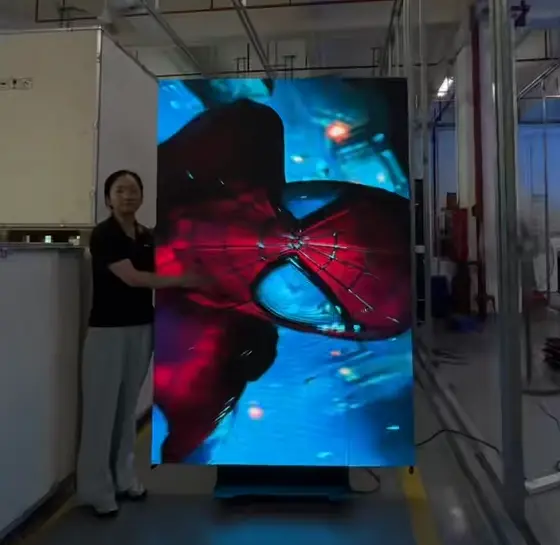
When choosing an LED display for a commercial project, many buyers focus first on pixel pitch or screen size. But there is another component that directly affects image quality, durability, serviceability, and product cost: the SMD LED package. So what are SMD LED chips, how do they work inside an SMD LED display, and when should you choose SMD instead of COB, GOB, or newer MIP technologies?
For commercial LED walls, billboards, rental screens, stadium displays, and fine-pitch installations, SMD remains one of the most widely used LED packaging technologies because it combines mature manufacturing, flexible pixel pitches, broad supply availability, and relatively straightforward maintenance. The key is understanding what SMD actually describes—and what it does not.
What Is an SMD LED?
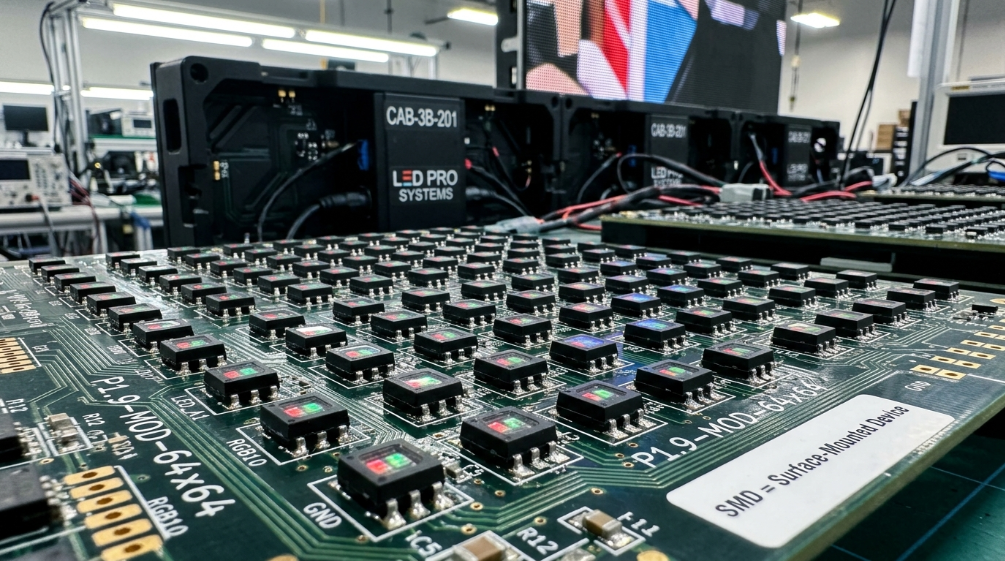
SMD stands for Surface-Mounted Device. In LED display manufacturing, an SMD LED is a packaged light-emitting component mounted directly onto the surface of a printed circuit board (PCB) using surface-mount assembly technology.
It is important to make one technical distinction:
An LED chip or die is not exactly the same thing as an SMD LED package.
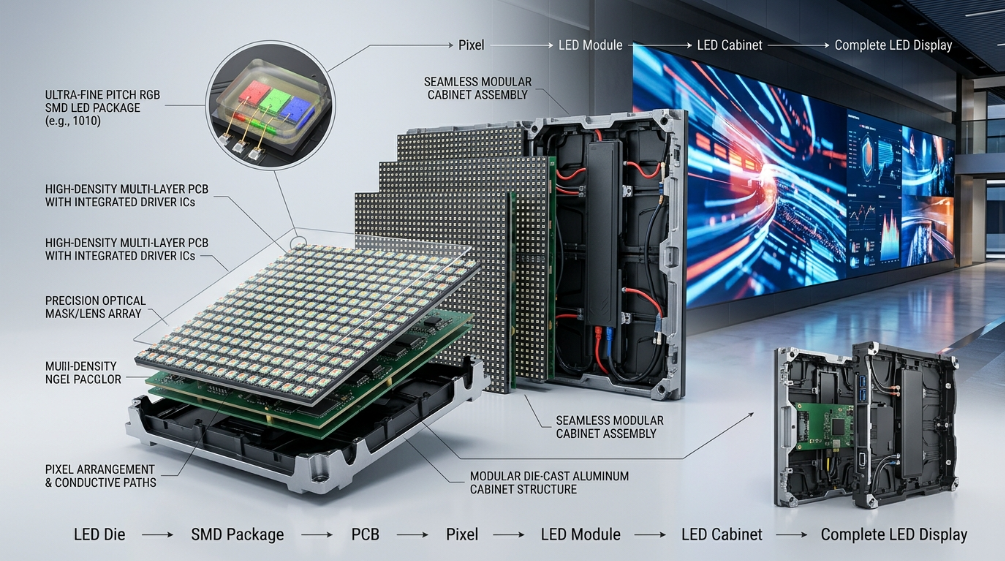
A simplified commercial LED display structure looks like this:
LED die → SMD package → PCB → pixel → LED module → LED cabinet → LED display
The LED die is the semiconductor element that produces light. The SMD package houses and protects the LED dies and provides the electrical connection to the PCB. Multiple SMD packages are then arranged into a pixel matrix to form an LED module.
In a full-color SMD LED display, an individual pixel commonly uses red, green, and blue LED elements to reproduce a wide range of colors. This packaged RGB architecture is one reason SMD became the mainstream technology for many professional direct-view LED displays.
How Do SMD LED Chips Work in an LED Display?
The word “chip” can create confusion because an SMD display is not simply a collection of bare semiconductor chips attached to a screen.
The LED dies are first packaged into small components. These components are then precisely positioned and soldered onto the PCB during the SMT manufacturing process.
A typical display pixel contains three primary color channels:
- Red
- Green
- Blue
The control system adjusts the electrical drive of these channels to create different colors and brightness levels.
Thousands or millions of these individually controlled pixels are combined to create a complete LED display.
This architecture provides several practical advantages for commercial projects. Manufacturers can automate component placement, produce modules in large volumes, and replace defective modules without replacing the entire display wall.
That last point matters to B2B buyers. A large LED wall may contain hundreds of modules, so the ability to isolate and replace a failed module can have a direct effect on maintenance cost and downtime.
What Do SMD LED Numbers Mean?
One of the most common questions from LED buyers is:
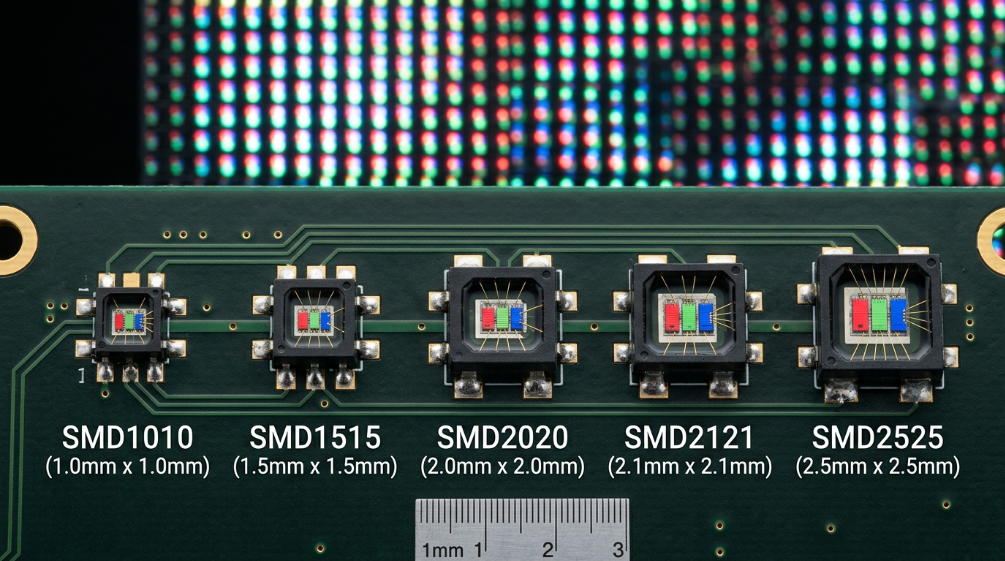
What do SMD1010, SMD1515, SMD2020 or SMD2121 actually mean?
In general, the numbers refer to the approximate physical dimensions of the LED package.
For example:
| SMD Type | Approx. Package Size | Typical Commercial Use |
|---|---|---|
| SMD1010 | 1.0 × 1.0 mm | Fine-pitch indoor LED |
| SMD1515 | 1.5 × 1.5 mm | Fine-pitch and indoor LED |
| SMD2020 | 2.0 × 2.0 mm | Indoor and commercial LED |
| SMD2121 | 2.1 × 2.1 mm | Indoor/outdoor LED |
| SMD2525 | 2.5 × 2.5 mm | Larger-pitch applications |
These package dimensions should not be confused with pixel pitch.
For example, a P1.5 LED display does not mean that its SMD package is exactly 1.5 mm. Pixel pitch describes the center-to-center distance between adjacent pixels, while the SMD number describes the package itself.
This distinction is important when comparing supplier quotations.
SMD LED Package Size vs. Pixel Pitch
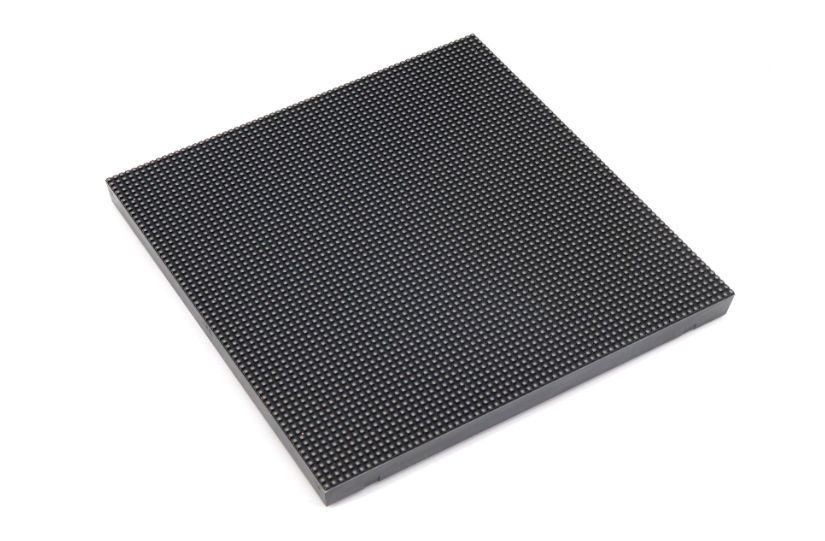
Pixel pitch is one of the most important specifications when purchasing an SMD LED display.
It measures the distance between the centers of two adjacent pixels.
A smaller pixel pitch means more pixels can fit into the same physical area.
For example:
- P3.9 → larger pixel spacing
- P2.5 → higher pixel density
- P1.9 → higher pixel density
- P1.5 → fine-pitch LED
- P0.9 → ultra-fine-pitch application
However, smaller is not automatically better.
If a display is installed several meters away from the audience, paying a large premium for an ultra-fine pitch may provide little visible benefit. Conversely, a P3.9 screen installed inside a corporate meeting room can appear too coarse at close viewing distances.
The correct pixel pitch should therefore be selected according to:
Viewing distance + content type + screen size + camera requirements + budget.
For commercial fine-pitch LED, P0.9–P2.5 products are commonly used for close-viewing environments, although exact product classifications vary between manufacturers.
How SMD LED Affects Display Image Quality
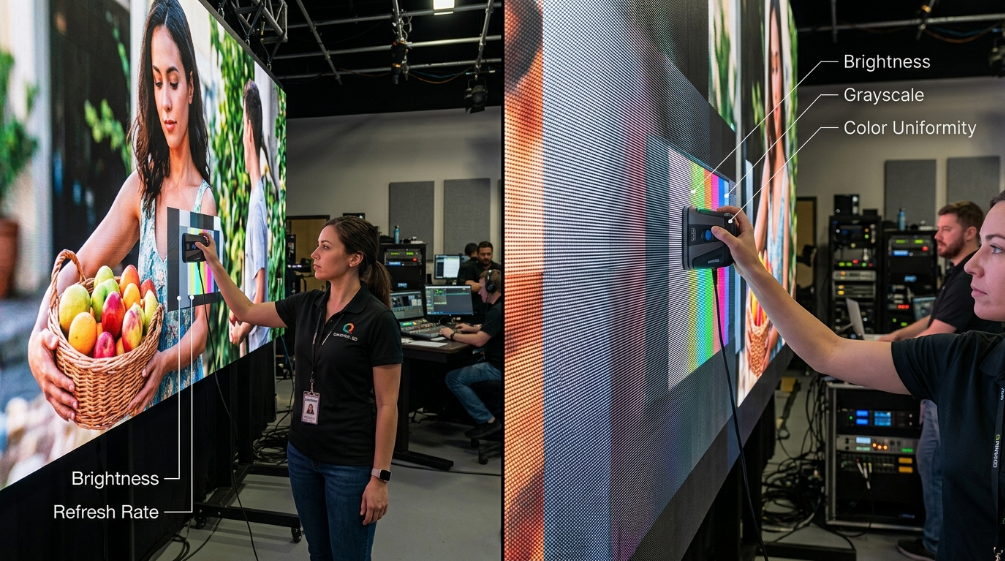
An SMD package is only one component of image quality.
A professional LED buyer should evaluate the entire optical and electronic system.
Brightness
Brightness determines whether content remains visible under the project’s ambient lighting conditions.
Indoor LED displays normally require substantially less brightness than outdoor billboards. Outdoor commercial displays may require several thousand nits or more, depending on sunlight exposure and installation orientation.
For example, SoStron’s Ares outdoor SMD/DIP solution can be configured for brightness up to 10,000 nits, while its Ares 2 platform supports up to 7,500 nits.
However, maximum brightness should not be treated as a universal quality ranking. Excessive brightness in an indoor environment can reduce viewing comfort and increase power consumption.
Refresh Rate
Refresh rate becomes particularly important when the LED display is filmed by professional cameras.
For:
- live events
- sports broadcasting
- virtual production
- studio applications
- corporate video recording
a higher refresh rate can help reduce visible scan artifacts and flicker.
Commercial LED products commonly use 3,840 Hz or higher refresh rates, while demanding camera-facing applications may specify 7,680 Hz or other high-refresh configurations.
Grayscale
Grayscale performance determines how smoothly the display reproduces transitions between dark and bright areas.
This becomes especially important for:
- cinematic content
- dark scenes
- broadcast graphics
- high-end advertising
- virtual production
A display with high brightness but poor grayscale performance can still produce an unnatural image.
Color Uniformity and Calibration
A large SMD LED wall consists of many individual modules. Even when the same LED package is used, manufacturing tolerances can create differences in brightness or color.
Professional LED displays therefore use calibration processes to improve:
- module-to-module uniformity
- brightness consistency
- color consistency
- grayscale reproduction
For large commercial installations, calibration is not an optional cosmetic feature. It is part of maintaining a consistent image across the entire wall.
What Are the Advantages of SMD LED Displays?
SMD remains popular in commercial LED because it offers a practical balance between performance, manufacturing maturity, and serviceability.
Mature Manufacturing
SMD has an established global supply chain and highly automated SMT production process.
That makes it easier for manufacturers to produce large quantities of consistent modules and maintain replacement-parts availability.
Wide Pixel-Pitch Range
SMD technology can support many commercial applications, from larger outdoor advertising screens to fine-pitch indoor LED walls.
This flexibility is one reason SMD remains common in:
- digital billboards
- retail displays
- corporate LED walls
- rental screens
- stadium displays
- stage LED screens
- transportation advertising
- fine-pitch commercial displays
Easier Field Service
A major advantage for B2B projects is serviceability.
With a conventional SMD LED module, technicians can generally replace modules or repair individual components using established service procedures.
This can be especially important for rental companies, stadium operators, advertising networks, and large commercial installations where downtime has a direct financial impact.
Cost Efficiency
SMD benefits from a mature component and manufacturing ecosystem.
For many mainstream commercial projects, this makes SMD a practical choice when the buyer needs a combination of image quality, availability, repairability, and controlled project cost.
SMD vs. COB LED Display
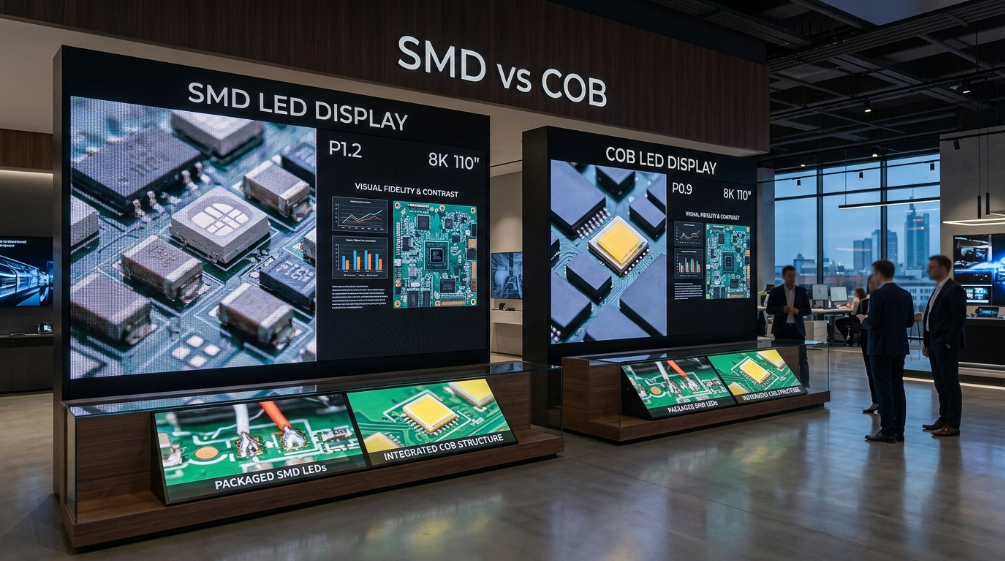
One of the most important comparisons in the current LED display market is SMD vs. COB.
The fundamental difference is packaging architecture.
SMD:
LED dies are packaged into individual LED components and surface-mounted onto the PCB.
COB:
LED dies are mounted directly onto the substrate and encapsulated as part of the module structure.
COB can provide advantages in fine-pitch applications, including a more integrated surface, strong physical protection, and potentially improved perceived contrast and viewing characteristics. SMD, meanwhile, benefits from mature manufacturing, broad product availability, and easier component-level serviceability.
For a mainstream commercial LED wall, SMD can be the more economical and service-friendly choice.
For an ultra-fine-pitch boardroom, broadcast studio, XR environment, or other close-viewing application where surface durability and optical performance are priorities, COB may justify its higher cost.
The correct answer is therefore not “COB is better than SMD.”
It is:
Choose the packaging technology that matches the project’s viewing distance, environment, durability requirements, maintenance strategy, and budget.
SMD vs. GOB LED Display
GOB means Glue on Board.
GOB should not be confused with a completely different LED chip architecture. In a typical GOB process, an SMD LED module is assembled first and then covered with a transparent protective material.
The purpose is to improve protection against:
- accidental impact
- dust
- moisture
- surface abrasion
- frequent handling
This can be valuable for rental screens, interactive installations, museums, retail environments, and other locations where the LED surface may experience physical contact.
The key distinction is simple:
Standard SMD = exposed SMD packages
GOB = SMD packages + protective surface coating
GOB therefore extends the practical application range of SMD without abandoning the underlying SMD manufacturing ecosystem.
SMD vs. MIP and IMD
As pixel pitches continue to shrink, buyers are also encountering MIP and IMD.
MIP, or Mini/Micro LED in Package, aims to combine some of the manufacturing and serviceability advantages of packaged LEDs with the density required for extremely fine-pitch displays.
IMD, or Integrated Matrix Device, combines multiple LED elements into a larger integrated package. The approach can improve mechanical robustness compared with conventional individual SMD packages at very fine pixel pitches.
These technologies are particularly relevant to:
- P0.9 and below
- broadcast
- XR
- virtual production
- premium corporate displays
- high-end indoor video walls
However, newer packaging does not automatically mean better value for every project. SMD remains highly competitive where the required pixel pitch and viewing distance do not justify a more expensive architecture.
Are SMD LED Displays Suitable for Outdoor Use?
Yes, but SMD itself does not make a display weatherproof.
Outdoor reliability depends on the complete display design, including:
- LED package selection
- PCB design
- cabinet construction
- sealing
- thermal management
- power supply
- protection rating
- corrosion resistance
- installation environment
For example, outdoor commercial displays may use IP65, IP66 or comparable protection configurations depending on the cabinet and installation design.
So when evaluating an outdoor SMD LED display, do not ask only:
“Is it SMD?”
Ask:
“What is the complete environmental protection design?”
This distinction prevents one of the most common procurement mistakes: treating the LED package type as a substitute for system-level weather protection.
SMD LED Displays and Thermal Management
Heat is another factor that should not be overlooked.
LED performance and long-term reliability depend on how effectively heat is generated, transferred, and dissipated.
The thermal path can include:
LED package → PCB → module structure → cabinet → surrounding air
Poor thermal design can accelerate LED degradation and increase the risk of electronic component failure.
For large outdoor displays operating continuously in hot climates, cabinet material and cooling architecture therefore matter almost as much as the LED package itself.
For example, SoStron’s Ares outdoor platform uses an aluminum cabinet structure as part of its passive thermal-management strategy.
Where Are SMD LED Displays Commonly Used?
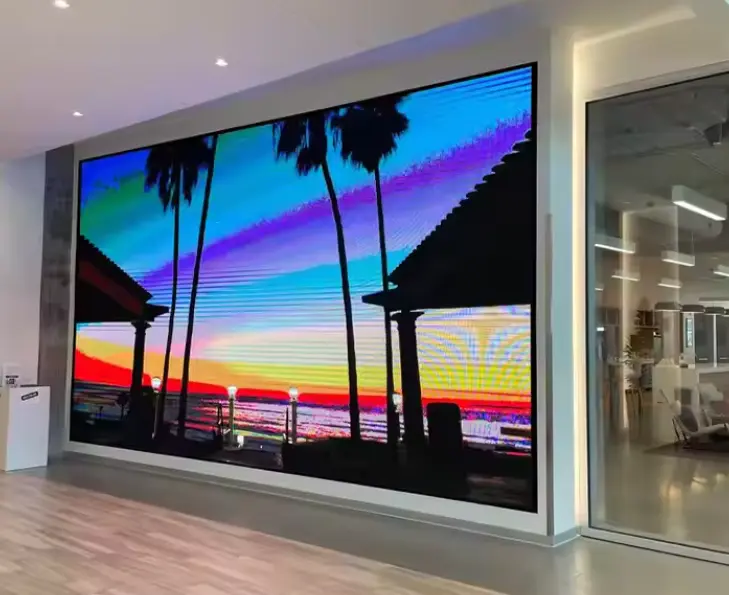
Because of their flexible pixel-pitch range and mature supply chain, SMD LED displays are suitable for a wide range of commercial environments.
Indoor Commercial LED Walls
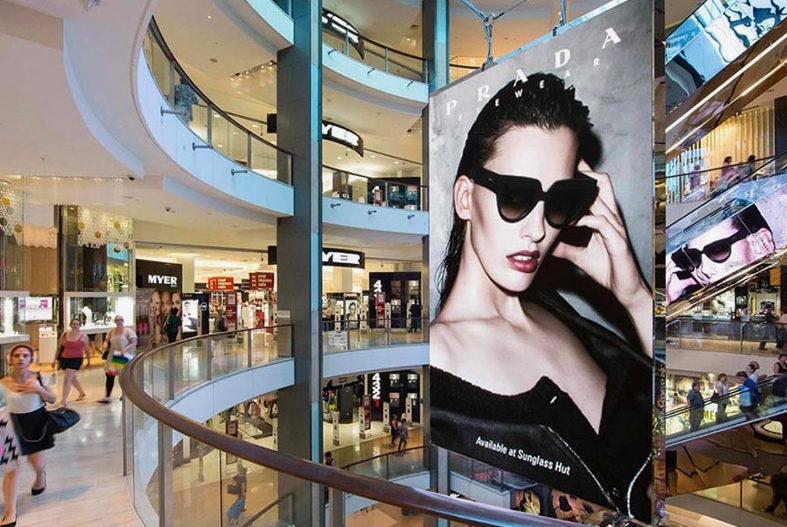
Typical applications include:
- corporate meeting rooms
- retail stores
- showrooms
- control rooms
- hospitality venues
- museums
- digital signage
Fine-pitch SMD products can provide detailed images at relatively short viewing distances.
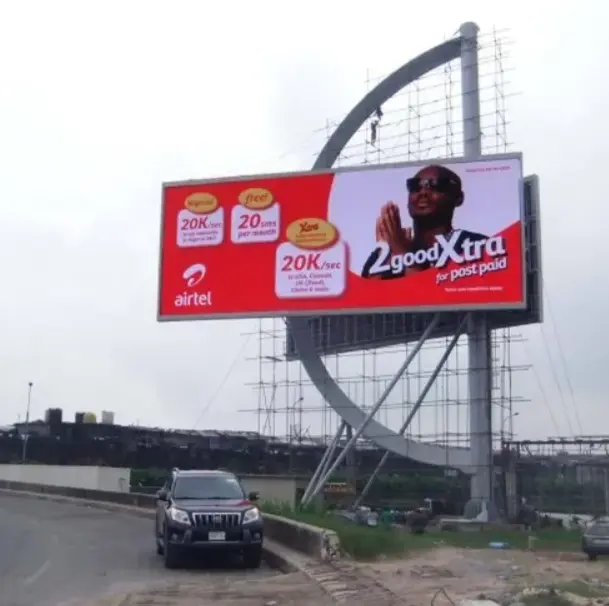
Outdoor LED Advertising
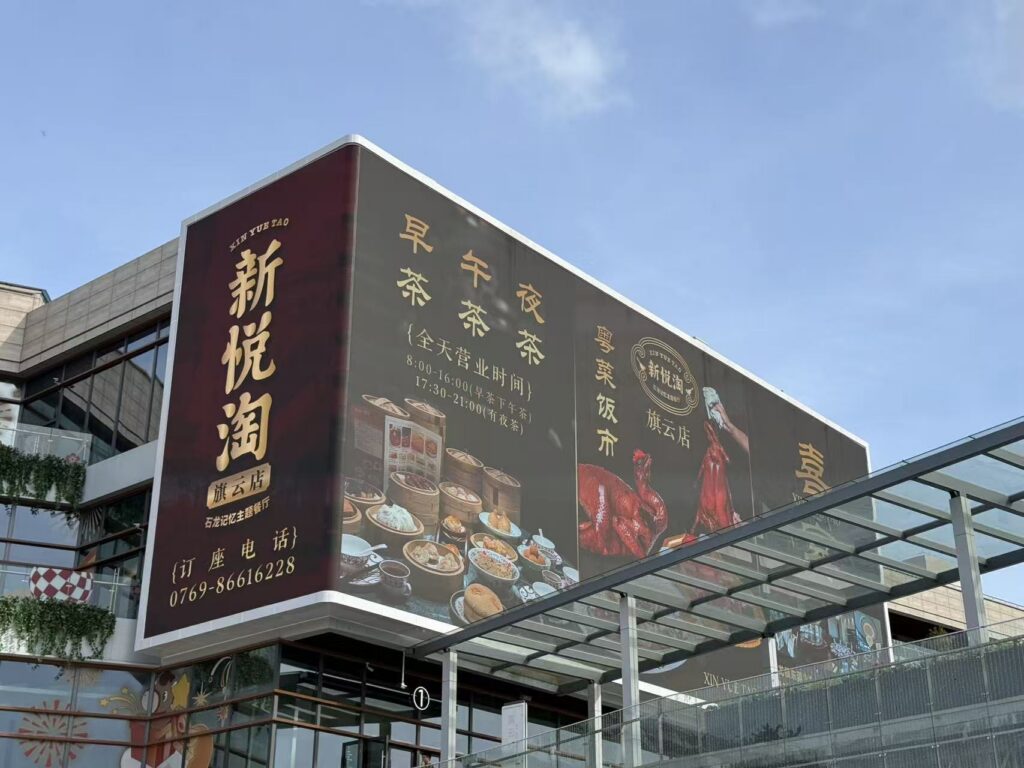
SMD displays are widely used for:
- roadside billboards
- building façades
- digital out-of-home advertising
- shopping-center advertising
- transportation displays
Outdoor products need to combine sufficient brightness with environmental protection and thermal management.
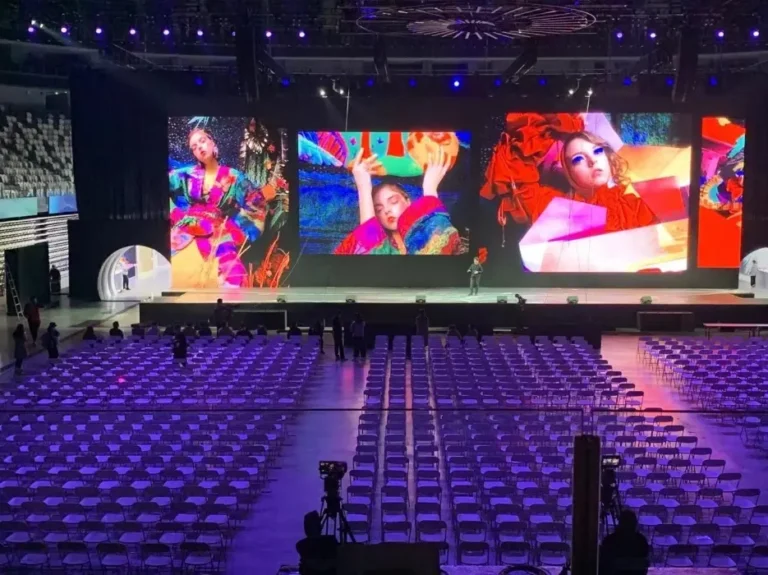
Rental and Event LED Displays
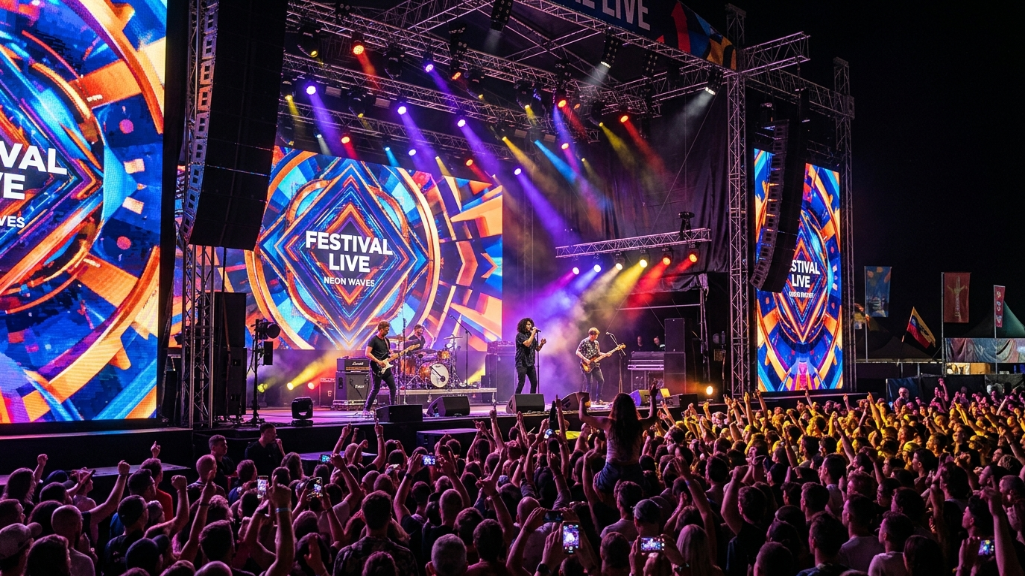
SMD is also widely used in rental and staging because modules can be designed around lightweight cabinets, fast assembly, and practical serviceability.
Rental buyers should pay particular attention to:
- cabinet weight
- corner protection
- front/rear maintenance
- locking mechanisms
- refresh rate
- transport durability
- spare modules
Stadium LED Displays
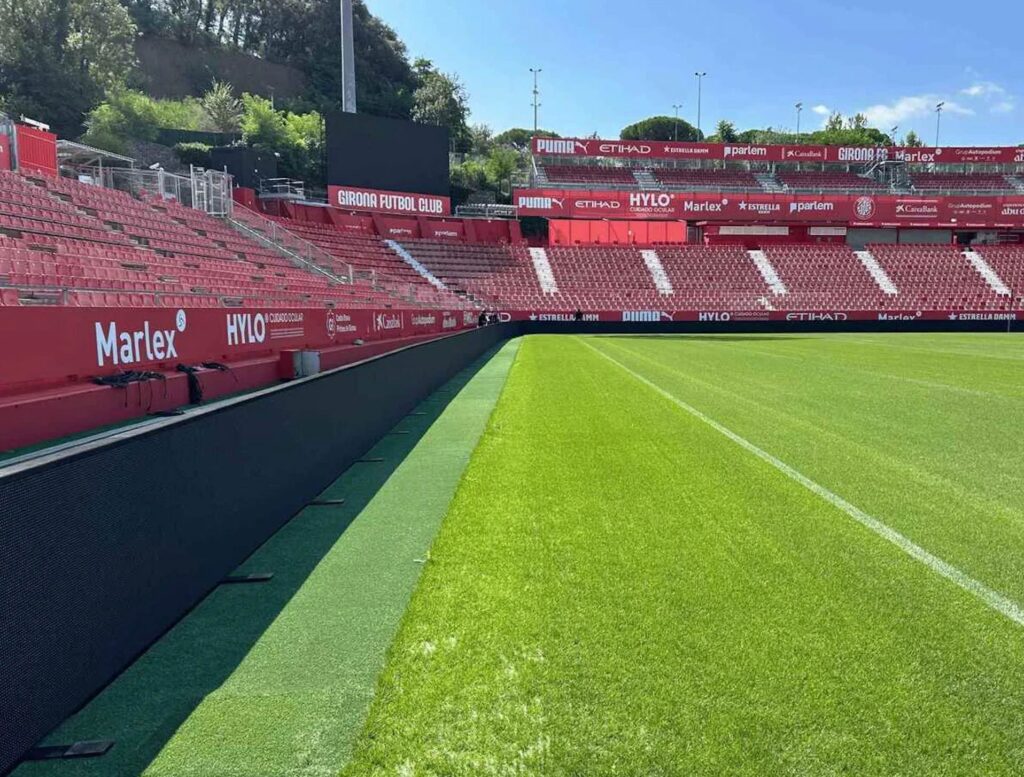
Sports environments create additional requirements because displays may need:
- high brightness
- weather protection
- high refresh rate
- wide viewing angles
- impact protection
- broadcast compatibility
A stadium LED system is therefore much more than a collection of SMD LED chips. It is an integrated mechanical, electrical, optical, and control system.
How to Choose the Right SMD LED Display
For B2B buyers, the following checklist is more useful than comparing LED package names alone.
1. Start With Viewing Distance
Determine the closest important viewing position.
Do not select the smallest pixel pitch simply because it offers a higher specification.
2. Define the Environment
Ask whether the display is:
- indoor
- outdoor
- semi-outdoor
- fixed installation
- rental
- interactive
The answer determines the required protection and cabinet construction.
3. Check Pixel Pitch
Compare the required viewing distance with the available pixel pitch.
For example, a close-viewing corporate wall may require P1.5 or P1.9, while a large roadside billboard may prioritize brightness and viewing distance over ultra-fine resolution.
4. Check Refresh Rate
If the screen will appear on camera, request the actual refresh-rate specification and confirm camera compatibility.
5. Check Brightness
Indoor and outdoor environments require very different brightness levels.
More brightness is not always better.
6. Check Serviceability
Ask:
- Is front maintenance available?
- Can individual modules be replaced?
- Are spare modules available?
- How long will replacement parts remain available?
- Is remote monitoring supported?
These questions directly affect long-term operating cost.
7. Compare Total Cost of Ownership
Do not compare only the price per square meter.
A proper commercial LED quotation should consider:
Display + controller + structure + power distribution + installation + calibration + spare parts + transportation + warranty + maintenance
A slightly more expensive screen with better thermal design and easier maintenance can cost less over its operating life.
Is SMD LED Still a Good Choice in 2026?
Yes.
The emergence of COB, GOB, MIP, and IMD does not make SMD obsolete.
Instead, the LED display market is becoming more application-specific.
For mainstream commercial LED walls, outdoor advertising, rental screens, stadium displays, and many indoor fine-pitch projects, SMD remains a highly practical technology because of its mature ecosystem, flexible product range, serviceability, and cost structure.
COB and newer packaging technologies become more compelling as pixel pitch becomes smaller or when physical durability, contrast, and close-viewing performance become higher priorities.
The best technology is therefore not determined by the newest package on the market.
It is determined by the project requirement.
SMD LED Display FAQ
What does SMD mean in an LED display?
SMD means Surface-Mounted Device. It describes the packaged LED components mounted directly onto the PCB surface.
Are SMD LED chips the same as LED pixels?
No. An LED chip is the semiconductor light-emitting die. An SMD package contains the LED components, while a pixel is the independently controlled image-producing unit in the display.
What is the difference between SMD and COB LED displays?
SMD uses individually packaged LED components mounted onto a PCB. COB mounts LED dies directly onto the substrate and encapsulates them. SMD generally offers mature manufacturing and easier serviceability, while COB is particularly attractive for fine-pitch, close-viewing and high-durability applications.
Is SMD LED suitable for outdoor LED displays?
Yes. SMD is widely used for outdoor LED displays, but outdoor reliability depends on the complete system design, including brightness, sealing, IP protection, thermal management, PCB design, cabinet construction and power systems.
What is SMD1010?
SMD1010 generally refers to an SMD LED package with an approximate footprint of 1.0 × 1.0 mm. It is commonly associated with fine-pitch LED applications.
Does a smaller SMD package always mean a better LED display?
No. Package size is only one factor. Pixel pitch, LED efficiency, brightness, color consistency, calibration, driver IC, PCB design, thermal management, refresh rate, and cabinet engineering all affect final display performance.
Which is better for a commercial LED project: SMD or COB?
It depends on the project. SMD is often the practical choice for mainstream commercial, rental, outdoor and serviceable LED applications. COB can be preferable for premium fine-pitch indoor installations where close viewing, durability and contrast are more important than initial cost.
Final Takeaway
SMD LED chips are only one part of an SMD LED display system.
For professional LED projects, the better purchasing approach is to evaluate the entire chain:
SMD package → pixel pitch → pixel density → brightness → refresh rate → calibration → thermal design → protection → serviceability → total cost of ownership.
Once these factors are considered together, it becomes much easier to determine whether a conventional SMD LED display is the right solution—or whether GOB, COB, IMD, or MIP is more appropriate for the project.
For commercial buyers, system-level engineering matters more than the package name printed on a specification sheet.
References:
LED Basics — U.S. Department of Energy (DOE)
Solid-State Lighting — U.S. Department of Energy (DOE)