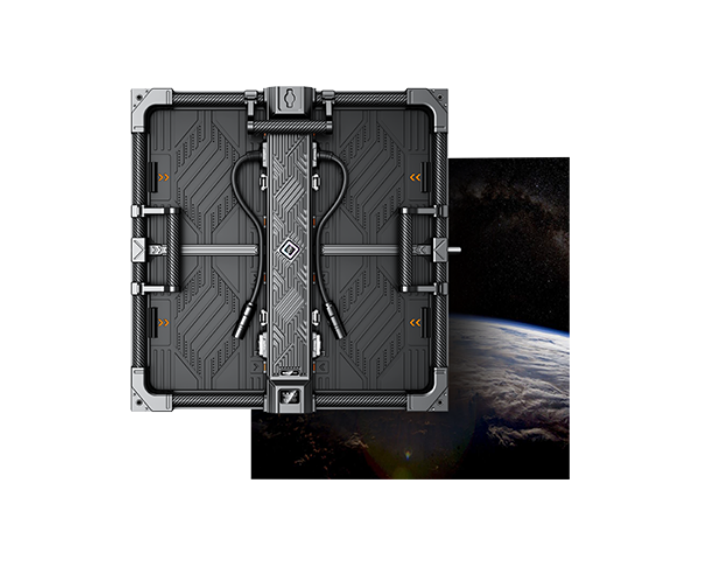
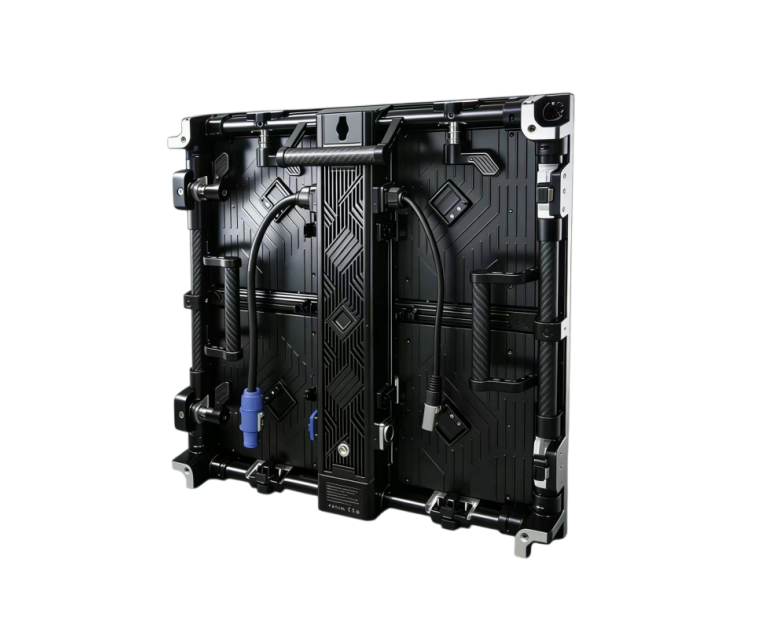
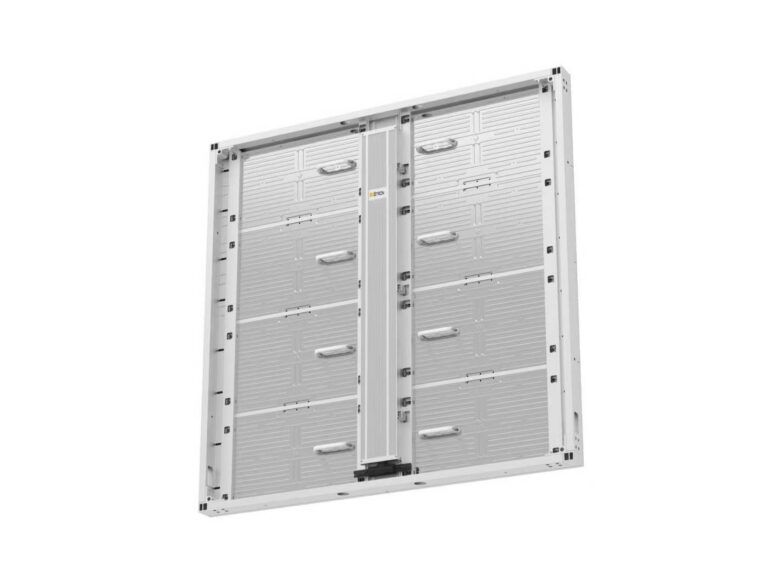
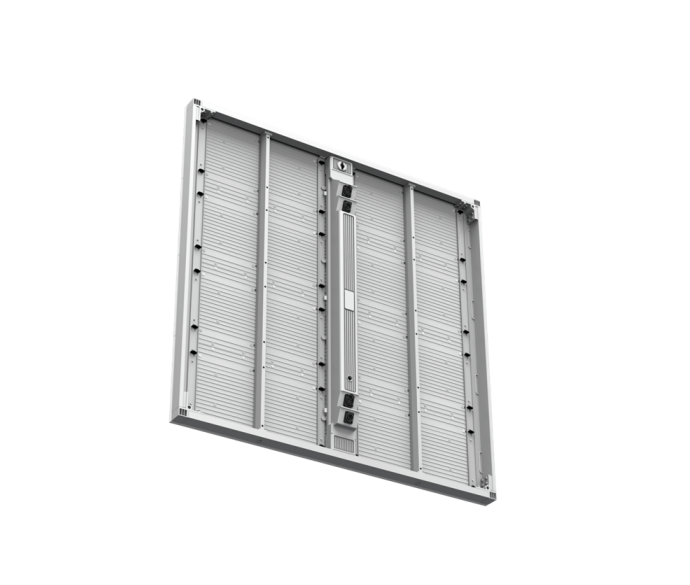
An LED Cube Display is a multi-sided, three-dimensional LED video wall system where individual high-resolution panels are precision-joined at 90° seamless corners to form a geometric cube structure—typically with 4, 5, or 6 active display faces. When driven by purpose-built naked-eye 3D video content, it produces a 360° immersive visual experience visible from every direction, without glasses or special optics. Here is what B2B buyers need to know before specifying one:
| Decision Variable | What It Affects | Buyer Action |
| Face Count (4/5/6) | Visual coverage angle, mounting method | Match to venue sightlines and ceiling structure |
| Pixel Pitch (P1.8–P4) | Minimum comfortable viewing distance | Measure venue; use P2.5 for 2–4 m viewing |
| Corner Module Type | Seamless 90° gap or visible black line | Demand beveled-edge cabinets; specify gap < 0.1 mm |
| GOB vs. Standard SMD | Impact & moisture resistance | GOB for DJ booths, transit, high-vibration sites |
| Refresh Rate | Flicker on cameras and broadcast lighting | Minimum 3840 Hz for social-media-facing venues |
| Customization | Side length, face count, non-cube geometry | Confirm OEM capability and module size grid |
Why Flat LED Walls Are Losing the Battle for Attention
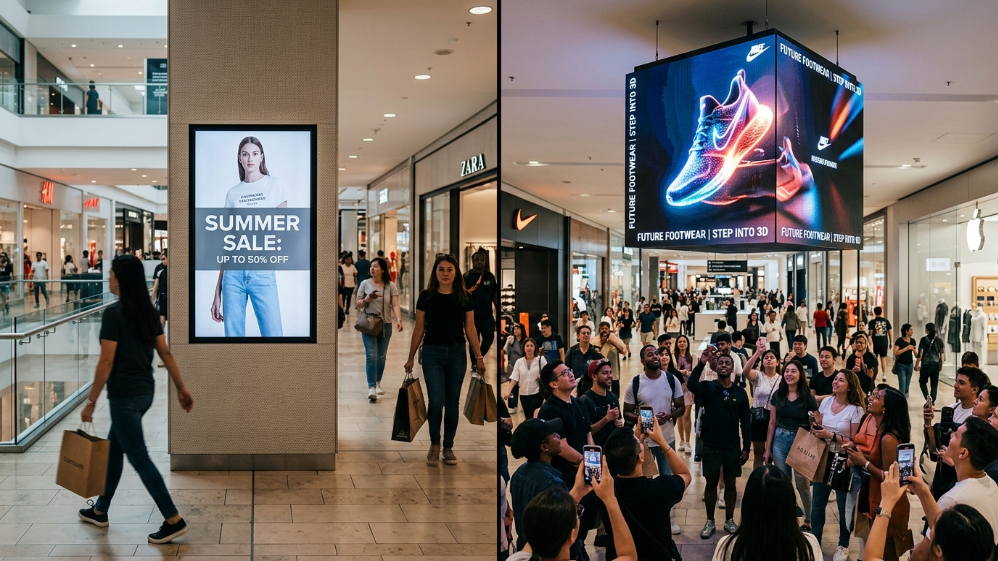
Walk through any premium shopping mall atrium, and you will see the same pattern: a flat LED wall mounted on a column, playing looping brand footage to visitors who are already looking somewhere else. The screen is there. Nobody is stopping.
The physics of engagement have changed. Foot traffic in high-density commercial spaces moves in every direction simultaneously, and a single-face display commands only the narrow cone of visitors already facing it. That is not a content problem. It is an architecture problem—and no amount of 4K resolution solves a geometry constraint.
The multi-sided LED video wall solves it by occupying vertical space while broadcasting in 270° to 360° sightlines. Suspended from an atrium ceiling, it speaks to shoppers on every floor and from every angle at once. Installed at a DJ booth, it wraps the performer in light that reaches the back corner of the venue. Mounted as a column-wrap, it transforms a structural pillar into a media asset. According to industry data compiled across 3,000+ global LED display projects, creative 3D display formats generate social media sharing rates 4–6× higher than equivalent-area flat installations—a multiplier that has no unit cost once the hardware is commissioned.
The 360° Attention Problem: Why Single-Face Displays Fail in Open Spaces
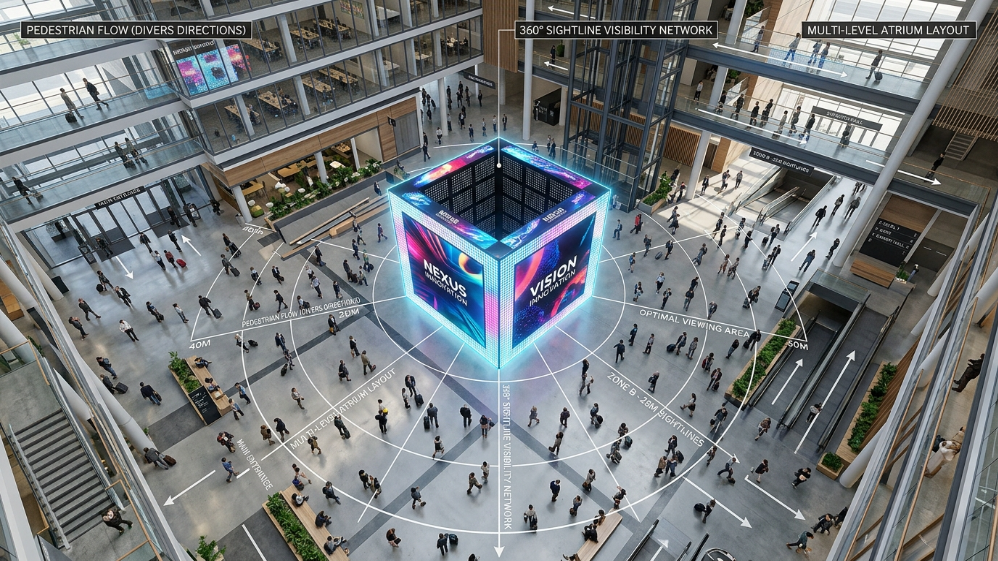
The commercial mathematics are simple: a flat LED screen has one effective viewing cone, typically ±60° horizontal from center. An LED Cube Display with 5 active faces and suspended installation has zero dead zones across a 360° horizontal plane. Every person who walks into the space becomes a viewer, regardless of their direction of travel.
This is particularly acute in venues where the design brief explicitly demands omnidirectional impact: flagship store atriums, nightclub main floors, airport concourse columns, and science museum exhibition halls. In all of these, a flat screen is a compromise. A cube is the specification.
The Rise of Naked-Eye 3D: From Novelty to Proven Revenue Driver
The naked-eye 3D effect on a cube LED display is not a gimmick applied on top of standard content. It is a function of the hardware’s geometry. Because the display presents multiple faces at diverging angles simultaneously, purpose-built video content—engineered using UV-mapped perspective projection in tools like Cinema 4D or Blender—creates a genuine perception of depth and spatial extension beyond the screen plane. No glasses. No projection tricks. Pure pixel engineering.
Based on our experience across deployments in retail, hospitality, and public infrastructure, the social sharing effect alone typically delivers earned media exposure equivalent to several months of conventional outdoor advertising spend within the first two weeks of installation.
What Is an LED Cube Display? Anatomy, How It Works, and the 3D Effect Explained
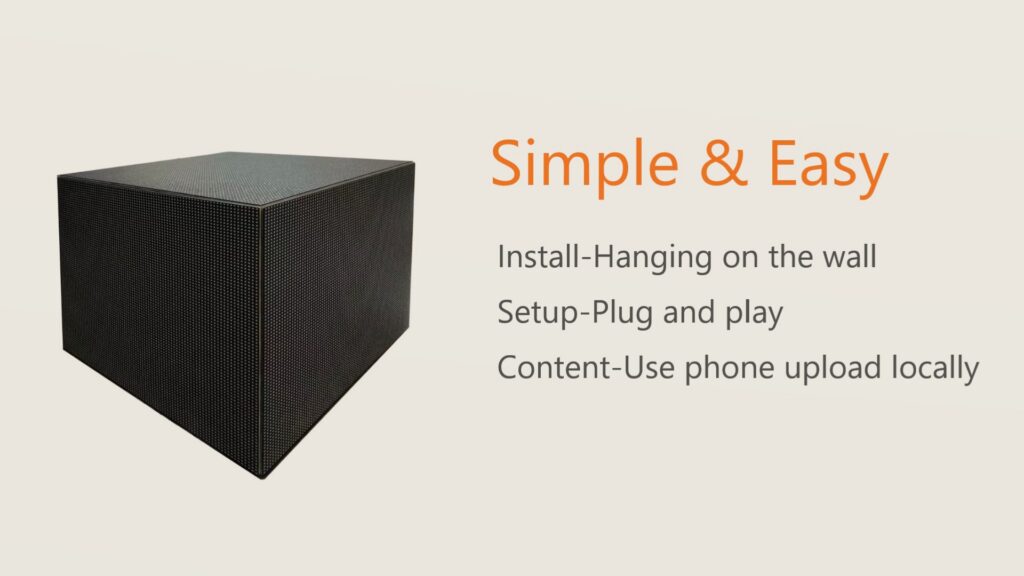
From an engineering standpoint, an LED Cube Display is a multidimensional digital display device with 4 to 6 independent emitting surfaces, precision-joined at 90° miter angles, driven by a synchronized control architecture. Each face is built from SMD LED modules mounted on PCB boards, housed in die-cast aluminum cabinets—the same fundamental unit as a standard flat video wall panel, but engineered to terminate at a precise 45° beveled edge rather than a flat frame.
That single change—the beveled edge—is where most of the engineering complexity lives.
The Critical Engineering Detail: Why Seamless 90° Corner Modules Are Non-Negotiable
When two standard LED cabinets meet at a right angle, the combined frame thickness of both units creates a visible gap—typically 3–8 mm of dark border that the pixel grid cannot cross. On a flat video wall, that gap is invisible because the eye reads it as a panel seam. On a cube, that gap is a black line that runs vertically from top to bottom of every corner, destroying the geometric illusion the entire installation depends on.
The solution requires five-axis CNC precision machining at micron-level tolerance. The die-cast aluminum cabinet frame is chamfered at exactly 45°. The PCB circuit board—populated with the same dense LED components—is chamfered at the same angle. When two faces meet, the combined physical seam compresses to under 0.1 mm: sub-pixel at most pixel pitches, effectively invisible in viewing conditions.
This is expensive to manufacture correctly. It is also the single most important differentiator between a professional LED Cube Display and a cheap equivalent. Any supplier quoting significantly below market rate is almost certainly cutting this tolerance.
4-Face vs. 5-Face vs. 6-Face: Which Multi-Sided Configuration Fits Your Space?
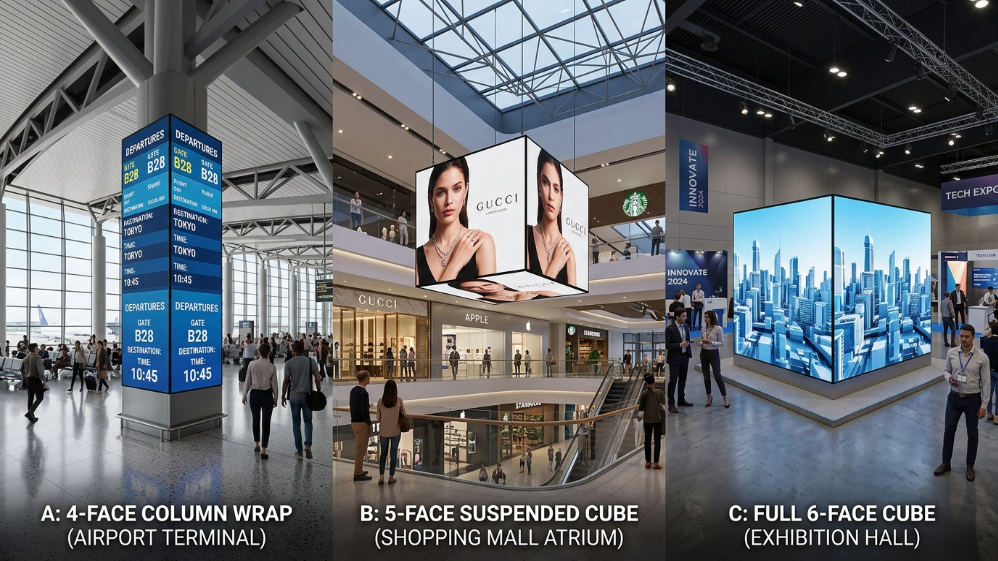
| Configuration | Open Faces | Best Mounting Method | Ideal Venue | Visual Coverage |
| 4-Face | Top + Bottom open | Column wrap, floor-standing | Airport column, retail floor unit | 360° horizontal |
| 5-Face | Bottom open | Ceiling suspension (single-point or truss) | Mall atrium, DJ booth, museum centrepiece | 360° horizontal + 4 vertical faces |
| 6-Face (Full Cube) | None—fully enclosed | Floor pedestal or structural mount | Brand pop-up, exhibition centrepiece | Full 360° × 360° |
The 5-face suspended configuration is the most commercially common for good reason: it covers the maximum sightline area from below (where 100% of pedestrians are positioned), while the open bottom face eliminates the engineering challenge of bottom-panel ventilation and simplifies suspension rigging load calculations.
Real-World Case Study: Dongguan Qiyun Plaza—A City-Level Visual Landmark Powered by Naked-Eye 3D
Qiyun Plaza is the largest TOD (Transit-Oriented Development) commercial complex in northern Dongguan, China—integrating a shopping center, commercial street, dining, business offices, and a rail transit hub. The operator faced a classic opening challenge: how do you generate immediate foot traffic momentum in a market saturated with new commercial real estate?
The answer was a large-scale outdoor naked-eye 3D LED display deployed at a core position on the building’s façade. Unlike a conventional outdoor billboard, the screen was engineered to deliver depth-breaking 3D content using special perspective-design and visual algorithms—creating the impression of objects leaping beyond the physical boundary of the screen surface.
The commercial result was immediate. The installation became the area’s primary social media check-in location within days of opening. Consumers stopped, photographed, and shared the content across platforms—generating earned media exposure that extended the plaza’s opening announcement far beyond its paid advertising footprint. Especially after dark, the display’s high-brightness panels coordinated with surrounding architectural lighting to form a cityscape visible as a landmark from the surrounding transit catchment area.
Key engineering specifications of the Qiyun Plaza project:
-
Display type: Outdoor naked-eye 3D LED screen, 90° corner seamless configuration
-
Application: Commercial façade, TOD transit-integrated development
-
Effect: Forced-perspective 3D content breaking apparent screen boundary
-
Outcome: Immediate social media amplification, measurable foot traffic uplift on opening
This project is representative of what a correctly specified naked-eye 3D display achieves when hardware engineering, content production, and venue architecture are aligned from the outset. The display does not merely deliver advertising—it becomes the destination itself.
The Sostron Solution: Recommended Product Series for Cube and Creative 3D Installations
Based on the five primary deployment scenarios covered in this guide—atrium suspension, nightclub/DJ, museum exhibition, airport column-wrap, and live stage—two Sostron product series address the full range of B2B requirements:
1. Creative Displays Series (Custom LED Cube)
Sostron’s Creative Display range is purpose-engineered for multi-sided and non-planar geometries. Cabinets are available with precision 45° beveled-edge CNC machining for true seamless 90° corner assembly. Customizable from 4-face to 6-face configurations, with side dimensions scalable to client-specified footprints. Pixel pitch options span P1.8 to P3.91 to cover the full spectrum from close-viewing museum exhibits to large-scale atrium suspensions. The series supports the V4.0 SoStron CMS platform, enabling synchronized multi-face content management, independent face programming, and real-time remote updates.
2. Hima Series XR LED Display
For stage, event, and immersive environment applications—including DJ booth main visuals and live event cube arrays—the Hima Series delivers high-refresh-rate performance (camera-friendly, eliminating moiré and flicker in broadcast lighting), GOB-level impact protection via its anti-collision corner design, and one-person installation capability via a unique lock system. The Hima’s seamless cube design was purpose-built for immersive environments where the display is simultaneously a structural element and a content surface. CE, RoHS, FCC, and UL certified.
Engineering Insight: For any atrium suspension project, request a structural load calculation from the supplier alongside the product spec sheet. A correctly specified 5-face cube measuring 1.2 m per side in aluminum cabinet construction will typically weigh 180–250 kg; your ceiling rigging anchor points must be rated accordingly before specifying pixel pitch or face size.
How To Choose the Right Pixel Pitch for Your LED Cube Display: A Specification Decision Table
The product is only as good as its spec match to the venue. Pixel pitch determines minimum comfortable viewing distance—and on a cube installation, where audiences may be standing as close as 1.5 meters or as far as 15 meters, getting this wrong is a five-figure mistake that cannot be corrected after manufacturing.
| Pixel Pitch | Min. Viewing Distance | Best Venue Type | Indoor/Outdoor | Key Trade-off |
| P1.8 | 1.8 m | Museum exhibit, luxury retail close-up display | Indoor only | Highest resolution; highest cost per m² |
| P2.5 | 2.5 m | Flagship store atrium, DJ booth, showroom | Indoor primary | Practical sweet spot for 2–4 m viewing |
| P3/P3.91 | 3–4 m | Airport column-wrap, large atrium, convention centre | Indoor/Outdoor | Best balance of resolution and cabinet cost |
| P4+ | 4 m+ | Outdoor plaza, building façade, stage large format | Outdoor primary | High brightness (6,000+ nits); reduced close-up detail |
One variable that most spec sheets omit: PWM dimming frequency. A cube in a nightclub environment will operate across a 500:1 ambient light range—from near-dark during a set to full house lights during changeover. Inferior driver ICs handle this by reducing pulse width at low brightness, which introduces flicker at frequencies visible to smartphone cameras. First-tier driver ICs (ICN2038S class and above) maintain ≥3840 Hz refresh across the full brightness range. For any venue where social media filming is part of the commercial proposition, this is not optional.
5-Scenario Installation Guide: Exactly How to Specify for Each Application
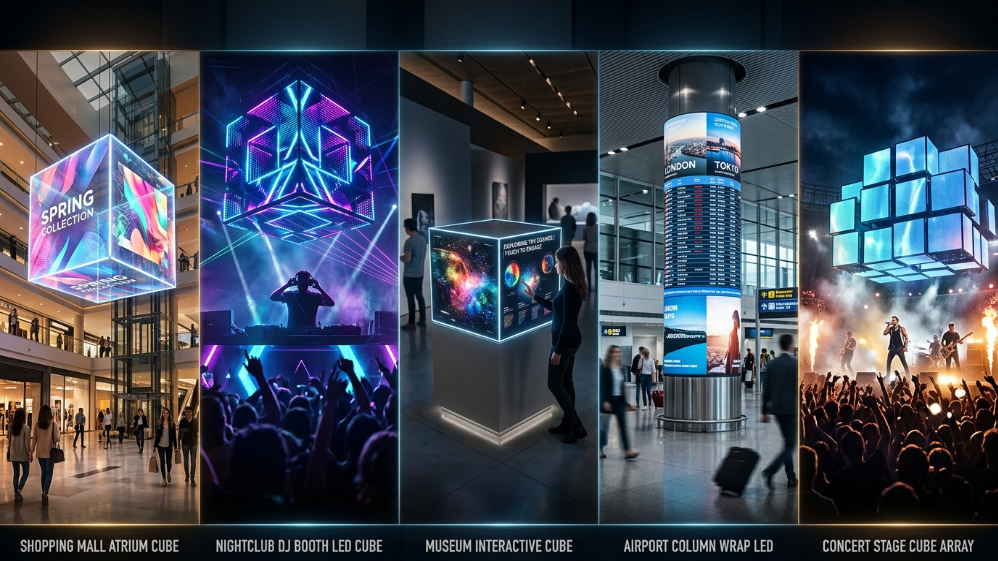
Scenario 1—Flagship Store Atrium: Suspended 5-Face Cube
The suspended atrium cube is the format that generates the most social media value per square meter of any LED display configuration. The engineering brief is precise: a 5-face unit (bottom open), rigged from ceiling steelwork at a single point or trapeze arrangement, centered over the primary pedestrian flow.
Specify P2.5 for viewing distances of 2.5–5 m typical in enclosed mall atriums. Demand a structural load certificate from the supplier—a 1.2 m cube will weigh 200–250 kg fully assembled. The suspension rigging must be rated for dynamic load (swaying from HVAC airflow), not static weight alone. Content should be produced with a 360° horizontal sweep in mind: a shopper on Level 1 and Level 3 simultaneously will see different faces. All faces must contribute to a coherent spatial narrative.
Scenario 2—Nightclub & DJ Booth Main Visual
The DJ booth cube lives in the harshest electrical environment of any commercial display application: bass vibration, fog machine particulates, rapid thermal cycling, and constant close-range handling by crew. GOB (Glue-on-Board) encapsulation is mandatory—it bonds the SMD LED elements to the PCB surface with an optical resin, eliminating the mechanical failure mode of vibration-loosened components. Pair with ≥3840 Hz refresh rate for flicker-free performance under strobed and coloured stage lighting. IP-rated power connectors throughout.
Scenario 3—Museum & Science Centre Exhibition
Resolution over everything. P1.8 with GOB protection for a close-viewing public environment where visitors will stand 1–2 m from the surface and reach out to touch it (they always do). The CMS integration requirement is different here: the display needs to run unattended for 8–12 hours daily, cycle through timed content programmes, and be serviceable by non-technical museum staff. Front-access maintenance panels are essential—rear access in an exhibition plinth is typically impossible once the surrounding exhibit is installed.
Scenario 4—Airport Column Wrapping: 4-Face Multi-Sided LED Video Wall
Column-wrap deployments are structurally distinct from suspended cubes. The LED cabinet system must conform to the column’s exact cross-section dimensions—whether square, rectangular, or polygonal—which almost always requires custom cabinet sizing. Specify IP54 minimum for cleaning resistance (airports use pressurized water cleaning on all surfaces), and 24/7 operation thermal management: passive heat dissipation via aerospace-grade aluminum profiles rather than fan-based cooling, which generates maintenance overhead and eventual failure in a 24/7 environment.
Scenario 5—Stage Art & Live Event: Multi-Cube Arrays
Multiple LED Cube Displays deployed as an array demand hardware-level frame synchronization—not software-level. The main controller (sending card) must distribute a global Genlock clock signal to all receiving cards simultaneously, ensuring that every cube in the array refreshes within the same microsecond. Without this, fast-moving content across multiple cubes produces a visible “tearing” artifact at the boundaries between units. Demand written confirmation of Genlock support from any supplier quoting a multi-cube stage configuration.
The Naked-Eye 3D Content Workflow: What Nobody Tells You Before You Buy
The cube hardware is the easy part. The content is where projects succeed or fail.
Naked-eye 3D content cannot be repurposed from standard video assets. It must be purpose-built for the exact pixel dimensions of each face of your specific cube. The workflow has three non-negotiable steps:
-
Step 1—Pixel Map Generation. Your supplier must provide a dimensioned technical drawing showing the exact pixel count (width × height) of each display face. A P2.5 cube with 640 mm side length, for example, resolves to 256 × 256 pixels per face. Content built to any other resolution will exhibit either stretched or cropped images—and the 3D depth illusion collapses immediately.
-
Step 2—UV-Mapped 3D Production. In Cinema 4D, Blender, or equivalent 3D software, a chamfered cube model is built to exact physical dimensions, UV-unwrapped, and used as the rendering canvas. The 3D scene is designed so that objects appear to protrude through or beyond the surface plane when viewed from the primary audience position. This requires a specialist content studio; generic motion graphic designers cannot substitute.
-
Step 3—CMS Synchronisation and Loop Scheduling. Content is uploaded to the display’s CMS as a face-mapped package, not as a single video file. The controller distributes the synchronized signal to each face’s receiving card simultaneously. Loop scheduling should include a minimum 4-week content rotation to prevent audience habituation—a static loop in a daily-use venue loses its impact within 10–14 days of opening.
5 Questions Every B2B Buyer Asks Before Purchasing an LED Cube Display
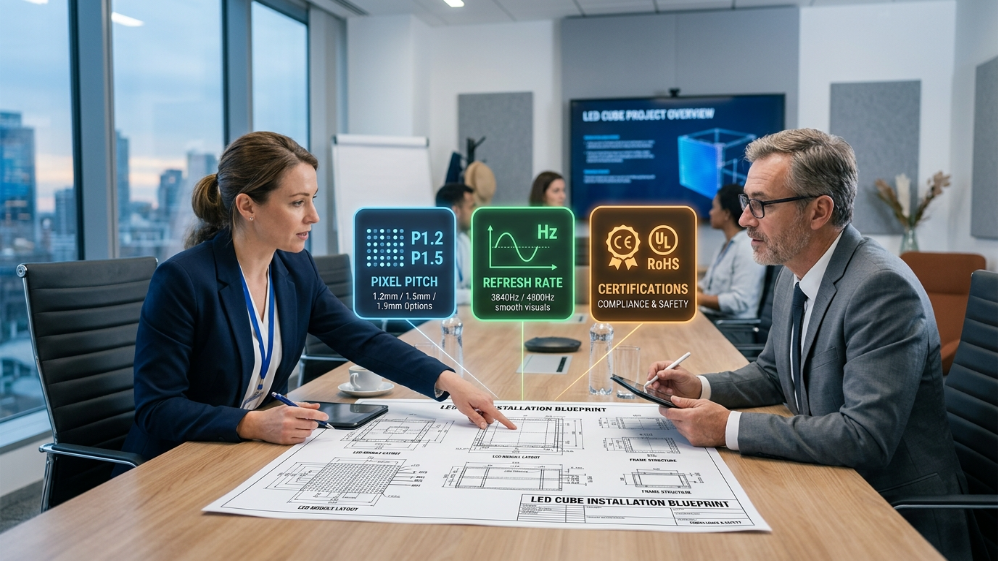
Q1: What corner gap specification should I demand from a supplier?
The industry-leading standard for professional-grade units is under 0.1 mm at the 90° join. Any supplier quoting a “seamless” product should be asked to provide the actual machined tolerance in writing. If they cannot answer in millimeters, the module corners are not precision-machined.
Q2: Can I use standard video content on a cube LED display?
No. Standard video plays on a single face only and looks no different from a flat screen. The naked-eye 3D effect—and the commercial justification for the premium hardware cost—requires purpose-built pixel-mapped 3D content. Budget for content production alongside hardware procurement, not as an afterthought.
Q3: How long does a commercial-grade LED Cube Display last?
Properly specified units carry an MTBF (Mean Time Between Failures) rating of 100,000 hours for the LED components—approximately 11 years at 24/7 operation. In practice, the first components to require replacement are power supply units (typically at 5–7 years) and driver ICs under adverse thermal conditions. Front-access serviceability and a supplier with in-country spare parts inventory are the two factors that determine real-world operational lifespan.
Q4: What certifications should I require for import compliance?
CE and RoHS for Europe; FCC for North America; UL for insurance and building compliance in the United States and Canada. Absence of any of these is a project risk, not just a paperwork issue—uncertified displays have been seized at customs or rejected by venue fire safety inspectors after installation.
Q5: What does a complete custom LED cube display project cost?
A commercial-grade indoor 5-face custom cube at P2.5, 1.2 m side length, with CMS, controller, and suspension rigging hardware, typically ranges from $18,000–$35,000 for the display system. Structural engineering, installation labour, and content production are additional and frequently equal the hardware cost. Budget for the complete system, not the panel price alone.
Expert Verdict
An LED Cube Display is not the right tool for every space—it is the right tool for spaces where omnidirectional visual impact is the commercial brief. When correctly specified (seamless 90° corners, matched pixel pitch, GOB protection where the environment demands it, and purpose-built naked-eye 3D content), it is the highest ROI creative display format available to B2B buyers in retail, hospitality, transit, and live events. When incorrectly specified—wrong pixel pitch, visible corner gaps, generic video content—it is an expensive flat screen mounted on six sides of a box.
The difference between those two outcomes is almost entirely in the pre-purchase specification process. Get the engineering right before you sign the order.
Ready to spec your project? Share your venue dimensions, viewing distance, and installation scenario with the Sostron engineering team for a custom pixel pitch recommendation and structural load calculation—no obligation, typical response within 24 hours.
References:
MIT Media Lab – Immersive Display & Spatial Computing Research
University of California, Berkeley – Human Visual Perception & Display Systems