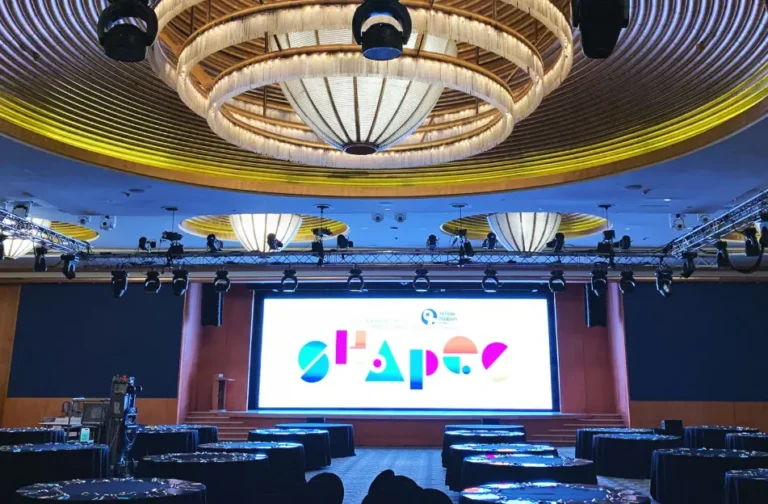
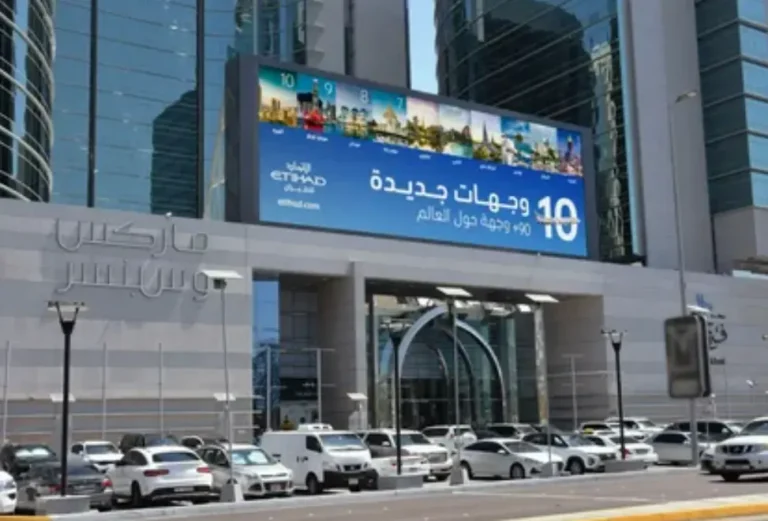
Here’s the short answer, before we get into the engineering: for roughly 95% of outdoor LED installations—roadside billboards, retail facades, stadium perimeter boards, standard DOOH networks—IP65 is the correct spec, not IP68. IP68 adds continuous-submersion protection you will almost never use, at a 20-35% cost premium that would be better spent on gasket quality, GOB sealing, and corrosion-resistant hardware. The exception is a narrow set of cases: poolside displays, flood-zone installations, and screens mounted below grade. If your project doesn’t fall into one of those categories, keep reading before you sign off on a spec sheet that’s solving the wrong problem.
| Rating | Dust Protection | Water Protection | Typical Use Case |
| IP65 | Fully dust-tight | Low-pressure water jets, any direction | Billboards, facades, standard DOOH |
| IP66 | Fully dust-tight | High-pressure, high-volume water jets | Coastal zones, storm-prone regions |
| IP67 | Fully dust-tight | Temporary immersion, up to 1m for 30 min | Flood-prone sites, low-lying installs |
| IP68 | Fully dust-tight | Continuous submersion beyond 1m | Poolside screens, semi-submerged builds |
We’ve specified LED modules for coastal DOOH networks, festival stages, and transit hubs across three continents, and the single most expensive mistake we see repeated is buyers treating the IP number as a proxy for “how good is this screen.” It isn’t. An IP65 panel with a poorly machined gasket channel will fail faster than a well-built IP65 panel with precision die-cast tolerances—regardless of what the datasheet says. According to IEC 60529, the standard that governs every IP rating on the market, the certification only confirms performance under one specific laboratory test: a defined water jet, at a defined pressure, from a defined angle, for a defined duration. It says nothing about how the enclosure behaves after 18 months of UV exposure, thermal cycling, or salt-laden coastal air. That gap between “passed the test” and “survives the field” is where most outdoor LED projects run into trouble, and it’s the gap this guide is built to close.
Why “Waterproof” Is a Marketing Word, Not an Engineering Spec
No LED display is waterproof in the way a diving watch is waterproof. The term gets used loosely by sales teams because it sells, but as a system integrator or DOOH operator, you need to think in terms of ingress protection under specific conditions, not blanket immunity to moisture. That distinction isn’t pedantic—it’s the difference between a screen that survives its warranty period and one that doesn’t.
What the IP Code Actually Tests—And What It Doesn’t
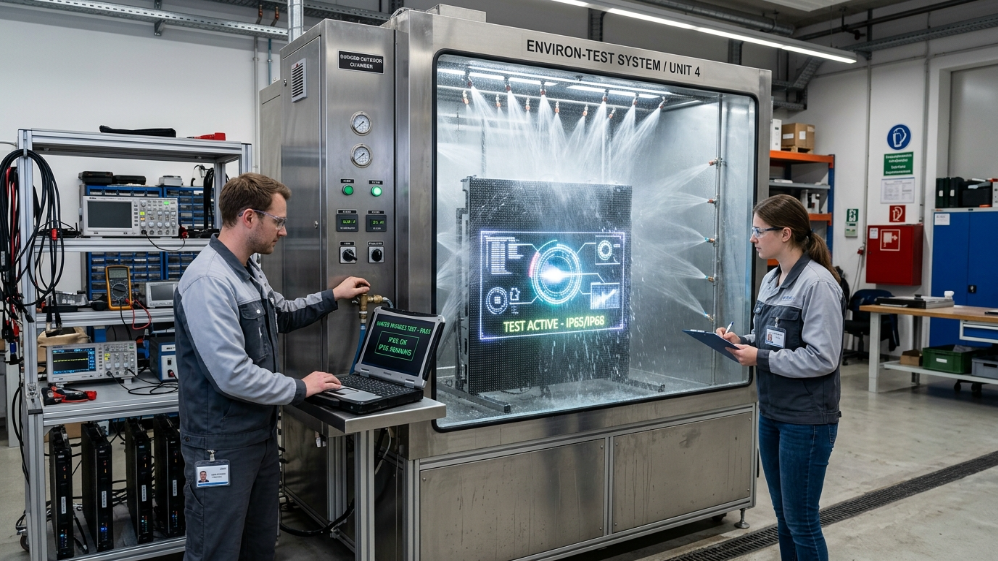
The two digits in an IP rating measure two independent things. The first digit, 0 through 6, covers solid particle ingress—dust, sand, insects, tools. For any outdoor cabinet, this number needs to be 6, meaning fully dust-tight; anything lower isn’t worth considering for an exterior install. The second digit, 0 through 8 (occasionally 9 for the specialized IP69K standard), covers liquid ingress, and this is where the real decision-making happens.
Here’s what the test conditions actually specify, per IEC 60529, and where they stop:
| Test Parameter | IP65 | IP67 | IP68 |
| Water delivery | Jet nozzle, 6.3mm | Full immersion | Full immersion (extended) |
| Pressure/depth | 30 kPa at 3m distance | Up to 1m depth | Manufacturer-defined depth |
| Duration | 15 min minimum | 30 min | Continuous, per spec |
| Simulates | Rain, hose spray | Brief submersion | Sustained submersion |
| Tests humidity infiltration? | No | No | No |
| Tests condensation cycling? | No | No | No |
| Tests salt spray corrosion? | No | No | No |
That last row is the one nobody puts on the spec sheet, and it’s the one that determines whether your screen is still running in three years.
The Silent Killer Most Suppliers Won’t Mention: Humidity and Thermal Condensation
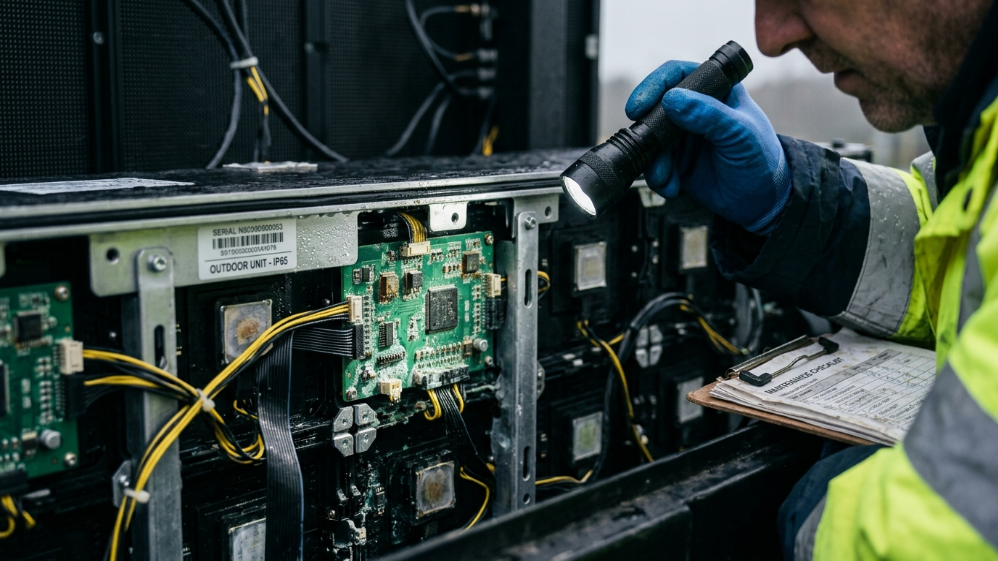
Rain is not what kills most outdoor LED cabinets. Humidity is. Water vapor molecules are small enough to migrate through seams and gasket interfaces that block liquid water completely, and once inside a sealed cabinet, they have nowhere to go. A panel running at 55-60°C during peak sun exposure and dropping to ambient temperature overnight creates a pressure differential that actively draws humid air in through microscopic gaps—then that moisture condenses on the coolest surface inside, which is almost always the PCB. Over months, that condensation cycle corrodes solder joints, LED leads, and driver ICs from the inside out, and no IP rating in the IEC 60529 standard—not IP65, not IP67, not IP68—is designed to test for it. This is precisely why a screen can hold a certified IP65 rating and still fail from moisture damage well inside its expected service life; the certificate tells you it passed a spray test, not that it’s immune to the mechanism that actually causes most field failures.
IP65 vs IP68—The Real Difference in Plain Numbers
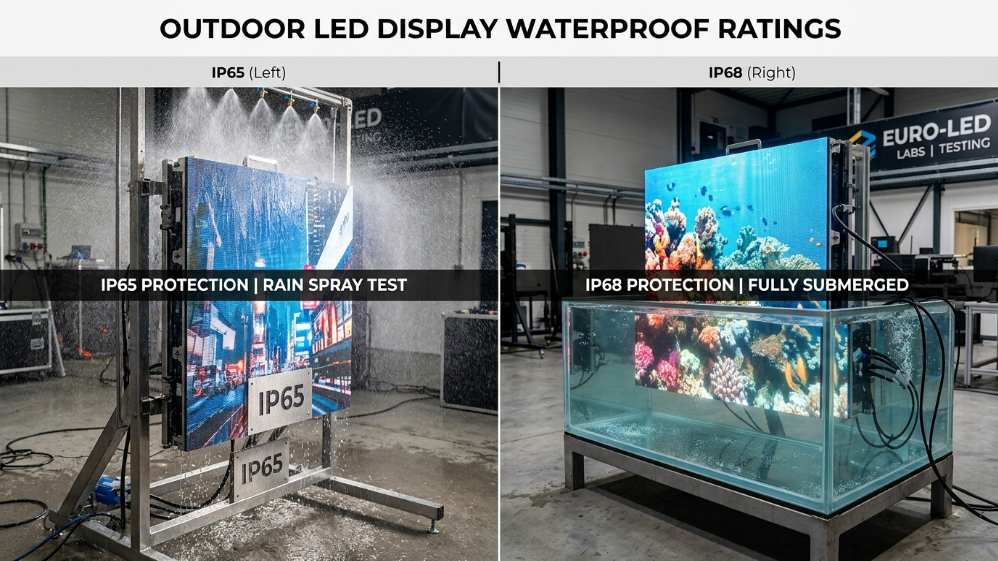
IP65 Explained: Dust-Tight + Directional Water Jet Resistance
An IP65-rated cabinet is built to shrug off wind-driven rain, sprinkler overspray, and routine hose-down cleaning from any angle. The “6” is your dust-tight guarantee—critical for driver boards and power supplies, since dust ingress causes short circuits and accelerates heat buildup far more often than people expect. The “5” confirms the enclosure survives a sustained, low-pressure jet test. In FAB terms: the feature is directional jet resistance at moderate pressure; the benefit to a DOOH operator is that you can run a standard maintenance wash-down without decommissioning the panel or voiding the warranty, and you get full weatherproofing for a market-standard price point rather than paying for capability you’ll never exercise.
IP68 Explained: Continuous Submersion Protection (And Why It’s Overkill for 99% of Projects)
IP68 certifies that an enclosure survives continuous submersion beyond one meter, for a duration and depth the manufacturer specifies. The feature is total immersion resistance; the honest benefit assessment for most B2B buyers is that it protects against a scenario—sustained underwater operation—that almost no commercial LED installation will ever face. Paying the IP68 premium on a roadside billboard doesn’t make the screen brighter, extend its operating lifespan, or improve image uniformity. It solves a problem you don’t have, while the budget it consumes could instead fund the gasket quality and GOB sealing that address the humidity and condensation failures that actually take screens down in the field.
Do You Actually Need IP68? A Decision Framework for B2B Buyers
Once the panels are dust-tight and jet-resistant, the real question isn’t “which number is higher”—it’s “which failure mode does my site actually expose me to.” We walk every client through the same three questions before recommending a spec, and they’ll save you from both under-speccing and overpaying.
-
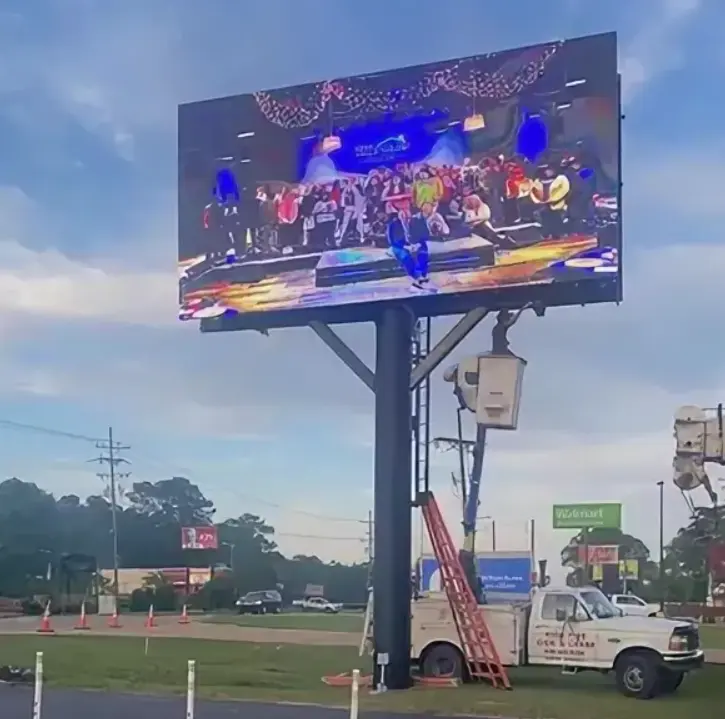
When IP65 is more than enough: standard roadside billboards, shopping-center facades, transit shelters, and any DOOH placement under a canopy or overhang. If the screen faces rain, dust, and routine wash-downs but nothing more aggressive, IP65 with quality gaskets outperforms a cheaply built higher-rated alternative every time.
-
When to upgrade to IP66/IP67: coastal sites within roughly 2km of salt water, regions with monsoon-grade or wind-driven storms, and open-air venues with no structural cover—think stadium perimeter boards or freestanding parking-lot displays that take the full force of every weather event. IP66’s higher-pressure jet tolerance matters here because storm-driven rain behaves more like a pressure wash than a light spray.
-
When you genuinely need IP68: poolside or fountain-adjacent screens, installations below flood elevation, and any cabinet that will sit at or below grade with a realistic risk of standing water. Outside these scenarios, IP68 is solving a submersion problem your site will never present.
Buyer-Specific Guidance: Match the Rating to Your Use Case
A system integrator, an event rental company, and a DOOH network operator are reading this same spec sheet for three different reasons—and each faces a different risk if they get it wrong.
System Integrators
System integrators should treat the IP certificate the same way a structural engineer treats a materials cert: verify it, don’t assume it. Ask the supplier for the actual IEC 60529 test report, not just the rating printed on the datasheet—the report specifies jet pressure, distance, and duration, and a legitimate one will match the standard’s parameters exactly. Based on our experience qualifying suppliers for municipal and transit contracts, a supplier who can’t produce a third-party test report is a supplier whose “IP65” is a marketing claim, not an engineering fact.
Event and Rental Companies
Event and rental companies face a different tradeoff: portability versus repeated assembly stress. Cabinets get disassembled, transported, and reassembled dozens of times a season, and every reassembly cycle is a chance for a gasket to seat imperfectly. For this use case, connector quality and gasket resilience under repeated compression matter more than chasing a higher IP number—an IP65 panel with a tool-free, self-aligning locking mechanism will hold its seal longer under field conditions than an IP67 unit with delicate seams that degrade after the twentieth teardown.
DOOH Advertisers
DOOH advertisers should be modeling IP rating against uptime revenue, not upfront cost alone. A panel failure mid-campaign doesn’t just cost a repair—it costs the contracted ad impressions you can no longer deliver. According to field data compiled across coastal advertising networks, moisture-related failures cluster heavily in the first 18-24 months when corrosion-grade hardware and sealing were skipped to hit a lower bid price. The IP number on the quote is rarely the variable that predicts this outcome; the gasket spec and cabinet material almost always are.
Beyond the IP Number—What Actually Determines LED Screen Lifespan
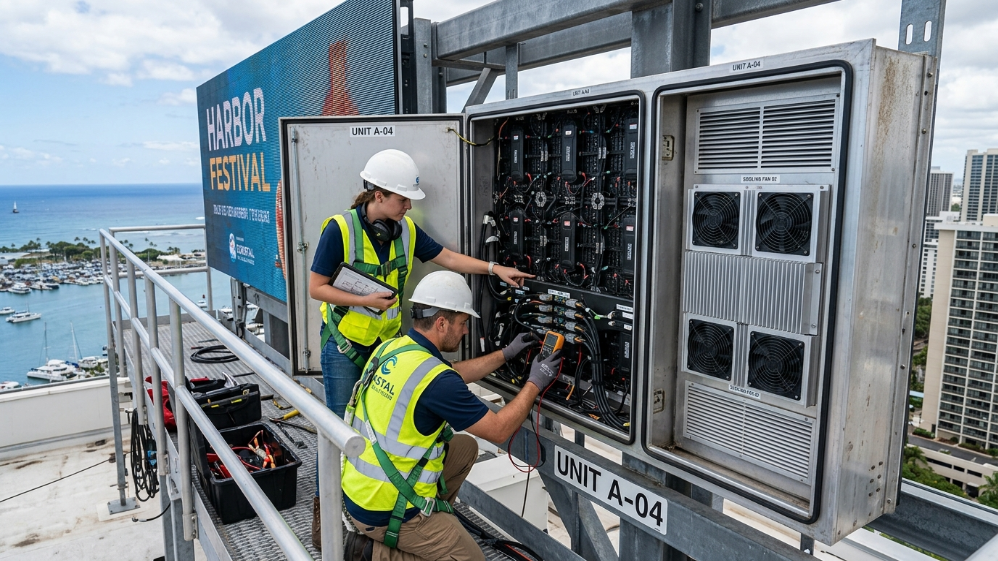
| Factor | Why It Matters More Than the IP Digit Alone |
| GOB (Glue on Board) sealing | Encapsulates individual LED chips in resin, blocking moisture at the component level rather than relying solely on the cabinet enclosure—critical in high-humidity climates regardless of IP rating |
| Gasket material (EPDM/silicone) | Maintains elasticity across temperature swings; a degraded gasket turns a certified IP65 cabinet into an unsealed one within a season |
| Cabinet material | Die-cast aluminum resists corrosion natively and holds tighter tolerances over time than painted steel, which relies on an unbroken coating to prevent rust |
| Salt spray resistance (ISO 9227) | A separate test from IP rating entirely; coastal hardware needs 720-hour-minimum salt spray certification, since IP testing uses fresh water and says nothing about chloride-driven corrosion |
| Breather valves | Equalize internal/external pressure during thermal cycling, reducing the humid-air “breathing” effect that drives condensation inside a sealed cabinet |
None of these show up in the two-digit IP code, and all of them are more predictive of five-year field performance than the rating itself.
Red Flags: How Suppliers Inflate or Fake IP Ratings
Watch for three patterns when evaluating quotes:
-
First, a rating with no accompanying test report—a real IP65 or IP68 certification is backed by a lab document specifying test house, date, and parameters; if a supplier only offers a spec sheet with the number printed on it, ask directly for the underlying report.
-
Second, a rating applied to the “front only”—some monitor and touchscreen products are rated IP65 on the display face but unrated on the rear housing, which is irrelevant for wall-mounted indoor gear but a serious liability on an outdoor cabinet exposed on all sides.
-
Third, an IP68 quote with no salt-spray or humidity data attached—a supplier pushing you toward the highest number without addressing the corrosion and condensation issues that actually cause failures is optimizing for your budget, not your installation’s survival.
FAQ
Is IP65 the same as fully waterproof?
No. IP65 confirms resistance to directional low-pressure water jets, not full submersion. It handles rain and hose wash-downs but will not survive sustained underwater conditions.
Can an IP65 LED screen survive a hurricane or typhoon?
Not reliably on its own. Wind-driven, high-pressure rain during severe storms exceeds the IP65 test parameters; installations in cyclone- or typhoon-prone regions should specify IP66 at minimum, paired with structural wind-load engineering.
How much more expensive is IP68 compared to IP65?
Industry pricing generally runs 20-35% higher for IP68 versus a comparable IP65 or IP66 panel, largely due to more elaborate sealing systems and lower production volumes.
What IP rating do I need for a coastal DOOH installation?
IP66 minimum, combined with 316 stainless steel hardware and ISO 9227-tested corrosion-resistant coating—the IP rating alone does not address salt-driven corrosion.
Does a higher IP rating improve LED screen brightness or lifespan?
No. IP rating governs enclosure sealing only. Brightness, pixel pitch, and color performance are independent specifications, and lifespan depends more on gasket quality, GOB sealing, and thermal management than on the IP digit itself.
Expert Verdict
If you take one thing from this guide, make it this: stop shopping by the IP number and start shopping by the failure mode your site actually presents. A well-built IP65 cabinet with proper GOB sealing, EPDM gaskets, and die-cast aluminum construction will outlast a cheaply assembled IP67 unit in nearly every real-world deployment we’ve evaluated. Save the IP68 premium for the handful of projects that genuinely involve submersion, and put the difference toward the sealing quality, corrosion testing, and connector engineering that determine whether your screen is still running clean five years from now.
References:
IEC 60529: Degrees of protection provided by enclosures (IP Code)
ISO 9227: Corrosion tests in artificial atmospheres — Salt spray tests