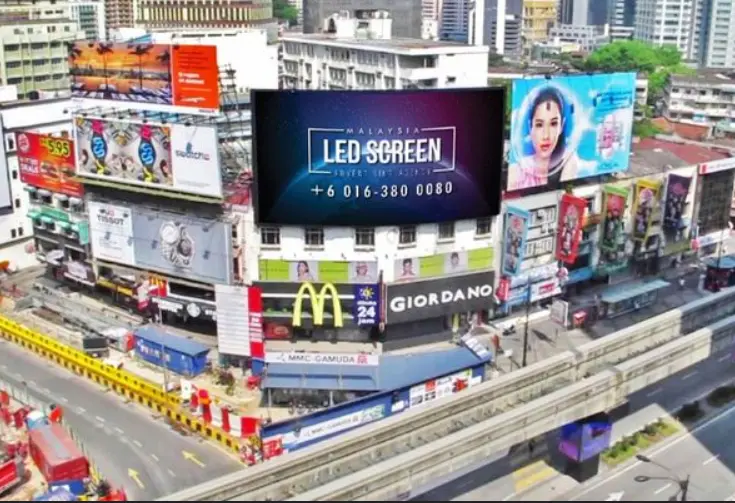
How Much Does a Jumbotron Cost?
A commercial LED Jumbotron typically costs US$40,000–US$1 million+ for a complete installed system, depending on screen dimensions, pixel pitch, display configuration, structural requirements, and installation complexity. Smaller indoor LED video scoreboards can start around US$40,000–US$60,000, while medium-sized systems commonly fall between US$75,000 and US$200,000. Large stadium Jumbotrons can reach US$250,000–US$1 million or more.
These are US market budgeting benchmarks, not manufacturer quotations. A US scoreboard installation specialist, Scoreboard Enterprises, publishes comparable project ranges and identifies outdoor high-school installations starting at approximately US$150,000.
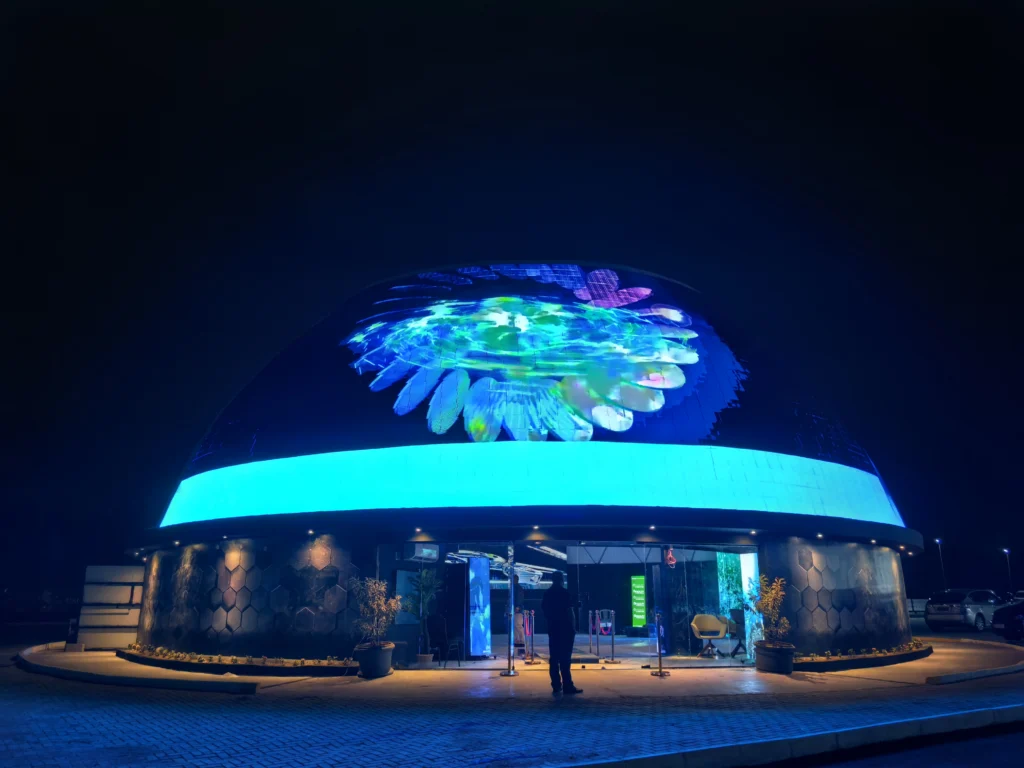
For buyers in the UK and Europe, the following currency conversions provide an initial reference:
| Project Category | USD Estimate | GBP Equivalent | EUR Equivalent |
|---|---|---|---|
| Small indoor display | $40,000–$60,000 | £30,300–£45,500 | €36,400–€54,600 |
| Medium LED video system | $75,000–$200,000 | £56,900–£151,700 | €68,200–€181,800 |
| Large stadium Jumbotron | $250,000–$1,000,000+ | £189,600–£758,400+ | €227,300–€909,200+ |
| Outdoor school scoreboard installation | $150,000+ | £113,800+ | €136,400+ |
Currency conversions use indicative mid-market rates dated November 17, 2026: US$1 ≈ £0.7584 and €0.9092. GBP and EUR figures are converted USD benchmarks, not independently verified UK or European supplier quotations.
The first distinction buyers need to understand is that the price of an LED screen is not the same as the cost of a functioning Jumbotron installation.
A supplier may quote only the LED cabinets, while another may include video processing, control equipment, steel structures, electrical work, installation, and commissioning. Comparing these two quotations without checking their scope can produce a seriously misleading budget.
What Is Included in a Jumbotron Price?
Commercial Jumbotron projects generally have four different pricing levels:
- LED screen hardware: LED modules, cabinets, power supplies, receiving cards, and internal connections.
- Complete display system: Screen hardware, sending equipment, video processor, control system, and essential accessories.
- Installed project: Display system, structural support, electrical infrastructure, transportation, installation, and commissioning.
- Rental package: Screen rental, delivery, setup, dismantling, technical personnel, and event-related services.
For example, a 100-square-metre outdoor LED display quoted at a hardware-only rate of US$700 per square metre represents US$70,000 in screen hardware. It does not automatically mean the entire project can be completed for US$70,000.
The quotation scope must be established before any meaningful price comparison begins.
What Determines the Cost of a Jumbotron?
Two Jumbotrons with identical external dimensions can have substantially different prices. The reason is that screen area is only one part of the engineering specification.
For commercial LED displays, the most influential factors are pixel pitch, brightness, LED component quality, cabinet construction, operating environment, and viewing distance.
Screen Size and Total Display Area
Screen dimensions determine how many LED cabinets and modules are required.
A larger display requires more LED pixels, power supplies, receiving cards, structural support, and electrical capacity. However, the relationship between size and price is not always perfectly linear because cabinet dimensions, custom fabrication, and installation requirements can introduce additional costs.
Consider these examples:
- A 6 × 3 m screen provides 18 m² of display area.
- An 8 × 5 m screen provides 40 m².
- A 12 × 7 m screen provides 84 m².
- A 20 × 11 m screen provides 220 m².
Moving from 18 m² to 220 m² is not simply a matter of purchasing a larger screen. The structural design, transportation, lifting equipment, electrical distribution, and maintenance arrangements also become more demanding.
Pixel Pitch and Viewing Distance
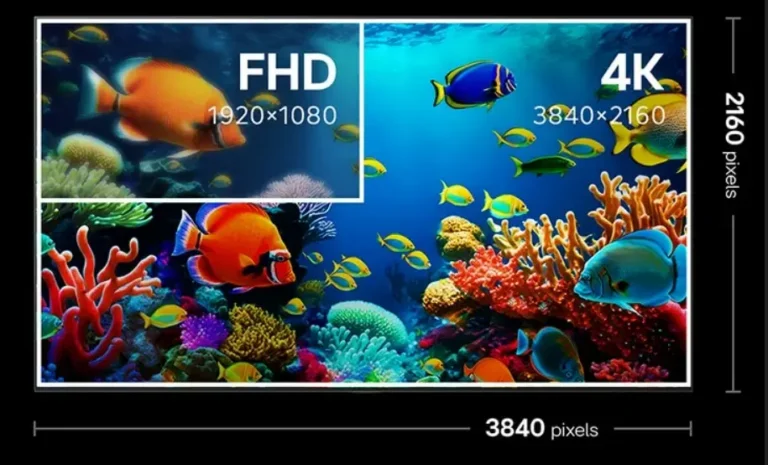
Pixel pitch refers to the distance between the centres of two adjacent LED pixels, measured in millimetres.
A smaller pixel pitch produces a higher pixel density and generally provides sharper images at shorter viewing distances. However, it also requires more LEDs and associated components for the same display area.
For a stadium Jumbotron viewed from distant seating areas, specifying an unnecessarily fine pixel pitch can increase the initial investment without delivering a meaningful improvement to most viewers.
By contrast, indoor arenas and premium broadcast environments may require finer pixel spacing because audiences and cameras can be much closer to the display.
A practical starting point is to assess:
- The closest expected viewing position.
- The furthest viewing position.
- The physical dimensions of the screen.
- Whether the display primarily shows scores, advertising, live video, or detailed graphics.
- Whether television and camera capture are important.
Pixel pitch should be selected according to actual viewing conditions, not simply the smallest number available in a product catalogue.
Brightness and Indoor vs. Outdoor Requirements
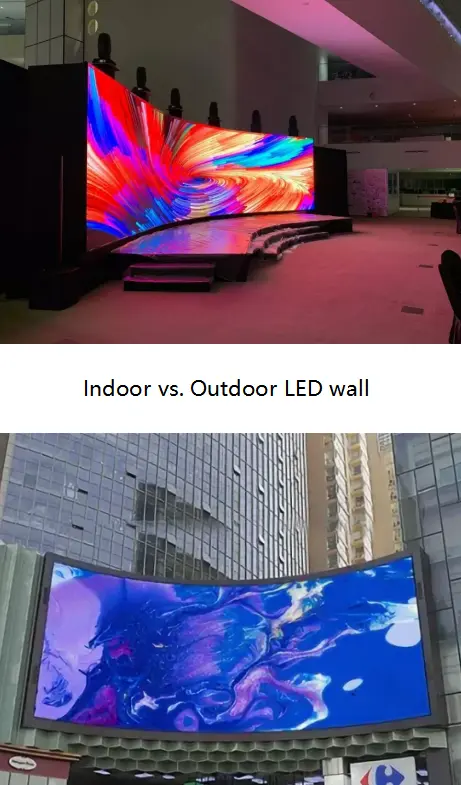
Brightness is another important cost driver, particularly for large outdoor Jumbotrons.
An indoor arena operates under relatively controlled lighting conditions. An outdoor stadium must maintain image visibility under changing daylight, direct sunlight, and variable weather.
Typical engineering considerations include:
- Indoor displays: Controlled ambient lighting, viewing distance, image detail, and camera performance.
- Outdoor displays: Sunlight visibility, automatic or manual brightness control, weather protection, and thermal management.
- Semi-outdoor displays: Partial exposure to sunlight, moisture, dust, and temperature fluctuations.
Outdoor systems commonly require higher brightness and more demanding environmental protection than indoor displays. These requirements influence LED components, power consumption, cabinet sealing, and heat dissipation.
A higher brightness specification should therefore be justified by the installation environment rather than treated as an automatic upgrade.
LED Technology and Cabinet Construction
The LED technology and cabinet design also influence the initial investment and long-term maintenance costs.
For large commercial displays, buyers commonly evaluate:
- SMD LED: A widely used technology for outdoor and indoor LED video displays, with different pixel pitches and brightness configurations.
- COB LED: An integrated packaging approach that can be relevant to fine-pitch applications requiring a different surface protection and maintenance strategy.
- GOB LED: A protective coating approach used in certain LED display applications to improve surface protection.
These technologies should not be compared on packaging terminology alone. Actual image performance, component quality, repair procedures, and operating conditions matter more than the technology label.
Cabinet construction is equally important. Die-cast aluminum cabinets, steel structures, and specialized rental cabinets have different weight, rigidity, installation, and maintenance characteristics.
Estimated Jumbotron Costs by Display Specification
The following table provides indicative 2026 LED hardware and installed-system benchmarks for different commercial applications.
| Application | Typical Pixel Pitch | LED Hardware (USD/m²) | Installed System (USD/m²) |
|---|---|---|---|
| Outdoor stadium perimeter | P6–P10 | $400–$1,100 | $700–$1,900 |
| Indoor arena display | P4–P8 | $1,100–$2,500 | $2,000–$4,500 |
| High-resolution video board | P2.5–P4 | $1,800–$3,500 | $3,000–$6,000 |
| Outdoor advertising display | P6–P10 | $400–$1,100 | $700–$1,900 |
Indicative 2026 screening ranges compiled from published stadium display pricing. These are not standardized industry averages or Sostron quotations. Installed costs depend on the assumed installation scope and site conditions; complex structural work may exceed these ranges.
The important point is that a stadium perimeter display and a main stadium Jumbotron should not be budgeted using the same price-per-square-metre assumption.
A perimeter screen is generally designed for advertising and information delivery around the playing area. A main video board may require higher image detail, different structural support, specialized video processing, and more demanding broadcast integration.
How Much Does Jumbotron Installation Cost?
For permanent installations, engineering and construction can account for a substantial part of the total project budget.
This is particularly important for outdoor displays mounted on poles, building façades, stadium structures, or purpose-built steel frameworks.
Steel Structure and Foundation
A large outdoor Jumbotron creates significant wind resistance. The supporting structure must therefore be designed around the actual display dimensions, mounting arrangement, local wind conditions, and structural characteristics of the installation site.
The project may require:
- Structural engineering calculations.
- Steel support frames and mounting brackets.
- Concrete foundations and anchor bolts.
- Wind-load assessment.
- Crane and lifting equipment.
- Access platforms for maintenance.
In the United States, structural engineers commonly refer to ASCE/SEI 7 for applicable design loads, together with the locally adopted building code.
For UK installations, structural design must follow the relevant British and European engineering requirements and applicable building regulations.
Local Regulations and Installation Conditions
Regulatory approval can also affect the budget and project schedule.
In the United States, buyers should confirm requirements with the local Authority Having Jurisdiction (AHJ), building department, electrical inspector, and relevant zoning or transportation authorities.
In England, illuminated outdoor advertising may require advertisement consent from the Local Planning Authority. The applicable requirements depend on the advertisement’s location, dimensions, illumination, and consent category. The UK government’s advertising guidance explains the distinction between deemed and express consent.
The physical environment also changes the engineering requirements:
- Coastal locations: Salt exposure and corrosion protection deserve particular attention.
- Hurricane-prone regions: Wind-load calculations and structural anchoring become critical.
- Cold climates: Snow, ice, temperature fluctuations, and drainage require consideration.
- Hot and humid regions: Thermal management, ventilation, and moisture protection become more important.
These are not optional upgrades for appearance. They are engineering considerations that influence safety, equipment reliability, and maintenance costs.
Electrical Infrastructure, Freight and Import Costs
A complete installation also requires adequate electrical capacity and signal infrastructure.
The project may involve dedicated distribution equipment, circuit protection, grounding, cable routes, surge protection, and video-processing equipment.
For international procurement, freight and customs costs should be evaluated separately from the factory quotation.
US importers should confirm the correct Harmonized Tariff Schedule (HTS) classification, country of origin, and applicable duty rates with their customs broker. US Customs and Border Protection emphasizes that tariff determination depends on the correct product classification; LED display components should not automatically be assigned one universal duty rate.
UK and European buyers should similarly assess:
- Ocean or air freight.
- Cargo insurance.
- Import VAT.
- Applicable customs duties.
- Port handling and inland transportation.
- Customs clearance and delivery arrangements.
A low factory price does not necessarily translate into a low landed project cost. The final budget should reflect the equipment delivered to the actual installation site, not simply its original manufacturing price.
What Does It Really Cost to Own a Jumbotron? Understanding the Five-Year TCO

The purchase price is only the beginning of a Jumbotron investment. For stadium operators, advertising companies, event venues, and commercial display buyers, the more useful financial question is how much the LED display will cost to operate over its entire service life.
This is where Total Cost of Ownership (TCO) becomes important.
A five-year TCO calculation should include more than the original LED screen quotation. It should account for electricity, maintenance, spare parts, control equipment, technical labour, and potential downtime.
Electricity Consumption: Maximum Power Is Not Average Power
Power consumption is one of the most frequently misunderstood elements of an outdoor LED display quotation.
Manufacturers commonly specify both maximum power consumption and average power consumption. Maximum consumption represents a high-load operating condition, while average consumption is generally more useful for estimating electricity expenses.
Actual consumption depends on:
- Screen area and pixel pitch.
- Brightness settings and ambient lighting.
- Video content and average image brightness.
- Operating hours per day.
- Power supply and system efficiency.
- Environmental temperature and ventilation requirements.
For example, a 100 m² outdoor Jumbotron operating at an assumed average power consumption of 250 W/m² has an estimated average power demand of:
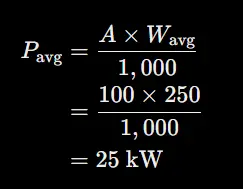
If the screen operates for 12 hours per day, its estimated daily energy consumption is:
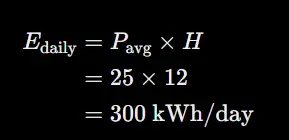
At an illustrative electricity tariff of US$0.15/kWh, the estimated electricity cost is:
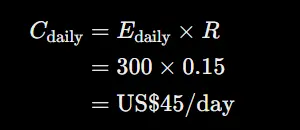
Assuming the same operating schedule and electricity rate throughout the year:
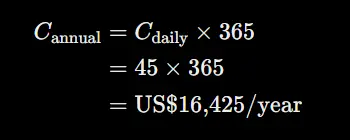
This is a planning calculation, not a guaranteed operating cost. Actual electricity consumption depends on screen brightness, displayed content, operating conditions, and configuration. Buyers should request measured or manufacturer-documented typical power consumption for the proposed LED display configuration. We provide you with a professional LED display project cost estimate calculator.
Maintenance, Spare Parts and Technical Labour
A large LED display contains thousands or millions of individual pixels, together with power supplies, receiving cards, cables, connectors, and control components.
Even a well-designed system requires a maintenance strategy.
Common long-term expenses include:
- Replacement LED modules and power supplies.
- Receiving cards and signal components.
- Cabinet cleaning and inspection.
- Electrical and connection checks.
- Technical labour and maintenance access.
- Software and control-system support.
- Spare-part storage and logistics.
One frequently overlooked issue is maintenance accessibility. A display with rear-service access may require a different support structure and installation clearance from a front-service design. If technicians cannot easily access the equipment, even a relatively inexpensive component replacement can become an expensive maintenance operation.
For a stadium installation, buyers should also consider the financial consequences of downtime. A failed display during a major sporting event can affect advertising delivery, sponsorship commitments, and the venue’s commercial operations.
A Practical Five-Year Jumbotron Cost Calculation
Consider a hypothetical outdoor stadium project with the following assumptions:
Illustrative Project Profile
100 m²
Outdoor LED Jumbotron · Five-year ownership model
| Parameter | Assumption |
|---|---|
| LED screen area | 100 m² |
| Hardware and control system | $90,000 |
| Structure and installation | $35,000 |
| Freight and commissioning | $10,000 |
| Initial project investment | $135,000 |
| Average power consumption | 250 W/m² |
| Daily operating hours | 12 |
| Electricity tariff | $0.15/kWh |
| Annual maintenance allowance | $4,000 |
| Annual spare-parts allowance | $2,000 |
The estimated five-year ownership cost is:
| Cost Category | Five-Year Cost |
|---|---|
| Initial project investment | $135,000 |
| Electricity | $82,125 |
| Maintenance labour | $20,000 |
| Spare parts | $10,000 |
| Total five-year TCO | $247,125 |
Illustrative scenario only. All project prices, operating assumptions, and maintenance allowances are hypothetical, not actual Sostron quotations or verified market averages. Taxes, financing, insurance, major component failures, and advertising revenue are excluded.
The calculation reveals an important commercial consideration: the initial US$135,000 investment represents only about 55% of the modeled five-year ownership cost.
A buyer comparing two systems should therefore examine their expected operating consumption, maintenance requirements, and service arrangements rather than choosing solely on the lowest hardware quotation.
Buying a Jumbotron vs. Renting: Which Makes Better Financial Sense?
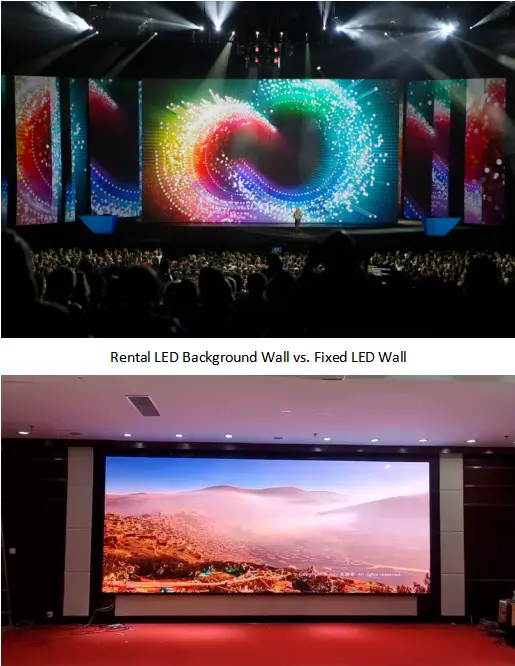
For event companies and stadium operators, purchasing an LED Jumbotron is not always the most economical decision. The right choice depends on how frequently the equipment is used, how long it remains installed, and whether the business can generate revenue from the display.
Buying is generally more attractive for regular, long-term use, while renting can be more practical for occasional events.
Consider the following factors:
| Evaluation Factor | Buying | Renting |
|---|---|---|
| Initial investment | High | Low |
| Long-term operating costs | Owner’s responsibility | Usually included or separately charged |
| Equipment availability | Under owner’s control | Subject to availability |
| Maintenance | Owner or contracted service provider | Usually rental provider |
| Customization | Greater control | Depends on rental inventory |
| Best application | Permanent stadiums and DOOH | Concerts and occasional events |
For rental projects, buyers should calculate the complete event cost, including:
- Daily LED screen rental charges.
- Transportation and insurance.
- Installation and dismantling.
- Rigging and lifting equipment.
- Video processing and technical operators.
- Additional event days and overtime.
A useful purchasing decision model is to calculate the number of event days required for owning an LED display system to become more cost-effective than renting:
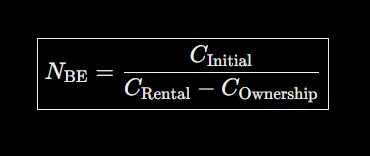
Where:
-
\(N_{\text{BE}}\) = Break-even number of event days.
-
\(C_{\text{Initial}}\) = Initial investment in purchasing and setting up the LED display system.
-
\(C_{\text{Rental}}\) = Rental cost per event day.
-
\(C_{\text{Ownership}}\) = Variable ownership cost per event day, including transportation, setup, operation, and other event-related expenses.
The calculation should also account for maintenance, storage, depreciation, and other fixed ownership costs over the comparison period. These costs should be added to the total ownership cost rather than overlooked.
For example, an event organizer running several large events each year should compare cumulative rental expenditure against the complete cost of purchasing, operating, transporting, storing, and maintaining a suitable LED display system.
There is no universal break-even point. The result depends on actual rental quotations, annual equipment utilization, operating expenses, and the resale or residual value of the display.
How to Choose a Jumbotron Manufacturer Before Requesting a Quote
A competitive price is important, but a commercial LED display is a long-term infrastructure investment. The supplier’s technical capabilities and ability to support the project deserve equal attention.
Before comparing manufacturers, request the following information:
1. Display Specifications
- Pixel pitch and LED configuration.
- Brightness and refresh rate.
- Cabinet dimensions and weight.
- Maximum and typical power consumption.
- IP protection rating.
- Front or rear maintenance configuration.
2. Engineering Documentation
- Cabinet installation drawings.
- Structural mounting requirements.
- Electrical specifications.
- Signal transmission architecture.
- Thermal management recommendations.
3. Commercial and After-Sales Terms
- Warranty coverage and exclusions.
- Spare-parts availability.
- Production and delivery lead time.
- Installation and commissioning responsibilities.
- Technical support arrangements.
A particularly important point is to establish who is responsible for the steel structure, foundation, electrical infrastructure, and local installation approvals.
A manufacturer may supply the LED display without assuming responsibility for the complete construction project. This distinction should be documented in the RFQ.
For buyers considering different display configurations, reviewing actual cabinet designs and product specifications is more useful than comparing quotations based on pixel pitch alone.
Frequently Asked Questions About Jumbotron Costs
Q1. How much does a 20-foot Jumbotron cost?
A 20-foot-wide Jumbotron does not have a fixed price because its height, pixel pitch, brightness, and installation method determine the total cost. A 20 × 10-foot display provides approximately 200 square feet of screen area. Buyers should request separate hardware, control-system, structural, and installation quotations.
Q2. How much does a stadium Jumbotron cost to install?
Stadium Jumbotron installation costs depend on screen dimensions, mounting height, structural design, foundation requirements, electrical infrastructure, and crane access. Outdoor installations may require wind-load calculations and local building approvals. A complete project quotation should distinguish LED equipment costs from civil engineering, steelwork, electrical installation, and commissioning.
Q3. How much electricity does a large outdoor Jumbotron use?
Electricity consumption depends on screen area, brightness, content, and operating hours. For example, a 100 m² display averaging 250 W/m² consumes approximately 25 kWh per operating hour. Running it for 12 hours daily requires around 300 kWh. Actual consumption should be calculated using the manufacturer’s documented typical power specification.
Q4. Is it cheaper to buy or rent a Jumbotron for sporting events?
Renting is often more practical for occasional sporting events because it avoids the initial equipment investment, storage, and long-term maintenance responsibilities. Buying may become more economical for venues with frequent events and consistent display requirements. Compare complete rental expenses against equipment ownership, installation, maintenance, and expected utilization before deciding.
Final Thoughts: Look Beyond the Initial Jumbotron Price
A Jumbotron is not simply a large LED screen. It is an integrated commercial display system involving display technology, structural engineering, electrical infrastructure, video processing, installation, and long-term maintenance.
The cheapest initial quotation may not represent the best investment. An unsuitable pixel pitch can waste money on unnecessary resolution, inadequate brightness can compromise daytime visibility, and poorly planned maintenance access can increase operating expenses over time.
Before making a purchasing decision, evaluate three things:
- Technical suitability: Does the display match the actual viewing distance, environment, and content requirements?
- Complete project cost: Does the quotation include the equipment, structure, transportation, electrical work, and installation?
- Long-term reliability: Can the system be maintained efficiently, with appropriate spare parts and technical support?
The right Jumbotron specification is the one that delivers the required viewing experience and commercial performance without creating unnecessary installation or operating costs.
Because installation environments, screen dimensions, and viewing distances vary significantly between projects, contact our engineering team to receive an accurate, free, customized quotation based on your specific project requirements.
Important Price Disclaimer
Please note that all prices and cost estimates provided in this article are for general reference and preliminary budgeting purposes only. Actual Jumbotron and LED display prices may vary depending on pixel pitch, screen dimensions, LED components, cabinet materials, brightness requirements, control systems, structural engineering, shipping costs, import duties, local regulations, installation conditions, and project-specific requirements.
Currency conversions and indicative market benchmarks may also change over time. The figures presented should not be regarded as fixed product prices, guaranteed quotations, or final project costs. For an accurate quotation, please contact our engineering team with your required screen size, pixel pitch, installation location, viewing distance, and application details. We will help evaluate the appropriate LED display configuration and provide a customized solution based on your actual project requirements.
References:
ASCE — Minimum Design Loads and Associated Criteria for Buildings and Other Structures
OAAA — Explanation of OAAA Recommended Brightness Guidelines