Table of Contents
ToggleWhen an event planner in Los Angeles starts looking for an LED dance floor rental, the first problem usually seems simple: How much will it cost? The real problem appears after the first few quotations arrive. One supplier may quote $1,600, another $2,500, while a larger production company may ask for more than $4,000 for what appears to be the same floor size. The difference often comes from panel construction, load capacity, controllers, delivery, installation, technical support, and venue requirements—not simply the number of LED panels. SoStron approaches these projects from the display-engineering side, combining rental-grade LED floor technology, modular cabinet design, structural protection, high-refresh-rate display systems, and project-based configuration rather than treating the dance floor as ordinary event lighting.
Built for Feet, Weight, Cameras, and Repeated Events
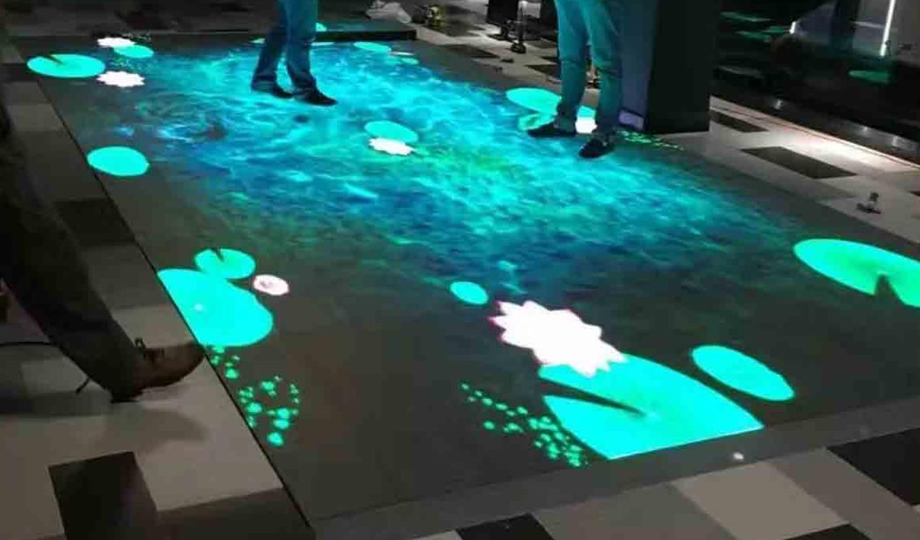
An LED dance floor looks like a display, but engineering one as a floor is a very different task from building a conventional LED wall. The system has to survive repeated foot traffic while maintaining a flat walking surface, stable connections, sufficient load capacity, thermal performance, and consistent image quality. Depending on the design, manufacturers use reinforced aluminum structures, protective glass or polymer surfaces, GOB-protected LED modules, magnetic or mechanical connections, and replaceable modules to balance durability with fast deployment.
This distinction matters particularly for rental companies. A floor that looks impressive during a five-minute demonstration is not necessarily suitable for hundreds of setup and teardown cycles. Commercial systems on the market demonstrate how different engineering approaches can produce load ratings ranging from hundreds of kilograms to several tons, while professional rental designs commonly combine 500 × 500 mm modules, high refresh rates, protective surfaces, and front-side environmental protection.
Why Choose SoStron for an LED Dance Floor Project?
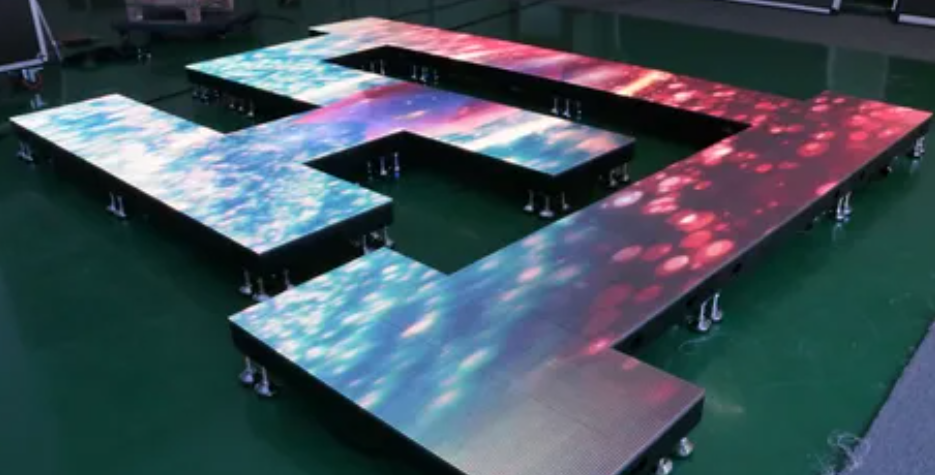
Choosing an LED floor supplier is ultimately a technical decision disguised as a purchasing decision. SoStron focuses on commercial LED display engineering rather than simply supplying illuminated tiles. Its product portfolio includes the Hima rental LED floor screen, designed around modular 500 × 500 mm panels, rental deployment, interactive applications, and angled installation options.
For buyers, that experience matters because the difficult part often starts after the order is placed. Pixel pitch has to match the viewing distance. Power distribution has to match the venue. Load-bearing requirements have to match the expected traffic. The controller has to work with the content workflow. Spare modules and service access have to be considered before the first event—not after a panel fails.
That is the difference between buying an LED product and engineering an LED floor system.
LED Dance Floor Rental Los Angeles: What Does the Market Actually Cost?
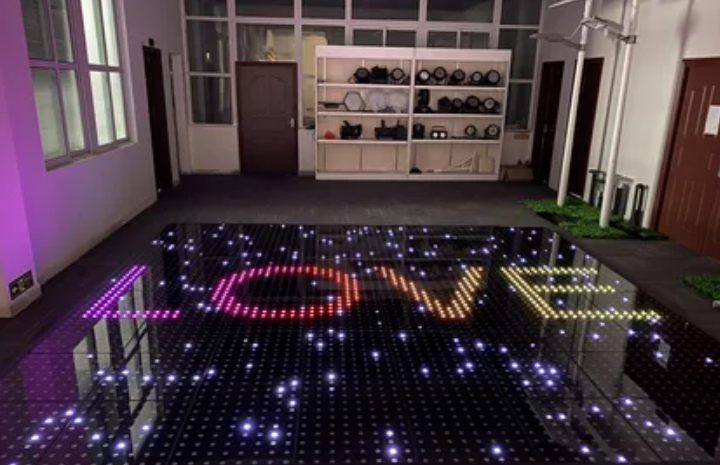
The most common pricing mistake is to search for one “standard” Los Angeles LED dance floor price. There isn’t one. Publicly listed LA rental prices show a broad range depending on floor size, equipment package, installation, and service scope. For example, some providers list 12×12 ft floors around $1,600–$2,000, while 16×16 ft and 20×20 ft configurations can move into the $2,500–$5,000+ range. Other companies calculate the rental using square-foot pricing rather than a fixed package.
For preliminary budgeting, the following range is more useful than a single headline number:
| Floor Size | Typical Planning Budget | Typical Application |
|---|---|---|
| 10 × 10 ft | $1,200–$2,500+ | Private parties |
| 12 × 12 ft | $1,500–$2,000+ | Weddings |
| 16 × 16 ft | $2,400–$3,500+ | Corporate events |
| 20 × 20 ft | $3,000–$5,000+ | Galas, concerts |
| 20 × 30 ft+ | Custom quotation | Festivals and large productions |
These figures should be used as budgeting references, not fixed market rates. The final quote depends heavily on whether transportation, installation, teardown, technician support, content programming, insurance requirements, and venue labor are included.
Why Two Similar LED Floor Quotes Can Be Thousands Apart
A low quotation is not necessarily a better quotation.
One supplier may be quoting the LED floor only. Another may be quoting a complete production package that includes delivery, setup, controller configuration, technician support, and pickup. A third may include custom content or an overnight technician.
Before comparing prices, break every quotation into the same categories:
- LED floor panels
- Controller and processor
- Power distribution
- Delivery
- Setup
- Teardown
- Technician
- Custom content
- Venue labor
- Insurance or COI
- Overtime
- Taxes
- Damage waiver
This is especially important in Los Angeles, where hotels, convention venues, production locations, and private event spaces may have different loading schedules and vendor requirements.
The number that matters is not the advertised rental fee.
It is the total cost of getting a working floor into the venue, operating it safely, and removing it afterward.
Choosing the Right LED Dance Floor Size for Your Event
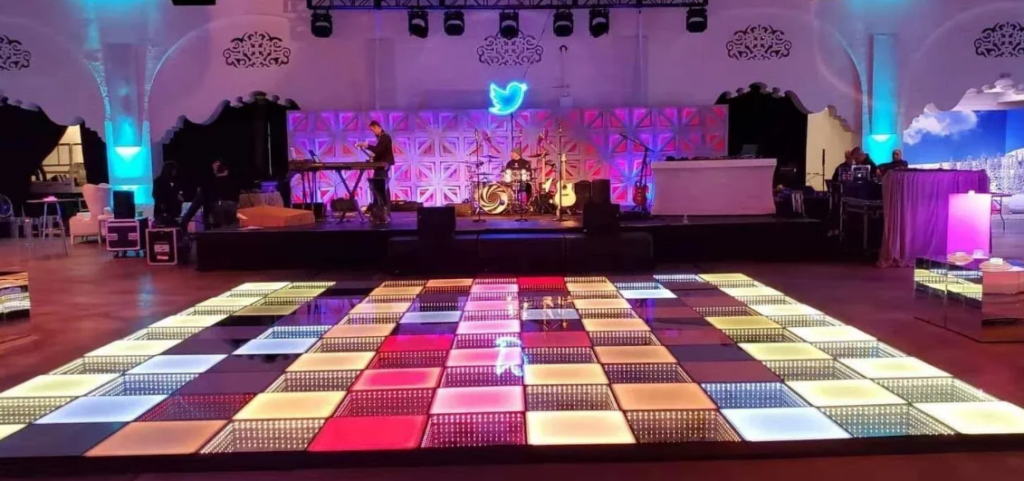
A 200-person event does not automatically require a 20×20 ft dance floor. Most guests are not dancing at the same time, and the layout of the venue can be more important than the guest list.
As a practical starting point:
| Floor Size | Approximate Active Dancers | Suitable Events |
|---|---|---|
| 10 × 10 ft | 20–40 | Private parties |
| 12 × 12 ft | 30–50 | Weddings |
| 16 × 16 ft | 50–80 | Corporate events |
| 20 × 20 ft | 100–160+ | Large receptions |
| 20 × 30 ft+ | 150+ | Concerts and festivals |
The actual capacity depends on how densely people are expected to dance. A wedding with 150 guests may function perfectly with a 16×16 ft floor if only part of the room is intended for dancing.
The right design starts with active dancers, venue dimensions, stage placement, tables, and audience sightlines rather than guest count alone.
Los Angeles Venue Requirements That Should Be Checked Before Booking
Many LED floor problems have nothing to do with the LED technology itself. They begin with venue logistics.
Before booking an LED dance floor rental in Los Angeles, confirm:
Floor Surface
The installation area should be reasonably flat, stable, and capable of supporting the system and expected traffic. If the venue floor is uneven, the supplier may need to use adjustable supports or another leveling solution.
Loading Access
Ask about:
- Loading dock availability
- Door width
- Freight elevator dimensions
- Stair access
- Distance from loading area to ballroom
- Allowed load-in hours
- Venue-approved vendors
This matters because a large LED floor can represent several hundred kilograms of equipment once panels, cases, controllers, cables, and power hardware are included.
Electrical Supply
The supplier should provide maximum power consumption and expected operating consumption so the venue’s electrical team can determine whether dedicated circuits are required.
Certificate of Insurance
Hotels and professional venues may require a Certificate of Insurance (COI) before allowing an external production company to install equipment.
Setup Window
Do not assume that a floor can be installed immediately before guests arrive. Larger systems need time for assembly, cable routing, controller configuration, testing, and calibration.
The Technical Specifications That Actually Matter
Specifications are useful only when they answer a real operating question.
Pixel Pitch
Pixel pitch determines the distance between individual LED pixels. For dance floors, P3.91 and similar rental-oriented pitches are common, while finer pitches may be selected when cameras or close viewing distances are important.
The right pitch depends on viewing distance and content. If the floor will mainly display animated colors and patterns, an extremely fine pitch may add cost without producing a meaningful visual improvement.
Refresh Rate
For professional events, refresh rate becomes particularly important when cameras are involved.
A high refresh rate helps reduce visible scanning and flicker artifacts in photography and video. Commercial rental products commonly advertise refresh rates of 3840 Hz or higher.
If the event will be livestreamed or professionally filmed, confirm the actual refresh-rate performance with the supplier instead of relying only on a marketing label such as “HD.”
Brightness
Indoor ballroom lighting, nightclub lighting, outdoor daylight, and concert lighting create very different requirements.
Higher brightness is useful in bright environments, but maximum brightness is not automatically better. It can increase power consumption and may require more aggressive thermal management.
Load Capacity
This is one specification that should never be guessed.
An LED wall cabinet is not automatically safe for floor use. A commercial dance floor requires a documented load-bearing structure designed for people walking, dancing, and potentially standing in concentrated areas.
Different commercial systems publish very different load capacities. For example, one professional rental system specifies a maximum bearing capacity of 4.6 tons, while other floor products publish ratings around 2,000 kg/m² or lower depending on construction.
Always verify the rating of the exact configuration being purchased or rented.
GOB Protection and Surface Construction
GOB protection can help shield LED components from impact, dust, and moisture. The upper walking surface may also use tempered glass, polycarbonate, acrylic, or another engineered protective layer.
These materials involve trade-offs.
Glass can provide excellent surface hardness and visual clarity. Polycarbonate can reduce weight and improve impact resistance. The important question is not which material sounds most premium, but whether the complete floor assembly is engineered for the intended application.
Outdoor LED Dance Floors Need More Than an IP Rating
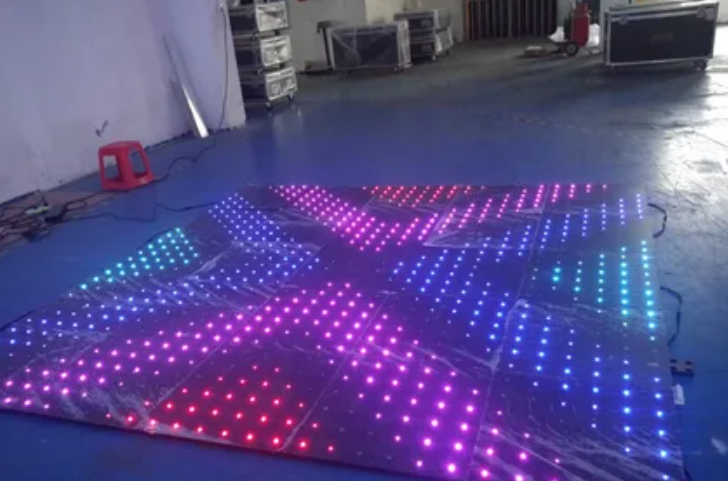
A common purchasing shortcut is to see “IP65” and assume that an LED floor is automatically suitable for outdoor use.
That conclusion is too simplistic.
Outdoor operation also depends on:
- Rain exposure
- Standing water
- Drainage
- Ground conditions
- Electrical protection
- Temperature
- Humidity
- Weather cover
- Cable connections
Some commercial floor displays specify front IP65 protection and rear IP54 protection, for example, while other products advertise higher environmental protection.
For an outdoor event, ask the supplier to define the actual permitted operating conditions rather than relying on the IP number alone.
Interactive LED Dance Floors: When Does the Extra Technology Pay Off?
Not every event needs an interactive floor.
A conventional LED dance floor can already display animated patterns, color transitions, logos, video, and synchronized visual effects. Interactive systems add sensors that allow the floor to react to movement or footsteps.
This can create:
- Footstep effects
- Ripple animations
- Interactive games
- Motion-triggered graphics
- Brand activation effects
- Music-synchronized visual experiences
Interactive technology makes particular sense for brand activations, exhibitions, nightclubs, experiential marketing, and trade shows where audience participation is part of the experience.
For a traditional wedding, however, spending more on interaction may produce less value than investing in better image quality, installation, content, and reliability.
A Real-World Planning Example: A 20×20 ft Los Angeles Event
Consider a hypothetical but realistic Los Angeles corporate gala with 180 guests.
The event organizer wants a 20×20 ft LED dance floor in a hotel ballroom. The floor must support approximately 100 active dancers, display branded animations, and remain operational for a six-hour reception.
The first quote comes in at $3,200.
It looks reasonable.
Then the organizer discovers that delivery, installation, custom content, technician support, and teardown are additional. The final project cost moves considerably higher.
A second supplier quotes $4,500, but includes delivery, setup, teardown, controller configuration, and an on-site technician.
At first glance, Supplier A appears cheaper.
After normalization, Supplier B may actually represent the lower-risk project.
This is how professional buyers should evaluate an LED dance floor rental in Los Angeles: compare the complete operating package, not the first number printed on the quotation.
LED Dance Floor for Sale: When Buying Starts to Make Sense
Rental works well when the floor is needed occasionally. The calculation changes when an event company or rental business deploys the same equipment repeatedly.
For a company producing ten, twenty, or more events per year, purchasing a rental-grade LED dance floor can turn the equipment into a revenue-generating asset.
Purchase prices vary according to:
- Floor size
- Pixel pitch
- Cabinet construction
- Load rating
- Protective surface
- Control system
- Interactive capability
- Flight cases
- Spare parts
- Shipping
- Installation
- Warranty
One California supplier, for example, publicly lists a complete 20×20 ft wireless LED dance floor package at approximately $35,000, including panels, controllers, power supplies, flight cases, edges, and corners.
That figure should not be interpreted as a universal LED dance floor for sale price. It demonstrates something more important: a complete deployable system can cost substantially more than a panel-only quotation.
What Should Be Included in an LED Dance Floor for Sale?
When buying for commercial use, ask for a complete bill of materials.
A professional package may include:
- LED floor panels
- LED modules
- Protective top layer
- Structural frames
- Edge pieces
- Corner pieces
- Receiving cards
- Video controller
- Power supplies
- Signal cables
- Power cables
- Flight cases
- Spare modules
- Spare power supplies
- Installation accessories
- Control software
- Technical documentation
- Warranty
A quotation that says “LED floor, $X per square meter” is not enough for a serious procurement decision.
Ask:
What exactly arrives in the shipment?
That one question often exposes the difference between a low-cost product quote and a complete commercial solution.
Rental or Purchase? Use Total Cost of Ownership
The traditional rent-versus-buy calculation is simple:
Break-even events = Purchase Cost ÷ Comparable Rental Cost
Suppose a complete purchase package costs $35,000 and the comparable rental cost is $3,500 per event.
The simple break-even point is:
$35,000 ÷ $3,500 = 10 events
But professional buyers should go one step further.
Add:
- Shipping
- Storage
- Maintenance
- Spare parts
- Insurance
- Technician labor
- Replacement components
Then subtract potential resale value.
The result is a more realistic Total Cost of Ownership (TCO).
For a rental company with consistent utilization, this calculation can make ownership attractive much earlier than a simple equipment-price comparison suggests.
Weddings, Corporate Events, Concerts, or Nightclubs?
The same LED floor should not be specified for every application.
Weddings
The priority is usually visual elegance rather than extreme brightness.
Important features include:
- Smooth color effects
- Custom monograms
- Reliable operation
- Clean edges
- Low visual seam visibility
- Easy venue integration
Corporate Events
Branding becomes much more important.
Look for:
- Custom content
- High refresh rate
- Camera-friendly performance
- Interactive functions
- DMX or Art-Net integration
- Technician support
Concerts and Festivals
The technical demands rise sharply.
A large production may require:
- High brightness
- High refresh rate
- High load capacity
- Weather protection
- Robust cable management
- Fast deployment
- Spare panels
- Lighting-system integration
Nightclubs
For permanent installations, reliability and maintainability usually matter more than rapid rental deployment.
A nightclub should consider:
- Daily operating hours
- Heat management
- Easy module replacement
- Interactive content
- DMX integration
- Long-term spare-parts availability
Installation Is Part of the Product
A good LED floor can still perform badly if the installation is rushed.
A professional setup should generally follow this sequence:
- Inspect the venue surface
- Confirm the floor layout
- Position panels
- Lock the mechanical structure
- Connect power
- Connect signal
- Configure the controller
- Test the content
- Calibrate brightness and color
- Complete a final safety inspection
Magnetic systems can accelerate assembly, while adjustable supports can help compensate for different installation conditions. Some commercial floor designs specifically use magnetic connections for faster deployment, while others provide adjustable foot pads for leveling.
The goal is not simply to finish installation quickly.
The goal is to have a flat, stable, visually consistent floor that is ready before the audience enters the venue.
Questions to Ask an LED Dance Floor Rental Company in Los Angeles
Before signing a rental agreement, ask:
- What is the exact floor size?
- What is the pixel pitch?
- What is the verified load capacity?
- Is it specifically engineered for floor use?
- What is the IP rating?
- What surface protection is used?
- What is the refresh rate?
- Is delivery included?
- Is setup included?
- Is teardown included?
- Is an on-site technician included?
- Are custom graphics included?
- Is a COI available?
- What power supply is required?
- Is outdoor use permitted?
- How many spare panels are available?
- What happens if a panel fails?
- What is the setup time?
- What venue conditions are required?
- What is the final all-in price?
A supplier that can answer these questions clearly is much easier to evaluate than one that relies on broad phrases such as “premium quality” or “commercial grade.”
How to Compare Three LED Dance Floor Suppliers Without Getting Tricked by Price
Suppose you have three quotations:
| Cost Item | Vendor A | Vendor B | Vendor C |
|---|---|---|---|
| LED floor | ✓ | ✓ | ✓ |
| Controller | ✓ | ✓ | ✓ |
| Delivery | Extra | Included | Included |
| Setup | Extra | Included | Included |
| Teardown | Extra | Included | Extra |
| Technician | Extra | Included | Extra |
| Custom content | Extra | Extra | Included |
| Spare panels | ? | ✓ | ? |
| COI support | ? | ✓ | ✓ |
| Final project cost | ? | ? | ? |
Vendor A may have the lowest equipment price.
Vendor B may have the lowest real project cost.
Vendor C may have the best option if custom content is the central requirement.
That is why experienced buyers compare scope, risk, and total delivered cost, not just price per square foot.
Why Floor Engineering Matters More Than the LED Chip Alone
The most visible part of an LED floor is the image.
The most important part may be underneath it.
A reliable floor is a chain of engineering decisions:
LED module → protective layer → panel structure → connection system → power → signal → control → installation
If the structural system is weak, a premium LED chip cannot solve the problem. If the connection system is unreliable, high image quality does not matter. If thermal management is inadequate, long operating hours can expose weaknesses that never appear during a showroom demonstration.
This is why commercial buyers should evaluate the complete floor architecture, not just the LED package.
Choosing an LED Dance Floor Manufacturer for Long-Term Use
The supplier relationship becomes increasingly important as the project becomes larger.
Look for evidence of:
- Dedicated LED floor engineering
- Load testing
- Product documentation
- Quality-control procedures
- Spare-part availability
- Controller compatibility
- Warranty terms
- Technical support
- OEM/ODM capability
- International shipping experience
SoStron’s product portfolio includes rental LED systems as well as the Hima rental LED floor screen, giving buyers access to a broader LED display ecosystem rather than an isolated dance-floor product.
For a one-time rental, service responsiveness may be the most important factor.
For an LED dance floor for sale, manufacturing consistency, spare parts, documentation, and long-term technical support become much more important.
2026 LED Dance Floor Procurement Checklist
Before placing an order, verify the following.
Display Performance
- Pixel pitch
- Brightness
- Refresh rate
- Grayscale
- Viewing angle
Mechanical Design
- Load capacity
- Surface protection
- Frame strength
- Edge protection
- Connection method
- Leveling system
Environmental Protection
- IP rating
- Indoor/outdoor suitability
- Humidity tolerance
- Temperature range
- Spill protection
Control System
- Video processor
- Receiving cards
- DMX/Art-Net
- Interactive sensors
- Content resolution
Logistics
- Delivery
- Setup
- Teardown
- Crew requirements
- Flight cases
- Storage
Commercial Terms
- Complete quotation
- Warranty
- Spare parts
- Lead time
- Shipping
- Taxes and duties
- Technical support
SoStron: Engineering the LED Floor Around the Event
The right LED dance floor is not simply the brightest or cheapest model on the market. It is the system that matches the venue, audience, content, mechanical load, installation conditions, and operating frequency.
SoStron focuses on commercial LED display engineering, including rental-oriented floor screens designed for events, stages, exhibitions, and interactive installations. The Hima series uses a modular rental architecture and can be configured for floor-screen applications where fast deployment and visual impact need to work together.
For occasional events, SoStron can help buyers evaluate the technical configuration required for a rental project. For rental companies and permanent venues, the discussion can move further into purchase configuration, spare parts, control systems, customization, and long-term operating cost.
The objective is straightforward:
Build the LED floor around the job—not force the job to fit the floor.
Explore SoStron’s Rental LED Floor Solutions
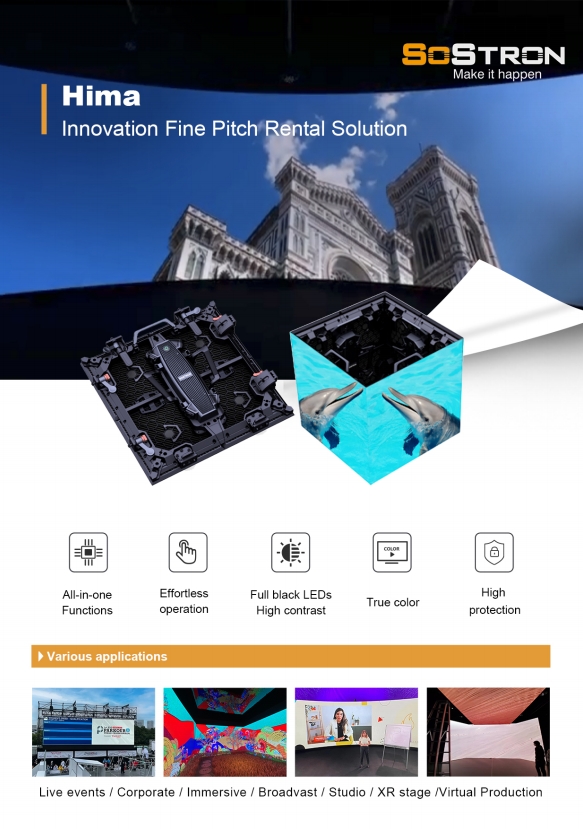
If you are comparing LED dance floor rental in Los Angeles or planning a larger event production, start with the Hima rental floor-screen solution to review its modular design, floor-screen application, and interactive configuration options.
Need an LED Dance Floor for Sale?
If your company is considering purchasing a commercial LED floor for repeated rental, nightclub, stage, exhibition, or event use, review the wider SoStron LED product portfolio and request a configuration based on your required floor size, pixel pitch, load capacity, environment, and control system.
Price Note
The prices shown above are intended as planning references, not fixed quotations. LED dance floor rental prices in Los Angeles can change significantly depending on the floor size, pixel pitch, event date, venue location, loading conditions, installation time, delivery distance, technician requirements, custom content, and whether setup and teardown are included. Publicly listed local prices currently range from roughly $1,899 for a 12×12 ft floor to $3,000–$3,600 or more for larger or full-service configurations, with some providers using minimum package pricing rather than charging strictly by square foot.
For this reason, buyers should be careful when comparing a low headline price with a full-service quotation. A $2,000 floor-only rental may ultimately cost more than a $2,800 package that already includes delivery, professional setup, pickup, and technical support. For an accurate project budget, provide the supplier with your event date, Los Angeles venue, floor dimensions, indoor or outdoor location, surface condition, and expected operating hours. This allows the supplier to quote the actual system and service scope rather than giving you a generic number.
References:
Purchasing Energy-Efficient Commercial and Industrial LED Luminaires — DOE
About SoStron
Marketing Strategic Director at Sostron