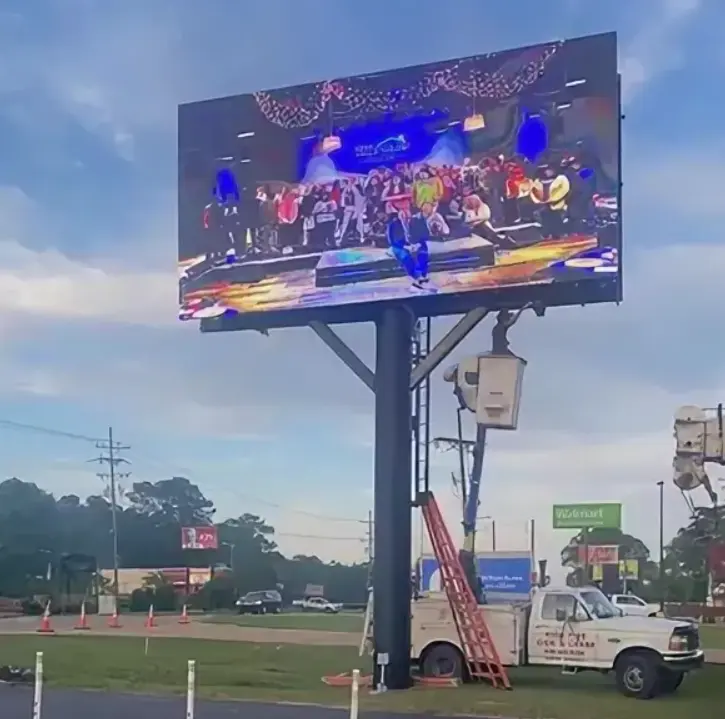
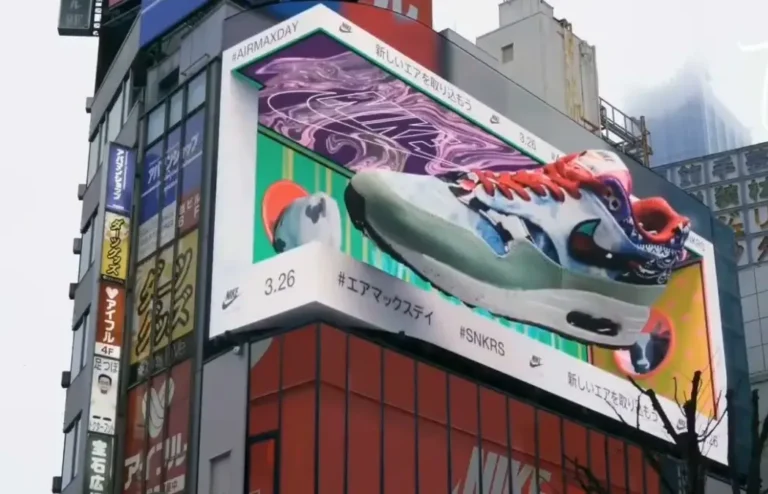
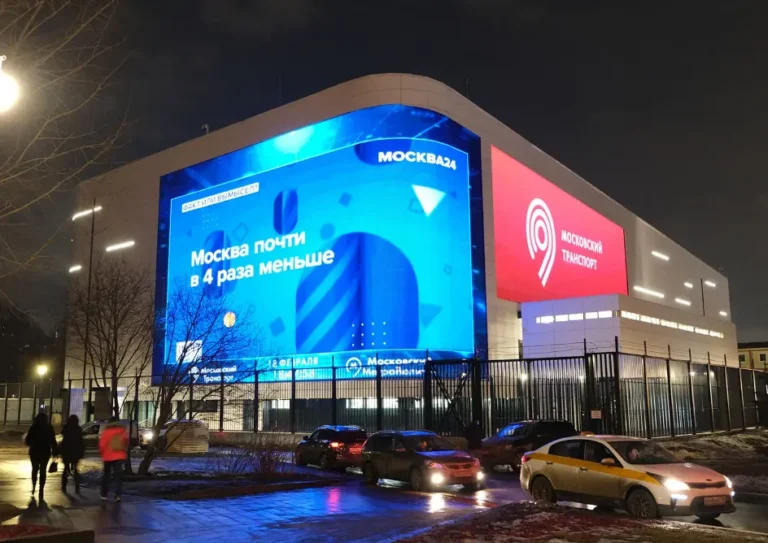
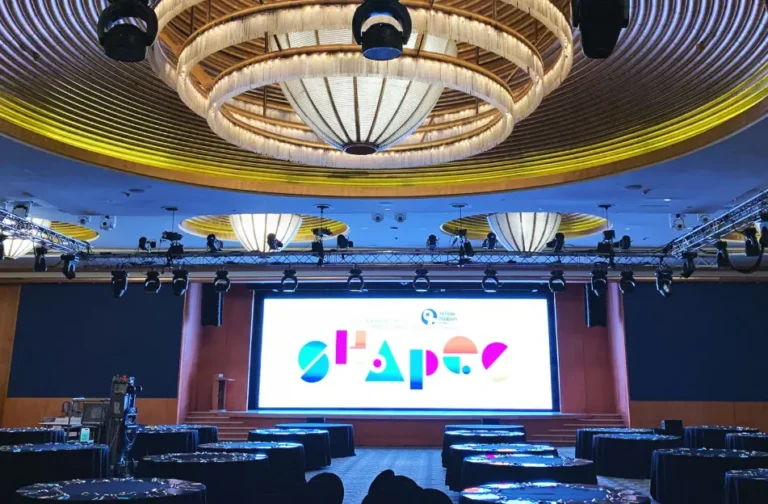
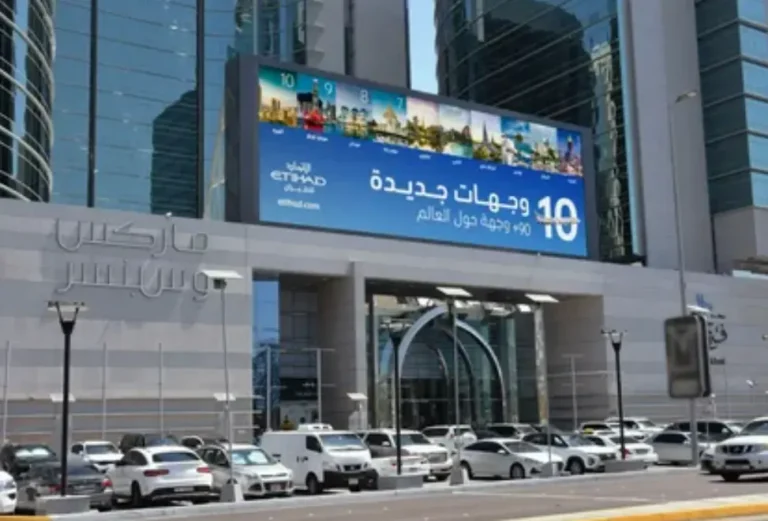
If you are budgeting for an LED display in Seoul, Korea, a realistic starting point is approximately₩1.7 million–₩3.5 million per m²(about US$1,240–US$2,550/m²)for many standard outdoor fixed-display configurations before project-specific structural, electrical, engineering, and installation costs. However, this is a budgeting range, not a universal market price.
Public Korean listings illustrate why the range is wide. A 3.84×1.92 m outdoor P4 display, approximately 7.37 m², is currently listed at₩12.7 million(about US$9,260), while a 6.72×3.84 m P4 display, approximately 25.8 m², is listed at₩44.5 million(about US$32,500). Larger P4 configurations on the same Korean market reach₩71.6 million for an 8.64×4.8 m screen. These are product-level public prices, not turnkey Seoul installation quotations.
For a real project, therefore, the number that matters is not simply the LED panel price per square meter. A Seoul buyer should evaluate the complete system: LED cabinets+controller+structure+electrical work+transportation+installation+compliance+commissioning+maintenance.
| Application / Configuration | Indicative Korean Market Hardware Price | Approx. USD* | Typical Project Consideration |
|---|---|---|---|
| Outdoor P10/large viewing distance | ₩1.7M–₩2.5M/m² | US$1,240–$1,820/m² | Advertising, roadside, large-format signage |
| Outdoor P6–P8 | ₩2.0M–₩3.0M/m² | US$1,460–$2,190/m² | Commercial buildings, DOOH, larger screens |
| Outdoor P4 | ₩2.0M–₩3.5M/m² | US$1,460–$2,550/m² | Higher-resolution advertising and commercial displays |
| Indoor P2.5–P3 | ₩2.5M–₩4.5M/m² | US$1,820–$3,280/m² | Retail, corporate, event and venue applications |
| Fine-pitch P1.5–P2.5 | ₩4M+/m² | US$2,920+/m² | Close-viewing premium indoor applications |
*USD conversions use approximately₩1,371 per US$1 as a September 2026 reference; exchange rates move continuously. These figures are budgetary ranges derived from publicly listed Korean LED products and should not be treated as a fixed Seoul-wide tariff.
What Is the Typical LED Display Price in Seoul?
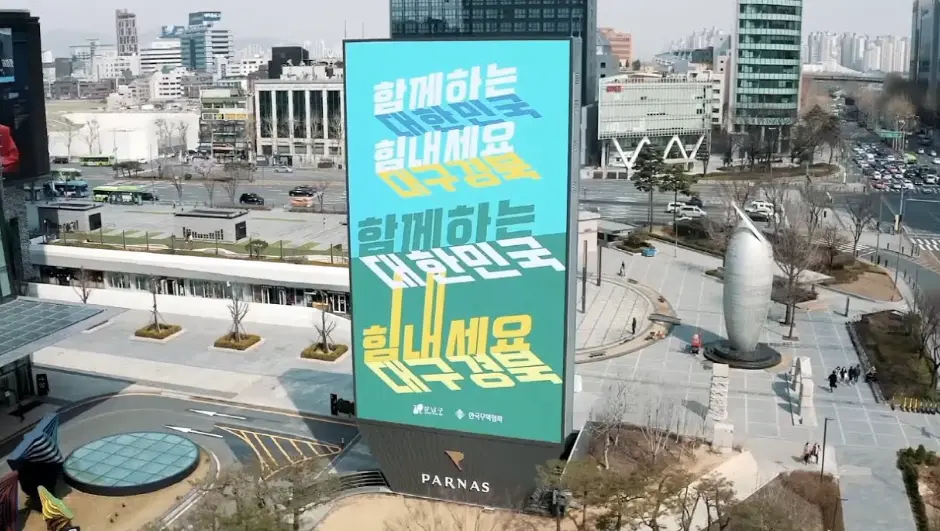
The first mistake buyers make is asking, “How much is an LED display in Seoul? ”without specifying the application.
A 20 m²indoor corporate LED wall and a 20 m²roadside advertising screen may have the same physical area but completely different engineering requirements.
A quotation can change substantially because of:
- Pixel pitch
- Brightness requirement
- Indoor or outdoor environment
- Cabinet construction
- Front or rear maintenance
- Screen dimensions
- Viewing distance
- Refresh rate
- Weather protection
- Structural mounting
- Electrical infrastructure
- Control system
- Installation access
- Local engineering and compliance requirements
Public Korean listings confirm that screen size and pixel pitch create large price differences even before installation. For example, one Korean supplier lists outdoor P4 configurations from approximately₩12.7 million for a 7.37 m²screen to₩71.6 million for a 41.47 m²configuration.
This is why quoting an LED display simply as“₩2 million per square meter”is useful only during the first budgeting stage.
Hardware Price vs Installed Seoul Project Cost
Think of the quotation in four layers:
Display hardware: LED modules, cabinets, power supplies, receiving cards and related electronics.
System equipment: sending processor, media player, control software and networking.
Site engineering: steel structure, mounting, electrical distribution, grounding and cable work.
Deployment: transportation, lifting equipment, labor, commissioning, testing and compliance-related work.
The last two categories can be relatively small for a simple indoor wall and extremely significant for a large outdoor billboard.
That distinction becomes particularly important in Seoul because outdoor digital signage is not treated as an unrestricted piece of electronic equipment.
Pixel Pitch Is the First Major Reason Some LED Displays Cost More
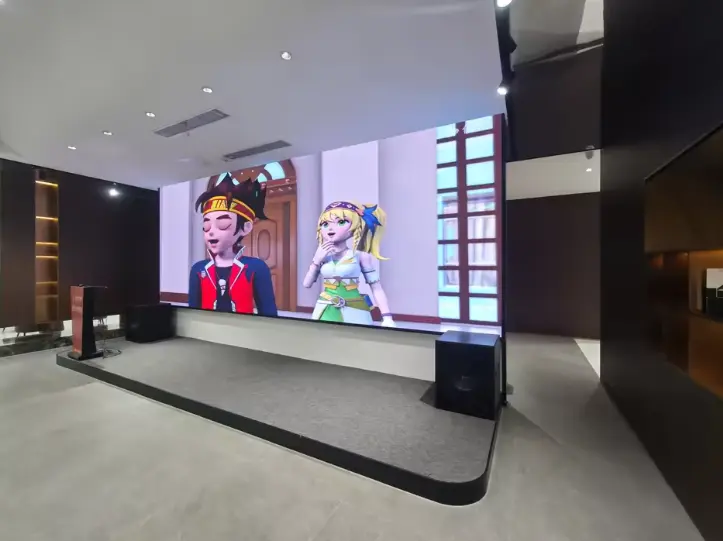
Pixel pitch is the distance between the centers of adjacent LED pixels. A smaller pitch places more pixels into the same physical area.
For example:
- P1.5: 1.5 mm pixel pitch
- P2.5: 2.5 mm
- P4: 4 mm
- P6: 6 mm
- P10: 10 mm
The reason a P1.5 display costs substantially more than a P6 display is not simply that the manufacturer has chosen a higher price. The LED surface contains dramatically more pixels.
At the same physical size, reducing pixel pitch means:
- More LED pixels
- More LED packages
- More driver channels
- Higher data density
- Greater manufacturing precision
- More demanding calibration
- Higher-resolution receiving and processing requirements
That additional density directly increases the bill of materials.
Choose Pixel Pitch From Viewing Distance, Not From the Lowest Price
A common procurement mistake is buying the smallest available pixel pitch because it appears to offer better image quality.
That can be economically irrational.
For a large roadside screen viewed from tens or hundreds of meters away, P6, P8 or P10 can often deliver sufficient visual performance. Paying for P1.5 in that situation puts money into resolution that the viewer cannot meaningfully resolve.
Conversely, a P10 screen inside a retail environment can look coarse because viewers are much closer.
A practical framework is:
- P1.2–P1.9: close-viewing premium indoor applications
- P2–P2.5: corporate, retail, control and presentation environments
- P2.5–P4: general commercial indoor/outdoor applications
- P4–P6: medium-distance outdoor viewing
- P6–P10+: large-format outdoor advertising and long-distance viewing
The exact selection should be calculated from viewing distance, content type, screen dimensions and required image quality, rather than from pixel pitch alone.
Why Outdoor LED Displays in Seoul Need More Than Bright LEDs
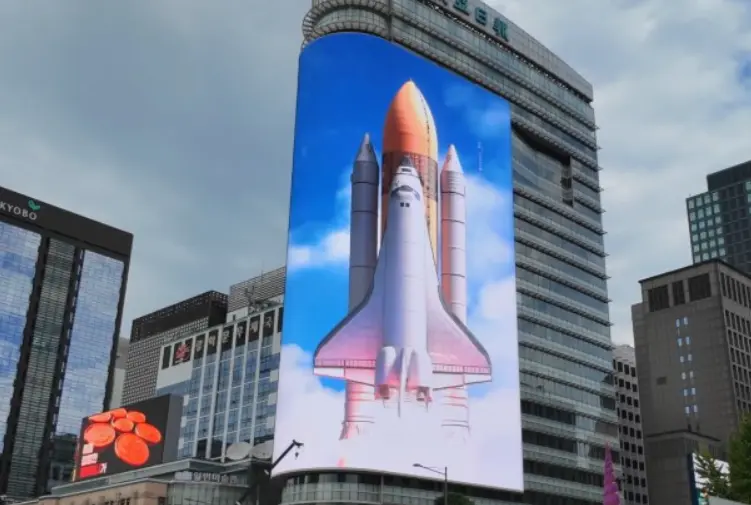
For an outdoor display, brightness is one of the most important engineering variables.
A screen installed on a Seoul building facade may experience:
- Direct sunlight
- Reflected sunlight from glass buildings
- Rapid weather changes
- Rain and humidity
- Dust
- Winter temperature variation
- Nighttime operation
- Pedestrian and driver exposure
Therefore, an outdoor LED display normally requires a combination of high luminance, weather protection, automatic brightness control and appropriate cabinet engineering.
Simply specifying“the brightest LED screen available”is not good engineering.
Brightness Is a Cost Driver
Higher brightness can require:
- Higher-output LED packages
- More demanding power supplies
- Greater thermal management
- Higher peak power capacity
- More sophisticated brightness control
- More careful nighttime operation
This becomes particularly relevant in Seoul because the city introduced new outdoor LED display brightness standards in 2026.
According to the Seoul Metropolitan Government, the new standards took effect on April 1, 2026, and apply to outdoor LED displays of 30 m²or larger that fall within the relevant review scope. Seoul also promotes automatic brightness control based on ambient light and requires a fail-safe approach that can reduce brightness or switch the display off when the sensor or control system fails.
The city estimates that the measures could reduce energy consumption by approximately 15%.
For a Seoul buyer, this means brightness control is not merely a software feature. For larger outdoor projects, it can become part of the system specification and therefore part of the project cost.
Maximum Brightness Is Not the Same as Better Performance
A competent outdoor LED specification should consider:
- Daytime luminance
- Nighttime luminance
- Ambient-light sensing
- Automatic dimming
- Fail-safe behavior
- Content brightness
- Viewing direction
- Surrounding buildings
- Pedestrian and driver visibility
In other words, usable brightness is more important than the largest number printed on a datasheet.
Cabinet Design and Environmental Protection Also Affect the Price
Two P4 outdoor displays may use the same nominal pixel pitch but still have very different prices.
One may use a basic cabinet intended for a straightforward installation. Another may use a lightweight aluminum cabinet, front-service access, enhanced weather protection, higher-quality power supplies and a more sophisticated maintenance design.
The difference becomes important when the display is installed in a difficult Seoul location.
Fixed Outdoor Cabinet vs Rental Cabinet
A permanent billboard normally prioritizes:
- Structural strength
- Weather resistance
- Service access
- Long-term reliability
- Cable management
- Thermal management
A rental display instead prioritizes:
- Lightweight construction
- Rapid assembly
- Fast locking mechanisms
- Frequent transportation
- Quick replacement
Using a rental-style cabinet for a permanent facade installation is not automatically wrong, but the economics and maintenance model are different.
IP Protection Matters Outdoors
For outdoor applications, buyers should check the actual enclosure specification rather than simply accepting“waterproof.”
Important parameters include:
- IP rating
- Front/rear protection
- Drainage
- Cable entry
- Corrosion resistance
- Power supply enclosure
- Module sealing
- Maintenance access
A cabinet that costs slightly more but is easier to service can reduce long-term maintenance labor. This is one reason the lowest initial quotation is not necessarily the lowest TCO.
Seoul Installation Can Change the Final Price More Than the LED Panels
Once the screen becomes a building-mounted or roadside installation, the project stops being only an electronics purchase.
The engineering budget may include:
- Steel support structure
- Structural calculations
- Anchoring
- Wall reinforcement
- Electrical distribution
- Grounding
- Surge protection
- Cable routing
- Crane or lifting equipment
- Scaffolding or access equipment
- Installation labor
- Commissioning
The physical environment matters.
A ground-level storefront with easy access is fundamentally different from a large screen mounted high on a commercial building. The LED cabinets may be identical, but the deployment cost is not.
For large outdoor displays, the structure must also account for wind loading, building attachment, screen weight and local site conditions.
This is where an apparently inexpensive imported LED screen can become an expensive project: the hardware quotation may be competitive while the local engineering work is not included.
Seoul Regulations Can Affect Both the Specification and the Budget
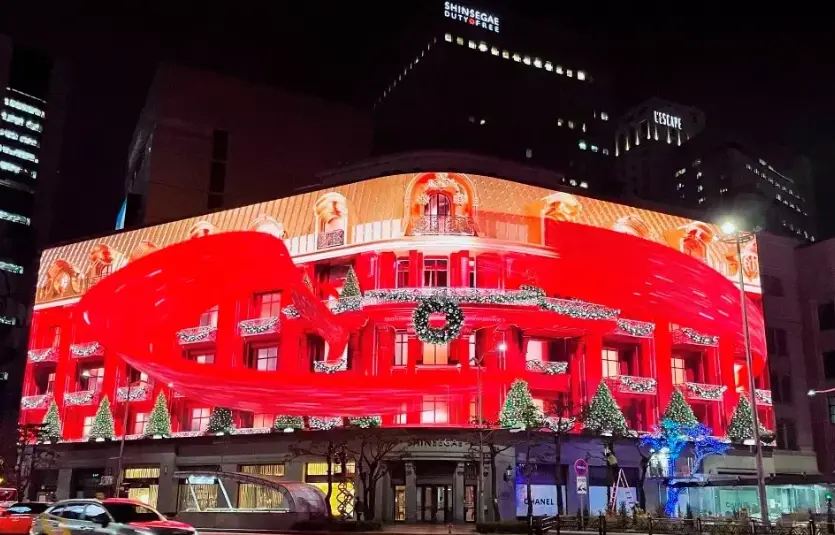
Outdoor LED advertising in Seoul is subject to the Seoul Metropolitan Government Ordinance on the Management of Outdoor Advertisements and Promotion of the Outdoor Advertisement Industry, with the current version effective May 18, 2026.
The relevant authority structure can involve the Seoul Metropolitan Government, the relevant district office(구청장)and, depending on the project, the applicable outdoor advertising deliberative committee.
The current Seoul ordinance contains provisions concerning digital/electronic advertising, installation conditions and brightness. It states, for example, that digital advertising brightness must not obstruct the view of drivers or pedestrians or harm the residential environment, while nighttime brightness must comply with applicable light-emission limits under Korea’s light-pollution legislation.
For a project in Seoul, the quotation should therefore clarify whether the following are included:
- Permit or approval assistance
- Structural documentation
- Electrical engineering
- Brightness-control equipment
- Site inspection
- Installation
- Testing and commissioning
- Local contractor coordination
A supplier who gives you only a KRW/m²hardware number has not necessarily given you the cost of the project.
The correct question is:
“What will it cost to make this LED display legal, installed, operational and maintainable at this specific Seoul site? ”
Once the LED hardware has been specified, the next question is more important than the initial quotation: what will this display actually cost to own and operate in Seoul? The answer changes significantly once installation, electricity, maintenance, compliance, downtime, and replacement parts are included.
For outdoor projects in particular, a 2026 Korean market benchmark of roughly₩1.5 million–₩4 million/m²(about US$1,090–$2,920/m²)for the LED display hardware is a reasonable starting reference for many P4–P10 configurations, while structure, electrical work, permits, and installation can add a substantial amount. A current Korean LED market source explicitly notes that outdoor construction costs can approach the display-equipment cost depending on site conditions.
That distinction is critical because a₩30 million LED screen is not necessarily a₩30 million Seoul project.
The Real TCO of an LED Display in Seoul
For a commercial LED display, total cost of ownership should be calculated over its operating life rather than at the moment the purchase order is signed.
A practical Seoul TCO model is:
5-Year TCO=Hardware+Installation+Electrical+Compliance+Logistics+Electricity+Maintenance+CMS/Control+Replacement−Residual Value
The costs buyers most often underestimate are the following.
1. Installation and Structural Engineering
For an outdoor LED billboard, the steelwork can become a major part of the project.
Depending on the site, the project may require:
- Steel support structure
- Wall reinforcement
- Roof reinforcement
- Concrete foundation
- Structural calculations
- Anchoring hardware
- Wind-load assessment
- Waterproofing
- Cable trays and conduits
- Crane or lifting equipment
- Traffic or access management
A screen mounted at ground level beside a commercial building is fundamentally different from a 40 m²display attached to a high-rise facade.
The LED modules do not become more expensive because the building is tall. The installation becomes more expensive because the engineering problem changes.
2. Electrical Infrastructure
The LED display itself is only one part of the electrical system.
A quotation should clarify whether it includes:
- Distribution cabinet
- Dedicated circuits
- Circuit breakers
- Grounding
- Surge protection
- Power cables
- Cable routing
- Electrical capacity upgrades
- Installation and testing
This matters particularly for high-brightness outdoor LED screens because maximum power demand can be considerable.
However, buyers should compare average power consumption, not just maximum power consumption.
A display that operates at maximum brightness continuously will have a very different electricity profile from one using automatic brightness adjustment.
3. Electricity Cost Over Five Years
Electricity is easy to ignore because it does not appear on the original purchase invoice.
For a simplified calculation:
Annual electricity cost=Average power×operating hours×operating days×electricity rate
For example, assume a 30 m²outdoor display has an average operating consumption of 0.30 kW/m².
That produces:
Display load:9 kW
Operating time:12 hours/day
Operating days:365 days/year
Annual consumption: approximately 39,420 kWh
If the effective electricity cost used for budgeting is₩180/kWh, the simplified annual electricity expense would be approximately:
₩7.10 million/year(about US$5,180)
Over five years, that becomes approximately₩35.5 million(US$25,900)before considering changes in electricity tariffs, operating schedules or brightness.
This is only a scenario calculation, not a universal Korean electricity tariff.
And this is where automatic brightness control becomes financially relevant. Seoul’s 2026 outdoor LED guidance specifically promotes automatic brightness adjustment according to ambient light conditions, with the city estimating potential energy savings of around 15%.
For a commercial operator, brightness control is therefore both a compliance consideration and a TCO consideration.
Hidden Maintenance Costs That Should Be in the Budget
LED displays are modular systems, which is a major advantage for maintenance, but“modular”does not mean maintenance-free.
Common replacement items include:
- LED modules
- Power supplies
- Receiving cards
- Sending cards
- Data cables
- Power cables
- Fans
- Sensors
- Control processors
- Spare cabinet components
A professional quotation should also identify:
Warranty duration
On-site service coverage
Response time
Spare-parts availability
Module replacement procedure
Color calibration after replacement
Labor charges outside warranty
Why Spare Modules Matter
Suppose an outdoor screen uses hundreds of modules and one module fails after several years.
The physical replacement may take only minutes.
The difficult part is achieving consistent brightness and color.
If the replacement module uses a different LED batch, the new module may appear visibly different from the surrounding screen.
For this reason, purchasing matching spare modules from the original production batch can be cheaper over the long term than attempting to source visually identical components later.
Seoul Compliance and Hidden Project Costs
For outdoor digital signage, the compliance budget should be considered before the hardware is ordered.
Seoul’s current outdoor-advertising framework contains provisions relating to digital/electronic advertising, installation conditions and brightness. The relevant administrative process can involve the Seoul Metropolitan Government, the relevant district office, and applicable deliberative procedures depending on the site and display.
The exact requirements depend on the project, but a buyer should investigate:
- Site eligibility
- Outdoor advertising approval
- Building-related restrictions
- Display size
- Installation location
- Brightness
- Nighttime operation
- Light-emission requirements
- Structural documentation
- Electrical safety
- Local district requirements
For displays of 30 m²or larger, Seoul’s 2026 LED brightness guidelines are particularly relevant.
The important procurement lesson is simple:
Do not finalize the LED specification before confirming that the intended screen can actually be operated at the proposed location.
A technically excellent display that cannot be approved at the site is still an expensive mistake.
Logistics and Import Costs: Factory Price Is Not Landed Cost
Buyers comparing a Chinese LED manufacturer with a Korean supplier should avoid comparing a factory quotation directly with a locally installed quotation.
The cost chain is more accurately represented as:
Factory price→export packaging→international freight→insurance→customs/import costs→Korean delivery→local installation→commissioning
Potential additional expenses include:
- Sea or air freight
- Customs clearance
- Import-related taxes
- Port handling
- Domestic transportation
- Warehousing
- Local technician costs
- Replacement-part logistics
The correct comparison is therefore:
Landed and operational cost vs landed and operational cost
—not simply:
China factory price vs Korea supplier price.
For smaller screens, logistics can represent a relatively large percentage of total cost. For a large project, freight may become less significant per square meter, while structural and installation costs become more important.
A Simulated Seoul Project: 30 m²Outdoor P4 LED Display
Consider a hypothetical Seoul commercial-building project requiring a 30 m²outdoor P4 LED display.
The viewing distance is relatively long, the screen operates 12 hours per day, and the building requires a custom steel mounting structure.
A reasonable budgeting model could look like this:
| Cost Component | Simulated Budget | Approx. USD |
|---|---|---|
| P4 LED display hardware | ₩75M | US$54,700 |
| Controller/media system | ₩5M | US$3,650 |
| Steel structure&engineering | ₩18M | US$13,100 |
| Electrical installation | ₩7M | US$5,100 |
| Lifting/site installation | ₩8M | US$5,800 |
| Compliance/documentation allowance | ₩4M | US$2,900 |
| Initial spare parts | ₩3M | US$2,200 |
| Estimated project budget | ₩120M | US$87,500 |
Illustrative engineering scenario only. It is not a quotation for a specific Seoul building.
The important observation is that₩75 million of LED hardware becomes approximately₩120 million of project expenditure once the surrounding engineering is considered.
Now add five-year operating costs.
Assuming approximately₩7.1 million/year in electricity from the simplified scenario above:
Five-year electricity: ₩35.5M
Preventive maintenance allowance: approximately₩15M–₩20M
Replacement/spare allowance: approximately₩5M
Potential CMS/network expenses: project-dependent
A simplified five-year TCO could therefore exceed:
₩175 million–₩185 million(approximately US$128,000–$135,000)
The actual number could be lower or higher depending on electricity consumption, operating hours, maintenance contracts, installation conditions and equipment specification.
This illustrates why comparing two quotations solely by the first-line LED screen price can be misleading.
How to Compare LED Display Quotes in Seoul
Before accepting the lowest quotation, ask suppliers to separate the following:
- LED cabinet price
- Pixel pitch
- LED package
- Brightness
- Average power consumption
- Maximum power consumption
- Refresh rate
- IP protection
- Controller
- Media player
- CMS
- Steel structure
- Electrical work
- Transportation
- Installation
- Commissioning
- Warranty
- Spare parts
- Maintenance
- Compliance assistance
A quotation that is₩10 million cheaper may simply exclude₩10 million of work.
The better question is:
“What exactly is included in this number? ”
FAQ: LED Display Price Seoul Korea
Q: How much does a 30 m²outdoor LED display cost in Seoul?
A 30 m²outdoor LED display can require roughly₩45 million–₩120 million+(US$33,000–$87,500+)depending on pixel pitch, brightness, cabinet quality, structure and installation. Large displays may also require additional engineering and compliance work.
Q: Is P4 or P6 cheaper for an outdoor LED billboard in Seoul?
P6 is normally less expensive than P4 because its larger pixel pitch requires fewer pixels per square meter. For long viewing distances, P6 can provide an appropriate balance between image quality and cost, while P4 is more suitable when closer viewing or finer image detail matters.
Q: Do Seoul outdoor LED billboards need brightness control?
For applicable outdoor LED displays, Seoul’s 2026 brightness guidelines promote automatic brightness control based on ambient light. The guidelines apply to outdoor LED displays with a surface area of 30 m²or larger within the stated scope, so project-specific compliance should be confirmed before equipment selection.
Q: Is importing an LED display from China cheaper than buying in Korea?
The factory purchase price can be lower, but the relevant comparison is the landed and installed cost. Freight, customs and taxes, Korean delivery, installation, electrical work, structural engineering, compliance, spare parts and warranty support can materially change the final cost.
Why the Lowest Initial Price Can Become the Most Expensive Option
The central trap in LED display price Seoul Korea searches is treating the LED cabinet as the project.
It is not.
A commercial LED display is a long-term infrastructure asset. Its real financial performance depends on:
Purchase price+installation+compliance+electricity+maintenance+downtime+replacement parts.
A cheaper display can become more expensive if it consumes more electricity, requires difficult maintenance, lacks local spare parts, needs structural modifications, or cannot satisfy the site’s operational requirements.
Conversely, spending more on appropriate pixel pitch, energy efficiency, brightness control, serviceability and structural design can reduce the total cost over the system’s useful life.
The right procurement target is therefore not the lowest KRW/m²figure. It is the lowest fit-for-purpose TCO that meets the project’s visual, structural, operational and regulatory requirements.
Because installation conditions and viewing distances vary substantially between projects, contact our engineering team for an accurate, free customized quotation based on your actual site and display requirements.
Price Note
LED display prices in Seoul can vary significantly depending on pixel pitch, brightness, cabinet design, installation conditions, structural requirements, compliance, logistics, electricity and maintenance. The figures in this article are intended for budgeting and comparison purposes only, not as fixed quotations. Before placing an order, request a project-specific quotation that clearly separates hardware, installation, engineering, compliance, transportation, commissioning, warranty and ongoing service costs.
References:
Seoul Metropolitan Government — 2026 Seoul Outdoor LED Billboard Brightness Standards
Korea Agency for Technology and Standards — KC Mark System