Table of Contents
ToggleFor B2B buyers, P3 outdoor LED displays are at a critical turning point—from “high-end luxury” to “mainstream refined display.” If you are looking for a direct quotation, the benchmark market pricing for 2026 is as follows:
The unit price of bare P3 outdoor LED display panels typically ranges from $800/m² to $1,500/m².
If calculated based on the standard 960mm × 960mm cabinet, the cost per cabinet is approximately $730–$1,380.
The nearly twofold price gap in this range is not entirely due to brand premiums, but is determined by four core technical variables: LED encapsulation materials, driver IC architecture, cabinet precision, and thermal management processes. The table below clearly shows the cost composition of different configuration tiers:
Table 1: Cost Comparison of Different Configurations for P3 Outdoor LED Displays in 2026
| Configuration Tier | Estimated Unit Price (USD/m²) | Core Hardware Specs (BOM) | Application Scenarios | Expected Lifespan |
|---|---|---|---|---|
| Entry-Level | $800–$950 | Copper wire SMD1921 / standard constant current driver / iron cabinet / brightness ≤5000 Nits | Temporary rental, shaded installations, low-budget advertising | 3–5 years |
| Mid-Range | $1,000–$1,250 | Gold wire SMD1921 / high refresh driver IC / die-cast aluminum cabinet / brightness 5500–6000 Nits | Commercial streets, mall facades, DOOH | 5–8 years |
| Premium | $1,300–$1,550+ | Customized gold wire (large chip) / common cathode energy-saving IC / full aluminum-magnesium alloy base / brightness ≥7000 Nits | Direct sunlight, luxury storefronts, extreme climates | 8–10 years |
Decoding the Core Drivers: Why P3 Outdoor Prices Vary So Much?
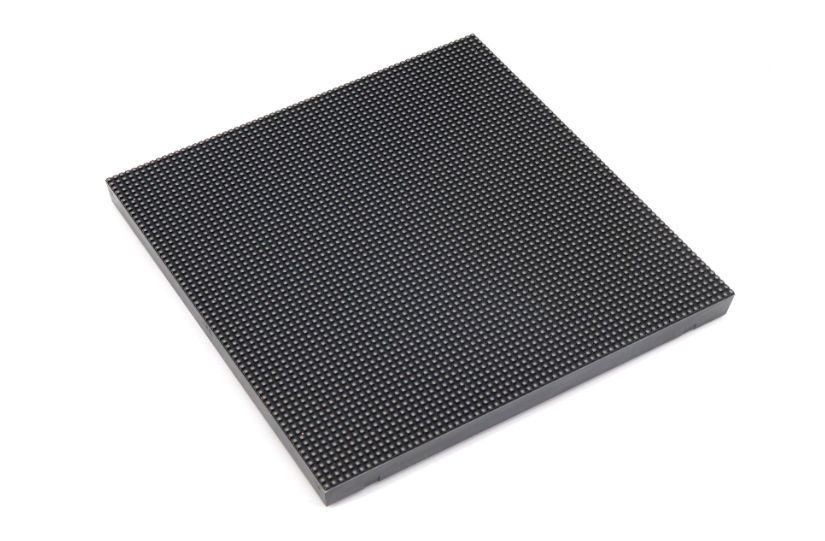
As a product manager, I must point out: P3 outdoor screens are among the most “technically sensitive” products in the LED industry. Unlike P8 or P10, they do not have large tolerance margins. With a high density of 111,111 pixels per square meter, any compromise in materials will be infinitely magnified in harsh outdoor environments.
Pixel Density Reality: The Cost of 111,111 Pixels/Sqm
The high physical cost of P3 stems first from its dense component load.
LED Encapsulation:
P3 outdoor must use SMD1921 LEDs (rather than indoor SMD2121 or smaller packages), because 1921 provides sufficient waterproof soldering area while maintaining pixel pitch.
20% Cost Difference Between Gold and Copper Wire:
Top-tier suppliers (such as Nationstar gold wire LEDs) cost about 20%–30% more than standard copper wire. In high-density P3 displays, gold wire not only means lower failure rates, but also stronger oxidation resistance in acid rain and high humidity environments.
Binning Precision:
Cheap panels are inexpensive because they use LEDs with wider wavelength ranges, leading to visible “color patching” after one year of use. High-consistency LED sorting introduces over 10% scrap cost premium.
The Brightness vs. Heat Dissipation Dilemma
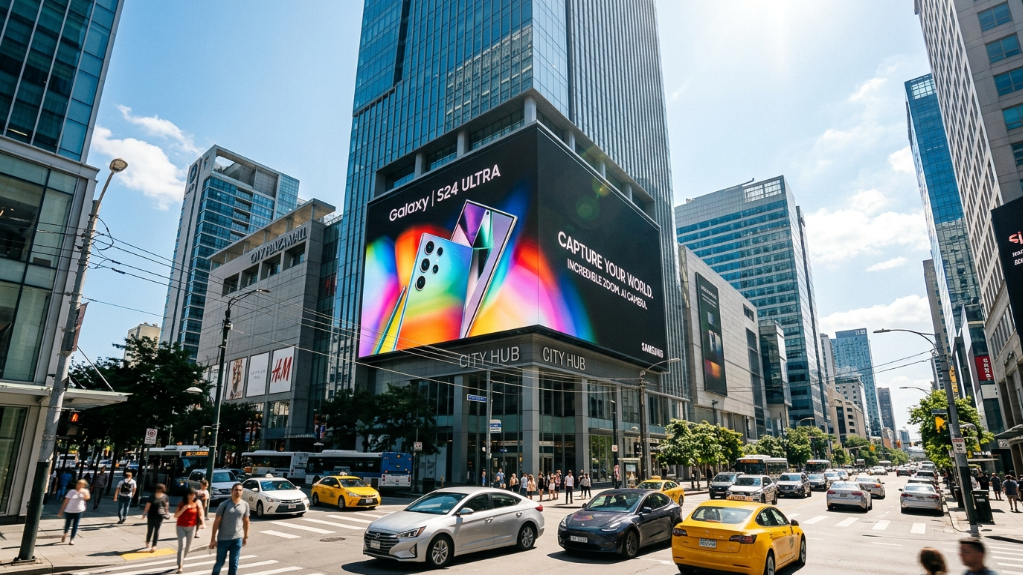
In outdoor environments, P3 screens face an engineering paradox: they must be bright, dense, and not overheat—directly increasing thermal management costs.
Brightness Threshold:
Outdoor P3 must reach 5500–6000 Nits to remain visible under sunlight. Achieving this without burning LEDs requires larger LED chips, which cost about 15% more than standard chips.
Common Cathode Technology:
This is a high-end configuration for P3 outdoor displays. By powering R, G, and B separately, it reduces unnecessary energy loss (cutting heat by about 25%–30%). Although it increases driver IC cost, it significantly extends lifespan and reduces electricity costs during operation. While CapEx is higher, it has clear advantages in TCO.
Cabinet Engineering for Tight Tolerances
P3 requires more than 10 times the flatness precision of P10.
Die-cast Aluminum vs. Iron Cabinets:
Traditional iron cabinets have tolerances of 1–2mm due to welding. On a P3 display, even a 1mm gap creates visible black lines. Therefore, qualified P3 outdoor displays must use CNC-machined die-cast aluminum cabinets, which cost about $80–$120 more per unit than iron cabinets.
Front Serviceability:
To achieve full outdoor waterproofing (IP65/IP68) while supporting front maintenance, complex mechanical locks and hydraulic structures add $50–$100/m² in design premium.
P3 vs. Other Pitches: Is the Premium Justified?
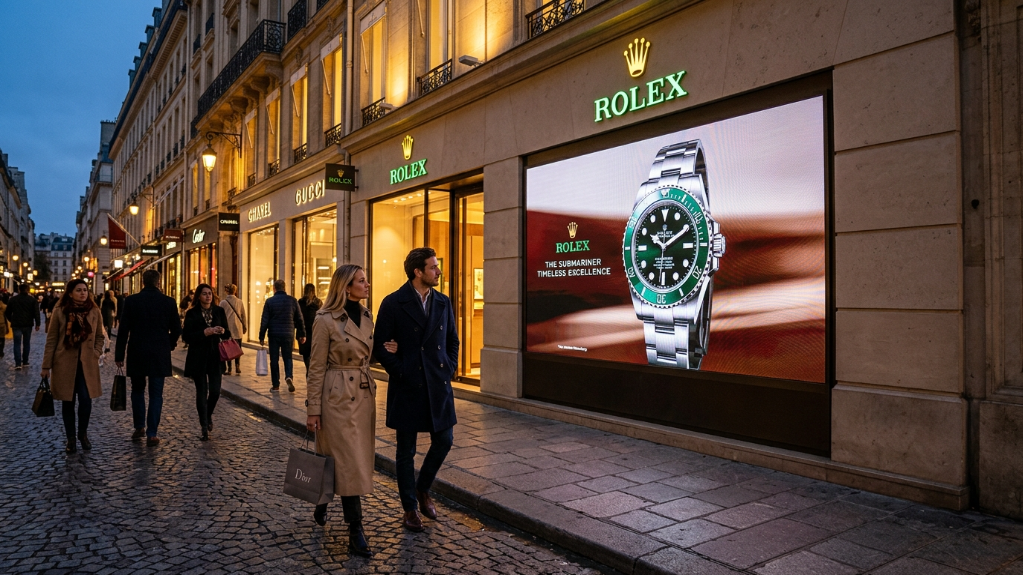
Many buyers ask: “Why is P3 so much more expensive than P4?” The answer lies not only in pixel count, but in exponentially increasing engineering complexity.
Table 2: Comparison of P3 and Other Outdoor Pixel Pitches
| Parameter | P3 Outdoor | P4 Outdoor | P8/P10 Outdoor |
|---|---|---|---|
| Pixel Density (pixels/m²) | 111,111 | 62,500 | 15,625 / 10,000 |
| Optimal Viewing Distance | 3m–20m | 4m–30m | 8m–100m |
| Typical Price (panel only) | $900–$1,400 | $650–$900 | $350–$550 |
| Technical Difficulty | Extremely difficult heat dissipation, requires precision structure | Balanced performance | Easy brightness & heat management |
| Driver IC Count per m² | ~230–260 pcs | ~130–150 pcs | ~30–50 pcs |
Key Conclusion:
If your audience is within 4 meters (e.g., storefronts or pedestrian streets), P3 is the only professional choice. Choosing P4 or P5 due to budget constraints will result in visible pixelation at close range, severely damaging brand perception. Provide you with P4 outdoor LED screen guide.
Beyond the Panel: Hidden Costs in P3 Outdoor Display Projects
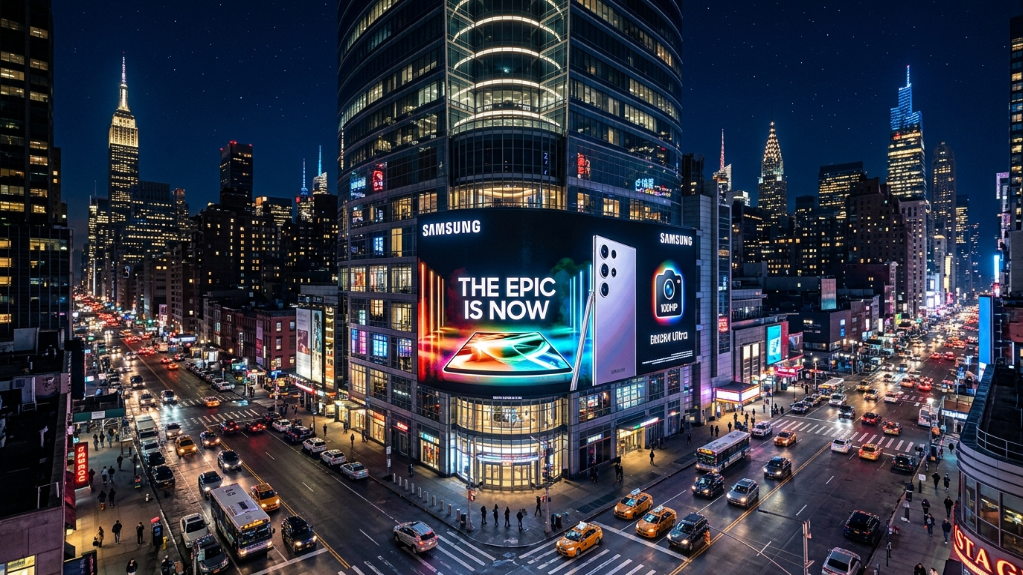
In B2B procurement, many beginners focus only on panel price. Experienced engineers know that the panel typically accounts for only 60%–70% of the total project budget. Due to the “barrel effect,” any weak component can ruin the final display performance.
Precision Steel Structures (Hidden Cost Trap)
This is the most commonly overlooked cost.
Tolerance Issue:
For P10, a 1mm gap is barely visible. For P3, even a 0.5mm misalignment creates visible bright or dark lines.
Cost Increase:
Standard welded steel structures are insufficient. CNC-adjustable brackets and reinforced wind-resistant structures are required, increasing costs by $100–$150/m².
High-Resolution Control Systems
High density means exponential growth in total pixels.
Load Capacity:
A 10m² P3 display exceeds 1.11 million pixels. Entry-level controllers are insufficient—you need systems like Novastar VX1000 4K processors.
Fiber Optic Transmission:
For long-distance outdoor installations, fiber optic transceivers and 10G fiber cables are required instead of Cat5 cables, adding several thousand dollars in cost.
HVAC and Electricity Costs
P3 outdoor screens generate extremely high heat density.
Cooling Requirement:
In environments above 35°C, industrial air conditioning is mandatory. Without it, internal temperatures can exceed 70°C, leading to IC failure or mass dead pixels.
Operational Cost (OpEx):
A 20m² P3 screen may consume 16kW–20kW at peak. Over three years, electricity costs may approach the initial purchase cost.
TCO Analysis: Is P3 the Right Investment for You?
To provide a clearer understanding, here is a simulation of a typical 10m² P3 outdoor project:
Table 3: Total Cost of Ownership (TCO) for 10m² P3 Outdoor LED Project
| Budget Item | Specification | Estimated Cost (USD) | Ratio |
|---|---|---|---|
| P3 Panels | 111,111 pixels/m², gold wire, 6000 Nits | $11,500 | 62% |
| Video Processor | 4K processing, Novastar VX series | $1,800 | 10% |
| Steel Structure | CNC brackets, edge finishing, anti-corrosion | $2,500 | 13% |
| Cooling & Power | Industrial cabinet + 2HP AC | $1,200 | 7% |
| Logistics & Installation | Shipping + on-site guidance | $1,500 | 8% |
| Total CapEx | — | $18,500 | 100% |
Expert Tip:
For a 10m² P3 project, the real turnkey price is about $1,850/m². Any “all-inclusive” offer at $800 inevitably compromises steel structure precision or LED quality.
FAQ: Frequently Asked Questions About P3 Outdoor LED Screen Pricing
Q1: Why is P3 outdoor significantly more expensive than P3 indoor?
P3 outdoor panels require IP65/IP68 waterproof encapsulation (glue injection) and at least 5500+ Nits brightness to withstand direct sunlight. This requires larger LED chips, higher voltage power supplies, and UV-resistant masks, increasing costs by 40%–60% compared to indoor versions.
Q2: Will I need an air conditioner for a small P3 outdoor screen?
For screens larger than 5m², integrated cooling is strongly recommended. Due to high pixel density, heat generation per unit area is much higher than P10. Without HVAC, you will experience accelerated brightness decay and color shift within 12 months.
Q3: How much power does a P3 outdoor LED panel consume annually?
A typical P3 panel consumes 300–400W/m². Running 14 hours daily, a 10m² screen consumes about 15,000–20,000 kWh annually. Common cathode technology can reduce this by around 30%.
Conclusion: Avoid the “Low-Price Trap” and Invest in Long-Term Value
In the LED display industry, choosing the wrong product is always more expensive than choosing a slightly expensive one.
For precision products like P3 outdoor displays, a low upfront price often signals endless maintenance costs: frequent dead pixels, visible seams, and shutdowns under high temperatures. If your goal is a stable digital asset with a 5–8 year lifespan, you must focus on three core factors: gold-wire LEDs, common cathode ICs, and high-precision cabinets.
Want a Scientific and Accurate Quotation?
Due to variations in installation environment, local climate, viewing distance, and power infrastructure, fixed pricing tables cannot cover all scenarios. Contact our engineering team to receive a customized quotation based on your exact geographic location and project conditions, including full lifecycle cost analysis.

About SoStron
Marketing Strategic Director at Sostron