Choosing an LED display supplier in Japan requires more than comparing product prices. The market includes companies that sell LED screens, provide rental equipment, integrate audiovisual systems and coordinate installation. Some businesses also describe themselves as manufacturers, but their actual production responsibilities should be checked separately.
For commercial buyers, the first decision is identifying who will manufacture the display, who will handle the Japanese installation and who will provide technical support after delivery.
This guide reviews selected companies with identifiable LED display businesses in Japan, explains the technical specifications that affect purchasing decisions and outlines the main considerations when sourcing from a Japanese supplier or an overseas factory.
The companies below are not presented as a ranked list. Their business categories reflect publicly available company information, not an independent factory audit.
Who Are the LED Display Manufacturers and Suppliers in Japan?
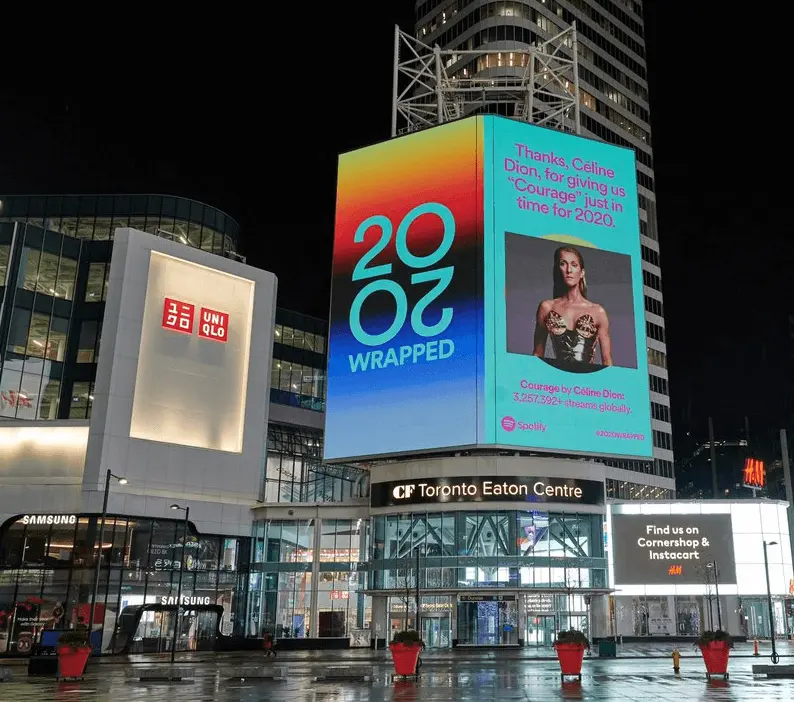
Japan has several types of LED display businesses. Some focus on product sales and rental, while others provide system design, installation coordination, maintenance or product development.
The distinction matters because a company that supplies a display is not necessarily the company that manufactures its cabinets or electronic components.
LED TOKYO

LED TOKYO provides LED display sales and rental services, alongside digital signage-related solutions. Its official service information lists indoor, outdoor, transparent, floor and special-format LED displays. The company also offers media production and planning services.
Its company profile identifies LED TOKYO as a digital signage business established in 2015, with a head office and showroom in Tokyo and a Kansai office.
Best suited for: Buyers seeking a Japanese supplier for LED display sales, rental or related digital signage services.
Its public company information does not, by itself, establish ownership of an LED cabinet production factory.
MINAMIHARA LED

MINAMIHARA LED began its LED display business in 2019 and established a dedicated company in 2021. Its stated services include planning, sales, operation and maintenance. The company also describes testing products at its own LED laboratory.
Its service model is relevant to buyers who prefer a supplier that can coordinate multiple stages of a project rather than simply deliver display hardware.
Best suited for: Commercial customers looking for sales, installation coordination and ongoing maintenance services in Japan.
The company’s warranty and reliability statements are supplier-published claims. Buyers should confirm the applicable contract terms, exclusions and service coverage for their own project.
PANDASTUDIO.TV

PANDASTUDIO.TV provides large LED display rental and sales services. Its official LED business page states that the company works with ACE Media and offers installation, maintenance and video content production. It also describes LED display applications for studios, events and outdoor use.
This makes the company relevant to event organizers and production teams that need display equipment and related technical services.
Best suited for: Studio productions, events, temporary installations and buyers considering rental or purchase.
Its published business description supports its classification as a rental and sales provider, not as a confirmed independent LED display manufacturer.
X Vision
X Vision is a Tokyo-based LED display and audiovisual company established in November 2021. Its official company profile describes planning, product selection, system design, installation coordination, calibration, rental, sales, content production and maintenance.
Its stated product and service coverage includes fine-pitch indoor displays, outdoor LED, transparent LED, MicroLED and custom display formats.
Best suited for: Buyers who need LED display system design, audiovisual integration, installation coordination or ongoing operation support.
Its public profile identifies it as a solutions provider. Buyers seeking factory-direct manufacturing should confirm the actual manufacturer of the proposed equipment.
Auo LLC
auo LLC is a newer Japanese LED display business. Its official company information states that it was established on April 3, 2026, with operations commencing on July 1, 2026. The company lists LED display and digital signage development, manufacturing, import and sales among its business activities. Its shareholders include AVIX and Unilumin.
This makes aua relevant to buyers interested in a business combining Japanese market operations with international LED display industry relationships.
Best suited for: Buyers evaluating LED display development, product supply and sales through a Japanese business structure.
Its stated business scope should not be taken as proof that every product is manufactured at a Japanese factory. Confirm the production location, manufacturing entity and warranty provider for the specific model being quoted.
Taketaka Corporation

Headquarters: Japan | Specialty: AV+ICT integration, event production, projection mapping
Overview
Originally a film projector manufacturer, Taketaka Corporation has evolved into a full-spectrum audiovisual and ICT solutions company over decades of industry transformation. Today, the company is recognized as one of Japan’s leading one-stop suppliers for video production, spatial experiences, and large-format LED display deployment.
Key Products & Services
- LED video wall planning, installation, and management for commercial and multipurpose venues
- Large-scale projection mapping projects (stadiums, heritage buildings, brand activations)
- AV equipment rental (video, audio, PC, media server)
- System integration for sports venues and public spaces
Why They Stand Out
Taketaka’s longevity in the AV industry gives it deep relationships with venue operators and event producers across Japan. Its tracking-based equipment management system is particularly valuable for rental fleet clients managing multi-site deployments.
Best For
Sports venues, multipurpose halls, event producers, brand activation agencies.
LEDUS Vision

Headquarters: Japan | Specialty: LED digital signage sales, operation, and in-house repair
Overview
LEDUS Vision has carved out a distinctive niche in Japan’s digital signage market by pairing international product sourcing with an unusually strong post-installation support model. While most Japanese LED signage vendors rely on the overseas manufacturer to handle component repairs — a process that typically takes 2–3 weeks — LEDUS Vision has invested in proprietary in-house repair capabilities that drastically reduce downtime for clients.
Key Products & Services
- Indoor LED displays (fine-pitch and standard pitch)
- Outdoor LED displays for advertising and public information
- Cube LED, transparent LED, and poster LED screens
- Full lifecycle support: sales → installation → operation → repair
Why They Stand Out
The in-house repair model is LEDUS Vision’s most significant competitive advantage. For retail, hospitality, and other clients where display downtime directly impacts revenue, the ability to resolve hardware failures within days rather than weeks delivers meaningful operational value.
Best For
Retail chains, hotel groups, building owners, advertising media operators.
Network Japan Corporation

Headquarters: Japan | Specialty: LED displays, projectors, IT solutions
Overview
Network Japan Corporation operates from a purpose-built facility that integrates warehousing, technical R&D, showroom, and sales operations within a single 1,800m² building. This vertical integration allows the company to move quickly from client consultation to product demonstration to delivery — a meaningful advantage in Japan’s efficiency-oriented business culture.
Key Products & Services
- LED display systems (indoor and outdoor)
- Projector systems and large-format display solutions
- Information technology solutions and AV system integration
- Demonstration and trial facilities at the Tokyo headquarters
Why They Stand Out
The dedicated exhibition room and listening room at Network Japan’s headquarters enable potential clients to experience display solutions in a controlled environment before committing to purchase — valuable for clients evaluating fine-pitch or high-brightness options where specification sheets alone are insufficient.
Best For
Corporate AV buyers, system integrators, government and institutional clients.
Seima Corporation

Headquarters: Japan | Founded: 1961 | Specialty: System design, leasing, AV maintenance
Overview
With over 60 years of operating history, Seima Corporation represents one of Japan’s most established technology service firms. From its origins in audiovisual equipment, Seima has evolved into a specialized company focused on creating multi-sensory communication experiences — combining imagery, sound, and space design to help clients convey messages with maximum impact.
Key Products & Services
- Poster LED displays and indoor LED walls
- Outdoor LED display systems
- Medical monitor solutions (a highly specialized segment requiring strict color accuracy compliance)
- Aerospace display systems
- System leasing, maintenance contracts, and lifecycle management
Why They Stand Out
Seima’s depth of experience across both commercial and specialized industrial display applications — including medical and aerospace sectors — reflects an engineering culture that most digital signage companies cannot match. For clients in regulated industries, this technical credibility carries significant weight.
Best For
Medical institutions, aviation and aerospace facilities, government agencies, established corporations.
LED Link

Headquarters: Nishishinjuku, Tokyo | Specialty: Multi-standard LED displays, international installations
Overview
LED Link operates from the heart of Shinjuku — one of Tokyo’s most commercially active districts — and leverages that positioning to serve both domestic and international clients. The company offers a wide range of pixel pitch and size configurations, and has established a global installation footprint that gives it credibility with multinational brands seeking consistent display performance across markets.
Key Products & Services
- HD LED displays (fine-pitch indoor)
- Sports LED displays for venue installations
- Creative LED displays (non-standard shapes and configurations)
- LED display rentals for events and temporary campaigns
Why They Stand Out
LED Link’s international certification portfolio — including ISO, CE, EMC, RoHS, ETL Mark, and UL — makes it one of the few Japan-based LED display companies whose products meet compliance requirements for deployment in North America and Europe as well as Asia. This is particularly relevant for global brands managing regional campaigns.
Best For
Multinational brands, sports venues, international events, Tokyo commercial district installations.
Ray Corporation

Headquarters: Japan | Revenue: Approx. ¥10 billion | Specialty: Advertising communications, entertainment production
Overview
Ray Corporation operates at the intersection of advertising, entertainment, and technology — a positioning that makes it distinctive among Japan’s LED display providers. With revenues of approximately ¥10 billion (around $65 million USD), the company brings enterprise-scale resources to projects spanning TV advertising production, concert staging, digital content creation, and AV equipment rental.
Key Products & Services
- Video advertising production (broadcast, digital, out-of-home)
- Event and concert production with large-format LED displays
- Digital content production and interactive experiences
- DVD and Blu-ray media production
- Video editing studio services and equipment rental
Why They Stand Out
Ray Corporation’s strength is not hardware specification — it’s the ability to deliver an LED display installation as part of a fully integrated creative and production project. For brands that need a display and the content to fill it, Ray’s end-to-end capability eliminates the coordination overhead of working with separate technology and creative vendors.
Best For
Advertising agencies, concert and live event producers, broadcast media companies, entertainment brands.
AVC

Headquarters: Japan | Founded: 1968 | Specialty: Event video, system sales, display imports
Overview
AVC has operated in Japan’s professional display market for over 55 years, tracing its origins to the educational equipment division of import trading company Osawa Shokai. Now operating as Eizo Center, the company has built its business around three core pillars: event video production and support, system sales for permanent installations, and the import and distribution of international display products.
Key Products & Services
- Digital display rental for events and exhibitions
- Large-format display systems and multi-video configurations
- AV system integration for corporate and institutional clients
- Import and distribution of professional display hardware
Why They Stand Out
AVC’s five-decade track record in Japan’s professional AV market gives it institutional relationships with event venues, corporate clients, and government institutions that newer competitors struggle to replicate. Its emphasis on empathy with clients — a philosophy embedded in the company’s core values — reflects a service orientation that resonates deeply in Japan’s relationship-driven business culture.
Best For
Corporate events, institutional clients, exhibition and trade show operators, display system integrators.
How Should You Compare LED Display Suppliers in Japan?
Once you have identified potential suppliers, compare the responsibilities and deliverables behind their quotations.
Confirm Who Actually Manufactures the Display
Ask the supplier to identify:
-
The legal name of the manufacturer.
-
The factory location.
-
The company responsible for cabinet assembly and testing.
-
The manufacturer of the LED modules and power supplies.
-
The entity responsible for product warranty and replacement parts.
If the supplier uses an OEM or ODM manufacturer, request the relevant product datasheets and confirm who will handle technical issues.
A supplier’s brand name on a quotation does not automatically identify the factory responsible for production.
Check Installation and Maintenance Responsibilities
A commercial LED display project may involve several parties: the equipment supplier, structural contractor, electrical contractor, AV integrator and local installation team.
Before ordering, define who is responsible for:
-
Site measurement and installation drawings.
-
Structural design and approval.
-
Power distribution and cabling.
-
Display configuration and commissioning.
-
Operator training.
-
Fault diagnosis and replacement parts.
For an overseas purchase, these responsibilities are particularly important. Shipping the equipment to Japan does not automatically include installation or local maintenance.
Compare Warranty and Spare-Part Conditions
A warranty period is only one part of after-sales support. Ask whether it covers modules, power supplies, receiving cards, control equipment and labour.
Also clarify whether replacement parts are shipped from overseas, held in Japan or available through a local service partner.
The contract should specify how faults are reported, who diagnoses them and who pays for shipping, labour and site visits.
What Technical Specifications Matter When Buying LED Displays?
The right LED display configuration depends on viewing distance, content, ambient light and installation conditions. A more expensive specification is not necessarily a better fit.
Pixel Pitch and Viewing Distance
Pixel pitch is the distance between adjacent LED pixels. A smaller pitch generally provides greater image detail at close viewing distances, but it also increases the cost of the display.
For retail environments, meeting rooms and control spaces, buyers should consider how close viewers will stand and whether the screen needs to show fine text or detailed graphics.
For outdoor billboards and large-format displays, the audience is usually farther away. A larger pixel pitch may therefore provide sufficient image quality at a lower hardware cost.
Ask the supplier to recommend a pitch using the actual screen dimensions and nearest viewing position. Do not select a fine-pitch display solely because it has a smaller number in its model name.
Brightness and Ambient Light
Brightness should match the lighting conditions at the installation site.
Indoor displays usually have different brightness requirements from outdoor screens exposed to direct sunlight. For outdoor projects, consider screen orientation, reflections, nearby buildings and changing daylight conditions.
Ask suppliers whether the quoted brightness is a typical or maximum value and request the measurement conditions. Contrast, viewing angle and surface treatment also affect visibility.
Refresh Rate and Camera Performance
Refresh rate is relevant to fast-moving content, live events and camera-facing installations. However, a high refresh-rate figure alone does not guarantee clean camera images.
For broadcast studios, XR production and other camera-facing applications, request a demonstration with the intended camera settings. Check scan configuration, grayscale performance and visible artefacts under actual operating conditions.
Power Consumption and Heat Management
Ask for both average and maximum power consumption per square metre. Actual consumption varies with displayed content, brightness settings and operating schedules.
The project design should also account for electrical supply capacity, power distribution, protection devices, ventilation and maintenance access.
A product with lower power consumption may reduce operating costs, but it should be compared with alternatives using the same brightness and performance requirements.
IP Rating and Structural Conditions
For outdoor LED displays, check the IP rating of the complete cabinet or display assembly. Do not assume that the rating of an individual module establishes the protection level of the finished system.
The supporting structure requires a separate engineering review. Wind exposure, mounting height, building conditions and seismic considerations may affect the design.
For projects in Japan, request structural drawings and relevant load information from the responsible engineering party. An IP rating does not demonstrate structural safety.
What Certifications and Import Requirements Apply in Japan?
Japanese electrical safety requirements should be checked before the equipment is shipped. The applicable rules depend on the product category and the electrical components included in the system.
PSE and Electrical Components
Japan’s Electrical Appliances and Materials Safety Act regulates designated electrical products. METI lists AC/DC power supply units among examples of specified electrical appliances and materials. The Act distinguishes between specified and non-specified products, with different conformity assessment obligations.
This does not mean every complete LED display automatically requires the same PSE treatment. Buyers should identify the power supply models, adapters and other electrical components and check whether each falls within a regulated category.
For applicable products, the importer may have obligations involving business notification, technical conformity, self-inspection records and PSE marking. Specified electrical products also require the applicable third-party conformity assessment.
Before ordering, request the electrical component model numbers and available compliance documents. Confirm the requirements with the Japanese importer or a qualified compliance specialist.
Importer Responsibility and Technical Documents
A CE or UL document does not automatically replace Japanese legal requirements.
Prepare a technical document package appropriate to the equipment and transaction. It may include:
-
Commercial invoice and packing list.
-
Product datasheets and model numbers.
-
Electrical ratings and wiring information.
-
Power supply documentation.
-
Applicable conformity and test records.
-
Installation drawings.
-
Operation and maintenance manuals.
METI’s guidance explains that businesses importing products covered by the Act must follow the applicable notification and conformity procedures.
The precise obligations should be confirmed for the products being imported, rather than assumed from a supplier’s general statement that its equipment is compliant.
How Much Does It Cost to Source an LED Display for Japan?
The total project cost depends on more than the LED cabinets. A useful quotation should separate hardware, transportation, installation and the work needed to make the display operational.
Understand the Quotation Components
Ask suppliers to itemize:
-
LED cabinets and modules.
-
Control system and processing equipment.
-
Power supplies and distribution components.
-
Spare modules and critical replacement parts.
-
Packaging, freight and cargo insurance.
-
Installation and commissioning.
-
Structural work and electrical infrastructure.
-
Applicable testing, documentation and compliance support.
This makes it easier to compare offers with different scopes. A lower hardware price may exclude important components or site work.
Consider Total Cost of Ownership
For a permanent display, evaluate the expected operating costs as well as the purchase price.
Power consumption, maintenance access, replacement-part availability and downtime can affect the overall cost. For example, a screen installed in a difficult-to-access location may require additional equipment or labour for routine maintenance.
Ask suppliers to explain warranty exclusions, spare-part lead times and the process for remote or on-site technical support. For outdoor projects, include the inspection and maintenance of the supporting structure in the project plan.
Compare Factory-Direct and Local Supplier Quotes
A Japanese supplier may simplify site coordination, installation and communication. Factory-direct sourcing may offer greater flexibility in product configuration and direct access to the manufacturing team.
Compare quotations using the same screen area, pixel pitch, brightness, control system, installation scope, warranty conditions and delivery terms.
Neither route is automatically cheaper. The best option depends on the project’s customization needs and the availability of qualified local support.
Should You Buy from a Japanese Supplier or an Overseas Factory?
The right procurement route depends on the complexity of the installation and the support required after delivery.
When a Japanese Supplier Makes Sense
A local supplier or system integrator may be preferable when the project needs on-site surveys, Japanese-language coordination, installation management or local maintenance.
This can be particularly useful for permanent installations in commercial buildings, retail locations and public-facing environments.
When Factory-Direct Sourcing Makes Sense
Buying directly from an overseas manufacturer may suit projects requiring customized cabinets, specific pixel pitches, large display areas or repeatable configurations across multiple sites.
Before placing an order, confirm who will handle Japanese compliance requirements, structural approval, electrical work, installation and after-sales support.
Agree on After-Sales Responsibilities Before Ordering
For cross-border purchases, agree on how faults will be diagnosed, how replacement components will be supplied and who will arrange local repair work.
For complex projects, define commissioning and acceptance procedures before production begins. This helps reduce disputes if the delivered configuration does not match the approved specification.
Why Consider Sostron for Commercial LED Display Projects?
Sostron supplies commercial LED display products for indoor, outdoor, rental and specialized applications. Buyers considering an overseas manufacturer should evaluate the product documentation, engineering information and relevant project evidence for the configuration they need.
Product Selection and Engineering Support
Sostron’s published product range includes outdoor Ares displays, Carbon rental displays and other commercial LED display categories. The official product catalogue also lists indoor, transparent, rental and film/XR-related solutions.
The suitable configuration depends on the installation environment, viewing distance, screen dimensions, content and maintenance requirements.
For example, an outdoor advertising project may require an outdoor cabinet and weather-protection configuration, while an indoor meeting space may need a different pixel pitch and cabinet design.
Review the Sostron commercial LED display product range and confirm the current datasheet, electrical specifications and warranty terms for the selected model before requesting a quotation.
Review Relevant Project Experience
Sostron publishes project examples covering outdoor advertising, rental displays, stadiums and commercial installations. Its LED display case studies can help buyers review the types of applications presented by the company.
When reviewing any project reference, check whether the published information includes the product model, display area, pixel pitch, installation environment and project scope.
An overseas project can demonstrate experience with a particular application, but it does not prove Japanese regulatory approval or local installation capability.
Frequently Asked Questions
Are there LED display manufacturers in Japan?
Japan has companies involved in LED display development, sales, rental and system integration. However, not every supplier operates its own production facility. Buyers should verify the manufacturing entity and factory location for the specific product.
Can I import LED displays from China to Japan?
Overseas sourcing is a possible procurement route. Buyers should confirm applicable import procedures, electrical safety requirements and the responsibilities of the Japanese importer before shipment.
Does every LED display need PSE certification?
No blanket conclusion should be made for every complete LED display. PSE requirements depend on whether the product or electrical component falls within a category regulated by Japan’s Electrical Appliances and Materials Safety Act. Check the specific power supply and other applicable components.
What should I compare when choosing LED screen suppliers in Japan?
Compare manufacturing responsibility, technical specifications, installation scope, warranty terms, spare-part availability, delivery conditions and compliance documentation. The lowest cabinet price alone is not a reliable measure of project value.
Should I buy from a Japanese supplier or an overseas manufacturer?
Choose according to the project’s customization and support requirements. A local supplier may simplify site coordination and maintenance, while direct sourcing may offer more configuration flexibility. Confirm who is responsible for installation and after-sales service before ordering.
Final Recommendation: Verify the Supplier Before Comparing Prices
When evaluating LED display manufacturers in Japan and LED screen suppliers in Japan, begin by identifying who manufactures the equipment and who is responsible for installation, compliance and ongoing support.
Then compare the actual display configuration, electrical requirements, structural conditions, warranty coverage and total project costs. For overseas sourcing, establish the Japanese importer and local installation responsibilities before placing the order.
If you are planning an indoor, outdoor, rental or commercial LED display project, review Sostron’s product documentation and discuss the technical requirements before requesting a quotation.
References:
METI — Electrical Appliances and Materials Safety Act
IEC — IEC 60529: Degrees of Protection Provided by Enclosures (IP Code)