Quick Answer: What Is a Low-Power LED Display?
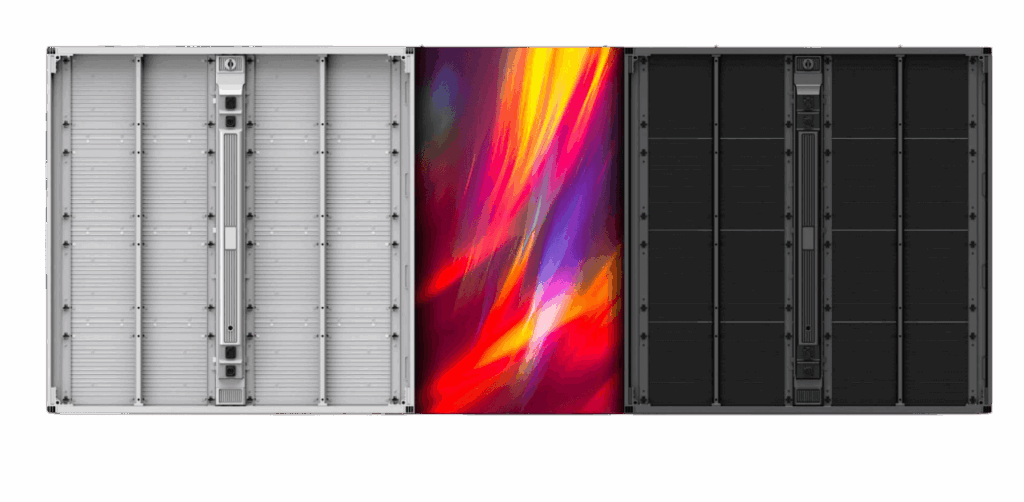
A low-power LED display is an LED screen engineered to reduce electricity consumption without compromising essential visual performance, including brightness, color accuracy, grayscale, and refresh rate. It achieves this through a combination of energy-efficient LED chips, optimized Common Cathode architecture, advanced driver ICs, efficient power supplies, and intelligent brightness control.
For commercial applications, the real value of an energy-efficient LED display goes beyond lower electricity bills. It can reduce operating expenses, limit unnecessary heat generation, ease cooling requirements, and improve the economics of large-scale digital signage and outdoor LED billboards.
However, not every screen advertised as an energy-saving LED display delivers the same results. Actual power consumption depends on pixel pitch, brightness, display content, operating hours, electrical design, and environmental conditions. Buyers should compare measured average power consumption at equivalent brightness levels rather than relying solely on manufacturers’ advertised energy-saving percentages.
| Key Factor | What Buyers Should Evaluate |
|---|---|
| Power consumption | Maximum and average power in W/m² |
| LED architecture | Common Cathode or Common Anode |
| Brightness | Actual measured output in nits |
| Driver efficiency | LED driver IC and current regulation |
| Thermal performance | Operating temperature and heat dissipation |
| Operating costs | Electricity, cooling, and maintenance |
| Reliability | Power supply quality, component life, and serviceability |
For an outdoor LED billboard operating many hours each day, even a modest reduction in average power consumption can produce meaningful savings over several years. The important question is whether those savings can be demonstrated under comparable operating conditions.
What Makes an LED Display Energy-Efficient?
A low-power LED display is not simply a conventional screen with a smaller power supply. Its energy efficiency depends on how effectively the entire display system converts electrical energy into visible light.
Several components influence the result, and improving only one of them does not necessarily make the complete screen more efficient.
Common Cathode Technology: How Does It Reduce Power Consumption?
One of the most important technologies used in energy-efficient LED displays is Common Cathode architecture.
In a conventional Common Anode configuration, RGB LED chips share a common positive supply arrangement. Different LED colors have different forward-voltage requirements, meaning that the power supply and driving circuit must accommodate their electrical characteristics.
Common Cathode technology uses a shared negative connection and allows different voltage rails to be supplied to the RGB channels. This arrangement can reduce unnecessary voltage loss when the power system is properly designed.
The principle is particularly relevant to outdoor LED displays, where high brightness and extended operating hours can create substantial electricity demand.
| Comparison | Common Anode | Common Cathode |
|---|---|---|
| Electrical architecture | Shared positive connection | Shared negative connection |
| RGB voltage management | Depends on circuit configuration | Can support separate RGB supply rails |
| Voltage matching | May involve additional voltage loss | Can improve voltage matching |
| Energy efficiency | Depends on overall design | Offers potential power-saving benefits |
| Thermal performance | Depends on electrical losses and cooling | Reduced losses may lower heat generation |
| Application | Conventional LED display designs | Energy-efficient display designs |
The key advantage is better matching between the supply voltage and the electrical requirements of different LED colors.
Texas Instruments explains this engineering approach in its application report, Common-Anode Power Supply Solution for Common-Cathode LED Display. The report provides a technical reference for understanding the power architecture and voltage requirements involved in Common Cathode systems.
Read the Texas Instruments Common Cathode technical report.
One important detail deserves attention: Common Cathode does not guarantee a fixed energy-saving percentage across all LED displays. The actual improvement depends on the LED chips, driver ICs, PCB layout, power supply, brightness settings, and overall circuit design.
A manufacturer claiming 40% or 50% energy savings should therefore provide test results showing the reference product, brightness, measurement conditions, and power consumption before and after optimization.
How Do LED Driver ICs Affect Power Consumption?
The LED driver IC controls the current supplied to individual LED channels. Its efficiency and current regulation directly influence how effectively the display operates.
An inefficient driver can waste electrical energy as heat, even when the LED chips themselves are relatively efficient.
Modern LED driver designs can improve energy performance through more precise current control, reduced electrical losses, and better coordination with the display’s power supply.
For commercial buyers, three factors deserve particular attention:
- Current regulation: Stable current helps maintain consistent brightness without unnecessary electrical consumption.
- Driver efficiency: Lower internal losses reduce the energy converted into unwanted heat.
- Display control: Proper grayscale and brightness management help prevent unnecessary power demand during normal operation.
The driver IC should not be evaluated independently of the complete display module. A high-efficiency driver cannot compensate for poor power distribution, unsuitable LED chips, or an inefficient overall circuit.
Does Power Supply Efficiency Matter?
Yes. The power supply converts incoming AC electricity into the DC power required by the LED modules and control electronics.
Some energy is inevitably lost during this conversion. A more efficient power supply reduces those losses, which can become significant when a large outdoor screen operates for extended periods.
However, buyers should distinguish between the efficiency rating of an individual power supply and the measured efficiency of the complete LED display.
A power supply advertised with high conversion efficiency does not automatically mean that the finished display has equally high energy efficiency.
When comparing manufacturers, request the actual power supply model, its relevant efficiency documentation, and the LED display’s measured AC input power.
Why Does Thermal Management Affect Energy Efficiency?
Electrical energy that does not contribute to useful light output can become heat. Excessive heat increases the thermal load on LED modules, driver ICs, power supplies, and other electronic components.
This creates an operational issue, particularly for outdoor LED billboards installed in locations exposed to direct sunlight and high ambient temperatures.
Effective thermal management involves several design considerations:
- PCB layout and electrical loss reduction.
- Cabinet ventilation and airflow.
- Heat dissipation through appropriate structural materials.
- Power supply positioning.
- Ambient temperature management.
The U.S. Department of Energy’s research on LED thermal management provides useful background on the relationship between temperature and LED performance. However, component-level thermal research should not be confused with a complete LED display lifespan test.
Read the U.S. Department of Energy thermal management research.
For buyers, the practical consideration is not simply whether a manufacturer claims that its screen operates at a lower temperature. Ask how the temperature was measured, where the measurement was taken, and whether both comparison products operated under equivalent conditions.
A lower cabinet surface temperature, for example, does not automatically establish a lower LED junction temperature.
How Much Power Does an LED Display Consume?
Power consumption varies considerably between LED displays. A large outdoor billboard designed for daylight visibility will generally have different electrical requirements from an indoor fine-pitch screen operating at lower brightness.
Pixel pitch, LED chip characteristics, brightness, display content, and operating conditions all influence actual consumption.
Two displays with identical dimensions may therefore have noticeably different electricity requirements.
Maximum Power vs. Average Power: Which Should You Use?
This distinction is essential when evaluating an LED display specification.
Maximum power consumption represents the power demand under a specified high-load testing condition. Full-white display content is commonly used when evaluating high-load performance.
Average power consumption represents the energy demand under a defined operating scenario, taking normal display content and brightness into account.
They serve different purposes:
| Power Metric | Primary Application | What Buyers Should Check |
|---|---|---|
| Maximum power | Electrical system planning | Peak load and circuit capacity |
| Average power | Electricity cost estimation | Actual operating conditions |
| Standby power | Non-display operating periods | Control system and idle consumption |
For electrical installation, maximum load and applicable startup conditions must be considered when sizing distribution equipment and protective devices.
For electricity budgeting, average power is generally more relevant.
A common procurement mistake is comparing the maximum power rating of one manufacturer’s screen against the average power rating of another. Such a comparison can make an ordinary product appear unusually inefficient or make an energy-saving model look better than it actually is.
Always request both figures and confirm that the measurement conditions are consistent.
What Factors Have the Biggest Impact on LED Screen Power Consumption?
1. Brightness
Brightness is one of the most influential operating variables. Outdoor LED billboards may require high luminance to remain visible under direct sunlight, while indoor displays generally operate under different lighting conditions.
Running a screen continuously at maximum brightness when the environment does not require it can increase unnecessary electricity consumption.
Automatic brightness adjustment can help match screen output to ambient lighting conditions, reducing energy demand during darker periods.
2. Pixel Pitch and LED Configuration
Pixel pitch determines the distance between adjacent pixels and influences the number of pixels installed per square meter.
However, smaller pixel pitch does not automatically mean higher or lower power consumption in every product. LED chip efficiency, module architecture, brightness, and driver design must also be considered.
3. Display Content
A screen displaying a predominantly dark advertisement may consume less power than one displaying bright, full-screen content.
This is one reason average power consumption varies between applications. A specification measured using one test pattern should not be treated as a universal figure for every advertising campaign.
4. Operating Environment
Outdoor temperature, direct sunlight, ventilation, and brightness requirements influence the energy demands of the complete display system.
A screen operating in a hot environment may also require additional thermal management, depending on its design and installation conditions.
5. Power Supply and Electrical Design
The quality of power conversion, current regulation, cable sizing, and distribution design all affect overall system efficiency.
An energy-efficient LED module installed with an inefficient power system may deliver less practical benefit than expected.
How Can Buyers Verify Real LED Display Power Consumption?
A specification sheet is a starting point, not proof of energy efficiency.
Before placing an order, buyers should request a consistent testing method and confirm that the results reflect the intended application.
At minimum, a useful power consumption test should identify:
| Test Item | Information Required |
|---|---|
| Product configuration | Model, pixel pitch, and module type |
| Screen brightness | Measured luminance in nits |
| Display content | Full-white or specified mixed-content pattern |
| Input voltage | Actual AC supply conditions |
| Measurement point | Complete system AC input |
| Operating environment | Ambient temperature |
| Measurement duration | Defined test period |
| Power result | Maximum and average W/m² |
| Testing equipment | Power analyzer and measurement records |
For a fair comparison, both products should be tested at equivalent brightness, screen dimensions, content, and environmental conditions.
The measurement boundary also matters. AC input power includes conversion losses from the power supply, while DC output power measures electricity delivered to downstream components. These values should never be presented as interchangeable.
For large-scale commercial installations, buyers should also consider whether the test includes receiving cards, control systems, and other equipment that contributes to the total electrical load.
A transparent manufacturer should be able to explain exactly what its power figures include.
100㎡ Outdoor LED Display: How Much Can Energy-Saving Solutions Save on Electricity Bills?
-
Screen Area: 100㎡
-
Daily Operating Hours: 14 hours
-
Assumed Traditional Solution Avg. Power: 350W/㎡
-
Assumed Energy-Saving Solution Avg. Power: 180W/㎡
-
Assumed Commercial Electricity Rate: $0.20/kWh
| Comparison Item | Traditional Solution | Energy-Saving Solution |
| Assumed Average Power | 350W/㎡ | 180W/㎡ |
| Daily Power Consumption | 490 kWh | 252 kWh |
| Daily Electricity Cost | $98 | $50.40 |
| Annual Electricity Cost (365 days) | $35,770 | $18,396 |
| 5-Year Electricity Cost | $178,850 | $91,980 |
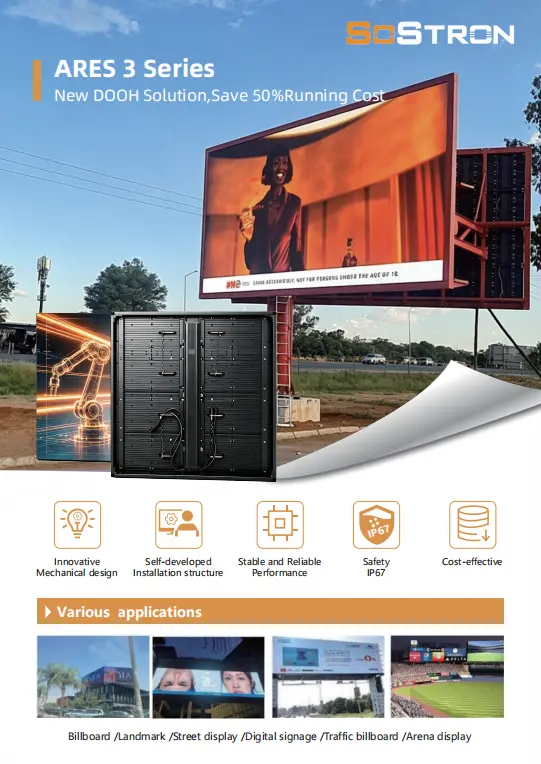
Ares 3 Energy-Saving Outdoor LED Display: What to Verify Before Purchasing?
-
Average Power vs. Max Power: Confirm the specific pixel pitch, brightness, and configuration corresponding to the provided data.
-
Brightness & Visual Performance: Verify brightness under target ambient light conditions while checking grayscale, color accuracy, and refresh rates.
-
IP Rating: Confirm both front and rear protection capabilities based on the installation environment, rather than relying on a single overall IP rating.
-
Power Supply & Heat Dissipation: Verify power supply configurations, thermal structures, and performance in high-temperature environments.
-
Test Reports: Request suppliers to detail test voltage, playback content, brightness settings, measurement locations, and test durations.
Low-Power LED Display Procurement: 5 Frequently Asked Questions
1. Are energy-saving LED displays necessarily more expensive than standard LED screens?
2. Is Common Cathode definitely more energy-efficient than Common Anode?
3. What is the difference between average power and maximum power in LED displays?
4. Does higher brightness on an outdoor LED display always mean higher power consumption?
5. How can buyers verify if the energy-saving data provided by a supplier is reliable?
Conclusion: Don’t Just Buy Low-Power Specs—Buy Verifiable Operating Costs