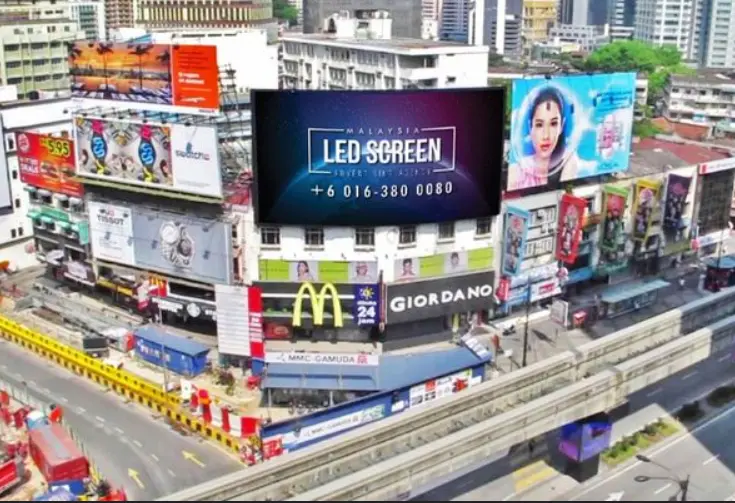
Quick Answer: What Are Ultralight LED Displays?
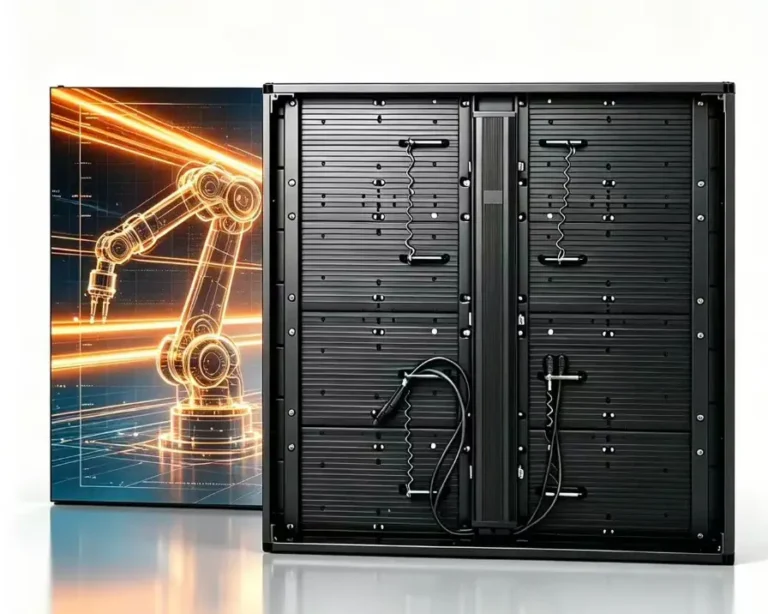
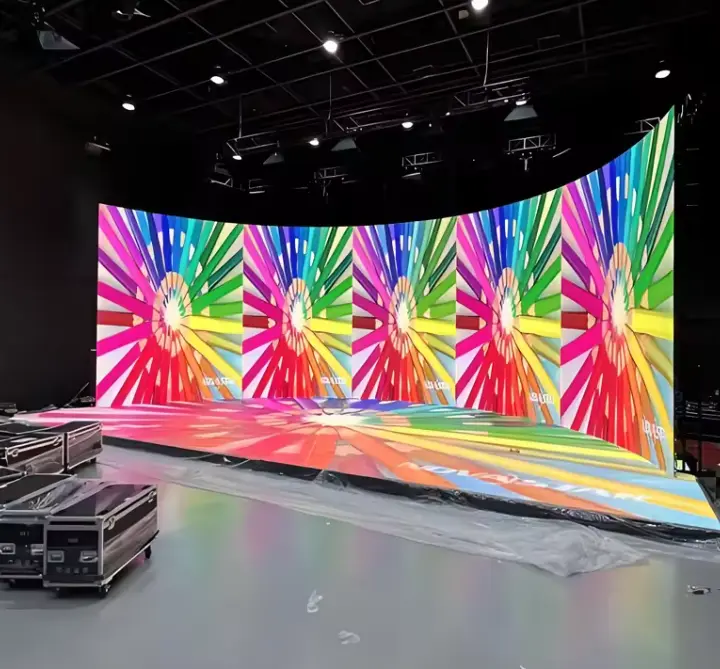
Ultralight LED displays are LED video panels engineered to reduce cabinet weight while maintaining the visual performance, mechanical stability, and serviceability required for professional installations. They are commonly considered for touring events, rental stages, XR production, temporary installations, and projects where transportation or structural loading is a major concern.
The term “ultralight LED display” does not have a single universal weight threshold that applies across all products and applications. Buyers should compare the weight of panels with the same dimensions and similar configurations, then confirm the total system weight, including required accessories and support hardware. A lower panel weight alone does not establish that a complete display system is easier to install or suitable for a particular structure.
The cost of an ultralight LED display depends on pixel pitch, cabinet materials, manufacturing design, brightness, control equipment, order quantity, and project requirements. Lightweight construction may reduce certain handling, transportation, or installation expenses, but it does not guarantee a lower total project cost.
| Buying consideration | What to check | Why it matters |
|---|---|---|
| Cabinet weight | Verified weight for the exact model | Helps assess handling and transport |
| Weight per square meter | Comparable display-area figures | Enables fair product comparisons |
| Purchase price | Itemized manufacturer quotation | Reveals the cost of lightweight construction |
| Structural requirements | Approved rigging or mounting documentation | Helps manage installation risks |
| Image performance | Pixel pitch, brightness, refresh rate and grayscale | Ensures suitability for the intended viewing environment |
| Total cost of ownership | Hardware, shipping, installation, maintenance and spares | Provides a more realistic budget |
Who should consider ultralight LED displays? Rental companies, touring production teams, XR studios, event contractors, and integrators working with strict weight limits may benefit most. For fixed installations with accessible maintenance and adequate structural capacity, a conventional cabinet may remain the more economical option.
What Makes an LED Display Ultralight?
An ultralight LED display is not simply a conventional screen made with a different metal. Its weight depends on the cabinet dimensions, structural design, material selection, power distribution, cooling system, locking mechanism, and the accessories required for operation.
Lightweight engineering aims to remove unnecessary mass without compromising the properties that make an LED display suitable for repeated installation, transportation, and operation.
Cabinet Weight vs. Complete System Weight
One of the most important distinctions in LED procurement is the difference between the weight of an individual cabinet and the weight of the complete display system.
A manufacturer may publish a cabinet weight that excludes hanging bars, ground-support structures, flight cases, cables, processors, and other accessories. A logistics quotation may use gross packed weight or volumetric weight, while a structural engineer needs the actual loads imposed by the complete installed assembly.
| Weight category | What it includes | Main application |
|---|---|---|
| Bare cabinet weight | Cabinet assembly as defined by the manufacturer | Comparing cabinet designs |
| Configured cabinet weight | Cabinet plus specified modules, power supplies or accessories | Verifying the supplied configuration |
| Display-system weight | Cabinets, connectors, mounting hardware and applicable system components | Installation planning |
| Shipping gross weight | Product, packaging and transport materials | Freight quotations |
| Structural design load | Applicable dead loads and other required design loads | Engineering approval |
These categories are not interchangeable. Always ask the supplier to define exactly what is included in its published weight specification.
How Should Buyers Compare Cabinet Weight?
A fair comparison requires products with equivalent display areas and clearly defined configurations.
Manufacturer specifications illustrate why cabinet dimensions matter when comparing lightweight LED displays. Absen lists the NT V2 panel at 9.7 kg for a 500 × 1,000 mm configuration, while ROE Visual lists its Diamond panel at 5.76 kg for a 500 × 500 mm configuration. These figures are not a like-for-like comparison because the panel dimensions differ. For procurement, compare equivalent panel sizes where possible and verify the weight of the complete installation configuration with the manufacturer.
Before choosing either product, verify the current model specification, included components, pixel pitch, application, and installation configuration. A lighter individual cabinet does not automatically mean a lighter complete system or a lower installed cost.
How Much Do Ultralight LED Displays Cost?
The price of an ultralight LED display cannot be established reliably from cabinet weight alone. Two products with similar dimensions and weight may have different prices because of their pixel pitch, LED components, brightness, control architecture, cabinet construction, quality-control requirements, and intended application.
For Sostron buyers, the most useful starting point is an itemized quotation for the exact product configuration. If a supplier does not publish a verifiable price, treat any preliminary budget as an estimate rather than a confirmed market rate.
What Determines the Price of an Ultralight LED Display?
| Cost driver | Potential price impact | What buyers should verify |
|---|---|---|
| Pixel pitch | Fine-pitch products often require denser LED packaging and tighter manufacturing tolerances | Actual pixel pitch and module specification |
| Cabinet material | Carbon fiber and specialized magnesium-alloy designs may involve different material and manufacturing costs | Material specification and finished cabinet weight |
| Structural design | Curved cabinets, specialized locks and custom geometry may add engineering and production costs | Drawings, connection design and configuration |
| Brightness and performance | Higher performance requirements may affect LED components, power supplies and thermal management | Brightness specification and operating conditions |
| Control system | Processors, receiving cards, signal distribution and synchronization equipment add to system cost | Exact equipment list and compatibility |
| Order quantity | Custom tooling, production setup and volume pricing can affect unit costs | Minimum order quantity and quotation validity |
| Customization | Special dimensions, mounting hardware and project-specific requirements may increase costs | Engineering scope and included services |
| Logistics | Packaging, freight, insurance, duties and destination handling can materially affect landed cost | Shipping terms, destination and quotation exclusions |
A low cabinet price may not represent the lowest-cost project. Buyers should evaluate the complete configuration and installation requirements before comparing quotations.
Hardware-Only Price vs. Installed Project Cost
An LED display quotation may cover only the display cabinets, or it may include a broader package of equipment and services. This difference can make two apparently similar offers difficult to compare.
Request a breakdown that separates the following items:
-
LED cabinets and spare modules.
-
Power supplies, receiving cards, cables and control processors.
-
Mounting hardware, hanging bars or ground-support structures.
-
Flight cases and protective packaging.
-
Shipping, cargo insurance and destination handling.
-
Customs duties, taxes and brokerage where applicable.
-
Installation labor, electrical work and commissioning.
-
Content-management equipment and software where required.
-
Warranty, technical support and replacement parts.
Important: Not every project requires every item. A touring rental company may already own processors, flight cases and rigging equipment, while a first-time fixed-installation buyer may need a more complete supply package.
Ask each supplier to state what is included, what is excluded, and which costs remain the buyer’s responsibility.
How Can Buyers Estimate Transportation Costs?
Lightweight cabinets may reduce handling effort and gross shipment weight. However, freight charges can also depend on package dimensions, shipping mode, route, service level, and the carrier’s charging rules.
The following factors should be evaluated together:
| Logistics factor | Why it matters |
|---|---|
| Net product weight | Establishes the weight of the supplied equipment |
| Packed gross weight | Includes packaging and protective materials |
| Package dimensions | Affect container utilization and dimensional charging |
| Flight cases | Improve protection but add weight, volume and cost |
| Shipment destination | Determines route, local handling and applicable charges |
| Shipping method | Air, sea and road freight have different cost structures |
| Incoterms | Define important responsibilities for delivery, costs and risk |
| Return logistics | Particularly relevant to touring and rental operations |
Do not assume that reducing cabinet weight by a given percentage produces the same percentage reduction in freight cost. Packaging volume, shipment consolidation and carrier pricing may limit the savings.
For an accurate budget, obtain a packing list and a current quotation from the logistics provider using the actual destination and shipment configuration.
How Do Aluminum, Magnesium Alloy and Carbon Fiber Compare?
Cabinet materials are a useful starting point for product selection, but they should not be treated as a simple ranking from worst to best.
Aluminum alloys, magnesium alloys and carbon-fiber composites have different material properties and manufacturing requirements. The finished cabinet’s performance also depends on geometry, wall thickness, reinforcement, joints, locking mechanisms and quality control.
Aluminum Alloy Cabinets
Aluminum alloy is widely used in LED display cabinet construction because it offers a useful balance of weight, stiffness, manufacturing flexibility and corrosion resistance when appropriately designed and finished.
Its suitability depends on the alloy, fabrication process, cabinet geometry and protective treatment. Aluminum cabinets may be a practical choice for rental companies and integrators that need established maintenance procedures and broad product availability.
Potential advantages
-
Established manufacturing and fabrication processes.
-
Useful balance of mechanical performance and weight.
-
Availability of repair and replacement options, depending on the product.
-
Suitability for a broad range of indoor and outdoor cabinet designs.
What to verify
Check the finished cabinet weight, joint design, surface treatment, locking mechanism, and availability of replacement components. The label “aluminum alloy” alone does not establish cabinet strength or durability.
Magnesium Alloy Cabinets
Magnesium alloys can be useful in weight-sensitive equipment designs. Their performance depends on the specific alloy, manufacturing process, structural geometry and protective treatment.
A magnesium-alloy cabinet is not automatically lighter than every aluminum cabinet. A reinforced magnesium design may also have different durability, corrosion-protection, repair and production requirements.
Before paying a premium, request the exact material specification and compare the complete cabinet with an equivalent product.
Carbon Fiber Cabinets
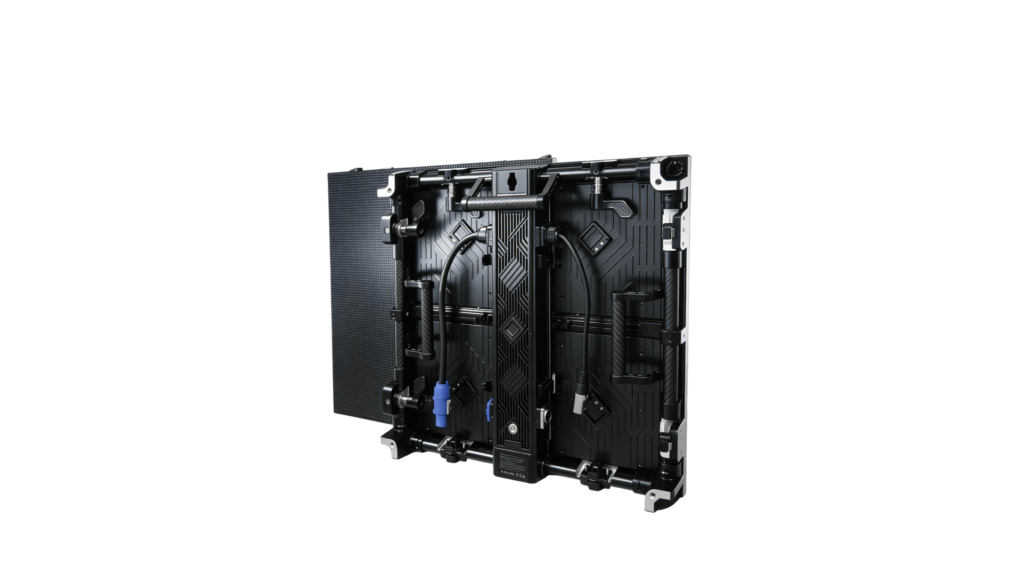
Carbon-fiber composites can provide high stiffness relative to weight when the fiber orientation, resin system, laminate structure and cabinet design are appropriately engineered.
However, the properties of a carbon-fiber composite depend on how it is manufactured. A material-level strength claim cannot be used as proof that an entire LED cabinet is stronger, safer or more durable than a metal cabinet.
Buyers should investigate:
-
Composite construction and relevant test documentation.
-
Localized impact resistance and edge protection.
-
Connection points and repeated locking cycles.
-
Repair procedures and the availability of replacement parts.
-
Heat exposure, electrical isolation and integration with other components.
-
Long-term service support for the particular product.
For rental applications, the cabinet must withstand the handling and transport conditions expected during repeated deployments. For XR applications, the buyer may place greater emphasis on image quality, synchronization and camera-facing performance alongside weight.
Material Comparison Table
| Evaluation factor | Aluminum alloy | Magnesium alloy | Carbon fiber |
|---|---|---|---|
| Weight potential | Depends on cabinet design | Can support lightweight designs | Can offer high stiffness at low mass |
| Structural performance | Depends on alloy and geometry | Depends on alloy and geometry | Depends on laminate design and load direction |
| Corrosion considerations | Alloy and surface treatment matter | Protective treatment and environment matter | Composite durability and attached metal components matter |
| Impact and handling | Depends on construction and protection | Depends on alloy and cabinet design | Local impact and edge damage require attention |
| Repairability | Depends on fabrication and available parts | Depends on manufacturing and repair provisions | Damage assessment may require specialized procedures |
| Cost | Varies by product and volume | Varies by alloy and manufacturing process | Varies by composite design and production process |
| Best selection method | Verify the finished product | Verify the finished product | Verify the finished product |
No material should be declared the universal winner. The right choice is the cabinet that meets the project’s weight, mechanical, environmental, maintenance and budget requirements.
Which Specifications Matter Beyond Weight?
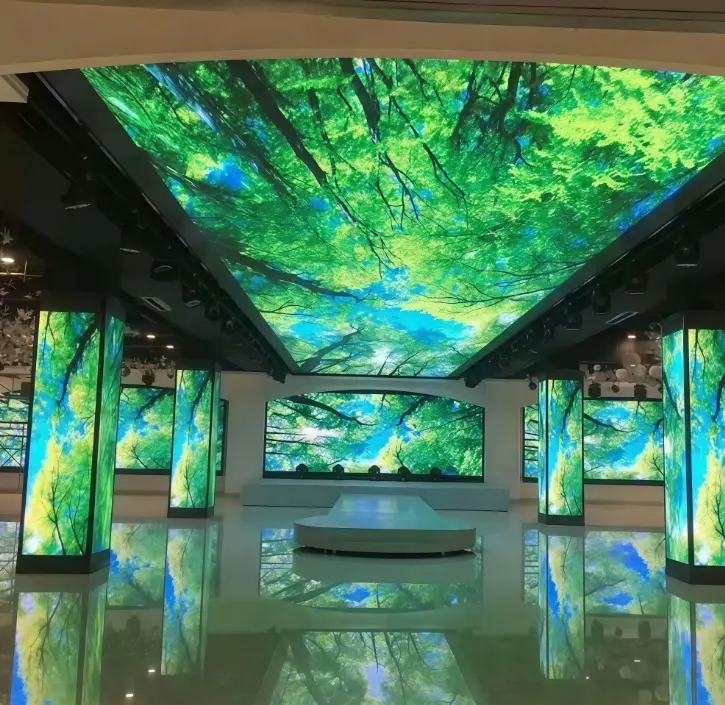
Weight is only one part of an LED display specification. A lightweight cabinet that cannot meet the required image quality, environmental conditions or installation requirements is not a good purchase.
Pixel Pitch and Viewing Distance
Pixel pitch is the distance between adjacent pixel centers, normally expressed in millimeters. Smaller pixel pitch generally supports higher pixel density for a given display area, but it may also increase hardware cost and the precision required in manufacturing and maintenance.
Select pixel pitch according to the expected viewing distance, screen dimensions, content and budget. A touring screen viewed from a long distance may have different requirements from an XR wall positioned close to a camera.
Do not pay for finer pixel pitch without considering whether the audience or camera setup can benefit from it.
Brightness and Environmental Conditions
Brightness requirements depend on ambient light, viewing direction, installation location and intended content.
Indoor rental displays, XR stages and outdoor event screens operate under different conditions. An outdoor product may need higher brightness and appropriate environmental protection, while an XR application may prioritize camera performance, controlled brightness and uniform image reproduction.
Ask the manufacturer for the rated brightness of the exact model and the operating conditions under which it is specified. For outdoor installations, also verify the applicable ingress protection rating, temperature range and maintenance requirements.
Refresh Rate, Grayscale and XR Performance
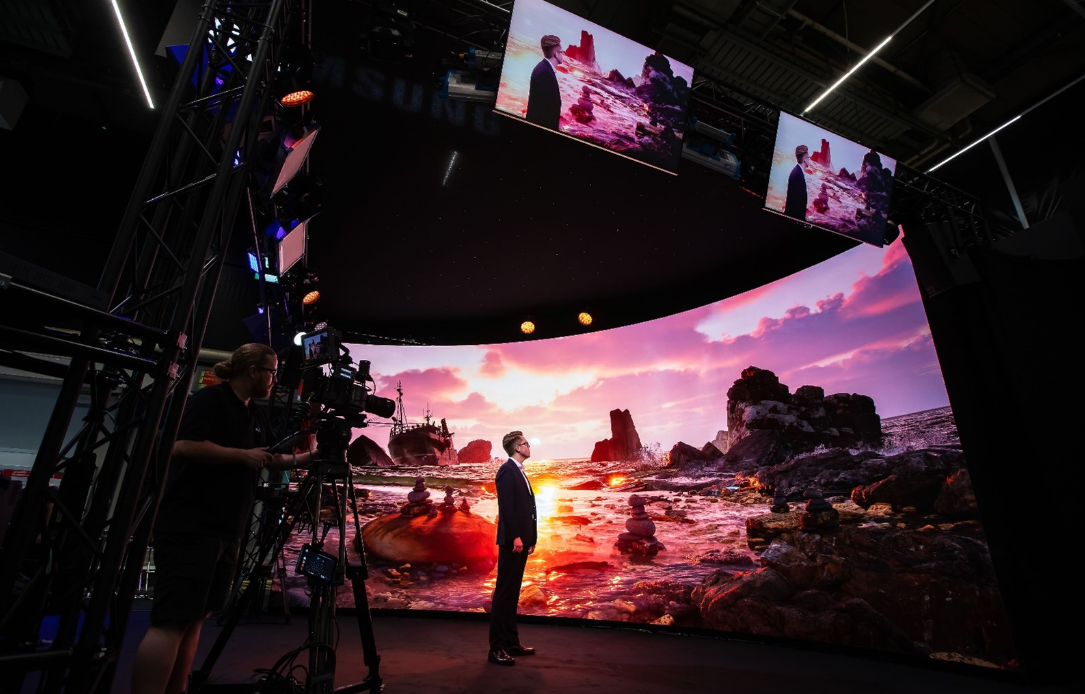
- Camera Flicker: Visible black bars (rolling shutter effect) when filmed.
- Content Loss: Fast-moving content may appear blurry or tearing.
- Not Broadcast Ready: Unsuitable for professional live streaming or TV.
- Flicker-Free: Crystal clear image on all cameras (1/2000s+ shutter speed).
- Smooth Motion: Perfect for fast video playback and sports.
- XR Ready (7680Hz): Essential for virtual production and XR studios.
For XR production and camera-facing applications, refresh rate is only one part of image performance.
Buyers should also examine:
-
Grayscale performance at the brightness levels actually used.
-
Scan configuration and potential camera artifacts.
-
Synchronization capabilities and compatibility with the production workflow.
-
Color consistency across cabinets.
-
Calibration and image-uniformity procedures.
-
Camera testing at the intended frame rates, shutter settings and exposure conditions.
A published refresh-rate figure alone does not prove that a display is suitable for every broadcast or virtual-production workflow. Request a demonstration or test recording using the intended camera setup.
Power Consumption and Thermal Management
Lightweight design can affect the space available for power supplies, ventilation and structural reinforcement. These systems must be evaluated together rather than treating low weight as an isolated performance benefit.
Request both maximum and average power figures when available, along with the manufacturer’s test conditions. Average consumption can vary with displayed content, brightness settings and operating mode.
For a permanent installation, power distribution and heat management may have a greater effect on operational cost than a small difference in cabinet weight.
Maintenance Access and Spare Parts
A lightweight display should also be practical to service.
Check whether modules, power supplies and receiving cards can be replaced efficiently. Confirm whether maintenance is front-access, rear-access or a combination, and establish how much clearance is required around the screen.
For rental companies, spare-module availability and repair turnaround can affect equipment utilization. For fixed installations, access limitations may increase future maintenance labor even when the original installation was inexpensive.
Does a Lighter LED Display Reduce Total Cost of Ownership?
It can, but only when the reduction in relevant project expenses outweighs any additional purchase and operating costs.
Total cost of ownership (TCO) includes more than the display hardware. It also considers transportation, installation, maintenance, spare parts, energy use and other costs incurred over the intended service period.
Where Can Lightweight Design Create Savings?
| Cost area | Potential benefit | Important limitation |
|---|---|---|
| Transportation | Lower shipment weight may reduce some freight charges | Packaging volume and carrier pricing also matter |
| Handling | Easier manual handling may reduce equipment-handling effort | Handling procedures and staffing requirements still apply |
| Installation | Lighter components may simplify some installation tasks | Rigging, access, wiring and commissioning still require planning |
| Supporting structure | Lower equipment dead load may influence design requirements | A qualified engineer must determine the actual structure |
| Touring operations | Easier loading and unloading may improve workflow | Vehicle capacity and labor arrangements determine actual savings |
| Maintenance | Modular, accessible designs may simplify repairs | Cabinet weight alone does not determine serviceability |
| Electricity | Efficient electronics may reduce operating consumption | Lightweight materials do not automatically reduce power use |
The distinction between potential and proven savings matters. A lightweight cabinet may reduce one cost while adding another, such as a higher purchase price or specialized repair requirements.
A Practical TCO Evaluation
Before selecting a product, request comparable quotations for the lightweight option and a suitable conventional alternative.
Use the same display area, pixel pitch, brightness requirement, control configuration, accessories, delivery destination and installation scope wherever possible. Otherwise, the comparison may reflect differences in product specification rather than the value of lightweight construction.
The evaluation should account for the following:
-
Initial equipment and control-system costs.
-
Structural engineering and installation expenses.
-
Freight, packaging, customs and local handling.
-
Electricity and cooling requirements.
-
Spare modules, maintenance labor and replacement parts.
-
Downtime and service availability.
-
Expected equipment utilization and intended service period.
If the supplier cannot provide evidence for a claimed saving, treat that claim as unverified. A transparent comparison is more useful than an impressive percentage without a defined baseline.
There is no single price that applies to all ultralight LED displays. The quoted cost depends on screen dimensions, pixel pitch, panel configuration, control hardware, structural requirements, shipping, installation, and maintenance arrangements. Request an itemized quotation that separates display hardware from project-specific costs, and compare suppliers using the same technical scope. Any budget figure should be identified as a supplier quote, a dated market reference, or an estimate—not presented as a verified market average without supporting evidence.
How Should Buyers Choose an Ultralight LED Display for Different Applications?
The best configuration depends on how the screen will be used, transported, installed and maintained.
Touring and Rental Events
Touring and rental applications often benefit from lightweight cabinets because equipment is repeatedly packed, transported, assembled and dismantled.
However, buyers should prioritize more than weight:
-
Locking mechanisms that support the intended assembly method.
-
Consistent cabinet dimensions and alignment.
-
Protection against expected transport and handling conditions.
-
Suitable flight cases and spare-module arrangements.
-
Clear rigging and ground-support documentation.
-
Fast, practical maintenance procedures.
Ask suppliers to demonstrate assembly and disassembly using the actual proposed configuration. A cabinet that is lightweight but difficult to align or service may not deliver the expected operational benefit.
XR and Virtual Production
XR environments introduce additional requirements beyond mechanical portability.
The display must be evaluated for pixel pitch, color consistency, grayscale, scan behavior, synchronization and camera compatibility. The production workflow may also require specific processing equipment and calibration procedures.
Before purchasing, arrange a camera test using the intended camera, frame rate, shutter settings and operating brightness. Verify that the display and processing system can meet the production team’s requirements.
A lightweight cabinet may simplify stage changes or temporary rigging, but it should not take priority over the image performance required for production.
Fixed Indoor Installations
For a fixed indoor installation, weight can matter when access is restricted, the supporting structure has defined load limits or the screen must be mounted in a difficult location.
Yet a permanently installed screen may not be transported or reassembled frequently. In these circumstances, a conventional cabinet may provide better value if it meets the project’s structural and maintenance requirements.
Evaluate the building’s approved load limits, access routes, mounting conditions and maintenance clearances before selecting the cabinet.
Outdoor Rental and Fixed Outdoor Displays
Outdoor projects introduce environmental and structural considerations that must be assessed separately from cabinet weight.
Verify the applicable ingress protection rating, operating temperature range, wind-loading requirements, mounting method, electrical installation and maintenance provisions.
For temporary outdoor events, the supporting structure and anchoring arrangement require particular attention. For fixed installations, the design must account for site-specific conditions and applicable local requirements.
A lighter LED cabinet does not eliminate the need for structural engineering. Actual loads, connection details, wind conditions and installation methods must be evaluated for the specific project.
How Can Buyers Verify Supplier Claims and Installation Safety?
A reliable procurement process should establish whether a supplier’s published specifications match the actual product and installation configuration.
What Documents Should Buyers Request?
Use the following checklist before approving a purchase order.
| Document or evidence | What it should establish |
|---|---|
| Official product datasheet | Model-specific dimensions, weight and performance specifications |
| Cabinet weight declaration | Weight definition and included components |
| Mechanical drawings | Dimensions, connection points and mounting arrangements |
| Rigging or mounting documentation | Approved installation configurations and applicable load limits |
| Electrical documentation | Power requirements, connections and applicable safety information |
| Test reports | The test method, product tested, conditions and results |
| Warranty terms | Coverage, exclusions, duration and service responsibilities |
| Spare-parts list | Availability of modules, power supplies and other replaceable components |
| Packing list | Shipment dimensions, net weight and gross weight |
| Installation and maintenance manual | Assembly, servicing and operational requirements |
A specification sheet is useful, but it does not replace an engineering assessment or independent test report where one is required.
Which Safety Standards May Apply?
The applicable standards depend on the installation type, location and project scope.
For temporary large-format display installations, ANSI E1.50-1-2025 addresses aspects of planning, assembly, suspension, safety, use, and dismantling. ANSI E1.21-2024 addresses temporary ground-supported structures used for outdoor entertainment events. Their relevance depends on the project and installation method. Buyers should confirm applicable local codes, structural design requirements, and site-specific engineering approvals rather than treating a reference to either standard as blanket proof of product or installation compliance.
These references should not be interpreted as proof that a particular LED display complies with either standard. Confirm the applicable edition, jurisdiction, installation type and contractual requirements with the responsible project professionals.
For suspended installations, structural design, rigging hardware, connection points, installation procedures and applicable design loads must be evaluated together. Cabinet weight is only one input to that assessment.
How Should Buyers Evaluate a Manufacturer?
Beyond the headline price, assess the supplier’s ability to deliver consistent products and support the project throughout its operating life.
-
Verify product identity. Confirm that the quotation, datasheet and sample refer to the same model and configuration.
-
Check technical consistency. Compare the stated weight, dimensions, brightness, refresh rate and power requirements against the official documentation.
-
Request relevant evidence. Ask for test reports, installation documentation and references that can be verified.
-
Review service arrangements. Confirm spare-part availability, warranty conditions and technical support responsibilities.
-
Compare complete quotations. Ensure that competing offers include equivalent equipment and services.
-
Clarify responsibility. Establish who is responsible for structural design, installation, commissioning and local compliance.
For projects where lightweight construction is a major purchase criterion, request a physical sample or witnessed demonstration when practical. Weighing the actual cabinet and checking its connection mechanisms can help verify the supplied configuration.
Frequently Asked Questions About Ultralight LED Displays
What qualifies as an ultralight LED display?
Ultralight LED display is a descriptive product category rather than a universally standardized weight class. The term generally refers to cabinets engineered to reduce weight while meeting the mechanical and visual requirements of their intended applications. Buyers should compare verified cabinet dimensions, weight, weight per square meter, included accessories and complete installation requirements rather than relying on the marketing label alone.
How much do ultralight LED displays cost?
There is no single reliable price for all ultralight LED displays. Costs depend on pixel pitch, cabinet construction, performance specifications, order quantity, control equipment, accessories, transportation and installation requirements. Request an itemized quotation for the exact configuration and destination. Treat unverified online prices or preliminary budgets as estimates, not confirmed market averages.
Is carbon fiber better than magnesium alloy for LED cabinets?
Neither material is universally better. Carbon-fiber composites can provide high stiffness relative to weight, depending on their construction, while magnesium alloys can support lightweight metal cabinet designs. The finished product’s performance depends on its geometry, manufacturing quality, connections, protective treatment and maintenance requirements. Compare actual product specifications and test evidence before choosing.
Does a lighter LED cabinet reduce installation costs?
It may reduce some handling effort or influence the supporting structure, but savings are not guaranteed. Installation costs also depend on access, mounting hardware, cable routing, rigging, labor rates and site conditions. A qualified engineer must determine structural requirements. Compare quotations using equivalent installation scopes and confirm whether the supplier’s claimed savings are supported by actual project data.
Are ultralight LED displays suitable for outdoor installations?
Some lightweight LED displays are designed for outdoor applications, while others are intended for indoor rental or XR use. Verify the exact model’s ingress protection rating, operating temperature range, brightness, electrical requirements and applicable structural documentation. Outdoor wind conditions, mounting arrangements and local requirements must also be considered. A lightweight design does not automatically establish outdoor suitability.
What is the difference between cabinet weight and shipping weight?
Cabinet weight describes the LED cabinet according to the manufacturer’s stated configuration. Shipping weight may include flight cases, protective packaging, cables and other accessories. Freight charges may also depend on package dimensions and carrier-specific charging rules. Request the packing list, package dimensions, net weight and gross weight before budgeting transportation.
What should buyers check before ordering an ultralight LED display?
Verify the exact product model, cabinet dimensions, weight, pixel pitch, brightness, refresh rate, power requirements, maintenance access, warranty and spare-parts availability. For suspended or temporary installations, also obtain appropriate mechanical and rigging documentation. Finally, compare itemized quotations that clearly separate hardware, control equipment, logistics, installation and other project costs.
Sostron: LED Display Manufacturing and Engineering Support
Sostron provides LED display products and commercial display solutions for applications including rental events, outdoor advertising, retail environments and professional display installations.
For buyers evaluating lightweight LED display systems, the relevant product specifications and application requirements should guide the selection process. Sostron can support product development, customized configurations, engineering coordination, installation guidance and after-sales technical support, subject to the scope of the specific project.
Explore the Sostron Carbon Series to review relevant product information. For broader project requirements, visit the Sostron case studies and verify the details of any reference project before using it as a procurement benchmark.
The best ultralight LED display is not necessarily the lightest cabinet available. It is the system that meets the required image quality, structural conditions, operational demands and budget with specifications and supporting evidence that the buyer can verify.
Pricing note: Any price or cost estimate should be verified against a current, itemized supplier quotation. Final project costs depend on product configuration, order quantity, shipping destination, applicable duties and taxes, installation requirements, and the services included in the contract.