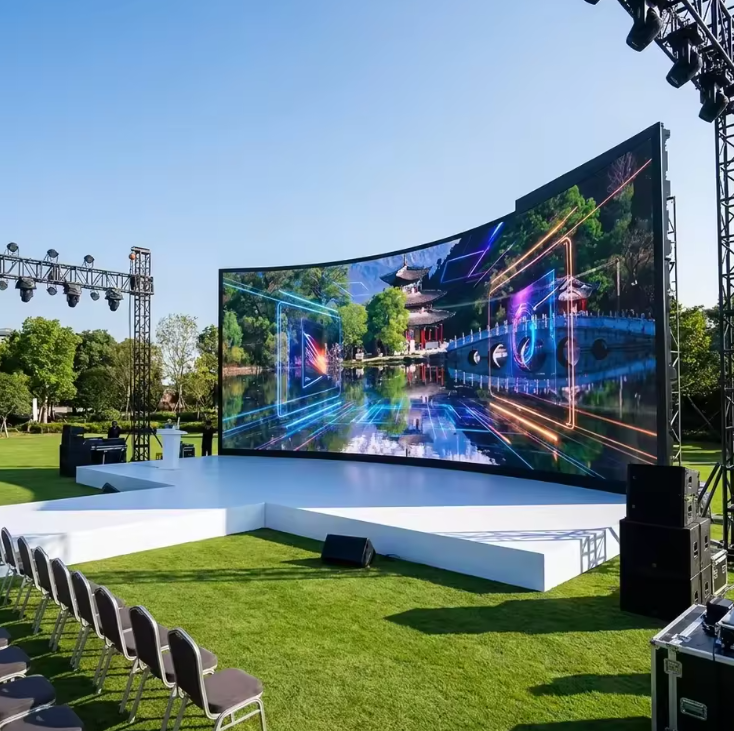
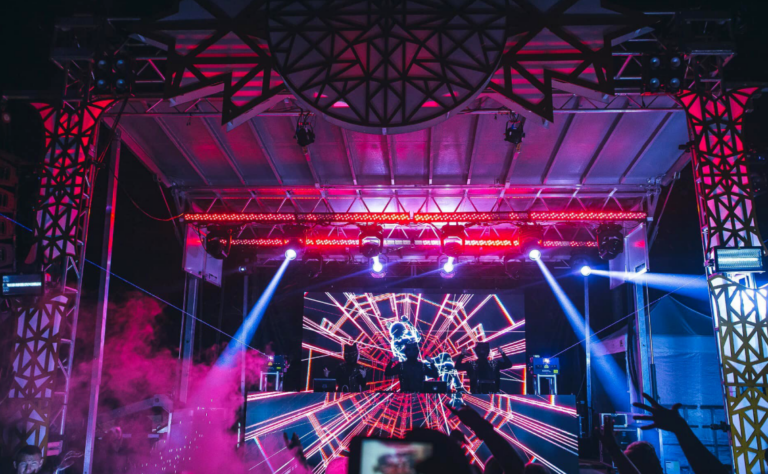
A giant LED screen can turn an ordinary stage, stadium, festival, product launch, or corporate event into a visual centerpiece. But the bigger the screen becomes, the less useful a simple “price per square meter” comparison is.
The real cost depends on much more than the LED panels themselves.
Screen size, pixel pitch, viewing distance, brightness, rigging, power, transportation, installation labor, video processing, technical support, and venue requirements can all change the final quotation.
So, how much does a giant LED screen cost?
For a professional rental deployment, a practical starting point is roughly $3,000–$5,000 per day for smaller large-format systems, while large outdoor productions can reach $10,000–$25,000+ per day once screen size, rigging, technicians, transportation, and production requirements are included. Actual pricing varies significantly by location and configuration. Current U.S. rental listings show examples ranging from several thousand dollars per day for approximately 11.5 × 6.6 ft walls to more than $20,000 per day for much larger configurations.
This guide explains how to choose a giant LED screen, estimate the total rental cost, plan installation, and compare suppliers without being distracted by headline specifications.
What Is a Giant LED Screen?
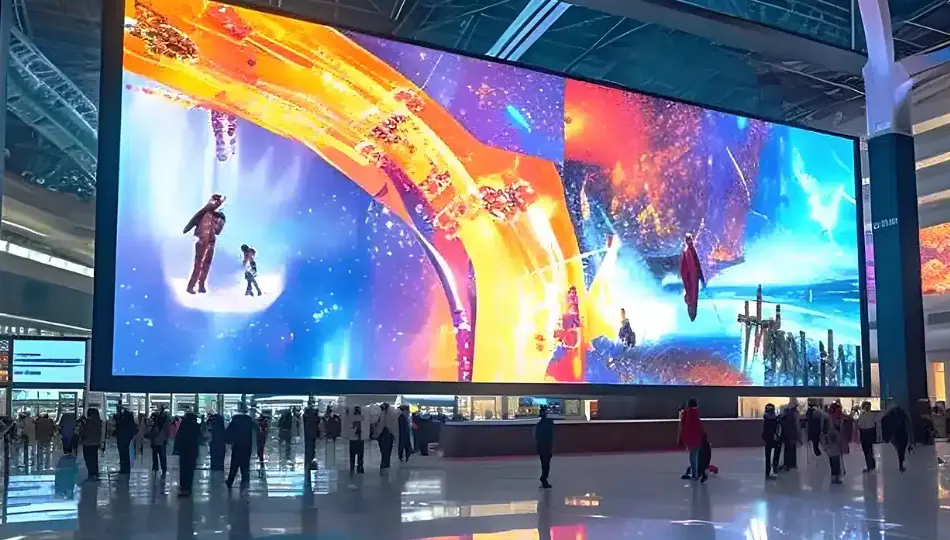
A giant LED screen is a large-format direct-view LED display assembled from multiple modular LED cabinets.
Unlike a conventional LCD display or projector, an LED wall generates light directly from its LED pixels. This makes it possible to build screens far larger than conventional commercial displays while maintaining high brightness and wide viewing angles.
There is no universally accepted technical definition of “giant.” In practical event production, the term usually refers to a large-format LED video wall that requires multiple cabinets, structural support, and professional installation.
Depending on the application, a giant LED screen may be:
- A large concert stage backdrop
- A stadium video board
- An outdoor festival screen
- A corporate event LED wall
- A trade-show display
- A product-launch backdrop
- A broadcast or IMAG screen
- An XR virtual production wall
- A mobile LED trailer
- A large outdoor advertising display
Because LED cabinets are modular, the final wall can be configured into conventional 16:9 layouts, ultra-wide screens, curved walls, or custom shapes.
How Much Does a Giant LED Screen Cost?
The short answer is:
A giant LED screen rental can cost approximately $3,000 to $25,000+ per day, with much larger productions potentially exceeding that range.
The price is not determined by screen area alone.
Current rental-market examples show approximately:
| Giant LED Screen Configuration | Typical Rental Range* |
|---|---|
| 11.5 × 6.6 ft P3.9 | $3,000–$5,000/day |
| 16 × 10 ft P2.6–P3.9 | $4,000–$8,000/day |
| 20 × 10 ft P2.6–P3.9 | $7,000–$12,000/day |
| 24 × 12 ft outdoor P3.9 | $8,000–$14,000+/day |
| 30 × 16 ft large-format wall | $12,000–$20,000+/day |
| 40 × 20 ft or larger | $20,000+/day |
*These are market-reference ranges rather than fixed industry prices. Delivery, rigging, labor, content, insurance, location, and technical support can substantially change the final quotation. Published rental packages in the U.S. show similarly wide differences based on screen size and pixel pitch.
A More Useful Way to Calculate the Cost
Instead of asking only:
“How much is the LED screen?”
ask:
“What is the total installed and operational cost of my LED wall?”
A practical cost model is:
Total Project Cost = LED Rental + Transportation + Installation + Rigging + Power + Processor + Technician + Insurance/Permits + Content
For some events, the LED equipment is only one part of the budget.
What Factors Determine Giant LED Screen Rental Cost?
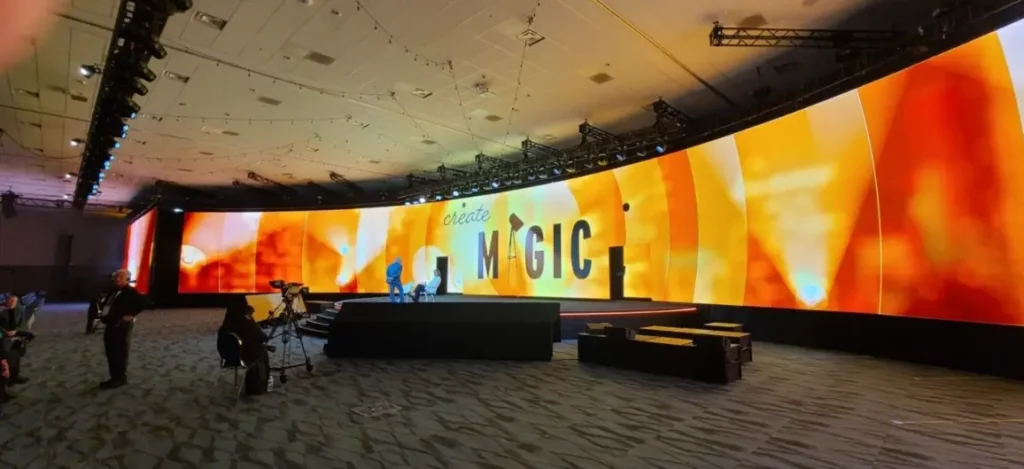
1. Screen Size
This is usually the first cost driver.
A 12 × 8 ft wall and a 40 × 20 ft wall may use the same basic LED technology, but the larger wall requires:
- More LED cabinets
- More power
- More signal capacity
- More transportation space
- More structural support
- More installation labor
- More technicians
- More time for testing and teardown
This is why giant LED screen rental pricing should be evaluated using the complete project scope, not simply a panel day rate.
2. Pixel Pitch
Pixel pitch is the distance between the centers of adjacent LED pixels, measured in millimeters.
A smaller pixel pitch means higher pixel density and better image detail at close viewing distances.
Typical choices include:
| Pixel Pitch | Typical Application |
|---|---|
| P1.5–P1.9 | XR, broadcast, premium indoor |
| P2.6–P2.9 | Corporate events, conferences |
| P3.9 | Concerts, stages, exhibitions |
| P4.8 | Outdoor concerts and large venues |
| P6–P10 | Stadiums, outdoor advertising |
The key point is simple:
Do not automatically choose the smallest pixel pitch.
If your audience is standing 20–30 meters away, paying a premium for an ultra-fine-pitch P1.9 screen may provide little practical benefit.
For large outdoor screens, P4.8, P6, or P10 may be a much more economical choice.
Pixel Pitch and Viewing Distance
A useful preliminary rule is:
Minimum viewing distance ≈ pixel pitch × 1 meter per millimeter of pitch.
For example:
- P2.6 → approximately 2.6 m
- P3.9 → approximately 3.9 m
- P4.8 → approximately 4.8 m
- P10 → approximately 10 m
However, this is only a planning rule.
Actual viewing quality depends on:
- Content type
- Camera usage
- Audience eyesight
- Screen size
- LED package technology
- Contrast
- Processing
- Viewing angle
For professional procurement, always evaluate the screen against the actual venue sightlines rather than choosing a pixel pitch from a generic chart.
3. Indoor vs. Outdoor Giant LED Screens
Indoor and outdoor LED screens are engineered for different environments.
Indoor Giant LED Screen
Indoor systems generally prioritize:
- Fine pixel pitch
- Lower brightness
- Low noise
- High grayscale performance
- Color accuracy
- Lightweight construction
Typical brightness may fall around 800–1,500 nits, depending on the application.
Indoor applications include:
- Conferences
- Trade shows
- Corporate events
- Indoor concerts
- Broadcast studios
- Churches
- Product launches
Outdoor Giant LED Screen
Outdoor LED displays must deal with:
- Direct sunlight
- Rain
- Wind
- Temperature changes
- Dust
- Higher ambient light
Professional outdoor systems commonly use:
- High brightness
- Weather-resistant cabinets
- IP-rated protection
- Strong structural mounting
- Higher power capacity
Brightness around 5,000–10,000 nits is common depending on the environment and application.
Outdoor rental suppliers commonly specify IP-rated front protection and additional precautions for rain and wet-ground conditions.
4. Brightness
Brightness is measured in nits.
A screen that looks excellent inside a dark ballroom may become almost invisible in direct sunlight.
A practical starting point is:
| Environment | Typical Brightness |
|---|---|
| Indoor conference | 800–1,200 nits |
| Indoor stage | 800–1,500 nits |
| Outdoor evening | 3,000–5,000 nits |
| Outdoor daytime | 5,000–8,000+ nits |
More brightness is not automatically better.
Excessive brightness indoors can make skin tones uncomfortable and can reduce perceived image quality.
5. Refresh Rate and Camera Performance
If the giant LED screen will appear on:
- Broadcast television
- Livestreams
- IMAG cameras
- Professional photography
- XR production
- Slow-motion footage
refresh rate becomes a critical specification.
A general event screen may use 3,840Hz, while demanding broadcast and XR applications may require 7,680Hz or higher, depending on the complete signal chain.
But refresh rate alone does not guarantee camera performance.
Professional camera-facing LED walls should also be evaluated for:
- PWM behavior
- Scan architecture
- Genlock
- Shutter-speed compatibility
- Grayscale
- Moiré performance
- Color calibration
So when a supplier says “7,680Hz,” ask for a camera test, not just a specification sheet.
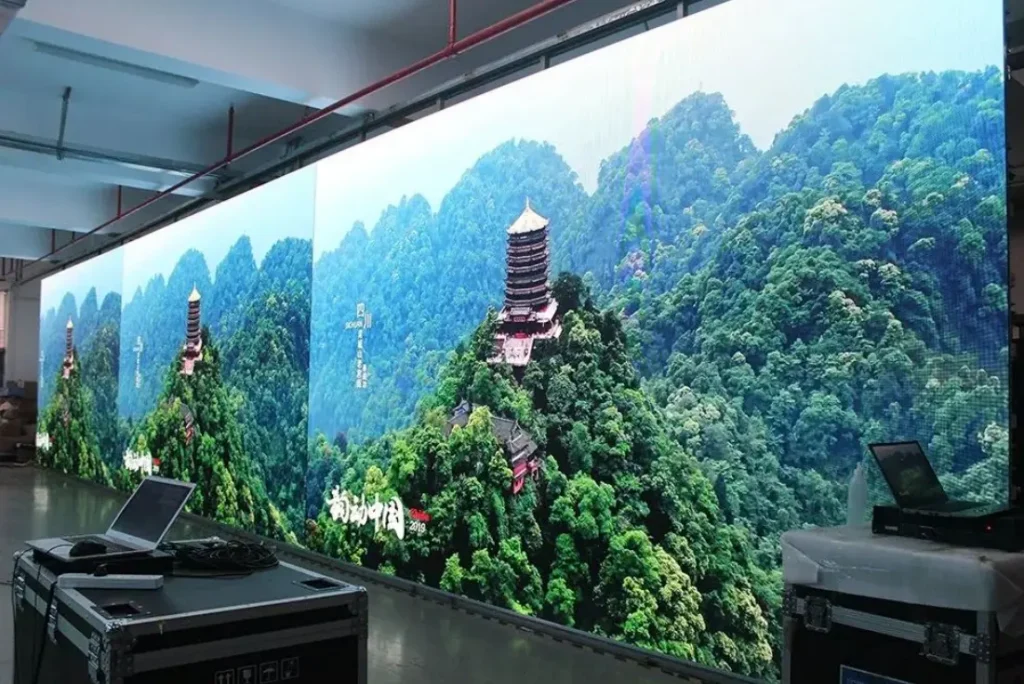
What Should a Giant LED Screen Rental Package Include?
This is one of the most important questions to ask before signing a contract.
A professional giant LED screen rental package may include:
Equipment
- LED cabinets
- LED modules
- Receiving cards
- Video processor
- Sending system
- Power distribution
- Signal cables
- Power cables
- Spare LED modules
Installation
- Delivery
- Assembly
- Ground support or rigging
- Electrical connection
- Signal testing
- Calibration
- Teardown
Technical Support
Depending on the package:
- On-site technician
- Show operator
- Emergency replacement panels
- Backup processor
- Signal redundancy
- Brightness adjustment
- Content troubleshooting
Do not compare two quotations solely by the LED rental rate.
A $4,000 quote that excludes rigging and technicians may ultimately cost more than a $6,000 all-inclusive package.
Giant LED Screen Rental Cost Breakdown
A useful budgeting structure is:
| Cost Component | Typical Share / Impact |
|---|---|
| LED equipment | 40–60% |
| Transportation | 5–15% |
| Installation & teardown | 10–20% |
| Rigging / structure | 5–20% |
| Technician / operation | 5–15% |
| Power distribution | Project dependent |
| Insurance / permits | Project dependent |
| Content production | Project dependent |
These are planning ranges rather than universal percentages.
The biggest mistake is treating the LED panel rental rate as the total project price.
Giant LED Screen Rental vs. Buying
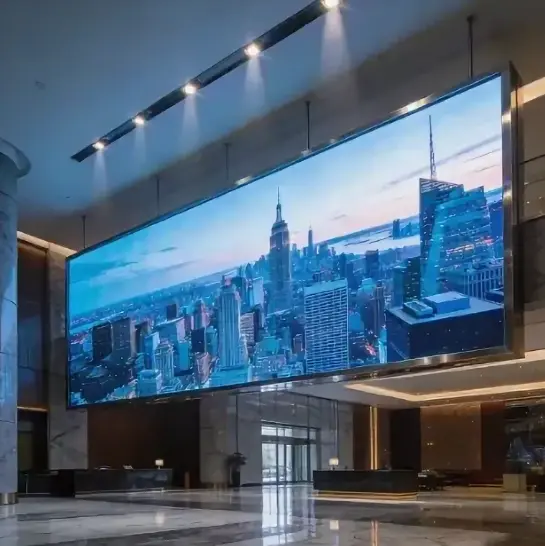
Should you rent or purchase?
The answer depends on how frequently the system will be used.
Renting Makes More Sense When:
- You have a one-off event
- Your event schedule changes
- You do not have storage
- You need technicians
- You want the latest technology
- You do not want maintenance responsibility
- You are testing a new event format
Buying Makes More Sense When:
- You operate frequent events
- You own a permanent venue
- You run a rental business
- You have recurring corporate events
- You need permanent digital signage
- The screen will operate throughout the year
For a permanent installation, calculate:
Annual Rental Cost × Expected Years of Use
and compare it with:
Purchase Price + Installation + Maintenance + Power + Replacement Parts
This gives procurement teams a much more realistic total cost of ownership (TCO) comparison.
Giant LED Screen Installation: Ground-Stacked vs. Flown
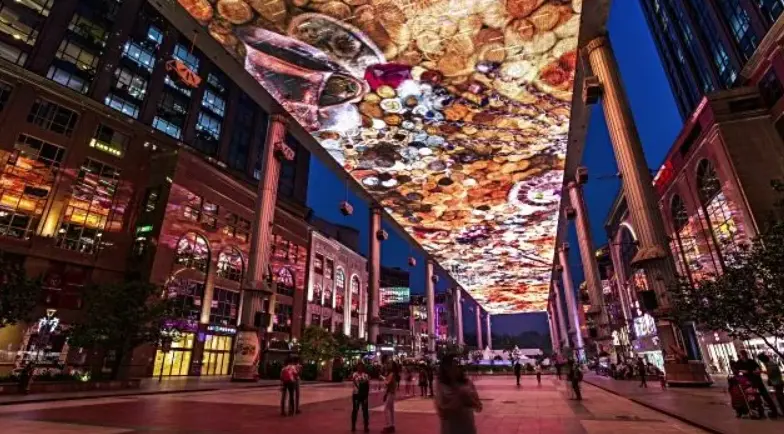
There are two major installation approaches for large rental LED walls.
Ground-Stacked LED Wall
The LED wall is supported from the floor using a ground-support structure.
Advantages
- Faster installation
- No venue rigging points required
- Easier access
- Suitable for many outdoor stages
Disadvantages
- Requires sufficient floor space
- Requires a level and load-rated surface
- Can obstruct sightlines or stage access
Flown LED Wall
The LED wall is suspended from:
- Truss
- Flying frame
- Motor system
- Certified venue rigging points
Advantages
- Saves floor space
- Cleaner stage appearance
- Better sightlines
- Suitable for large stage productions
Disadvantages
- Requires structural engineering
- Requires certified rigging
- Venue load limits must be verified
- Higher installation complexity
For a flown giant LED screen, never rely on a supplier’s verbal assurance that the venue can support the load.
Obtain documented:
- Cabinet weight
- Total wall weight
- Flying-frame weight
- Rigging-point capacity
- Load distribution
- Engineering approval
Power Requirements for a Giant LED Screen
Large LED walls can consume substantial electrical power.
Power depends on:
- Screen area
- Pixel pitch
- Brightness
- LED efficiency
- Content
- Refresh conditions
- Cabinet design
A supplier should provide both:
Average Power Consumption
and
Maximum Power Consumption
Do not size a generator using average consumption alone.
Your electrical plan should consider:
- Three-phase power
- Power distribution
- Circuit capacity
- Cable length
- Backup power
- Generator capacity
- Grounding
- Local electrical requirements
For a major event, electrical engineering should be completed before the LED wall arrives at the venue.
Giant LED Screen Processor: Why It Matters
The LED processor is effectively the bridge between the content source and the LED wall.
Common processor ecosystems include NovaStar and Brompton.
For standard:
- Corporate events
- Trade shows
- General concerts
- Retail applications
a properly configured NovaStar system can be a practical and cost-effective solution.
For:
- Broadcast
- XR
- Virtual production
- High-end touring
- Camera-facing LED walls
Brompton or another processor with appropriate synchronization and HDR capabilities may be preferred.
The important procurement question is not:
“Do you use NovaStar or Brompton?”
Instead ask:
“What exact processor, receiving card, signal path, refresh configuration and synchronization method will be used?”
That distinction matters.
Giant LED Screen Content and Resolution
One common procurement mistake is assuming:
Bigger physical screen = higher resolution.
That is not necessarily true.
Consider two LED walls with exactly the same physical dimensions:
- 20 × 12 ft P1.9
- 20 × 12 ft P3.9
Their physical size is identical, but the P1.9 wall contains significantly more pixels.
This affects:
- Image detail
- Camera performance
- Content resolution
- Processor requirements
- Cost
Your content team should know the actual pixel resolution of the final LED wall before creating the video.
For unusual aspect ratios, content mapping should also be completed before installation.
Giant LED Screen Applications
Concerts and Music Festivals
Concerts are among the most demanding giant LED screen applications.
Typical requirements include:
- P3.9–P4.8
- High brightness
- ≥3,840Hz refresh rate
- Wide viewing angle
- Fast installation
- Ground stacking or flown structures
The screen may function as a stage backdrop, IMAG display, side screen, or creative scenic element.
Sports Events
Sports venues typically require:
- High brightness
- Long viewing distances
- Real-time video
- Scoreboard integration
- Wide viewing angles
- Weather resistance
P6–P10 can be perfectly appropriate when audiences are far from the screen.
There is little reason to pay for P1.9 simply because it has a higher specification.
Corporate Events and Conferences
Corporate environments generally prioritize:
- Image quality
- Color accuracy
- Quiet operation
- Fine pixel pitch
- Camera compatibility
P2.6–P2.9 is often a sensible starting point for large indoor presentations.
Trade Shows and Product Launches
Trade-show LED walls often need:
- Compact cabinets
- Fast assembly
- Fine pixel pitch
- Strong branding colors
- Seamless appearance
- Easy content updates
For premium brand environments, color consistency may be more valuable than extreme brightness.
Broadcast and XR Production
XR and virtual production demand a different class of LED system.
Important specifications include:
- Fine pixel pitch
- High refresh rate
- Genlock
- Low scan-line artifacts
- High grayscale
- Accurate color reproduction
- Low moiré
- HDR support
A screen that looks excellent to the human eye may still perform poorly through a professional camera.
That is why XR procurement should always include a camera test.
Giant LED Screen vs. Projector
For large events, LED and projection are sometimes alternatives.
| Factor | Giant LED Screen | Projector |
|---|---|---|
| Daylight visibility | Excellent | Limited |
| Contrast | High | Environment dependent |
| Brightness | High | Environment dependent |
| Viewing angle | Wide | Depends on projection |
| Screen size | Highly modular | Highly flexible |
| Ambient light | Less affected | More affected |
| Seamless large wall | Excellent | Requires projection mapping |
| Outdoor use | Strong with proper protection | More difficult |
| Initial rental cost | Higher | Often lower |
For bright outdoor environments, LED usually has a major practical advantage.
For dark indoor spaces where budget is the primary concern, projection may remain competitive.
Mobile Giant LED Screens
Not every giant LED screen needs to be installed on a stage.
Mobile LED systems can be mounted on:
- Trailers
- Trucks
- Mobile platforms
They are useful for:
- Outdoor advertising
- Sports viewing
- Roadshows
- Festivals
- Political events
- Public screenings
- Brand activations
The major advantage is mobility.
The screen, structure, power system and transportation can be integrated into a single deployment.
This can reduce setup complexity when the same screen must move between multiple locations.
How to Reduce Giant LED Screen Rental Costs
1. Choose the Correct Pixel Pitch
Do not overpay for fine-pitch technology that your audience cannot appreciate.
2. Optimize Screen Size
A larger screen is not automatically a better screen.
Calculate the required viewing area based on:
- Audience size
- Viewing distance
- Venue dimensions
- Content type
3. Use Standard Cabinet Sizes
Standard 500 × 500 mm or 500 × 1000 mm rental cabinets are usually easier to configure and transport.
4. Ask for an All-Inclusive Quote
Compare:
Equipment + delivery + rigging + labor + technician + teardown
rather than equipment alone.
5. Consider Multi-Day Rental Pricing
Many suppliers offer more attractive effective daily rates for longer rental periods.
6. Avoid Unnecessary Engineering Complexity
Custom curves, unusual structures and special rigging can increase cost quickly.
Use them when they improve the event—not simply because they look impressive on a specification sheet.
Giant LED Screen Rental Procurement Checklist
Before signing a rental contract, ask the supplier to confirm:
Display
- Screen dimensions
- Pixel pitch
- LED package
- Resolution
- Brightness
- Refresh rate
- Viewing angle
- IP rating
- Cabinet weight
Processing
- Processor model
- Receiving card
- Input formats
- Signal distribution
- Genlock requirement
- HDR support
- Backup signal path
Installation
- Ground-stacked or flown
- Truss/ground-support requirements
- Rigging approval
- Structural documentation
- Wind-load requirements
- Installation schedule
- Teardown schedule
Electrical
- Average power
- Maximum power
- Voltage
- Phase requirements
- Power distribution
- Generator requirements
- Grounding requirements
Rental Service
- Delivery
- Installation
- Teardown
- Technician
- Spare panels
- Emergency response
- Insurance
- Permits
- Overtime policy
If a supplier cannot clearly answer these questions, the lowest quotation may not actually be the lowest-cost option.
How Far in Advance Should You Rent a Giant LED Screen?
For a standard event, 3–4 weeks is a reasonable planning window.
For a large deployment, plan for at least 30 days or more, especially when the project involves:
- 500+ m² of LED
- Custom structures
- Flown LED walls
- International touring
- Large outdoor festivals
- Engineering approval
- Venue rigging
- Multiple screens
- Broadcast/XR workflows
The larger the screen, the more expensive a last-minute mistake becomes.
Frequently Asked Questions
How much does a giant LED screen cost?
A giant LED screen rental typically starts at around $3,000–$5,000 per day for smaller large-format configurations and can reach $10,000–$25,000+ per day for large outdoor or production-intensive systems. Very large festival and stadium deployments can exceed this range.
The final cost depends on screen size, pixel pitch, location, rental duration, installation, rigging, transportation, technical support and power requirements.
How much does a 20 × 10 ft LED screen cost to rent?
A 20 × 10 ft LED wall may cost approximately $7,000–$12,000+ per day, depending heavily on pixel pitch and what is included in the rental package. Published rental pricing shows substantial variation even for similar dimensions.
What is the best pixel pitch for a giant LED screen?
For outdoor concerts, P3.9–P4.8 is a common starting point.
For indoor corporate events, P2.6–P2.9 may be more appropriate.
For stadiums and long viewing distances, P6–P10 can provide better value.
The correct choice depends on viewing distance rather than screen size alone.
Can giant LED screens be used outdoors?
Yes. Outdoor LED screens are designed with higher brightness and weather-resistant construction. Look for an appropriate IP rating, high brightness and documented environmental specifications.
However, the front and rear of a cabinet may have different protection levels, so always confirm the complete cabinet specification.
Can a giant LED screen be used in the rain?
Outdoor-rated LED cabinets can be designed for rain exposure, but rain protection should never be treated as an excuse to ignore site safety.
Ask about:
- IP rating
- Rain covers
- Power-off procedures
- Ground conditions
- Cable protection
- Weather monitoring
Is 3,840Hz refresh rate enough?
For many live-event applications, 3,840Hz is a strong baseline.
For broadcast, XR and demanding camera-facing applications, 7,680Hz or an appropriate camera-optimized configuration may be preferable.
The entire signal chain matters—not the refresh-rate number alone.
Is it cheaper to rent or buy a giant LED screen?
For a one-off event, rental is usually more practical.
For frequent recurring events or permanent installations, purchasing may produce a lower long-term cost.
Run a TCO calculation using the expected number of deployments rather than relying on a simple purchase-price comparison.
Final Advice for B2B Giant LED Screen Buyers
The biggest mistake in giant LED screen procurement is buying by specification instead of buying by application.
A P1.9 screen may look technically superior to P4.8, but that does not mean it is the right screen for a stadium.
Likewise, a $3,000 rental quote may look attractive until you discover that rigging, delivery, technicians, power distribution and teardown are additional charges.
Before comparing suppliers, define:
- Screen size
- Viewing distance
- Indoor or outdoor environment
- Pixel pitch
- Brightness
- Refresh rate
- Camera requirements
- Installation method
- Power requirements
- Complete rental scope
Then compare suppliers using the total installed cost, not the headline day rate.
For large-scale events, the best LED supplier is not necessarily the one with the cheapest panels. It is the supplier that can provide a technically appropriate screen, safe structure, reliable signal chain, qualified installation team, backup plan and transparent quotation.
That is what turns a giant LED screen from a collection of cabinets into a dependable professional display system.
References:
National Institute of Standards and Technology (NIST)
U.S. Department of Energy (DOE)