Table of Contents
-
Key Takeaway: Breaking Open the “P10 Price Black Box”
-
The Hidden Bill: Why Cheaper Screens Actually Cost More (TCO Analysis)
-
How to Avoid Traps: 3 Engineer-Level Checks to Verify a Real P10
-
FAQ: Common Questions About P10 Outdoor Displays
-
Sostron Solutions
In 2025, the mainstream factory-gate (EXW) price for a P10 outdoor full-color LED display ranges from $450–$950 per square meter.
This price gap isn’t branding hype—it’s hard, measurable BOM (bill of materials) differences. Gold-wire LEDs last up to 5× longer than copper-wire LEDs. 3840Hz high-refresh driver ICs cost roughly 15% more than standard ICs. And common-cathode energy-saving designs require higher upfront investment, but reduce total cost of ownership (TCO) by up to 30%.
Bottom line:
Screens under $500/sqm typically use copper-wire LEDs and basic iron cabinets—fine for short-term use only.
For long-term billboards or high-visibility installations, the safe budget range is $750+/sqm.
Key Takeaway: Breaking Open the P10 “Price Black Box”
As Sostron’s supply chain director, I’ve handled thousands of P10 outdoor projects. Procurement managers always ask:
“These screens look identical. How come Factory A quotes $450 and you quote $850?”
The answer isn’t in the appearance—it’s under a microscope.
In a P10 module’s cost stack, LEDs account for 60%, driver ICs 15%, and PCB + housing 15%.
Because P10 is a mature technology, production thresholds have lowered—and “spec-cutting tricks” have become more subtle.
Let’s break down the parts that make or break your screen.
Factor 1: LED Lamp Package — The 60% That Decides Life or Death
This is the industry’s biggest “open secret.” LED packaging determines whether your screen lasts five years—or turns into a “pimple-face display” after one.
Gold Wire vs Copper Wire
-
Industry reality: 90% of low-price screens (<$550) use copper wire.
-
Weakness: Copper oxidizes quickly in humid, coastal, or high-salinity environments.
Sostron’s lab data shows:
Copper-wire LEDs installed outdoors for 14 months experience exponential dead-pixel growth—up to 200 PPM.
Sostron Standard: Our Ares Series requires Nationstar or Kinglight gold-wire LEDs only.
Gold’s chemical stability is your only reliable shield for harsh outdoor conditions.
Bracket Material
-
Cheap LEDs: Iron brackets → poor heat dissipation, fast brightness decay (>15% after 3000 hours).
-
Premium LEDs: Copper brackets → excellent heat conduction, maintaining L90 brightness after 10,000 hours.
Factor 2: Driver IC & Refresh Rate
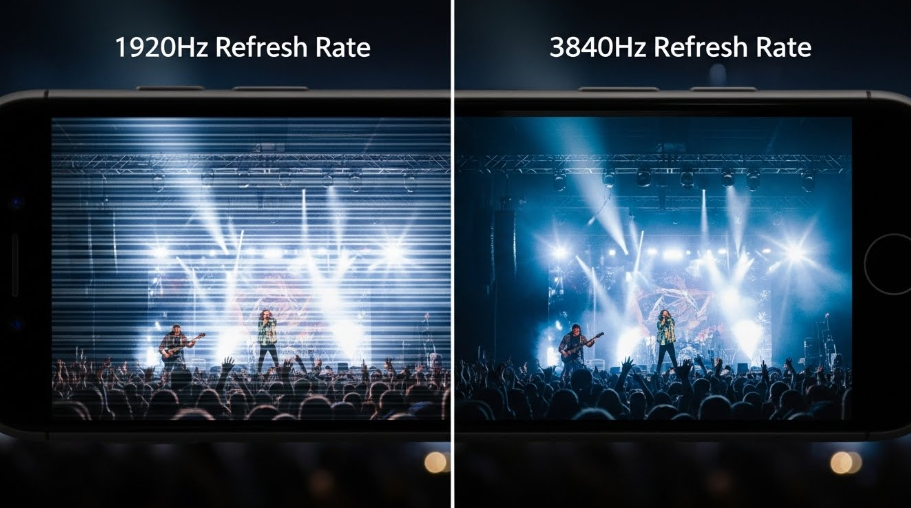
For rental stages and premium advertising displays, refresh rate is practically commercial reputation insurance.
-
Standard ICs (e.g., MBI5124): ~1920Hz
Looks fine to the naked eye, but creates black scan lines when filmed—bad news for live events. -
High-refresh ICs (MBI5153 / ICN2153): ≥3840Hz
Zero flicker on cameras, smooth gradients, and consistent color even at low brightness.
Factor 3: Cabinet Engineering & IP Protection
P10 displays are usually mounted high, and every maintenance session is expensive.
Iron Cabinets
Heavy, rust-prone, and once rust perforates, water ingress can trigger module short-circuits—or worse.
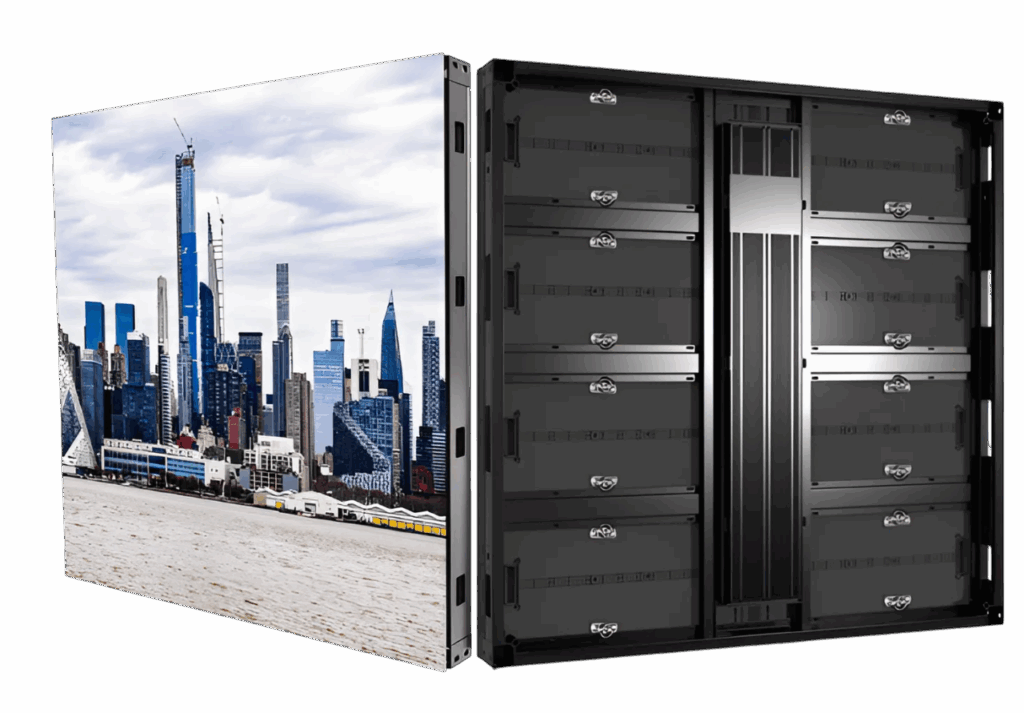
Sostron Ares Series All-Aluminum Cabinets
-
Aluminum conducts heat 3× better than iron.
-
Aerodynamic back-panel design eliminates the need for AC cooling.
-
Significantly lowers electricity bills and reduces failure rates.
Case Study – Southern France, 6sqm P3.9
Even under intense summer sunlight, the all-aluminum cabinet and 10,000-nit brightness maintained excellent stability with minimal power consumption.
P10 Configuration Tier List
Use this table to match your project with the correct BOM—without wasting money or cutting vital corners.
| Tier | Typical EXW ($/sqm) | LED Brand | Wire Type | Refresh Rate | Expected Lifespan | Best For |
|---|---|---|---|---|---|---|
| Economy | $450–$550 | Mulinsen / Local | Copper | 1920Hz | <2 years | Temporary roadside ads, low-budget upgrades |
| Standard | $600–$750 | Kinglight | Alloy/Gold | 1920Hz | 3–4 years | Shopping mall facades, city signage |
| Flagship | $800–$950+ | Nationstar | Pure Gold | ≥3840Hz | 5+ years | Landmarks, premium rental events, extreme climates |
The Hidden Bill: Why Cheaper Screens Cost You More (TCO Analysis)
B2B procurement isn’t just CAPEX (purchase cost)—
OPEX (operating cost) is where budgets quietly bleed.
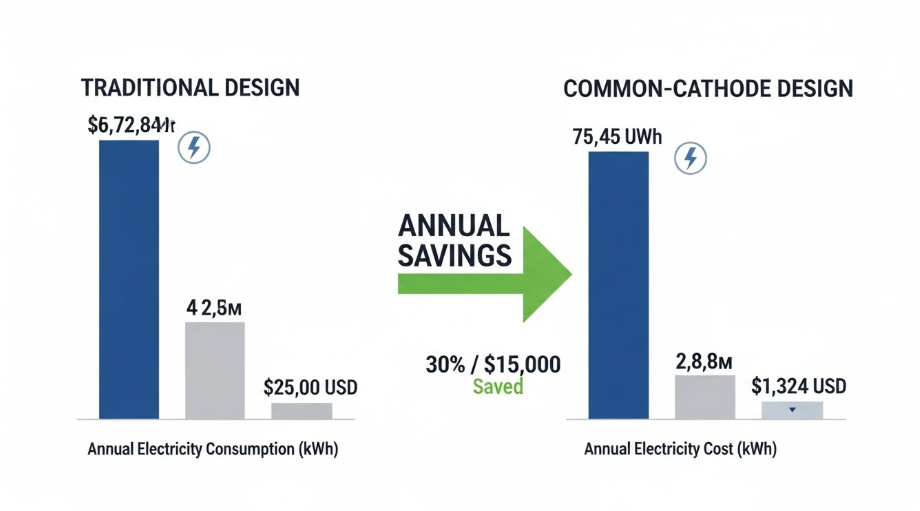
Electricity: The Silent Profit Killer
Traditional P10:
-
Avg. power draw: 300W/sqm
-
Peak: 900W/sqm
Common-Cathode Technology (Sostron High-End Series)
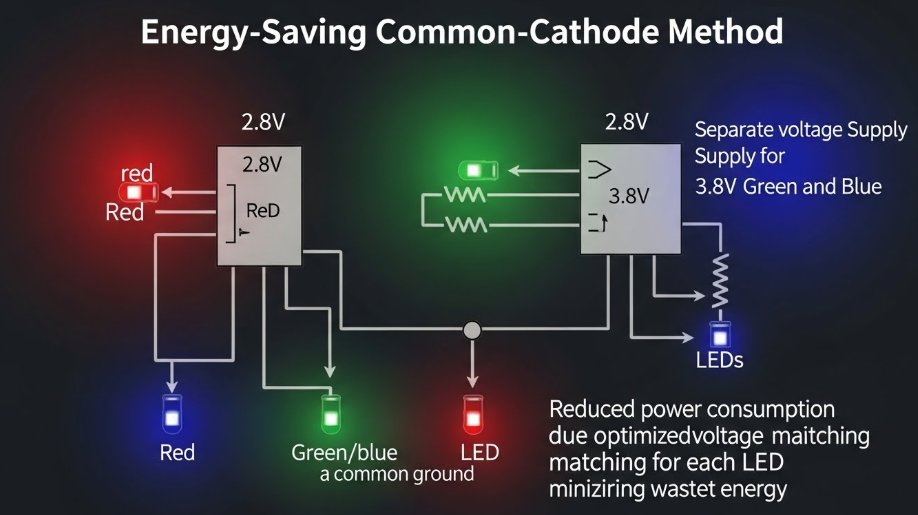
Separate voltage feeds for red (2.8V), green/blue (3.8V).
Savings:
A 100sqm billboard saves ~$3,500/year at $0.15/kWh.
Over 5 years, that’s half the cost of a brand-new screen.
Maintenance: Where Cheap Screens Hit Hardest
On a highway billboard tens of meters high, a single repair visit (crane + labor) can exceed $1,000.
Brazil Highway Project
-
Harsh sunlight, difficult maintenance.
-
Solution: Sostron P5 with CMS cloud control + automated fault alerts.
-
Maintenance workload dropped 60%.
How to Avoid Traps: 3 Engineer-Level Tests Before Paying a Deposit
Do these checks and you’ll filter out 80% of junk screens instantly.
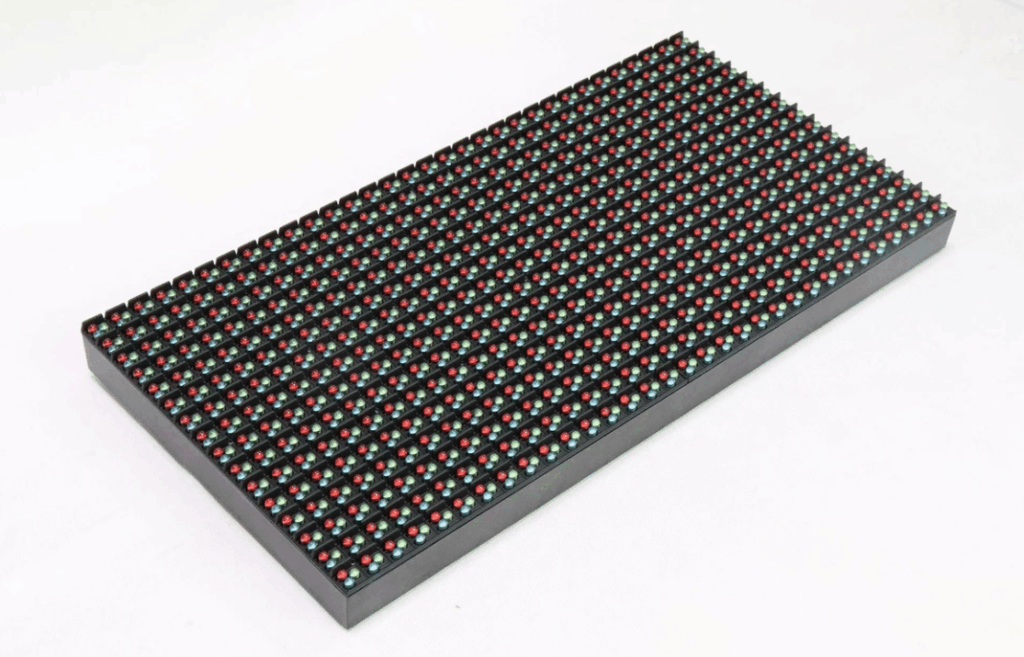
1. Macro Lens Test
Use a phone macro lens to inspect the LED interior.
-
Large bracket → good heat dissipation
-
Tiny bracket → early brightness decay + higher dead-pixel risk
2. “Inflated Brightness” Detection
Some factories crank up current to fake 7000 nits (actual brightness ~5000).
Test:
Light full white for 15 minutes → touch the module backplate.
If it’s above 55°C, the LED is being overdriven, and lifespan will tank.
Sostron’s Cairo installations stay within safe thermal limits even in desert heat.
3. Fake Pixel Pitches (P10 vs P10.66)
Some suppliers pass off P10.66 as true P10, reducing pixel count by thousands per sqm.
Solution:
Measure module size or request official pixel-count documentation.
FAQ: Common P10 Questions
Q: What’s the best viewing distance?
A rough rule:
Pixel pitch (10mm) × 1 = minimum 10 meters.
For closer viewing (5 meters), upgrade to P5 or P3.9 (Ares Series).
Q: Can it withstand typhoons or heavy rain?
Look for IP65 front / IP54 rear.
Our outdoor UK street displays use a custom drainage-channel design to prevent infiltration in constant rain.
Q: Rental screen or fixed installation?
-
For concert stages → choose Carbon Series or Hima Series.
Case:
At a Chile music festival, our Carbon P4.8 screens—lightweight carbon-fiber cabinets—cut labor and transport costs dramatically while maintaining flawless 3840Hz broadcast-grade performance.
Sostron Solutions: A 14-Year Manufacturing Commitment
Price is only the iceberg’s tip.
Quality determines whether the next five years are profit—or constant repairs.
Sostron operates a 15,000㎡ smart manufacturing base and holds national high-tech certifications.
We deliver full-chain reliability:
-
72-hour powered aging, vibration tests, and water-spray simulations
(industry standard is only 24 hours) -
3% spare-part redundancy—above industry norms—to ensure rapid on-site replacement
Ready for a Real ROI Analysis?
Don’t let low prices eat your margins from the inside out.
Contact a Sostron engineer today for:
-
A free TCO cost analysis sheet, or
-
A VR factory tour appointment.
References:
IES LM-80 (Measuring Lumen Maintenance) and TM-21 (Projecting Long-Term Lumen Maintenance).
Macroblock MBI5124 / MBI5153 Official Datasheets