Quick Answer
An outdoor rental LED screen for events is a temporary LED display system designed for concerts, music festivals, corporate events, outdoor exhibitions, sporting events, and brand activations. The right system depends on audience viewing distance, ambient light, screen dimensions, weather exposure, installation method, and the event’s content requirements.
How much does an outdoor rental LED screen cost? There is no single reliable price for every event. The total rental quote depends on the screen configuration, rental duration, transportation, structural support, installation, dismantling, control equipment, and on-site technical support. Request an itemized quote rather than comparing screen rental rates alone.
For most event buyers, the decision starts with seven considerations:
| Buying factor | What to evaluate | Why it matters |
|---|---|---|
| Screen size | Stage dimensions, audience layout, content format | Determines visibility and physical installation requirements |
| Pixel pitch | Viewing distance and content detail | Balances image clarity and equipment cost |
| Brightness | Daylight, shade, and viewing direction | Affects visibility in outdoor conditions |
| Weather protection | IP rating, connectors, drainage, operating limits | Helps assess exposure to rain and dust |
| Refresh rate | Camera use, motion, and content playback | Affects suitability for live video production |
| Installation | Ground stacking, rigging, wind loads, and access | Influences safety, labor, and setup time |
| Total rental cost | Equipment, transport, labor, power, and contingency | Reveals the actual project budget |
An outdoor rental LED screen is particularly suitable for event organizers who need a large, bright display without purchasing and maintaining their own equipment inventory. However, a technically suitable screen is only one part of a successful installation: the structure, power supply, signal chain, weather plan, and operating team must also match the venue.
1. How Much Does an Outdoor Rental LED Screen Cost for Events?
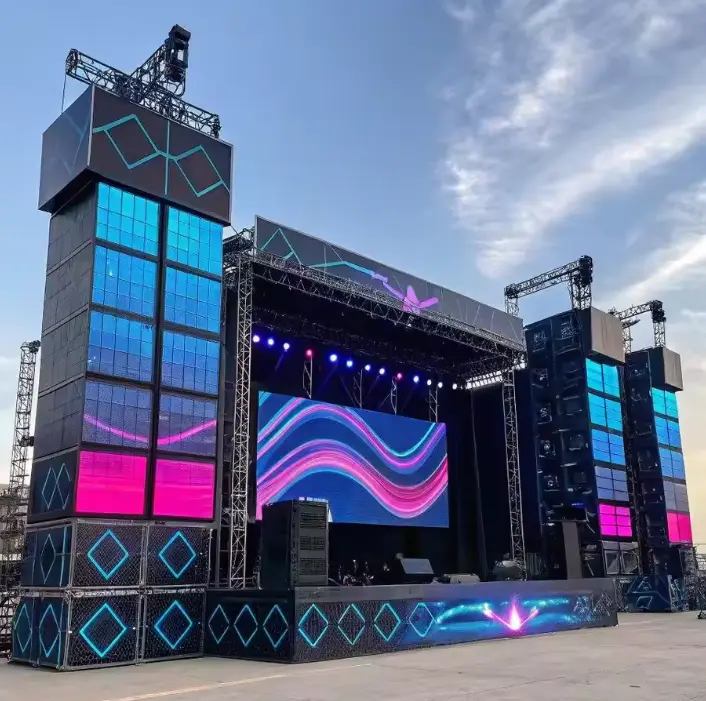
The cost of an outdoor rental LED screen depends on the equipment package and the services included in the quote. A screen-only rental, a delivered and installed LED wall, and a fully managed event display package are different products and should not be compared as though they were equivalent.
A credible budget should distinguish the rental charge from the total cost of preparing, operating, and removing the display.
What determines the rental price?
| Cost driver | Potential impact on the quote | Questions to ask the supplier |
|---|---|---|
| Screen area | Larger displays require more cabinets, processing capacity, and transport space | Is the price based on the screen area or a fixed package? |
| Pixel pitch | Different cabinet models and inventory can have different rental rates | Which exact model and pixel pitch are included? |
| Rental duration | Daily, multi-day, and longer-term arrangements may have different terms | Are setup and dismantling days charged separately? |
| Installation method | Ground support and flown installations have different requirements | Are trusses, lifting equipment, ballast, and engineering services included? |
| Transportation | Distance, vehicle capacity, loading, and access affect logistics | Does the quote include delivery, collection, and unloading? |
| Technical support | Staffing depends on operating hours, complexity, and service requirements | Is an operator included, and what happens outside scheduled hours? |
| Environmental requirements | Outdoor exposure may require additional protection or structural measures | What weather restrictions and contingency arrangements apply? |
There is no independently verified 2026 market-average rental price provided in this guide. For a meaningful comparison, request an itemized quote covering screen configuration, rental duration, processing and control equipment, support structure, transport, installation, dismantling, technical staffing, power requirements, taxes, and any overtime or weather-related charges. Confirm which items are included, optional, or excluded before comparing suppliers.
What is included in an outdoor LED screen rental package?
Rental packages differ substantially. Some suppliers quote only the LED cabinets, while others provide a complete event display service.
A useful quotation should identify the following items:
-
LED cabinets and the agreed spare-parts provision.
-
Sending and receiving equipment, video processors, and required signal accessories.
-
Power distribution equipment and the scope of electrical services.
-
Ground-support frames, rigging equipment, or other approved mounting structures.
-
Transportation, loading, unloading, installation, and dismantling.
-
On-site technicians, operating hours, and emergency response arrangements.
-
Content input requirements, playback equipment, and signal testing.
-
Insurance, damage liability, cancellation, and weather-related terms where applicable.
Do not assume that a component is included simply because the supplier describes the offer as a complete LED wall package.
How should you compare rental quotations?
Request comparable quotations using the same screen dimensions, pixel pitch, operating hours, installation method, and service scope.
For example, Supplier A may offer a lower equipment rate but charge separately for transportation, technicians, and structural support. Supplier B may have a higher initial quote but include these services.
The correct comparison is not the headline rental rate. It is the total cost of receiving the required display service under equivalent technical and operational conditions.
2. What Pixel Pitch Is Best for an Outdoor Event LED Screen?
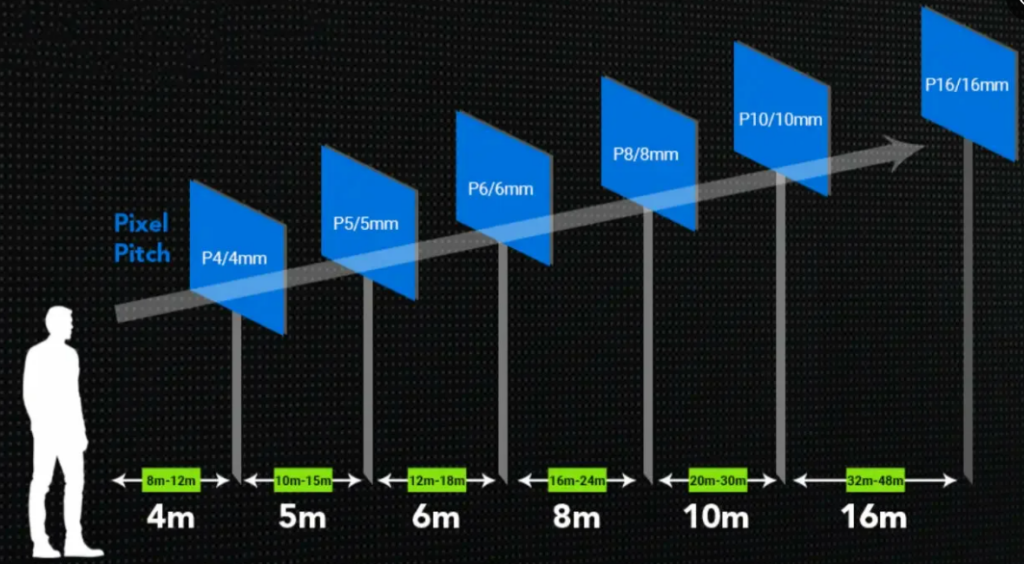
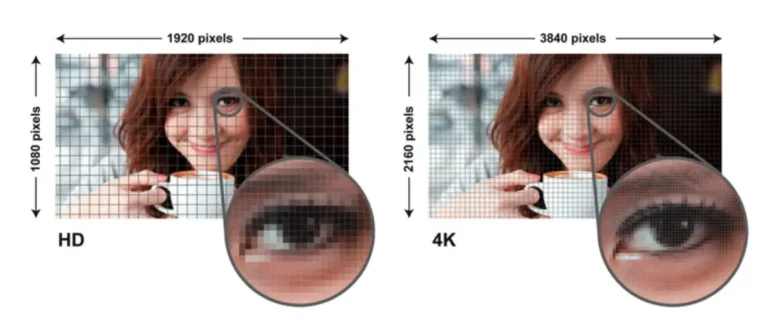
Pixel pitch is the distance between the centers of adjacent LED pixels, measured in millimeters. A smaller pixel pitch generally supports finer image detail at closer viewing distances, while a larger pixel pitch can be appropriate for audiences viewing a large screen from farther away.
However, choosing the smallest available pixel pitch is not always the best investment. The correct specification depends on audience position, content type, screen size, available rental inventory, and budget.
P2.9 vs. P3.9 vs. P4.8: What is the difference?
The following comparison describes general selection considerations, not a guarantee that every product with the same nominal pitch has identical performance.
| Selection factor | P2.9 | P3.9 | P4.8 |
|---|---|---|---|
| Pixel density | Higher | Medium | Lower |
| Close-up image detail | Generally better | Suitable for many stage applications | More dependent on viewing distance |
| Large outdoor stages | Can work, depending on budget and scale | Common candidate for versatile event applications | Candidate for large displays viewed from farther away |
| Fine text and graphics | Better suited to demanding detail requirements | Depends on content and audience distance | Requires greater care with small text |
| Rental economics | May carry a higher equipment cost | Often a practical compromise | Can be economical for distant viewing |
| Main trade-off | Equipment cost and availability | Balance between detail and cost | Image detail at closer distances |
Actual rental rates depend on the supplier’s inventory, cabinet design, market, and rental period. Pixel pitch alone does not determine price.
How does viewing distance affect pixel pitch?
The closest audience members usually determine the minimum acceptable image detail. A screen intended for a large festival audience may not need the same pixel density as a display viewed from a few meters away at a product launch.
Consider these scenarios:
-
Large outdoor concert: Evaluate the distance between the stage screen and the nearest audience members, as well as the size of performers and graphics on the display.
-
Corporate event: Prioritize readable text, presentation slides, product details, and the seating arrangement.
-
Outdoor exhibition: Consider whether visitors will stand directly in front of the screen or view it from across a larger space.
-
Sports event: Evaluate motion, live camera feeds, scoreboard content, and the distance of spectators from the display.
The final selection should be confirmed through the actual content, proposed screen dimensions, and viewing layout. If possible, request a demonstration using the intended content rather than relying entirely on a general viewing-distance rule.
Should you choose the smallest pixel pitch available?
Not necessarily.
A smaller pitch may improve close-range detail, but it can increase the equipment cost without delivering a meaningful benefit to viewers who are standing far away.
A larger pitch may be more economical for a distant audience, but it can make small text and fine graphics less legible when viewed up close.
Engineering recommendation: Establish the nearest viewing position first, then assess the content and screen dimensions before selecting the cabinet model. This prevents the common mistake of paying for image detail that the audience cannot meaningfully perceive.
3. How Bright Should an Outdoor Rental LED Screen Be?
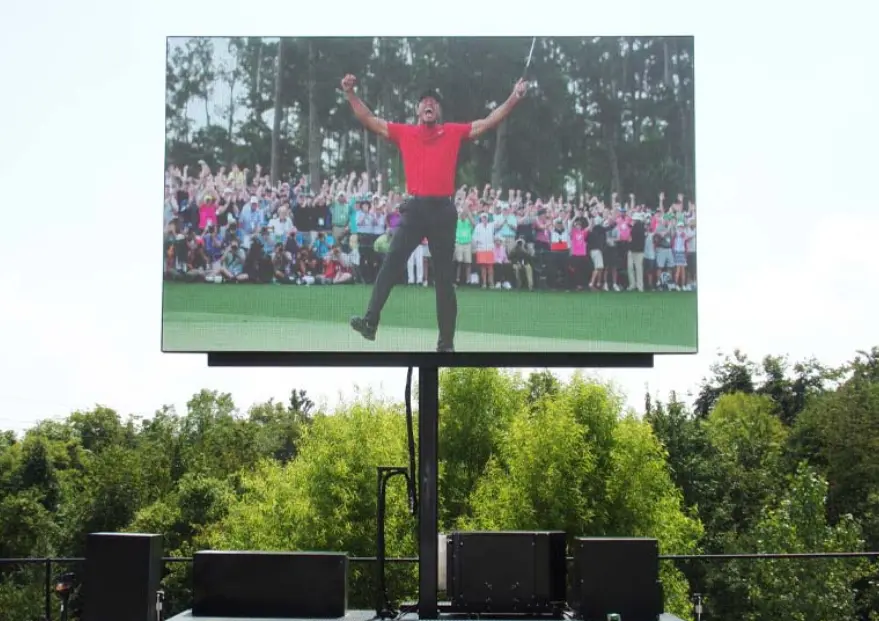
Brightness affects whether an outdoor LED screen remains visible under changing ambient-light conditions. A display facing direct sunlight generally has different requirements from one installed under a shaded stage roof or used after sunset.
The correct specification depends on the time of day, screen orientation, surrounding reflections, content, and the display’s available brightness-control range.
Direct sunlight vs. shaded outdoor events
| Environment | Main consideration | Recommended evaluation |
|---|---|---|
| Direct sunlight | Strong ambient light can reduce perceived contrast | Verify the model’s rated brightness and assess visibility under comparable conditions |
| Partially shaded stage | Lighting conditions may change throughout the event | Evaluate brightness control and viewing angles |
| Evening concert | High brightness may not always be necessary | Confirm that brightness can be adjusted appropriately |
| Outdoor exhibition | Ambient light varies by location and time | Test readability using actual presentation content |
| Camera-facing stage | Brightness interacts with camera exposure and display settings | Conduct a camera test with the intended frame rate and shutter settings |
Manufacturer specifications should identify the model and the conditions under which brightness is rated. A maximum-brightness figure alone does not guarantee that all content will remain equally legible in direct sunlight.
Why is maximum brightness not the only factor?
A screen may have a high rated brightness but still deliver disappointing results if its content has poor contrast, its surface reflects excessive ambient light, or viewers approach it from unsuitable angles.
Also consider:
-
Contrast and image processing.
-
Viewing angle and screen orientation.
-
Automatic or manual brightness control.
-
Whether the display can operate at lower brightness when ambient light decreases.
-
Color consistency and legibility across the intended viewing area.
For a daytime event, ask the supplier to demonstrate the proposed screen under lighting conditions similar to those expected at the venue. For a camera-facing installation, evaluate both audience visibility and recorded footage.
4. Are Outdoor Rental LED Screens Waterproof and Weather-Resistant?
Outdoor rental LED screens are designed for outdoor applications, but their actual environmental suitability depends on the product’s protection rating, cabinet construction, connectors, installation method, and operating restrictions.
An IP rating is not a blanket guarantee that an entire temporary display installation is safe in every weather condition.
What does an IP65 rating mean?
IEC 60529 defines the IP Code used to classify protection provided by electrical equipment enclosures against access, solid foreign objects, and water ingress. The specific rating and its scope must be verified in the manufacturer’s documentation.
An IP65 rating indicates dust-tight enclosure protection and protection against water jets under the specified test conditions. It does not mean that the complete LED screen system is waterproof under every outdoor condition, suitable for immersion, or safe to operate during all severe weather events. Confirm the protection rating of the relevant components and follow the manufacturer’s operating limits and site-specific safety requirements.
Reference: IEC 60529 — Degrees of protection provided by enclosures.
Before approving a rental system, confirm:
-
The protection rating of the actual cabinet model.
-
Whether the rating applies to the front, rear, or both sides.
-
The protection level of connectors, power distribution, and other exposed equipment.
-
The supplier’s permitted operating conditions.
-
The procedures for inspecting, drying, and restarting equipment after water exposure.
-
The venue’s electrical safety and weather-management requirements.
How should you assess wind and structural safety?
Wind resistance is a separate engineering issue from water resistance.
A screen can have an appropriate environmental protection rating and still be unsafe if its supporting structure, anchoring, ballast, or installation configuration is unsuitable for the site.
The project team should establish:
-
The proposed screen dimensions, total weight, and mounting arrangement.
-
The applicable site-specific wind loads and local structural requirements.
-
The approved support system, anchoring, ballast, and rigging arrangement.
-
The venue’s monitoring and operating procedures for adverse weather.
-
The shutdown, evacuation, and dismantling criteria established by the responsible event and engineering teams.
Do not rely on a generic wind-speed threshold for every installation. The safe operating limits depend on the structure, exposure, engineering design, and applicable requirements.
For temporary installations, the responsible structural professional and local authorities should determine the appropriate review and approval process.
What should happen if severe weather is forecast?
The event organizer and technical supplier should agree on a documented contingency plan before installation.
The plan should specify who monitors weather conditions, who has authority to suspend operation, how the screen and supporting structure will be secured, and how the equipment will be inspected before being returned to service.
These arrangements should be confirmed in the contract, particularly when the event takes place outdoors with limited shelter or restricted access for emergency work.
5. Do Refresh Rate and Power Consumption Matter for Outdoor Events?
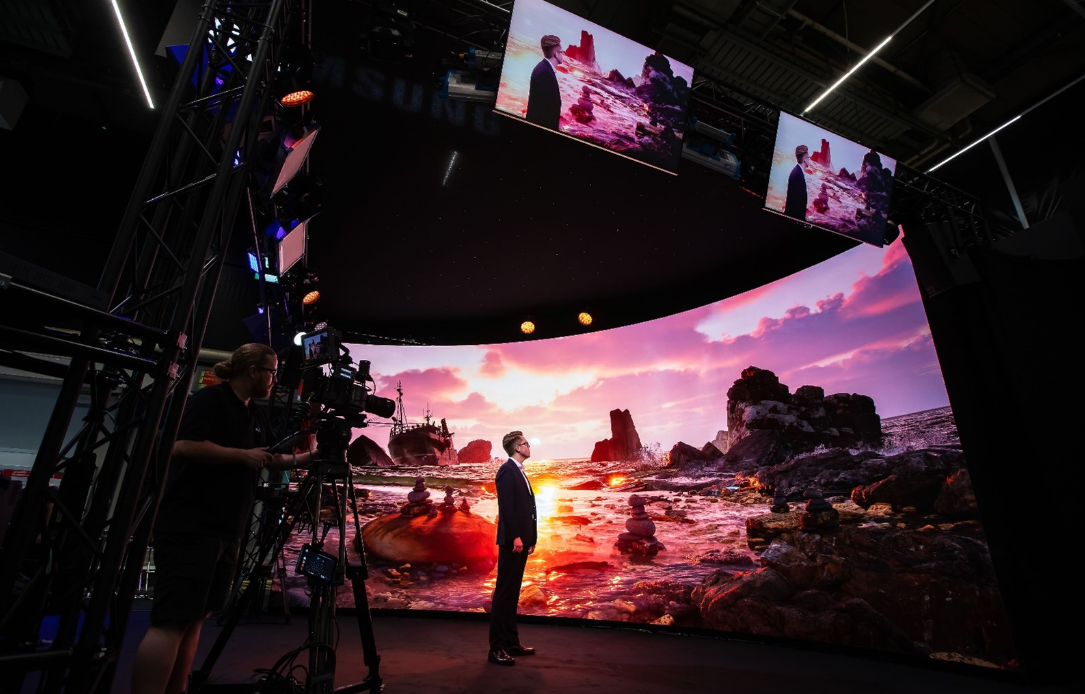
- Camera Flicker: Visible black bars (rolling shutter effect) when filmed.
- Content Loss: Fast-moving content may appear blurry or tearing.
- Not Broadcast Ready: Unsuitable for professional live streaming or TV.
- Flicker-Free: Crystal clear image on all cameras (1/2000s+ shutter speed).
- Smooth Motion: Perfect for fast video playback and sports.
- XR Ready (7680Hz): Essential for virtual production and XR studios.
Yes. Refresh rate can affect camera-facing applications, while power consumption determines part of the electrical infrastructure required for the event.
Both specifications must be evaluated in the context of the complete system rather than in isolation.
What refresh rate is suitable for live camera production?
LED display refresh rate describes how frequently the display updates its image. It is not the same as the content’s frame rate or the camera’s recording frame rate.
A display can advertise a high refresh rate and still produce unwanted artifacts in recorded footage if the display scan behavior, camera shutter, exposure settings, and frame rate interact poorly.
For camera-facing events, ask the supplier to confirm:
-
The exact display model’s rated refresh rate.
-
The receiving and processing equipment used in the configuration.
-
Whether the system supports the required video input formats.
-
Whether synchronization features are available and necessary.
-
Whether a camera test can be performed using the production team’s intended settings.
Refresh rate is one factor to check when an outdoor LED screen will be filmed or broadcast. Do not assume that a particular refresh-rate figure guarantees flicker-free footage. Ask the supplier for the exact model specification and, for camera-facing events, test the screen with the intended camera, frame rate, shutter settings, and content before the event.
How much power does an outdoor LED wall need?
Electrical requirements depend on the screen model, total screen area, brightness settings, content, operating conditions, and the rest of the video system.
Manufacturer documentation may list both maximum and average power consumption. These figures serve different purposes.
| Power specification | What it means | How to use it |
|---|---|---|
| Maximum power consumption | A specified upper consumption figure under the manufacturer’s stated conditions | Assess electrical capacity and distribution requirements |
| Average power consumption | An expected or specified consumption figure under defined operating conditions | Support energy-use estimates and operating budgets |
| Control-system power | Consumption of processors, playback equipment, and related devices | Include equipment outside the LED cabinets |
| Site electrical capacity | Available supply, circuit capacity, distribution, and protection | Confirm that the complete installation can operate safely |
Do not assume that average power consumption is guaranteed for every video, brightness setting, or operating condition. Ask the manufacturer how the figure was determined.
The event’s electrical contractor should verify the actual supply arrangement, distribution equipment, protective devices, cable routing, and applicable electrical requirements.
For generator-powered events, the plan must account for the complete connected load and the generator’s operating characteristics, not just the LED screen’s average consumption.
What about heat and continuous operation?
Outdoor displays may operate for extended periods under demanding ambient conditions. Heat management, ventilation, installation clearance, and manufacturer operating limits can affect reliability.
Confirm the equipment’s permitted operating temperature range and any restrictions affecting high-brightness operation. The supplier should also explain how faults are diagnosed and how replacement modules or cabinets will be handled during the event.
6. Which Outdoor LED Screen Setup Is Best for Your Event?
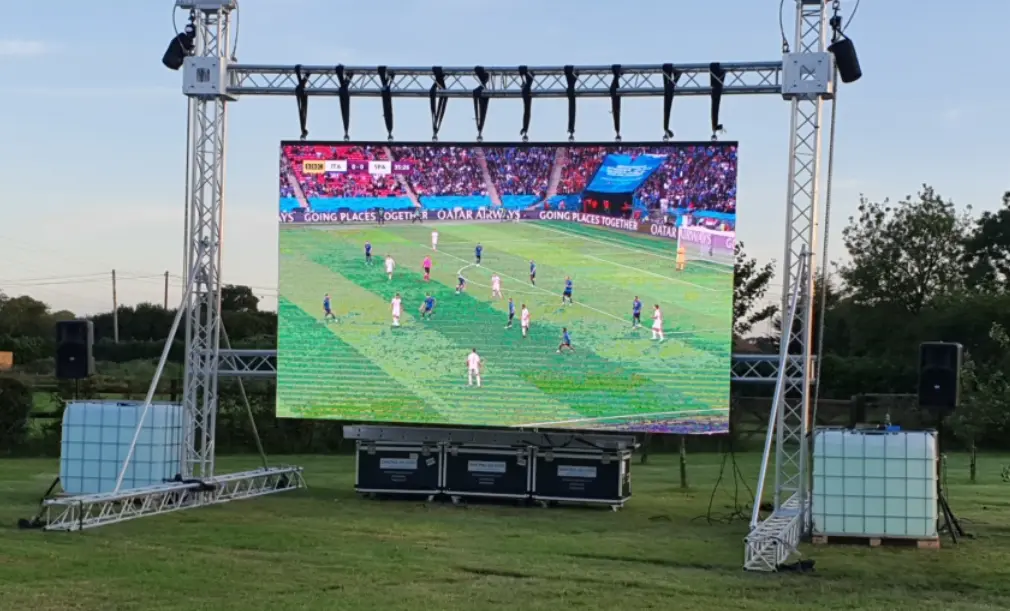
The best setup depends on the event’s visual objectives, venue layout, audience distribution, structural constraints, and production workflow.
Concerts and music festivals
Concerts often require large visual surfaces, dynamic content, and clear visibility from different audience positions.
Key considerations include:
-
Screen dimensions relative to the stage and audience.
-
Pixel pitch appropriate for the nearest viewers.
-
Brightness performance during daytime and evening use.
-
Camera compatibility for live performance footage.
-
Structural design for the proposed mounting method.
-
Redundant signal paths and an agreed fault-response procedure.
Side screens may improve visibility for audience members positioned far from the main stage, but their value depends on the venue layout and production plan.
Corporate events and outdoor brand activations
Corporate events often display presentations, product details, text, logos, and video content.
In these applications, legibility can matter more than maximizing screen size. Review the intended content at the expected viewing distance and confirm the resolution and aspect ratio with the event’s content team.
For brand activations, also consider whether the display needs to operate continuously, whether the content changes throughout the event, and whether the installation must fit within a restricted footprint.
Sporting events and outdoor exhibitions
Sports and exhibition environments may have different priorities:
-
Sports venues may require clear live footage, score graphics, and reliable content switching.
-
Exhibitions may prioritize readable information, brand presentation, and compact installation.
-
Public viewing areas may require additional consideration of pedestrian circulation and physical access.
-
Long operating schedules may increase the importance of maintenance access and spare equipment.
The screen should be selected according to its actual use rather than simply matching the largest display used at another event.
Ground-stacked vs. flown LED walls

Ground-stacked installation
The display is supported from the ground using an appropriate engineered support system. This arrangement may suit venues with sufficient floor space and suitable ground conditions.
Main considerations include the footprint, stability, public access, ballast or anchoring requirements, and the available viewing area.

Flown installation
The display is suspended from a suitable rigging system. This can preserve floor space and support certain stage designs, but it introduces lifting, suspension, and structural requirements.
Confirm the approved rigging design, load limits, suspension points, lifting equipment, inspection procedures, and the qualifications required for the installation.
Neither arrangement is automatically safer or more economical. The appropriate choice depends on the venue, engineering design, equipment configuration, labor, and installation schedule.
7. What Hidden Costs Should Event Buyers Budget For?
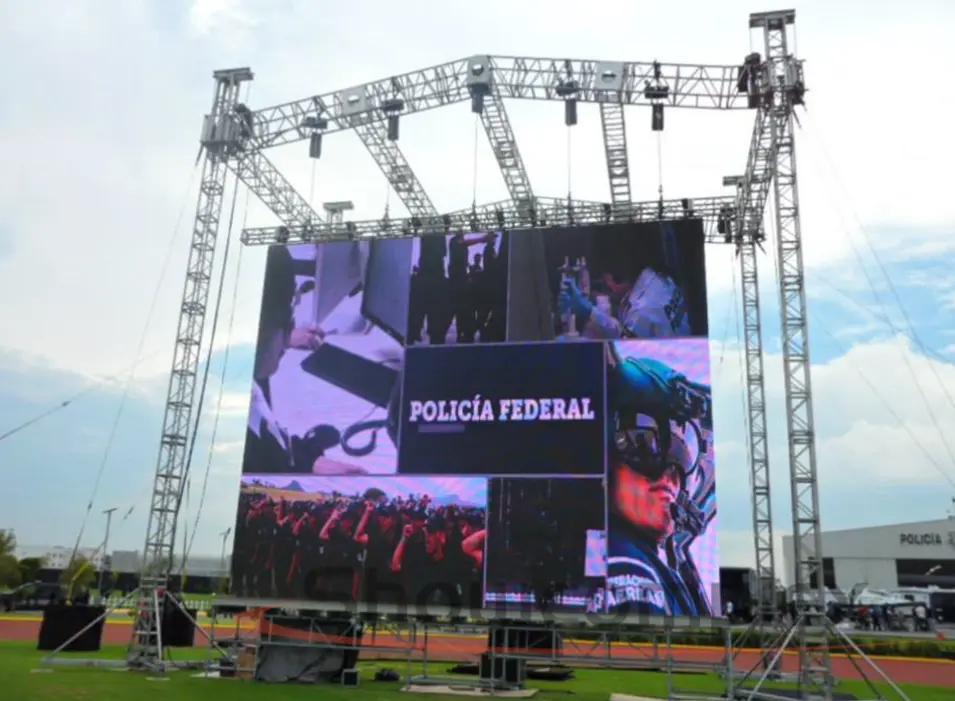
A screen rental quote can look inexpensive while excluding services that are essential to a working installation.
The following cost categories should be checked before comparing supplier proposals.
| Cost category | Possible additional expense | What to confirm |
|---|---|---|
| LED hardware | Different cabinet models, pixel pitches, or spare inventory | Exact model, quantity, and included spare parts |
| Control system | Video processor, sending equipment, signal converters | Input compatibility, resolution, and processing capacity |
| Structure | Truss, ground supports, rigging, ballast, or engineering services | Approved design and included equipment |
| Installation | Labor, lifting equipment, site access, and restricted working hours | Crew size, working schedule, and overtime rates |
| Shipping | Delivery, collection, loading, unloading, and return transport | Delivery window, access requirements, and responsibility for delays |
| Customs | Import duties, taxes, clearance, and temporary-import requirements where relevant | Which party handles customs and bears the charges |
| Maintenance | Troubleshooting, replacement modules, and emergency callouts | Response times, spare availability, and service limits |
| Electricity | Power distribution, generator hire, cabling, and electrical labor | Site supply and the complete connected load |
| Content and control | Playback computers, content formatting, media servers, and operator time | Who supplies and tests the playback system |
| Insurance and contingency | Damage liability, cancellation, weather delays, and rescheduling | Contract terms, exclusions, and applicable coverage |
Not every event will incur every cost. The objective is to identify which expenses apply to the specific venue and service package.
What is the difference between rental cost and total project cost?
The equipment rental charge covers only the items and services specified in the rental agreement. The total project cost also includes any additional resources required to deliver the event safely and on schedule.
For example, an organizer comparing two quotations should check whether both include the same screen configuration, delivery, installation, dismantling, control equipment, technical staffing, and weather-related terms.
A lower equipment rate does not necessarily represent a lower total cost if critical services are excluded.
Should you rent or buy an outdoor LED screen?
Renting and buying serve different operational models.
| Consideration | Renting | Buying |
|---|---|---|
| Initial capital | Generally lower equipment commitment | Requires purchasing the equipment |
| Inventory access | Depends on supplier availability | Depends on owned inventory |
| Maintenance | Often partly covered by the rental agreement | Owner manages or contracts maintenance |
| Storage | Usually handled by the supplier between rentals | Requires storage and inventory management |
| Equipment selection | Can vary by event and available stock | Limited to owned inventory unless additional equipment is sourced |
| Long-term economics | Depends on rental frequency and service charges | Depends on utilization, maintenance, depreciation, and resale value |
A business running occasional events may benefit from renting because it avoids maintaining an equipment inventory between events. A production company using similar configurations frequently may find ownership worth evaluating.
However, buying is not automatically cheaper after a fixed number of rentals. The decision depends on actual rental quotations, utilization, financing, maintenance, storage, staffing, equipment replacement, and resale assumptions.
For a fair comparison, use actual supplier quotations and the company’s own operating data rather than relying on a universal payback threshold.
8. How Do You Choose a Reliable Outdoor LED Screen Supplier?
A reliable supplier should be able to demonstrate that the proposed equipment, installation plan, and support arrangements meet the event’s requirements.
A product catalogue alone is not sufficient evidence of project readiness.
Which technical documents should you request?
Before confirming an order, ask for the following documentation where applicable:
-
Product specification sheet: Exact model, pixel pitch, brightness, refresh rate, cabinet dimensions, weight, power consumption, and IP rating.
-
Installation documentation: Approved mounting arrangement, structural requirements, and relevant handling instructions.
-
Electrical requirements: Power connections, distribution requirements, and operating limits.
-
Control-system information: Supported inputs, processing equipment, and signal compatibility.
-
Warranty and service terms: Coverage, exclusions, repair arrangements, and response commitments.
-
Safety and compliance documentation: Applicable declarations, certificates, test reports, and project-specific approvals.
Check that the documents refer to the actual model being supplied. Specifications from a similar product family should not be treated as proof that every model has identical capabilities.
How should you evaluate after-sales support?
For a time-sensitive event, the ability to resolve technical problems can be as important as the initial equipment specification.
Ask the supplier:
-
Who is responsible for installation and commissioning?
-
Is technical support available during the event’s operating hours?
-
Are spare modules, power supplies, and other critical components available?
-
How are faults reported, escalated, and resolved?
-
What happens if a component fails shortly before the event opens?
-
Who is responsible for dismantling and returning the equipment?
The answers should be consistent with the written agreement. Avoid relying on vague promises of rapid support without clear responsibilities and practical arrangements.
What should be confirmed before signing the contract?
Use the following checklist when comparing final quotations.
Pre-purchase checklist
0 of 8
9. Frequently Asked Questions
How much does it cost to rent an outdoor LED screen for one day?
The price depends on the screen size, pixel pitch, cabinet model, rental location, and service package. Transportation, installation, dismantling, control equipment, and technicians may be charged separately. Request an itemized quotation for your event rather than relying on an unverified market-average price.
What pixel pitch is best for outdoor events?
The best pixel pitch depends on the nearest audience viewing distance, content detail, screen dimensions, and budget. Smaller pixel pitches generally provide finer image detail at close range, while larger pitches can suit audiences viewing a large screen from farther away. Confirm the choice using the intended content and venue layout.
Can an outdoor rental LED screen be used in the rain?
Some outdoor LED displays are designed to operate in specified wet-weather conditions, but suitability depends on the model’s protection rating, installation, connectors, and operating restrictions. An IP rating does not guarantee that an entire installation is safe during severe weather. Follow the manufacturer’s instructions and the event’s electrical and structural safety procedures.
How much power does an outdoor rental LED wall need?
Power requirements depend on the model, total display area, brightness, content, and operating conditions. Use the manufacturer’s maximum power specification for electrical planning and its average consumption data for budgeting where appropriate. Confirm the complete installation’s electrical requirements with the responsible electrical professional.
What is included in an outdoor LED screen rental package?
Packages may include LED cabinets, video processing equipment, transportation, structural support, installation, dismantling, and technical personnel. The exact scope varies by supplier. Ask for a written list of included and excluded services, operating hours, spare parts, and additional charges.
Is renting better than buying an outdoor LED screen?
Renting may suit occasional events or organizers who need different configurations without maintaining an equipment inventory. Buying may suit businesses with recurring demand, suitable storage, maintenance resources, and high equipment utilization. Compare actual rental costs with ownership expenses before deciding.
What should I check before hiring an outdoor LED screen supplier?
Verify the exact product specifications, installation method, power requirements, relevant compliance documents, warranty terms, technical support, and spare-parts arrangements. Confirm delivery and setup schedules, weather contingencies, cancellation terms, and responsibilities in writing.
10. Sostron: Outdoor Rental LED Display Solutions
Sostron is a LED display manufacturer and commercial display solution provider based in Shenzhen, China. Its product portfolio includes rental LED display systems and other commercial LED display solutions for different installation environments.
For event organizers and production companies, selecting a display should begin with the intended application, audience viewing distance, screen dimensions, environmental conditions, and installation requirements.
Sostron provides product development, manufacturing, engineering support, customized display solutions, installation guidance, and after-sales technical support. The appropriate product configuration should be confirmed against the project’s actual requirements and the manufacturer’s current technical documentation.
Explore the Hima rental LED display range for rental applications, or review the Carbon Series LED displays when evaluating stage-display configurations and cabinet design.
For project-specific evidence, visit the Sostron case study library and verify that each referenced installation matches your intended application.
Final recommendation: Choose an outdoor rental LED screen based on verified specifications, a clearly defined installation plan, and a complete quotation. The best solution is not necessarily the screen with the smallest pixel pitch or the lowest rental rate. It is the system that meets the event’s visual requirements while providing a safe installation, reliable operation, and transparent project costs.
References:
OSHA — Specific Purpose Equipment and Installations
NIST — Standardization of LED Measurements Updates