Table of Contents
ToggleThe mainstream market price of LED display screen panels (single panel/module) in the United States in 2026 is USD 800–3500 per square meter (depending on pixel pitch). Indoor rental panels with P2.9–P3.91mm are priced at approximately USD 1200–2200/m², while high-end COB fine-pitch panels can reach USD 2800–3500+/m². A complete video wall panel package of about 10 m² (including processor) costs around USD 8000–15000.
The four core factors affecting price are: pixel pitch, LED packaging technology, U.S. import tariffs and compliance certifications, and cabinet standardization design.
TCO reminder: Only looking at panel list price can easily underestimate hidden costs by 20–40% (electricity, maintenance, tariffs).
Price Overview Table
| Application Scenario | Pixel Pitch | Panel Price (USD/m²) | Typical Panel Size | Recommended Use |
|---|---|---|---|---|
| Indoor Rental | P2.9mm | 1200–1800 | 500×500mm | Events / Churches |
| Indoor Fixed | P1.8mm | 2200–3200 | 500×1000mm | Meeting rooms / Retail |
| Outdoor Advertising | P3.91mm | 900–1600 | 500×500mm | Malls / Outdoor screens |
| High-end COB | P1.5mm | 2800–3500+ | Custom | Virtual production / Control rooms |
(Data based on real-time quotes from mainstream U.S. distributors in 2026, including basic freight, excluding tariffs)
The 4 Core Drivers Affecting LED Panel Prices in the U.S.
As a product manager with 10 years of LED display experience, I have seen too many U.S. buyers focus only on unit price, only to discover during implementation that “cheap” actually means higher total cost. The following four factors truly determine your final quotation, each creating a price gap of 20–300%.
Pixel Pitch — Direct Linear Relationship Between Resolution and Price
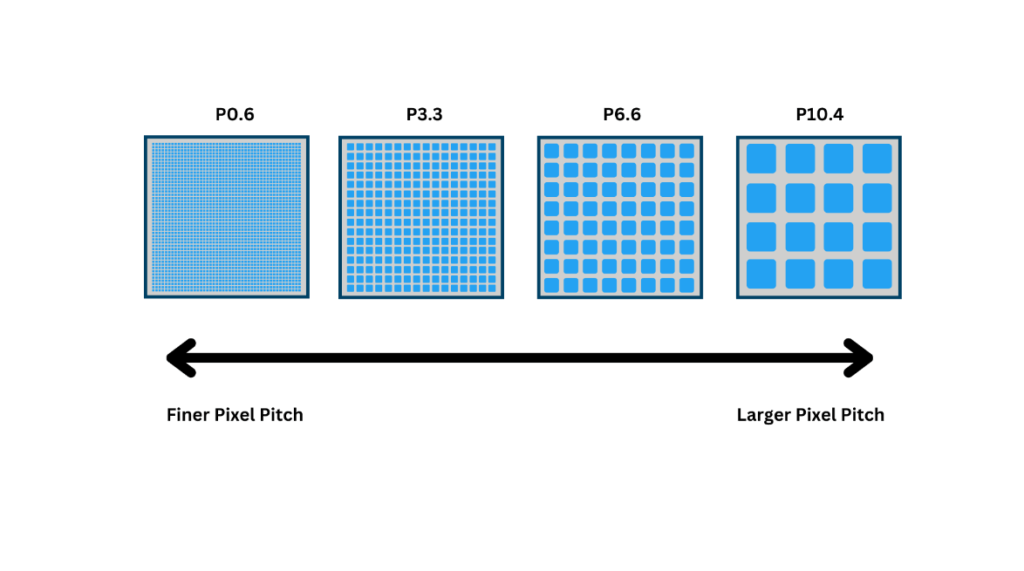
The smaller the pixel pitch, the exponentially higher the number of LED beads per unit area. At the same time, requirements for SMT precision, PCB layers, and driver ICs increase, directly pushing up manufacturing costs.
Why is P1.5mm 2–3× more expensive than P4mm?
P1.5mm requires about 440,000 LEDs per m², while P4mm only needs about 60,000. With a 7× increase in density, yield control becomes much more difficult, doubling material and process costs.
Key selection advice for U.S. buyers
Match precisely based on viewing distance (recommended formula: optimal viewing distance ≈ pixel pitch × 1000mm).
For indoor meeting rooms with a 3–5m viewing distance, P2.9mm is sufficient. Choosing P1.8mm forcibly only increases budget by 40% without noticeable visual improvement.
Common pitfall
Many quotations intentionally list a small pitch but do not mention effective resolution. Buyers later discover refresh rates below 1920Hz, causing moiré patterns during filming.
LED Packaging Technology and Chip Quality — The Biggest Hidden Cost Gap
The three mainstream packaging technologies—SMD, COB, and GOB—differ mainly in process complexity and chip brand. Take you through SMD, COB and GOB LED packaging: main differences and best applications.
Real difference: COB vs SMD
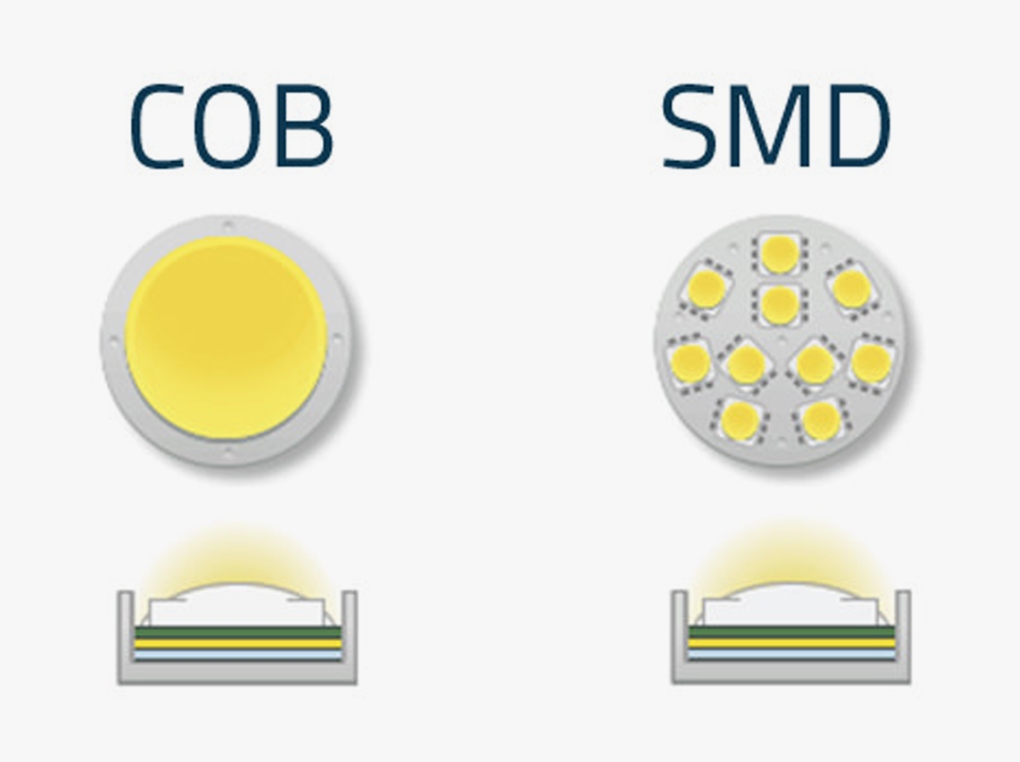
COB directly mounts chips on the PCB, eliminating brackets and solder joints. Brightness uniformity improves by 30%, and protection increases from IP5X to IP6X. However, chip bonding costs per m² are 40–60% higher.
SMD is more mature and easier to maintain, making it suitable for budget-limited projects.
Chip brand determines lifespan and stability
High-end chips such as Nichia/Epistar can achieve 50,000 hours (L70), while ordinary chips may experience over 20% brightness decay after 3 years.
Why it matters more in the U.S.
In rental scenarios with frequent assembly/disassembly, COB panels reduce spare part replacement frequency. Over 5 years, maintenance costs can drop by 15–25%.
U.S. Import Tariffs and Compliance Certifications — The Biggest Price Killer
In 2026, Section 301 tariffs still impose an additional 20–25% on Chinese LED panels (HTSUS 8531.20.00), with some electronic components reaching up to 30%. This is not controllable by manufacturers but is a landed cost in the U.S.
Actual impact
A panel priced at USD 800/m² EXW China will incur an additional USD 200–250/m² in tariffs and customs fees under DDP terms.
Mandatory certifications
UL, FCC, and ETL listing are essential. Missing any of these can result in customs clearance delays. Low-cost suppliers often skip certifications, leading to higher retroactive costs.
Local assembly vs direct import
Locally assembled panels cost 10–15% more but avoid tariffs and ensure spare parts delivery within one week, making them suitable for urgent projects.
Cabinet Material and Standardization — Key Factor in U.S. AV Rental Market
U.S. rental companies prioritize “lightweight, fast, and stable,” making die-casting aluminum cabinets the standard.
Why pay 15–25% more?
Die-cast aluminum cabinets weigh only 6–8kg per panel (vs. 12kg+ for steel), with ±0.1mm precision. Installation speed increases by 50%, significantly reducing transport and labor costs.
Standard sizes
500×500mm and 500×1000mm ensure seamless compatibility with NovaStar/Mars processors, avoiding on-site modification costs.
Hidden value
With high reuse rates in rental markets, lightweight cabinets reduce deformation by 70% over 5 years and maintain 20% higher residual value.
TCO (Total Cost of Ownership) Breakdown — 5 Hidden Costs U.S. Buyers Overlook
As a 10-year LED product manager, I repeatedly remind U.S. clients: initial panel price is just the tip of the iceberg. The following five hidden costs often determine total 5-year spending and can make “cheap” options 25–45% more expensive.
Power Consumption
U.S. commercial electricity rates are about USD 0.12–0.18/kWh.
Low-power COB panels consume 80–100W/m², while standard SMD panels can exceed 150W.
For a 10 m² screen running 8 hours daily, low-power options save USD 12,000–25,000 over 5 years.
Maintenance and Spare Parts
Chinese-imported panels may require 2–4 weeks for spare parts delivery in the U.S.
In rental scenarios, downtime losses can reach thousands of dollars per day.
Standardized die-cast cabinets allow replacement within one day.
Software Licensing and Upgrades
Some low-cost panels require annual CMS fees of USD 500–1500.
Over 5 years, total costs can exceed USD 3000.
Installation Infrastructure
Due to U.S. labor laws and structural requirements, additional support structures and electrical modifications can add USD 150–300/m².
Lifespan and Residual Value
Low-cost panels may lose over 20% brightness in 3 years, with residual value below 30%.
High-end panels can retain 40% resale value after 5 years.
Simulation Case: 20m² Outdoor Rental Panel Purchase in Los Angeles
| Item | Low-cost China Direct | High-quality Local Certified | 5-Year Difference |
|---|---|---|---|
| Initial Purchase | $18,000 | $24,000 | +$6,000 |
| Electricity (5 yrs) | $9,800 | $6,200 | -$3,600 |
| Maintenance | $7,500 | $2,800 | -$4,700 |
| Software & Infra | $4,200 | $2,100 | -$2,100 |
| Residual Value | -$2,000 | -$6,000 | -$4,000 |
| Total TCO | $37,500 | $29,100 | Low-cost costs +$8,400 |
Real result: The “cheaper” option ends up costing $8,400 more over 5 years.
2026 U.S. LED Panel Procurement Decision Framework
The core of decision-making in the U.S. AV rental and fixed installation market lies in supply chain and scenario matching.
Local distributors are 10–15% more expensive but avoid 20–25% tariffs and deliver within one week.
Direct imports from China suit bulk orders but require 3 months of lead time.
Scenario-based selection recommendations
- Churches: P2.9mm fixed installation (3–8m viewing distance)
- Event rental: prioritize 500×500mm lightweight cabinets
- Retail display: P1.8mm COB
- Virtual production: P1.5mm high refresh rate panels
8 must-check items in quotations
- UL/FCC certification numbers
- Actual power consumption data
- Cabinet weight
- Refresh rate
- Brightness decay curve
- Spare parts inventory
- Software compatibility
- 5-year warranty coverage
Real Case and Data Validation
The above simulation covers most mid-sized U.S. buyer scenarios. ROI analysis shows that customers focusing on TCO save an average of 22% in total costs over 5 years.
FAQ
Q1: What is the real price of P2.9 indoor panels in the U.S. in 2026? What about after tariffs?
The mainstream price is USD 1200–1800/m². After adding 20–25% Section 301 tariffs, the landed cost is about USD 1500–2250/m². Under DDP terms, an additional USD 80–120/m² customs fee applies.
Q2: Why do some low-priced panels result in higher TCO?
Low-cost panels often use standard SMD and non-certified chips, leading to 30–40% higher electricity and maintenance costs over 5 years. Frequent downtime and brightness decay make total costs exceed high-end options.
Q3: What certifications are required to import LED panels into the U.S.?
UL, FCC, and ETL listings are mandatory, along with HTSUS code 8531.20.00 declaration. Missing any of these can result in customs seizure and significantly higher retroactive costs.
Q4: What is the price difference between rental and fixed installation panels?
Rental panels (die-cast aluminum, 500×500mm) are 15–25% more expensive due to higher precision and lightweight design. Rental companies should choose rental panels, while churches and meeting rooms should choose fixed installations to reduce long-term TCO.
Focusing only on initial unit price is often a trap, as hidden costs can account for more than 30% of total spending. Due to differences in installation environments and viewing distances, it is recommended to consult an engineering team for a precise and customized quotation plan.
References:

About SoStron
Marketing Strategic Director at Sostron