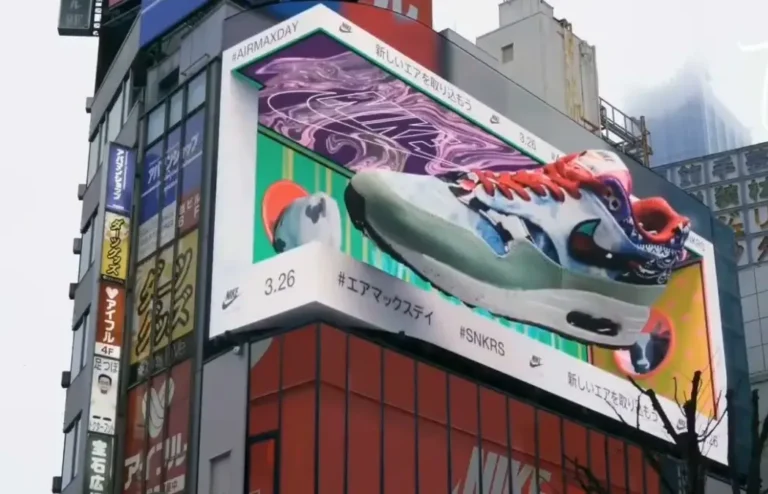
Display types are mainly divided into two broad categories: consumer-grade panel displays and large-format direct-view LED displays. Consumer-grade panel displays include LCD (Liquid Crystal Display), OLED (Organic Light-Emitting Diode), QLED, and Mini-LED. These focus on color accuracy and contrast for close-range viewing and are commonly used in televisions, monitors, and smartphones.
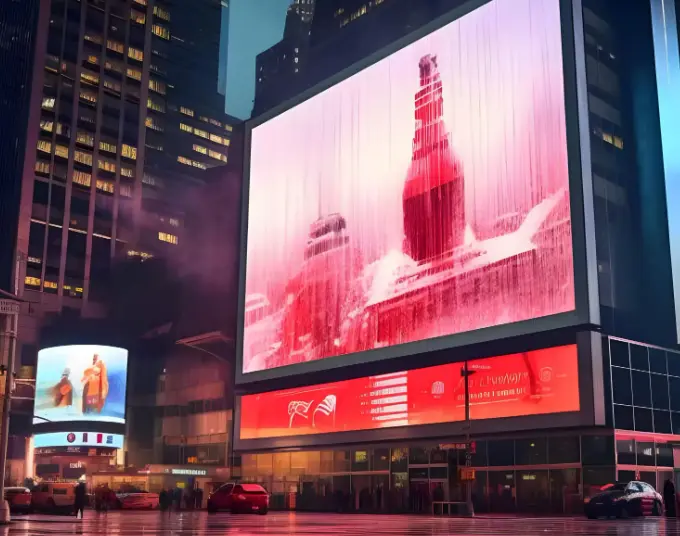
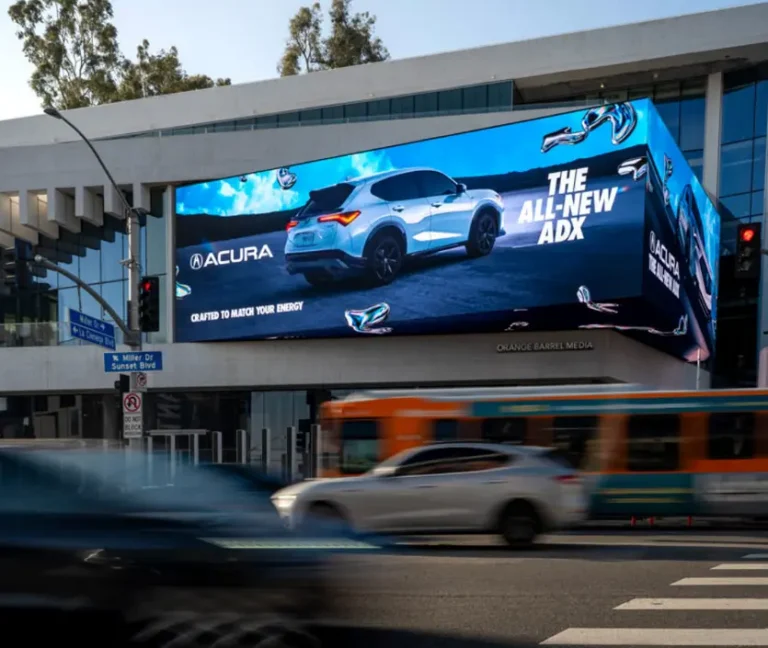
For commercial scenarios such as LED billboards, direct-view LED displays are the mainstream choice. Their core feature is that each pixel emits light independently without a backlight layer. They support modular splicing, large seamless screens, high brightness, and strong resistance to ambient light. This guide systematically organizes the classification dimensions, technical features, and selection criteria of LED billboard displays to help you quickly understand the differences between types and solve practical confusion such as “too many types and hard-to-understand parameters.”
Common Classification Dimensions of LED Billboard Displays
LED billboard displays can be categorized from multiple dimensions, making it easier to match technical solutions according to specific needs.
Classification by Usage Environment

Indoor LED displays: Suitable for indoor environments such as meeting rooms, shopping malls, and exhibition halls. They have moderate brightness and focus on color accuracy and image detail.
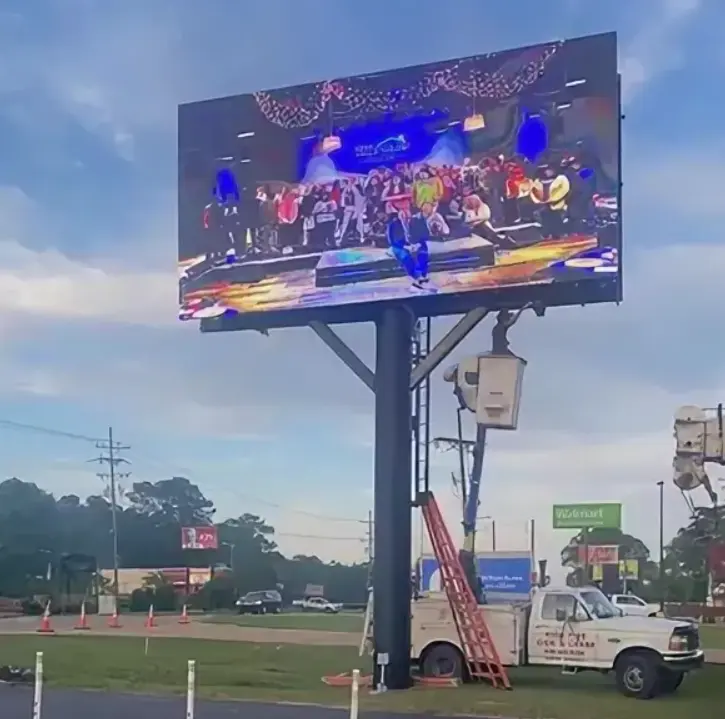
Outdoor/semi-outdoor LED displays: Designed for outdoor or semi-open spaces and must withstand sunlight, rain, and temperature variations.
Classification by Display Color
Monochrome LED displays: Only one color, commonly used for simple text display.
Dual-color LED displays: Two-color combinations suitable for basic information publishing.
Full-color LED displays: Based on RGB primary colors, capable of displaying rich images and videos.
Classification by Pixel Pitch
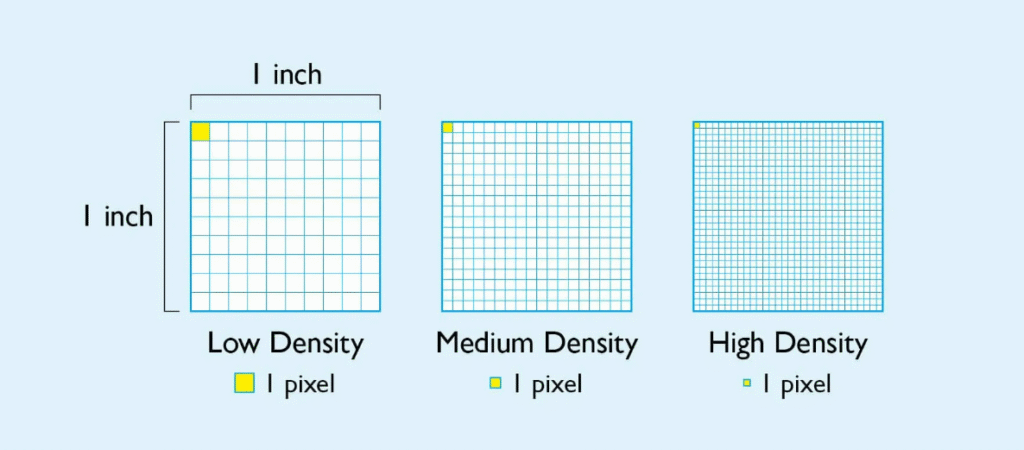
Pixel pitch directly affects visual performance and viewing distance. Small pitch (P1.0–P2.5) is suitable for close-range high-definition applications. Standard pitch (P3–P10 and above) is used for mid-to-long distance large screens.
Classification by Installation Method and Application Scenario
Fixed installation screens: Used for building billboards or permanent signage.
Rental screens: Designed for quick assembly and disassembly, commonly used in stage events.
Mobile/vehicle-mounted screens: Support flexible transportation and temporary deployment.
Classification by Screen Form
Flat screens: Standard rectangular structure.
Curved screens: Adapt to architectural or stage curvature.
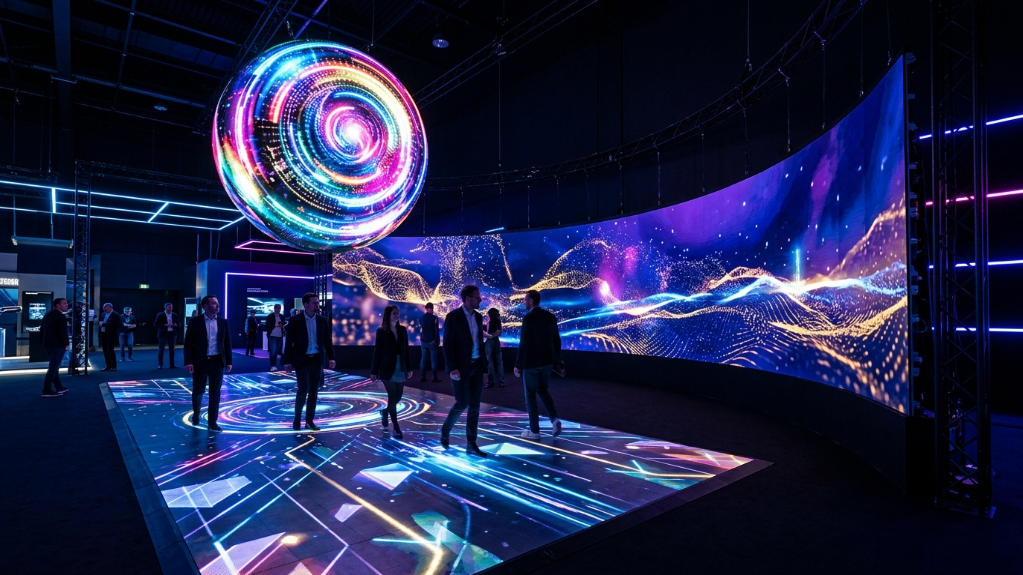
Creative irregular screens: Includes spherical screens, floor screens, or transparent screens and other innovative forms.
Classification by LED Packaging Technology
DIP packaging: Early technology with high brightness but larger pixel pitch.
SMD packaging: Mainstream surface-mount technology balancing brightness and fine image quality.
COB/GOB packaging: Integrated or glue-coated protection that improves reliability and durability.
The following table compares the core differences between indoor and outdoor LED displays from multiple dimensions for clearer understanding:
| Dimension | Indoor LED Display | Outdoor/Semi-outdoor LED Display |
|---|---|---|
| Brightness Requirement | 800–2000 nits | 5000–10000+ nits |
| Protection Rating | IP30–IP45 | IP65–IP67 |
| Viewing Distance | 1–5 meters | 5–50+ meters |
| Main Challenge | Color consistency | Waterproofing, dustproofing, UV resistance |
| Typical Applications | Conference rooms, shopping malls | Outdoor billboards, stadiums |
Technical Features and Performance Comparison of Different LED Display Types
Different types of LED billboards vary significantly in structure and performance. Indoor displays emphasize high refresh rates and low power consumption, while outdoor displays prioritize high brightness and weather resistance. The smaller the pixel pitch, the finer the close-range viewing effect, but the cost and maintenance requirements increase accordingly.
Full-color displays use RGB LEDs to achieve true color reproduction, far exceeding the information capacity of monochrome or dual-color displays. Fixed installation screens focus on long-term stability, while rental screens optimize quick assembly and lightweight design. Creative-shaped screens use flexible modules or special structures to achieve non-flat display effects.
The following table shows the relationship between pixel pitch and recommended viewing distance for practical selection reference:
| Pixel Pitch | Minimum Viewing Distance | Application Examples | Typical Characteristics |
|---|---|---|---|
| P1.0–P2.5 | 1–3 meters | Close-range meetings, exhibitions | Ultra-high definition, rich detail |
| P3–P6 | 3–10 meters | Shopping malls, stage events | Balanced clarity and cost |
| P8–P10+ | 10+ meters | Outdoor billboards | High brightness, long-distance clarity |
These comparison dimensions are based on real-world engineering experience and serve as a practical reference framework for LED billboard selection.
Key Technical Parameters for Selecting LED Billboard Displays
When selecting LED billboard displays, core parameters directly determine real-world performance. The following breakdown helps quantify evaluation from an engineering perspective. Take you to understand the working principle of LED display screen in detail: help you avoid expensive purchasing misunderstandings.
Brightness, Refresh Rate, and Grayscale Level
Brightness (nits): Outdoor environments require over 5000 nits to withstand strong sunlight, while indoor environments need only 800–2000 nits.
Refresh rate: 3840Hz or higher prevents scan lines. Rental stage screens often reach 7680Hz.
Grayscale level: 16-bit or higher ensures smooth color transitions.
With precise tuning from independent hardware R&D teams, these parameters can adapt to different lighting environments.
Protection Rating, Power Consumption, and Heat Dissipation Design
IP65/IP67 protection ratings ensure outdoor dustproof and waterproof performance.
Power consumption is controlled at an average below 300W/㎡, combined with intelligent heat dissipation systems to extend service life.
A standardized production line in a 15,000㎡ smart manufacturing base in Shenzhen ensures consistency across batches.
The table below summarizes key parameter matching guidelines:
| Parameter | Indoor Recommended Value | Outdoor Recommended Value | Practical Impact |
|---|---|---|---|
| Brightness | 800–2000 nits | 5000–10000+ nits | Ambient light resistance |
| Refresh Rate | 1920Hz+ | 3840Hz+ | Video smoothness |
| Protection Rating | IP30–IP45 | IP65–IP67 | Weather resistance and lifespan |
Viewing Angle, Flatness, and Seamless Splicing
A viewing angle of ≥160° ensures coverage for multi-angle audiences. Module flatness of <0.1mm enables seamless splicing and avoids visual interruptions caused by panel gaps.
Technical Standards and Industry Practice Backing
Leading companies typically rely on a complete industrial chain to ensure stable delivery of LED billboards. Shenzhen-based headquarters enterprises usually have a 15,000㎡ smart manufacturing base, independent hardware/software/engineering R&D teams, over 10 years of experience, more than 6,000 global projects delivered, exports to nearly 100 countries, and certifications such as CE, RoHS, FCC, and UL. These factors collectively serve as important benchmarks for reliability in the industry.
Real Project Case: Outdoor LED Display at a Manila City Mall

In March 2024, an outdoor LED display was installed at the entrance of a city mall in Manila, Philippines. The project used high-brightness outdoor modules, with screen dimensions adapted to the mall’s main pedestrian flow channel, enabling 24/7 digital advertising.
After delivery, the display maintained stable image quality and withstood local high temperature and humidity conditions, fully validating the reliability of outdoor LED screens in commercial advertising scenarios.
This case demonstrates the engineering team’s capability to provide practical solutions in complex environments.
Frequently Asked Questions (FAQ)
Q1: What is the fundamental difference between direct-view LED displays and regular LED TVs?
Direct-view LED displays have independently lit pixels without a backlight layer and support ultra-large seamless splicing. TVs are mostly LCD panels and are suitable for small-size close viewing.
Q2: Is a smaller pixel pitch always better?
Not necessarily. Small pitch (below P2.5) is suitable for close viewing. For long-distance viewing, P8 and above is sufficient while reducing cost.
Q3: How do transparent LED displays achieve light transmission?
Through special LED strip arrangement and high-transparency design, light transmittance can reach over 70%, making them suitable for glass curtain wall advertising.
Q4: What is the difference in maintenance cost between rental screens and fixed installation screens?
Rental screens use modular design for quick replacement, while fixed screens focus on long-term protection, resulting in longer maintenance cycles overall.
Q5: What refresh rate eliminates scan lines?
3840Hz and above generally eliminate scan lines. Stage applications are recommended to use 7680Hz.
Q6: What are the advantages of COB/GOB packaging?
They provide integrated surface protection, improving impact and waterproof resistance, making them suitable for high-frequency usage environments.
By understanding display types and parameters, you can accurately match solutions based on environment, viewing distance, and budget. Professional advice: first evaluate actual viewing distance and protection requirements, then build a technical specification list based on the dimensions above to effectively avoid selection deviations and improve project success rates.
References:
Society of Motion Picture and Television Engineers (SMPTE) – Standards Overview
IEEE Display & Imaging Technology Research