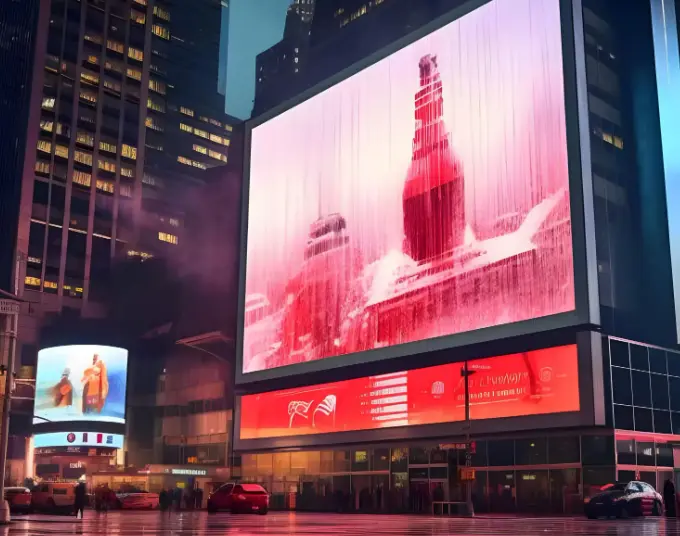
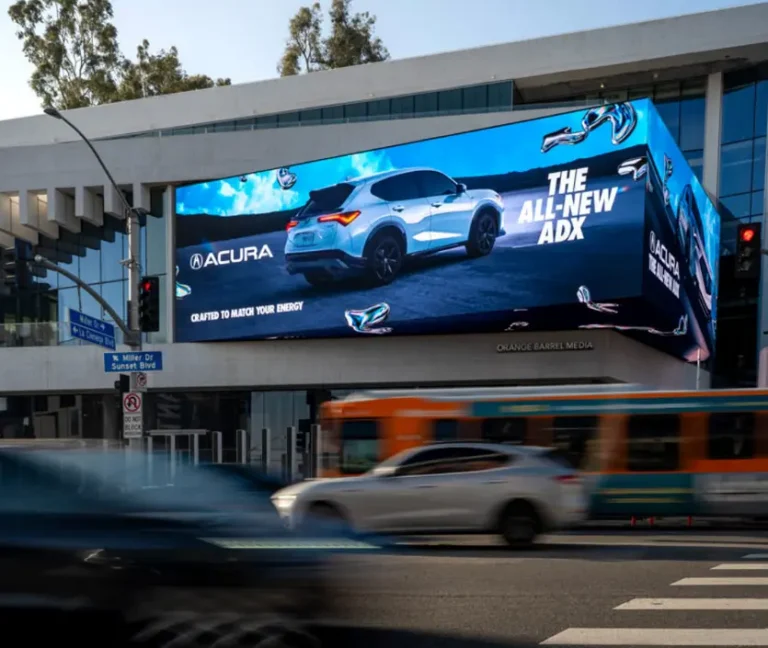
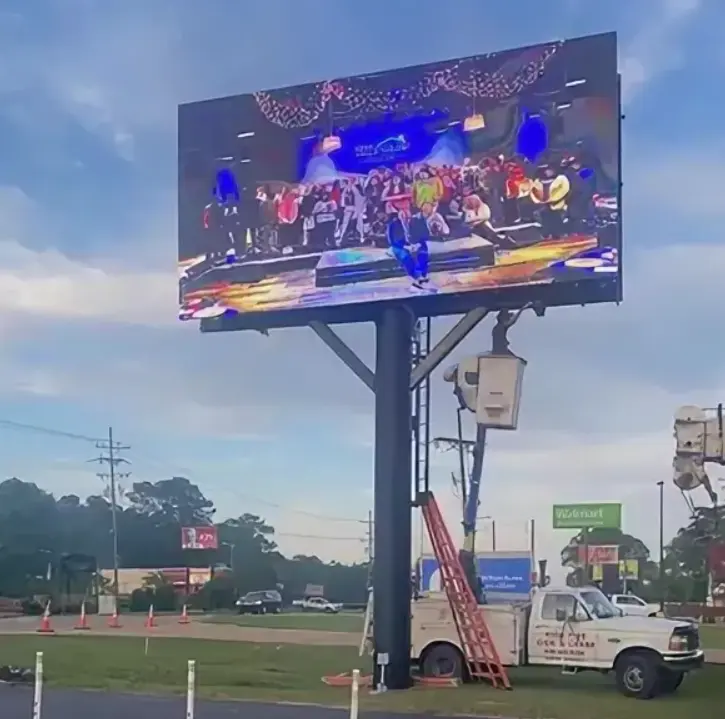
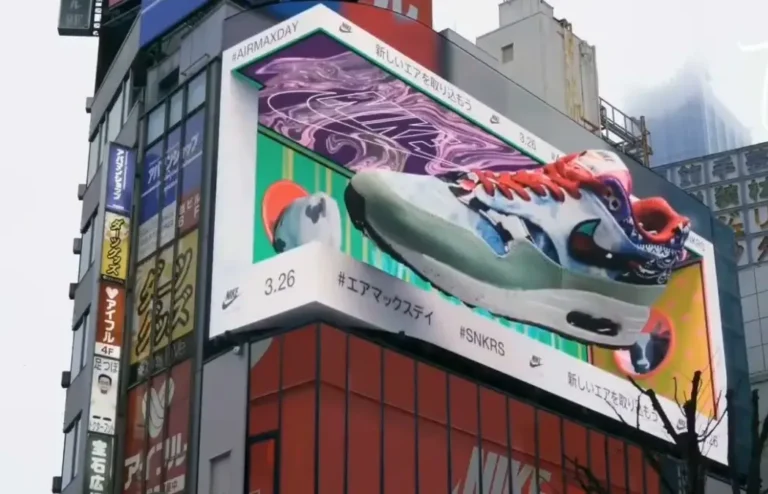
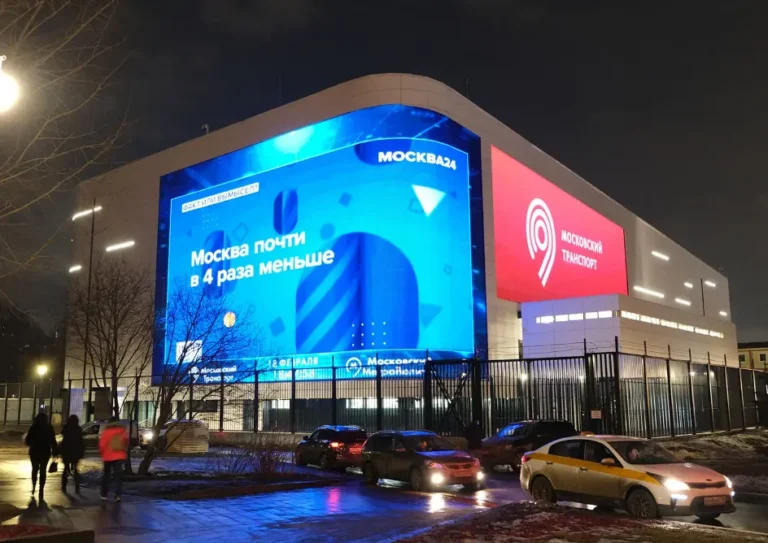
For corporate conferences, trade shows, concerts, product launches, sports events, and large-scale productions, Chicago LED wall rental is no longer simply about renting a large screen. The right solution depends on pixel pitch, viewing distance, brightness, screen size, camera requirements, rigging, power, installation labor, content processing, and the venue itself.
If you are comparing LED screen rental in Chicago or looking for a stage rental in Chicago, start with the production requirements rather than the screen size alone. A properly specified LED wall should match the audience distance, lighting environment, camera workflow, stage structure, and event schedule.
Why LED Wall Rental Is Growing Across Chicago Events
Chicago is a major market for corporate meetings, trade shows, exhibitions, concerts, sports events, product launches, and branded experiences. Large venues and event spaces create demand for display systems that can scale from a relatively compact stage backdrop to a large-format video wall.
Unlike projection, a professional LED wall produces its own light and can maintain strong visual impact in brightly illuminated environments. It is also modular, which means the same rental inventory can be configured into different widths, heights, aspect ratios, or creative shapes.
Typical applications include:
- Corporate conferences and keynote presentations
- Trade shows and exhibition booths
- Product launches
- Concerts and festivals
- Sports events and fan experiences
- Galas and award ceremonies
- Brand activations
- Church and entertainment productions
- Live streaming and IMAG
- Virtual production and XR environments
For Chicago projects, venue planning is also important. Depending on the location, the production team may need to coordinate delivery, load-in, labor, rigging, power, setup windows, and teardown with the venue or its approved service partners.
LED Wall vs. Stage Rental in Chicago: What Is the Difference?
The terms LED wall rental and stage rental are often used together, but they are not the same service.
An LED wall is the visual display system. A complete stage rental may include:
- Stage platforms or risers
- LED video walls
- Truss or ground support
- Stage lighting
- Audio systems
- Microphones
- Video processors
- Playback equipment
- Cabling and power distribution
- On-site technicians
- Setup and teardown
For a simple corporate presentation, you may only need an LED wall and basic technical support. For a concert or large production, the LED wall becomes one component of a much larger production system.
When requesting a quote, specify whether you need LED-only rental or a complete stage and AV production package.
How to Choose the Right LED Screen for a Chicago Event
The most important technical specification is not simply “resolution.” It is the relationship between pixel pitch, viewing distance, screen size, content, and camera requirements.
Pixel Pitch and Viewing Distance
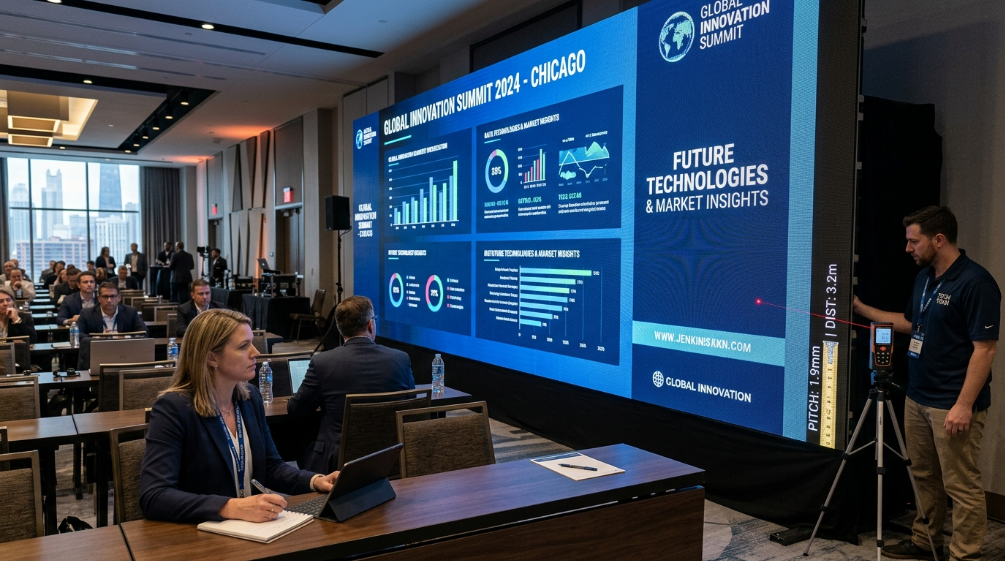
Pixel pitch is the distance between the centers of adjacent LED pixels, measured in millimeters.
A smaller pixel pitch provides higher pixel density and is generally better when the audience or cameras are close to the screen.
Typical rental configurations may include:
- P1.9–P2.6: close-viewing corporate events, premium stages, broadcast and camera-heavy applications
- P2.9: conferences, exhibitions, stage backdrops and medium-distance viewing
- P3.9: concerts, larger stages and applications where the audience is farther away
- Larger pitches: large outdoor viewing environments where long-distance visibility is the priority
There is no universal “best” pixel pitch. A P1.9 screen is not automatically a better choice than P3.9 if the audience is standing 30 or 50 feet away.
The practical question is:
How far will the closest important viewer or camera be from the LED wall?
That answer should drive the specification.
Indoor vs. Outdoor LED Screen Rental
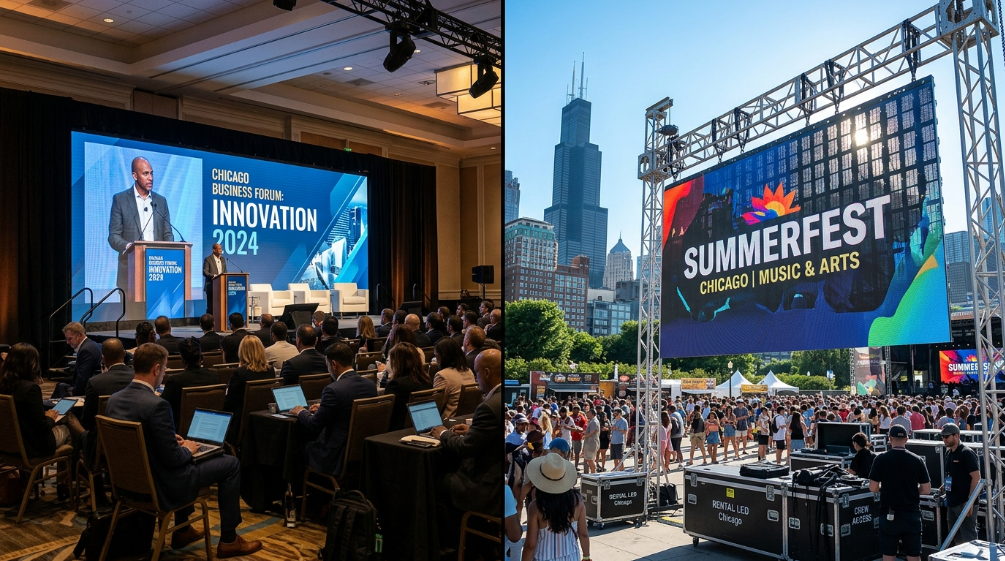
The environment changes the technical requirements.
Indoor LED Wall
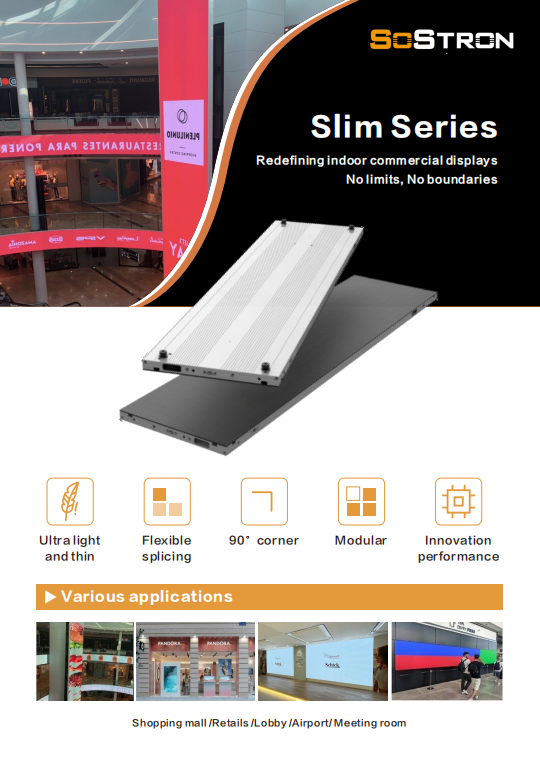
Indoor applications generally prioritize:
- Fine pixel pitch
- Moderate brightness
- High contrast
- Accurate color reproduction
- Quiet operation
- Lightweight cabinet design
- Camera performance
Ballrooms, conference halls, exhibition booths, theaters and indoor stages normally do not require the same brightness level as outdoor daytime applications.
Outdoor LED Screen
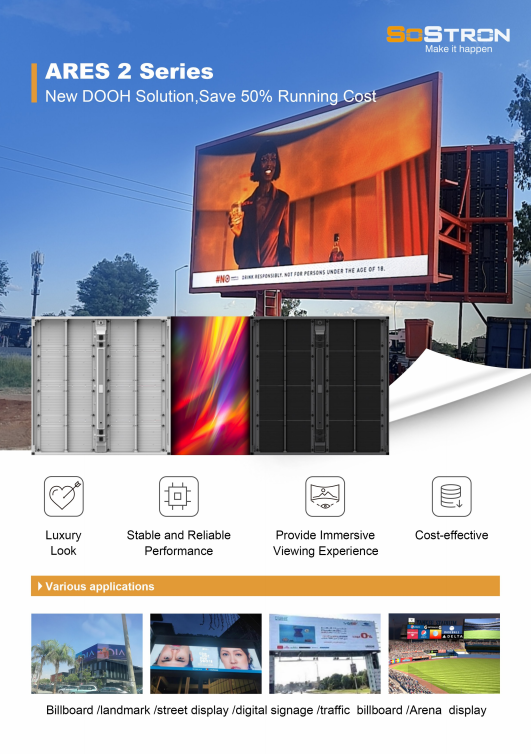
Outdoor applications require additional engineering considerations:
- Higher brightness
- Weather protection
- Dust and moisture resistance
- Temperature tolerance
- Wind exposure
- Structural support
- Weatherproof cable connections
- Safe power distribution
For outdoor daytime events, brightness becomes particularly important because ambient sunlight can reduce perceived contrast.
The screen should be specified according to the actual environment rather than selecting the highest possible brightness simply because it sounds better.
Refresh Rate, Cameras and Live Streaming
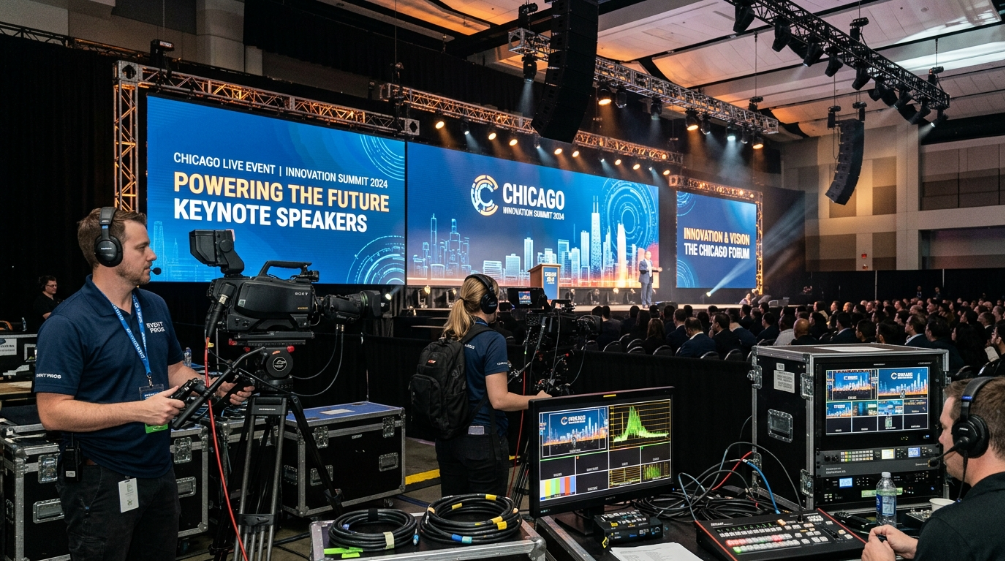
If the event will be filmed, livestreamed or displayed on large IMAG screens, camera compatibility should be part of the rental specification.
A professional rental LED wall may need:
- High refresh rate
- Stable PWM control
- Camera-friendly LED configuration
- Appropriate shutter-speed compatibility
- Low-latency signal processing
- Proper processor configuration
- Moiré reduction
For ordinary audience viewing, these specifications may not be immediately visible. Under a professional camera, however, poor synchronization or an unsuitable LED configuration can create scan lines, flicker or moiré patterns.
For concerts, corporate broadcasts and live productions, ask the rental company to confirm the screen’s refresh rate and camera performance, rather than evaluating image quality only with the naked eye.
How Much Does LED Wall Rental Cost in Chicago?
There is no reliable single Chicago-wide price for LED wall rental.
A professional quote may be calculated according to screen area, rental duration, equipment specification, labor and production requirements. Some providers advertise prices per square foot, while others use package pricing or project-based quotes.
The total cost can include:
| Cost Component | What It Covers |
|---|---|
| LED Panels | Screen size, pixel pitch and cabinet type |
| Video Processor | Signal scaling, switching and processing |
| Delivery | Transportation to and from the venue |
| Setup | Installation and screen assembly |
| Rigging | Truss, hanging hardware or ground support |
| Labor | Technicians and production crew |
| Operation | On-site technician during the event |
| Teardown | Screen dismantling and load-out |
| Content | Playback or content-production services |
| Venue Costs | Possible venue labor, power or access charges |
This is why two apparently similar “20 ft × 10 ft LED wall” quotes can have very different final prices.
When comparing vendors, compare the complete scope of work, not only the LED screen rate.
What Should Be Included in a Chicago LED Wall Rental Quote?
Before signing a rental agreement, ask for an itemized quote.
At minimum, confirm:
- Exact screen dimensions
- Pixel pitch
- Indoor or outdoor specification
- Brightness
- Refresh rate
- LED cabinet model
- Video processor
- Input and output connections
- Required power
- Rigging or ground support
- Delivery time
- Setup and testing time
- Teardown schedule
- On-site technician availability
- Backup or spare equipment
- Insurance and damage terms
Professional LED wall rental companies commonly combine the screen with processors, cabling, stands or rigging, crew, delivery, setup, operation and teardown. The exact package depends on the event.
LED Wall Rental for Chicago Trade Shows
Trade shows require a different approach from concerts.
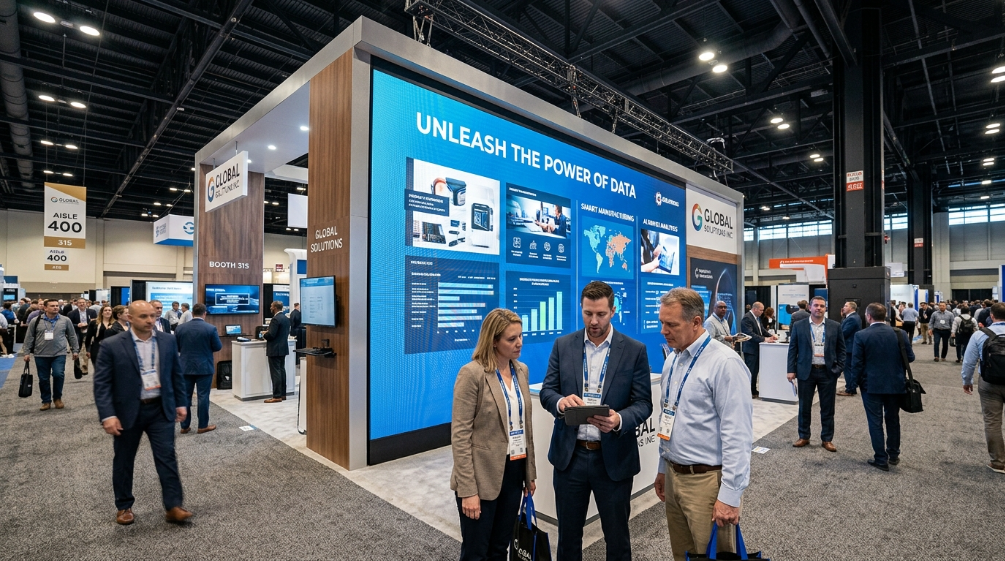
At a trade show, the LED wall may be installed inside an exhibition booth and used for:
- Product demonstrations
- Brand videos
- Product launch presentations
- Sponsor content
- Digital presentations
- Customer testimonials
- Social media content
- Interactive experiences
Chicago’s convention ecosystem makes this particularly relevant for exhibitors planning events around McCormick Place and other major exhibition venues.
For trade shows, confirm the booth dimensions and venue requirements before selecting the LED wall.
A 10 × 10 ft booth, for example, has very different structural and viewing-distance limitations from a 40 × 40 ft island exhibit.
The production team should also verify venue rules concerning electrical service, installation windows, approved labor and rigging.
LED Wall Rental for Concerts and Stage Productions
Concerts require more than a bright screen.
A professional stage LED system may need to work with:
- Main stage LED wall
- Side screens
- IMAG
- Camera feeds
- Playback servers
- Lighting systems
- Audio systems
- Stage automation
- Truss
- Ground support
For touring productions, cabinet weight also matters. Lightweight rental LED cabinets can reduce transportation requirements and structural loading.
Modern rental systems increasingly use lightweight cabinet materials and fast-lock mechanical systems to accelerate setup and teardown. Some premium systems are designed specifically for touring, XR and camera-heavy production environments.
Rigging and Structural Planning
One of the most overlooked parts of LED wall rental is structural planning.
A large LED wall can represent a substantial suspended or freestanding load. Before installation, determine whether the design uses:
- Hanging points
- Ground support
- Truss
- Stage roof
- Dedicated support structures
- Wall-mounted structures
The venue should confirm the allowable loading and available rigging points where applicable.
Do not treat rigging as a last-minute installation detail.
For large Chicago productions, the screen design, stage structure, rigging method, power distribution and installation schedule should be coordinated before equipment arrives at the venue.
Power and Signal Requirements
An LED wall is part of an electrical and video signal chain.
A typical system may look like:
Camera / Laptop / Playback Server → Video Processor → Receiving System → LED Cabinets
The rental provider should confirm:
- Input formats
- Resolution
- Frame rate
- Processor requirements
- Cable lengths
- Signal distribution
- Power requirements
- Circuit availability
- Backup signal options
For large installations, power distribution should be planned rather than improvised during load-in.
Chicago Venues and Local Logistics
When planning an LED screen rental in Chicago, the venue matters almost as much as the screen.
Potential event environments include:
- McCormick Place
- Navy Pier
- United Center
- Wintrust Arena
- Chicago Theatre
- Soldier Field
- Corporate conference venues
- Hotels and ballrooms
- Exhibition centers
- Production studios
Each venue may have different requirements for loading access, installation windows, power, rigging and labor.
Give the rental provider the exact venue name, event date, room, screen dimensions and desired setup time as early as possible.
This allows the production team to identify potential logistical problems before the event day.
How the LED Wall Installation Process Works
A professional rental workflow normally follows several stages.
1. Project Assessment
The provider confirms:
- Event type
- Venue
- Audience size
- Viewing distance
- Screen dimensions
- Indoor/outdoor environment
- Camera requirements
2. System Design
The team selects the appropriate:
- Pixel pitch
- Cabinet
- Processor
- Rigging method
- Power system
- Signal architecture
3. Site and Logistics Planning
The production team reviews:
- Load-in
- Setup window
- Rigging
- Power
- Access
- Stage dimensions
- Safety requirements
4. Installation and Testing
The LED panels are assembled, connected and calibrated. Signal sources are then tested before the audience enters the venue.
5. Event Operation
For large productions, an on-site technician may monitor the LED system and respond to signal or hardware issues.
6. Teardown
After the event, the LED wall is dismantled, packed and returned according to the agreed load-out schedule.
What Happens If an LED Panel Fails During the Event?
This question should be answered before the rental begins.
A professional rental plan should address:
- Spare modules
- Spare cabinets
- Backup power supplies
- Signal redundancy
- Technical support
- On-site replacement procedures
For a major corporate event or concert, the lowest rental quote is not necessarily the lowest-risk option.
A small difference in equipment cost can be insignificant compared with the cost of a failed main screen during a keynote, product launch or live performance.
When Should You Rent Instead of Buy an LED Wall?
Renting generally makes sense when:
- You have a one-time event
- Your screen size changes between events
- You need specialized equipment temporarily
- You do not want to store and maintain LED inventory
- You need technicians and production support
Buying may make more sense for:
- Event rental companies
- AV production companies
- Venues hosting frequent events
- Brands running recurring activations
- Organizations with permanent display requirements
If your company expects to use LED displays repeatedly, compare rental expenses against equipment ownership, storage, transportation, maintenance and depreciation.
Actionable Advice for Chicago LED Wall Buyers
Before requesting a quote, prepare a one-page project specification containing:
Event: Corporate / Trade Show / Concert / Sports / Other
Venue: Exact Chicago venue and room
Date: Event and installation dates
Screen Size: Width × Height
Viewing Distance: Closest and average audience distance
Environment: Indoor / Outdoor
Camera: Yes / No
Content: 16:9 / Custom / Live Camera / Playback
Rigging: Hanging / Ground Support / Unknown
Stage: LED Wall Only / Full Stage Rental
Technical Support: Required / Not Required
Then request an itemized quote.
Do not compare suppliers using price alone. Compare pixel pitch, brightness, refresh rate, processor, rigging, labor, delivery, technician support, backup equipment and venue logistics as one complete system.
That approach produces a much more meaningful comparison between Chicago LED wall rental providers.
Frequently Asked Questions About Chicago LED Wall Rental
What is the best pixel pitch for an LED wall rental in Chicago?
There is no universal answer. The correct pitch depends primarily on viewing distance, screen size, content and camera requirements. P2.9 and P3.9 are common event-production choices, while finer pitches may be preferred for close viewing and camera-intensive applications.
How much does an LED wall rental cost in Chicago?
Pricing depends on screen area, pixel pitch, rental duration, delivery, installation, rigging, technicians, venue requirements and other production services. Request an itemized quote instead of relying on a generic per-square-foot figure.
Can I rent an LED wall together with a stage?
Yes. A complete stage production package may combine LED walls with staging, truss, lighting, audio, power distribution and technical operators.
Do outdoor LED walls need to be waterproof?
Outdoor systems should be designed for the environmental conditions of the installation, including moisture, dust, temperature and sunlight. Confirm the manufacturer’s environmental rating and the rental provider’s outdoor operating procedures.
Do I need a technician for my LED wall rental?
For a small static presentation, professional operation may not always be necessary. For concerts, conferences, live streaming, IMAG and complex multi-source productions, an on-site technician is strongly recommended.
Can LED walls be curved?
Many modern rental LED systems support concave or convex configurations using specialized mechanical connections. Curved designs should be specified during the engineering stage rather than improvised during installation.
Can LED walls be used for live streaming?
Yes. Camera-facing LED systems can be integrated into live production workflows, but refresh rate, PWM behavior, processor settings, pixel pitch and moiré performance should be evaluated before the event.
Final Takeaway
The right Chicago LED wall rental is not simply the biggest screen at the lowest price.
For a successful event, the LED system must match the viewing distance, pixel pitch, brightness, camera workflow, venue restrictions, rigging method, power requirements and production schedule.
If your requirement is only a visual backdrop, an LED wall rental may be enough. If you are producing a concert, corporate keynote, trade show or large-scale activation, consider the complete system: LED + processing + stage + rigging + power + technical crew.
For procurement teams, the safest strategy is simple: define the production requirements first, request an itemized quote second, and compare the complete technical scope rather than the headline rental price.
References:
OSHA Subpart S – Electrical Standard eTool