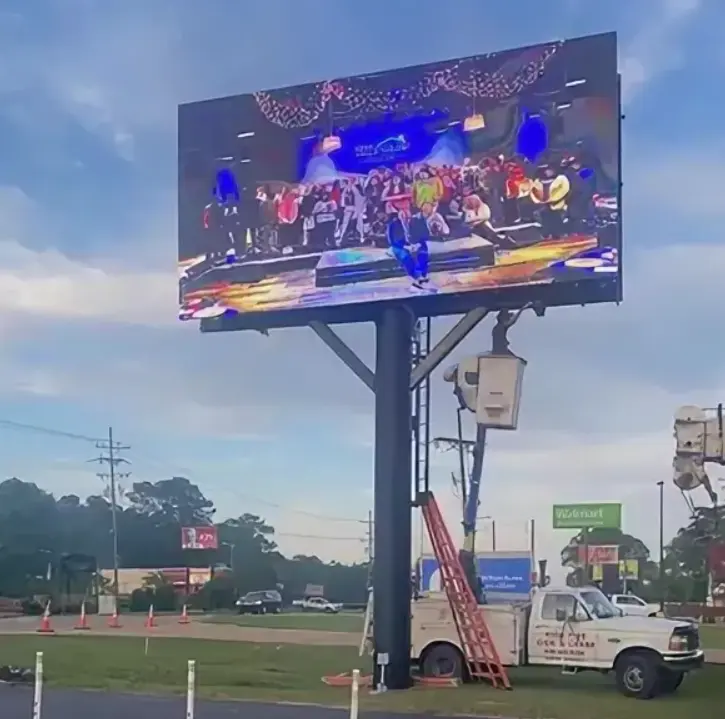
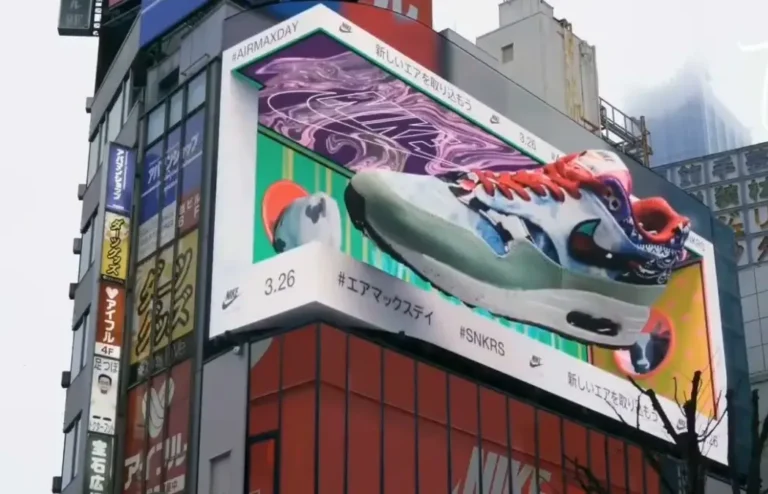
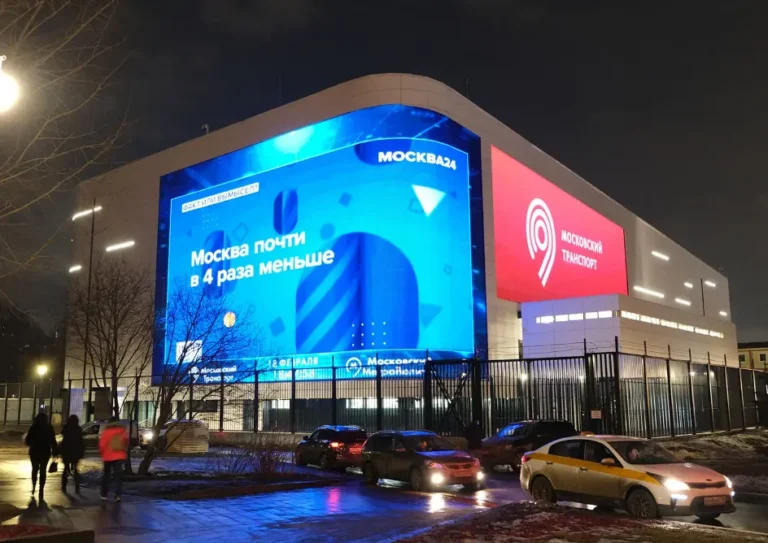
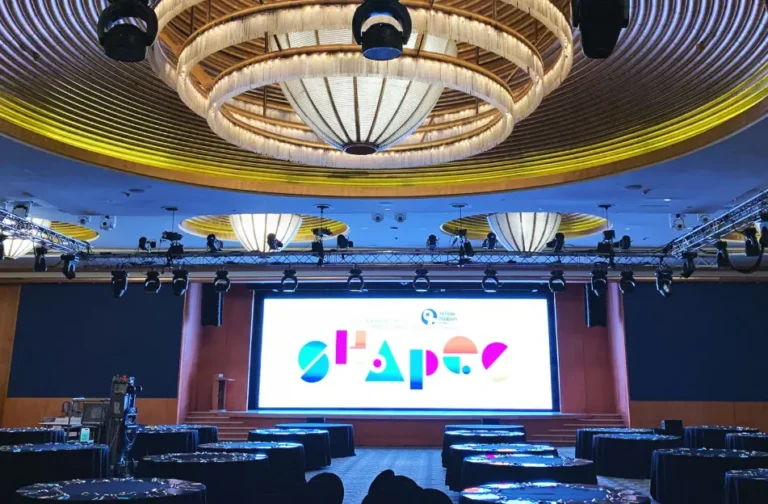
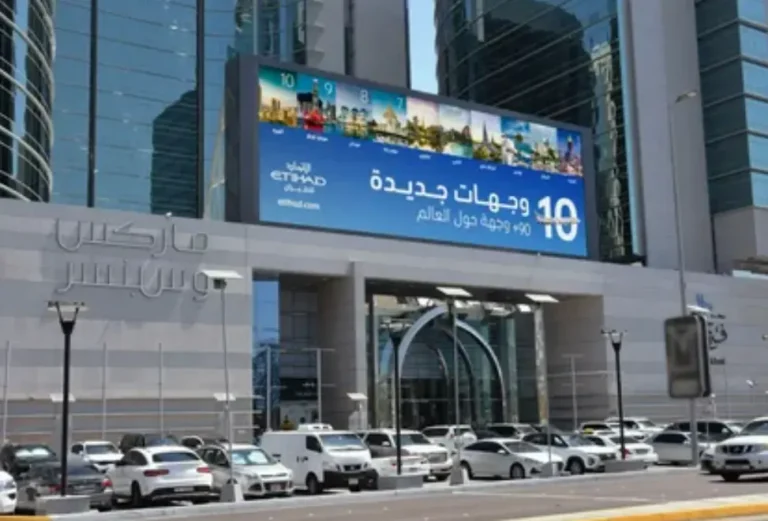
A creative LED display is the right solution when a standard rectangular LED wall cannot deliver the required shape, viewing experience, or architectural integration. For B2B LED projects, the key is not simply choosing the most unusual screen. The right Creative LED display solution must match the physical shape, pixel pitch, viewing distance, brightness, content mapping, structural design, installation environment, and total project budget.
| Project Requirement | Recommended Creative LED Solution |
|---|---|
| Curved wall or stage | Flexible or curved LED display |
| 360° visual experience | Sphere or cylindrical LED display |
| Retail window | Transparent LED display |
| Brand sculpture | Custom-shaped LED display |
| Interactive experience | Floor LED display with sensors |
| Outdoor landmark advertising | 3D / anamorphic LED display |
| Immersive entertainment | Curved, dome, floor or multi-surface LED |
The important point for buyers is that LED creative display price depends on much more than screen area. Shape complexity, pixel pitch, structural engineering, control systems, content production, installation and environmental requirements can all change the final project cost.
What Is a Creative LED Display?
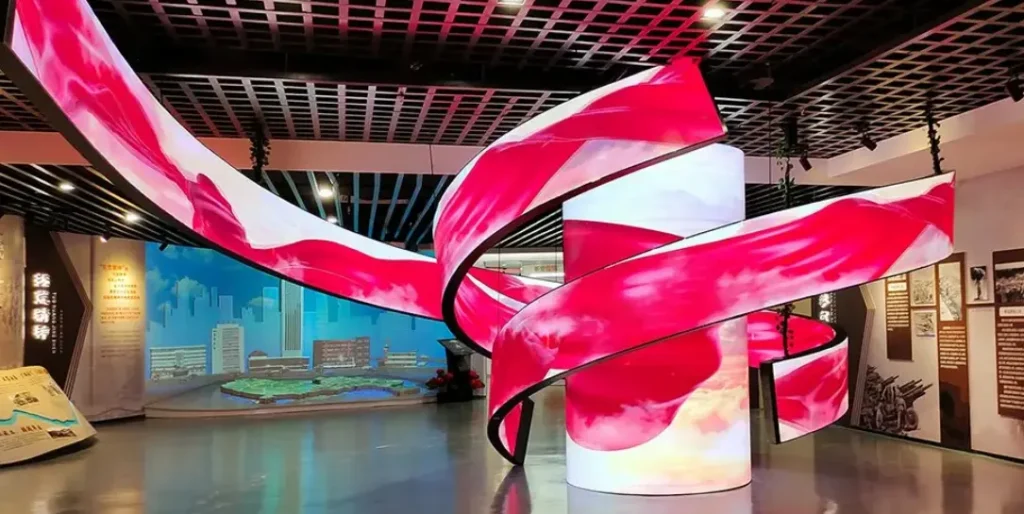
A creative LED display is an LED video system designed to go beyond the conventional flat rectangular screen. Depending on the project, the display can be curved, flexible, cylindrical, spherical, cube-shaped, transparent, interactive or completely custom-made.
Unlike standard LED video walls, creative LED systems are normally designed around the installation rather than selected entirely from a fixed product catalog. The display geometry, cabinet design, LED modules, supporting structure and content mapping may all need to be considered together.
This makes creative LED displays particularly useful for retail environments, museums, exhibitions, entertainment venues, architectural projects, brand activations and landmark advertising. Industry competitors increasingly position creative LED as a combination of display technology, structural engineering and content design, rather than simply a different type of LED panel.
Creative LED Display vs. Traditional LED Display
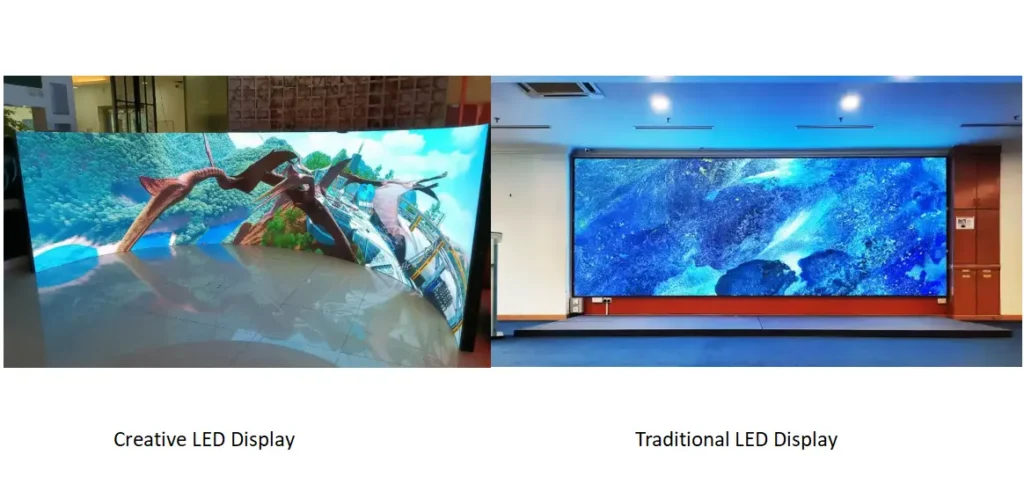
The main difference is not image quality alone. It is the degree to which the display can become part of the physical environment.
| Factor | Traditional LED Display | Creative LED Display |
|---|---|---|
| Shape | Mainly rectangular | Curved, circular, spherical, irregular or custom |
| Cabinet | Standardized | Standard, flexible or custom |
| Installation | Relatively standardized | Often project-specific |
| Content | Conventional video | May require pixel mapping |
| Structural design | Usually simpler | May require custom engineering |
| Customization | Limited | High |
| Project cost | More predictable | More variable |
| Typical objective | Information and advertising | Branding, immersion and visual differentiation |
For a simple commercial video wall, a standard LED display is usually the more economical choice. Creative LED becomes more valuable when the physical form itself contributes to the customer experience.
Major Types of Creative LED Displays
Creative LED technology covers a broad range of display formats. The best option depends on the application, viewing distance and required visual effect.
Flexible and Curved LED Displays
Flexible LED modules use bendable substrates and can conform to curved structures. They are commonly used for columns, concave or convex walls, stage designs, exhibition structures and artistic installations.
Flexible LED is particularly useful when the project requires a smooth radius rather than a conventional 90-degree cabinet structure. However, the minimum bending radius, module protection and mounting method should be confirmed before production.
Spherical LED Displays
A spherical LED display provides visual content across a three-dimensional globe-like surface. It is suitable for shopping malls, museums, science centers, exhibitions, visitor centers and brand installations.
Because the display surface is curved in multiple directions, spherical projects require accurate cabinet or module placement and content mapping. Structural engineering is equally important for large-diameter installations.
Cube and Multi-Sided LED Displays
Cube LED displays combine several LED surfaces into one three-dimensional structure. They can provide multiple viewing directions and are particularly effective in retail, exhibitions, trade shows, showrooms and commercial interiors.
For permanent installations, buyers should consider how the cabinet corners, service access and cable routing will be handled rather than evaluating only the visual appearance.
Cylindrical and Ring LED Displays
Cylindrical LED displays can wrap around columns or other circular structures, while ring-shaped displays create a distinctive architectural or stage element.
These formats can provide near-360-degree visibility and are useful where audiences move around the display rather than viewing it from one fixed direction.
Transparent LED Displays
Transparent LED displays combine digital content with visibility through the screen. They are particularly useful for retail storefronts, glass façades, automotive showrooms and commercial buildings.
For these projects, buyers should evaluate transparency, brightness, viewing distance, mounting structure and daylight conditions together. SoStron’s transparent LED solutions, for example, are positioned for retail windows and glass applications where preserving visibility and natural light is important.
Interactive Floor LED Displays
Floor LED displays turn the floor itself into a visual surface. With appropriate sensors or interactive systems, they can respond to visitor movement and create immersive experiences.
These systems require more than a conventional LED module. Load capacity, surface protection, anti-slip performance, waterproofing, leveling and maintenance access all need to be considered during specification.
Custom-Shaped and Freeform LED Displays
When a project requires a logo, mascot, product replica, architectural shape or artistic sculpture, a fully custom LED display may be appropriate.
Depending on the geometry, manufacturers may use standard modules, flexible modules, custom PCB layouts or a combination of technologies. The more complicated the geometry becomes, the more important it is to evaluate manufacturability, serviceability and content mapping before production.
How to Choose the Right Pixel Pitch
Pixel pitch is one of the most important technical specifications for a creative LED display.
The correct pitch should be selected according to viewing distance, not simply because a smaller number sounds better.
For example:
- P1.5–P2.5: close-viewing indoor applications and fine-detail installations
- P2.5–P4: retail, exhibitions, stages and medium viewing distances
- P4–P6: larger installations and longer viewing distances
- P6–P10+: large outdoor displays where viewers are farther away
A smaller pixel pitch increases pixel density and can improve image detail, but it normally increases the LED display price as well. For B2B procurement, the goal should be to achieve the required visual performance without paying for resolution that the audience cannot actually perceive.
Brightness, Refresh Rate and Environmental Protection
Brightness should be selected according to ambient lighting rather than treated as a simple “higher is better” specification.
Indoor creative LED displays generally require substantially less brightness than outdoor screens exposed to direct sunlight. Outdoor projects also need appropriate weather protection and structural design.
Refresh rate becomes particularly important when the display will be filmed by professional cameras. Stage, broadcast and XR applications may require high refresh rates and camera-friendly LED configurations to reduce scan lines and flicker.
For outdoor creative LED projects, the IP rating should also be evaluated together with cabinet construction, drainage, connectors and the actual installation environment.
Why Content Mapping Matters
Creative LED hardware alone does not guarantee a successful visual result.
A flat LED wall normally receives conventional rectangular video. A sphere, cylinder, cube or irregular LED surface may require a completely different pixel map.
The workflow can therefore be understood as:
Physical Shape → Pixel Arrangement → Content Mapping → Media Server → LED Controller → Display
For a 3D or irregular installation, the content creator needs to understand the actual display geometry and pixel coordinates. This is why creative LED projects often require cooperation between the LED manufacturer, structural engineer, system integrator and content team.
Content mapping is especially important for spherical displays, multi-sided structures and anamorphic 3D installations. Custom LED competitors increasingly identify mapping and software integration as part of the engineering scope rather than an optional afterthought.
Creative LED Display Price: What Does It Cost?
There is no single fixed creative LED display price because customized projects can vary significantly in complexity.
As a practical budgeting framework, buyers should separate the project into several cost components:
| Cost Component | What Affects the Price |
|---|---|
| LED modules/panels | Pixel pitch, LED technology and quality |
| Cabinet/shape | Standard, flexible or custom fabrication |
| Structural system | Steel frame, mounting and load requirements |
| Control system | Sending cards, processors and media servers |
| Content | Standard video, interactive content or 3D mapping |
| Installation | Site conditions and labor requirements |
| Environmental protection | Indoor, semi-outdoor or outdoor specifications |
| Maintenance | Spare modules, accessibility and service contracts |
Published industry pricing examples show that creative LED formats can range from relatively compact cube or curved systems to much more expensive spherical, ring and fully customized installations. One recent industry pricing guide, for example, lists cube displays at roughly $800–$4,000 per unit and sphere displays at roughly $3,000–$15,000, while larger custom projects are generally quotation-based. These figures should be treated as budgeting references rather than universal market prices.
For larger B2B projects, the panel price may represent only part of the total investment. Structural engineering, installation, content production, control equipment and commissioning can materially affect the final quotation.
How to Reduce Creative LED Project Costs
A creative design does not necessarily need to become an unnecessarily expensive project.
The most effective approach is to optimize the system during the design stage.
First, select the pixel pitch according to viewing distance. Avoid specifying ultra-fine pitch when the audience is several meters away.
Second, simplify the geometry where possible. A standardized curved structure may be considerably easier to manufacture and maintain than a completely freeform cabinet.
Third, consider serviceability before production. A beautiful screen that requires major disassembly for a single module replacement can create unnecessary long-term costs.
Finally, define the content requirement early. If the screen requires interactive or anamorphic 3D content, this should be considered in the system design and budget from the beginning.
Where Are Creative LED Displays Used?
Creative LED solutions are now used across multiple B2B environments.
Retail and Shopping Malls
Creative LED can become part of the store architecture rather than simply functioning as an advertising screen. Sphere, cube, curved and transparent displays are commonly considered for flagship stores, atriums and brand activation spaces.
Exhibitions and Trade Shows
Custom-shaped LED screens can create a strong visual centerpiece in a crowded exhibition environment. Portable or modular creative LED systems can also be designed for repeated deployment.
Stage and Entertainment
Concerts, theatres and live events use curved, flexible, floor and multi-surface LED systems to create dynamic stage environments. Rental-oriented creative LED solutions need to balance visual flexibility with fast assembly and transportation.
Museums and Cultural Spaces
Museums can use spherical, curved, floor and interactive LED displays to create immersive educational environments. Here, image quality, viewing distance, interactive performance and maintenance access are particularly important.
Architecture and Public Spaces
Creative LED can be integrated into building façades, columns, landmarks and public installations. Outdoor projects require special attention to brightness, weather protection, structural loading and long-term maintenance.
Creative LED Display Procurement Checklist
Before requesting a quotation from a manufacturer, prepare the following information:
- Required screen shape
- Overall dimensions or diameter
- Indoor or outdoor environment
- Viewing distance
- Viewing angle
- Desired pixel pitch
- Required brightness
- Refresh rate requirements
- Waterproofing/IP requirements
- Installation method
- Content type
- Interactive requirements
- Estimated quantity
- Destination country
- Target budget
- Required delivery date
Providing these specifications allows the supplier to recommend a realistic configuration instead of simply sending a generic LED panel price.
How to Choose a Creative LED Display Manufacturer
A creative LED display supplier should be evaluated on more than product appearance.
Look for evidence of:
- Relevant project experience — especially projects with similar shapes and dimensions.
- Engineering capability — structural design and custom cabinet development matter for complex installations.
- Manufacturing capability — customized components require consistent production and quality control.
- Content and control integration — confirm compatibility with the intended media server and controller ecosystem.
- Serviceability — ask how modules, power supplies and receiving cards can be replaced.
- After-sales support — confirm warranty, spare parts and technical assistance before placing the order.
The best creative LED manufacturer is not necessarily the company offering the lowest panel price. It is the supplier that can make the entire system work reliably after installation.
Why Choose SoStron for Creative LED Display Solutions?
SoStron provides commercial LED display products and customized solutions for retail, entertainment, outdoor advertising, exhibitions and other professional applications. Its product portfolio includes indoor, outdoor, rental, transparent, fine-pitch and creative LED display solutions, allowing projects to be configured around different application and engineering requirements.
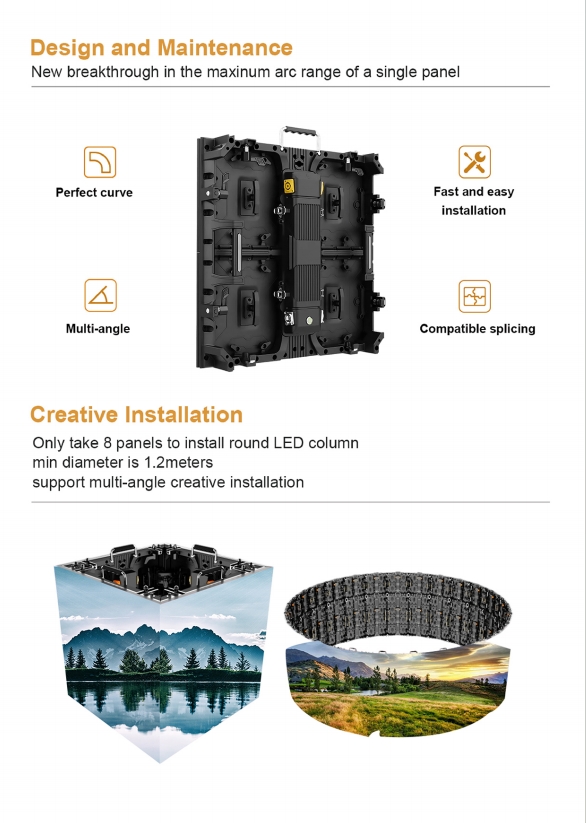
For projects that require curved or creative configurations, SoStron’s sPad Pro 2 flexible arc rental LED display is one relevant option, while its broader product portfolio provides additional choices for indoor, outdoor and rental applications.
If you are planning a creative LED project, send the required shape, dimensions, viewing distance, installation environment and target application. These details provide a much better starting point for an accurate LED display specification and quotation than requesting a price based only on square meters.
References:
The Volume: How “The Mandalorian” Revolutionized Filmmaking
8 Essential Tips for a Successful LED Display Installation