The Short Answer Before the Deep Dive
Most buyers waste time comparing specs that don’t matter for their use case. Here’s the decision in two sentences:
If your display lives outdoors or in a bright environment, needs to be larger than 100 inches, or runs 24/7 for years — choose direct-view LED. If you need sharp text and fine detail at close range indoors, LCD wins on resolution and cost. DLP is the right call when you need large-format projection in a controlled, dim environment.
Everything below explains why — with the data to back it up.
What Are DLP, LCD, and LED?
These three terms describe fundamentally different approaches to creating a visible image. Understanding the mechanism matters because it directly determines where each technology succeeds and fails.
DLP (Digital Light Processing) was developed by Texas Instruments and uses a chip covered in millions of microscopic mirrors — called a Digital Micromirror Device (DMD). Each mirror represents one pixel and tilts toward or away from the light source thousands of times per second to control brightness. A spinning color wheel (in single-chip models) or three separate DMD chips (in high-end models) handle color. DLP is almost exclusively used in projectors.
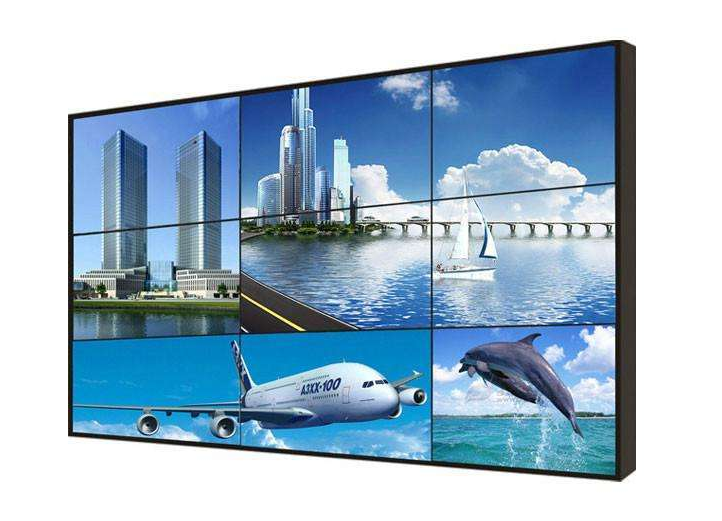
LCD (Liquid Crystal Display) works by shining a backlight through a layer of liquid crystals that can be electrically manipulated to block or pass light. The crystals themselves don’t emit light — they modulate it. Modern LCD displays use LED backlighting (replacing older CCFL tubes), which is why “LED TV” and “LCD TV” are often used interchangeably in consumer marketing. They are the same panel type with different light sources.
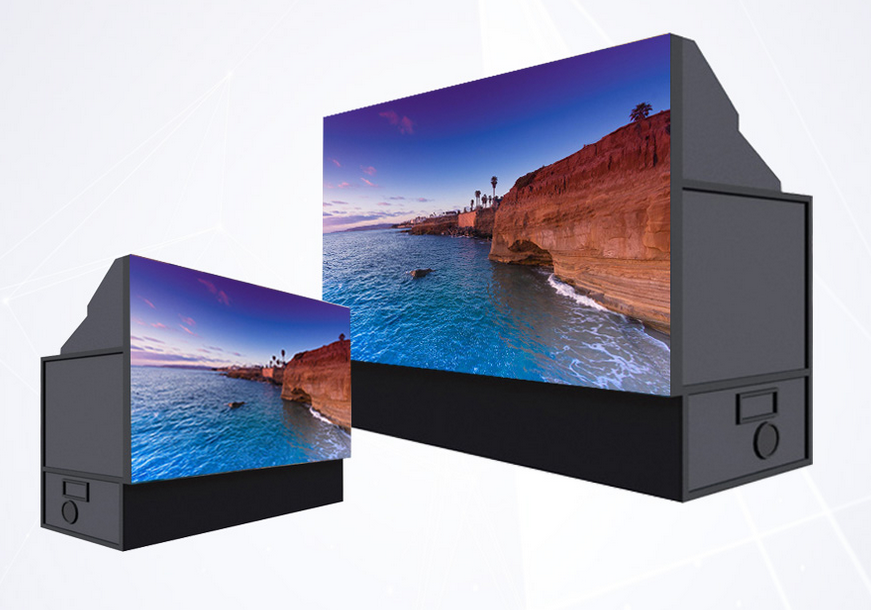
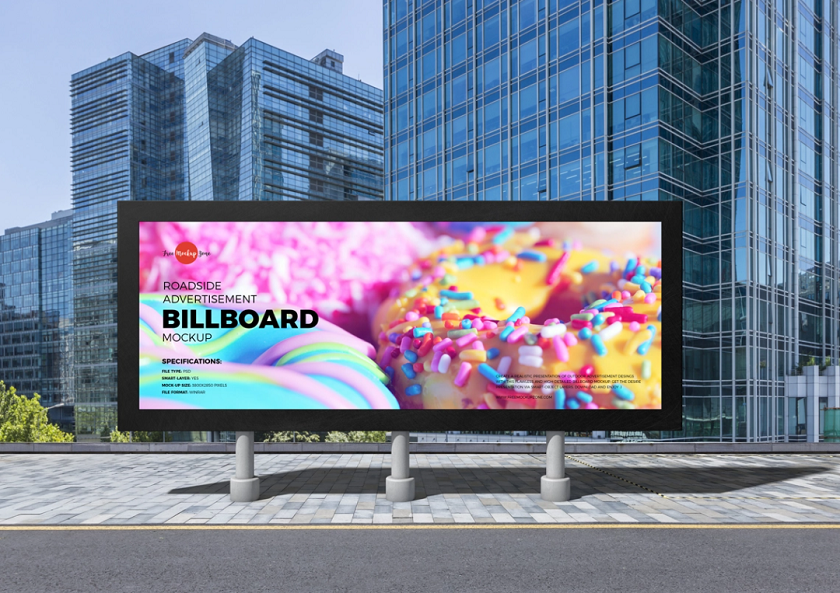
LED (Light-Emitting Diode) in the context of direct-view displays means each pixel is made up of actual LED chips that emit their own light — no backlight, no liquid crystals. This is the technology behind outdoor billboards, sports arena screens, and large-format video walls. It’s a fundamentally different architecture from LCD, despite the naming overlap.
Head-to-Head Comparison: The Dimensions That Matter
Brightness
| Technology | Typical Brightness | Outdoor Viable? |
|---|---|---|
| LCD (commercial high-bright) | 1,000–2,000 nits | No (needs 3,000+ nits) |
| LCD (specialized outdoor) | Up to ~3,000 nits | Marginal |
| Direct-view LED | 4,000–4,500+ nits | Yes |
| DLP projector | 2,000–50,000+ lumens* | Controlled environments only |
*Projector brightness is measured in lumens, not nits — not directly comparable to flat panel specs.
Direct-view LED delivers 2–3× the brightness of high-brightness LCD at comparable power draw. For any application where sunlight readability matters, the 3,000–5,000 nit threshold is the practical cutoff — and only LED clears it reliably.
Contrast and Image Quality
DLP produces the deepest blacks among projection technologies, with contrast ratios reaching 10,000:1 on modern single-chip units. This makes it the preferred choice for home cinema and gaming in dark rooms.
LCD offers high color accuracy and pixel density — the best choice for fine text, detailed graphics, and close-range viewing. The weakness is contrast: LCD panels struggle with true blacks because the backlight bleeds through even when pixels are “off.” Local dimming (splitting the backlight into zones) helps, but doesn’t fully solve it.
Direct-view LED achieves strong uniformity and wide viewing angles because each pixel is self-emitting. However, larger pixel pitch (the gap between LED clusters) creates a visible “screen door” effect at close viewing distances. At P2.5mm pitch and beyond, this becomes noticeable under 3–4 meters.
Lifespan and Maintenance
| Technology | Rated Lifespan | Key Maintenance Factor |
|---|---|---|
| DLP (lamp-based) | 1,000–5,000 hours | Lamp replacement every 1–3 years |
| DLP (laser-illuminated) | 20,000–30,000 hours | Minimal |
| LCD (commercial) | ~50,000 hours | Panel replacement at end of life |
| Direct-view LED | ~100,000 hours | Module hot-swap; no full replacement |
The shift to laser-illuminated DLP projectors — now mainstream in education and enterprise in 2026 — has largely eliminated the lamp replacement problem that made DLP expensive to operate. LED’s 100,000-hour rating remains the benchmark for long-term deployments.
Cost Structure
| Technology | Upfront Cost | Long-term Cost | Best TCO Scenario |
|---|---|---|---|
| DLP (lamp) | Low–Moderate | High (lamp cycles) | Short-term or low-usage |
| DLP (laser) | Moderate–High | Low | Medium-term, frequent use |
| LCD | Low–Moderate | Moderate | Indoor, 3–5 year cycle |
| Direct-view LED | High | Low | Outdoor, 24/7, 7–10 year horizon |
LED’s higher upfront cost is offset by its lifespan advantage. For a 24/7 outdoor installation running 10 years, LED’s total cost of ownership typically beats LCD despite the higher purchase price — primarily because LED modules can be hot-swapped individually rather than replacing the entire panel.
The DLP Rainbow Effect
This is a real limitation worth calling out explicitly. Single-chip DLP projectors use a spinning color wheel that cycles through red, green, and blue in rapid sequence. Some viewers — estimates range from 5–15% of the population — perceive brief flashes of color fringing, particularly during high-contrast scenes or fast eye movements. This is called the “rainbow effect.”
Three-chip DLP projectors (used in cinema and high-end commercial installations) eliminate this entirely. LCD and LED displays have no equivalent artifact.
If you or your audience is sensitive to this, avoid single-chip DLP for extended viewing sessions.
Where Each Technology Is Used in 2026
DLP Applications
- Home theater projectors — the dominant technology for dark-room cinema setups
- Classroom and corporate projectors — laser DLP has largely replaced lamp-based units in new installations
- Large-venue projection — concerts, conferences, and auditoriums where screen sizes exceed what flat panels can achieve
- 3D printing — DLP projection cures liquid photosensitive resin layer by layer, a separate but significant application
LCD Applications
- Consumer TVs and monitors — the volume leader; Mini-LED LCD is the 2026 mainstream premium tier
- Digital signage (indoor) — retail displays, menu boards, hotel lobbies, corporate lobbies
- Automotive displays — dashboard clusters, infotainment systems, rear-seat entertainment
- Medical imaging — high-resolution diagnostic displays where color accuracy is critical
- Mobile devices — smartphones and tablets (though OLED is gaining share in premium segments)
Direct-View LED Applications
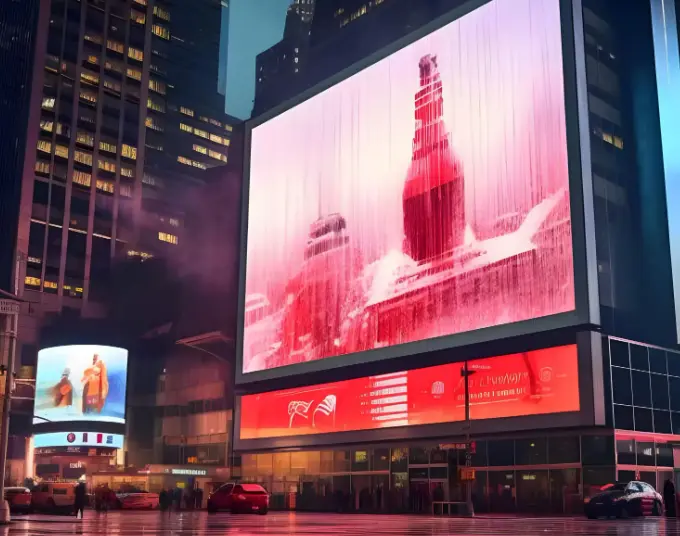
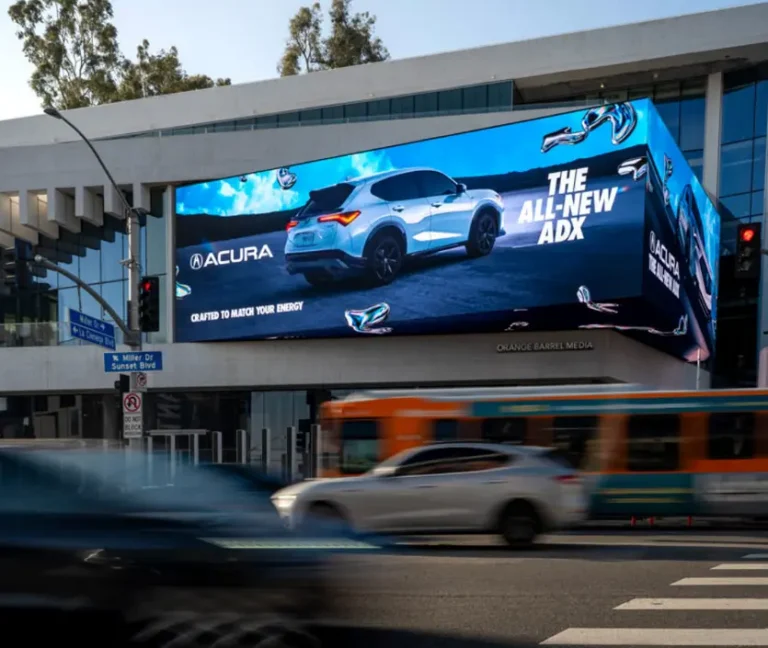
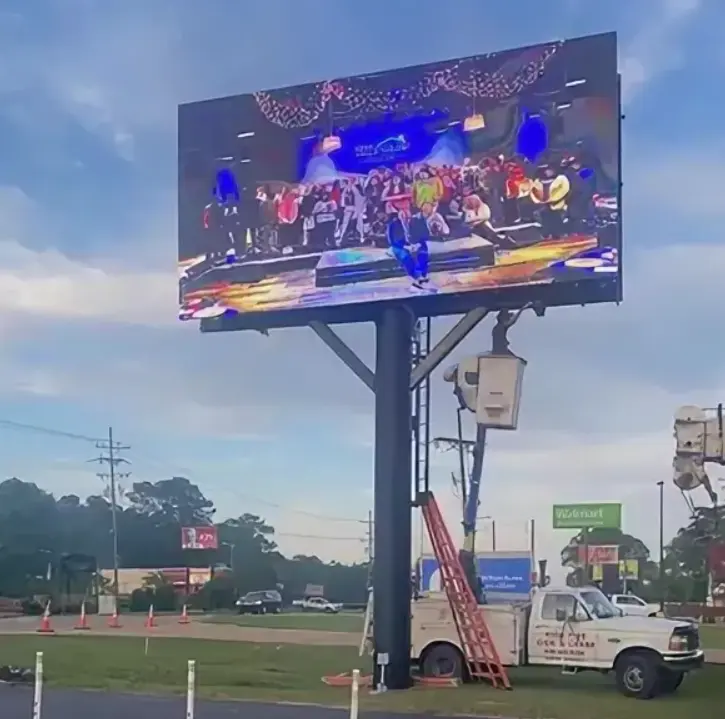
- Outdoor billboards and DOOH — the primary application; only technology that handles direct sunlight
- Sports arenas and stadiums — perimeter boards, scoreboards, large video walls
- Stage and live events — backdrop screens, floor displays, immersive environments
- Broadcast and XR virtual production — LED volumes replacing green screens in film and TV production
- Retail flagship stores — large-format brand installations where visual impact justifies the cost
Decision Framework: Which One Is Right for You?
Work through these four questions in order:
1. Where does the display live?
- Outdoors or in direct sunlight → LED only
- Indoors, controlled lighting → LCD or DLP both viable
2. How large does it need to be?
- Under 100 inches → LCD is practical and cost-effective
- 100 inches and above → LED (tiled modules scale to any size); DLP projection also viable if the room allows
3. What are you displaying?
- Fine text, detailed graphics, close-range viewing → LCD (highest pixel density)
- High-contrast video, cinema, gaming in dark rooms → DLP
- Dynamic video, advertising, large-format impact → LED
4. What’s your time horizon?
- Short-term (1–3 years) or low-usage → DLP lamp or LCD
- Long-term (5–10 years), 24/7 operation → LED (lowest TCO)
Summary Decision Table
| Use Case | Recommended | Why |
|---|---|---|
| Outdoor billboard | LED | Only option above 3,000 nits |
| Home cinema (dark room) | DLP | Best contrast, deep blacks |
| Corporate lobby signage | LCD | Sharp detail, cost-effective |
| Stadium / arena video wall | LED | Scale, brightness, durability |
| Classroom projector | Laser DLP | Brightness, low maintenance |
| Retail window display | LED | Sunlight readability |
| Restaurant menu board | LCD | Fine text, close viewing |
| Live event backdrop | LED | Modular, high brightness |
| Trade show booth | LCD | Controlled indoor lighting |
| 24/7 transit display | LED | 100,000-hr lifespan, IP-rated |
2026 Technology Trends Worth Knowing
Mini-LED LCD is closing the contrast gap. Modern Mini-LED panels from Samsung, LG, and Sony now feature 1,000–2,304+ local dimming zones, dramatically improving black levels. This narrows LED’s contrast advantage for indoor applications.
Laser DLP has replaced lamp-based projectors in most new commercial installations. The 20,000–30,000 hour laser lifespan eliminates the recurring lamp cost that made DLP expensive to operate. If you’re evaluating DLP for a new installation in 2026, specify laser illumination.
COB (Chip-on-Board) LED is pushing pixel pitches below P1.0mm. This brings direct-view LED into close-range viewing territory previously dominated by LCD — relevant for control rooms, broadcast studios, and high-end retail.
OLED is pressuring LCD in premium monitors and TVs but remains too expensive and burn-in-prone for most commercial signage applications.
Key Insights
- DLP uses microscopic mirrors to reflect light and produce images; it is primarily a projection technology, not a flat-panel display.
- LCD displays use a backlight shining through liquid crystals; “LED TV” and “LCD TV” refer to the same panel type with LED backlighting.
- Direct-view LED displays are self-emitting — each pixel contains actual LED chips — making them fundamentally different from LED-backlit LCD.
- Direct-view LED achieves 4,000–4,500+ nits of brightness, 2–3× higher than commercial LCD panels, making it the only viable technology for outdoor and sunlit environments.
- LCD offers the highest pixel density and color accuracy for close-range indoor viewing, with native 4K resolution available at standard commercial sizes.
- DLP projectors produce the highest contrast ratios among projection technologies, making them the preferred choice for home cinema and gaming in dark rooms.
- Direct-view LED has a rated lifespan of ~100,000 hours, approximately double that of commercial LCD panels.
- In 2026, laser-illuminated DLP and Mini-LED LCD are the two fastest-growing segments, with laser DLP replacing lamp-based projectors in most new commercial installations.
- The total cost of ownership for direct-view LED typically beats LCD for outdoor or 24/7 deployments over a 7–10 year horizon, despite higher upfront costs.
Frequently Asked Questions
Is LED better than LCD? For outdoor use, large-format installations, and long-term 24/7 deployments — yes. For close-range indoor viewing where fine text and 4K resolution matter, LCD is often the better choice at lower cost.
What is the rainbow effect in DLP? A visual artifact in single-chip DLP projectors where some viewers perceive brief flashes of color fringing during high-contrast scenes. It affects an estimated 5–15% of viewers. Three-chip DLP and LCD/LED displays do not have this issue.
Can LED replace LCD for indoor signage? Yes, and it’s increasingly common for large-format indoor installations. Sub-P2mm COB LED panels now deliver sufficient pixel density for close-range viewing. The trade-off is cost — LED remains more expensive per square meter than LCD for standard indoor sizes.
What does “LED TV” actually mean? An LED TV is an LCD TV with LED backlighting. The panel is still liquid crystal; the LED refers to the backlight source. True direct-view LED TVs (like Samsung’s MicroLED) are a separate, much more expensive product category.
Which technology is best for a conference room? Laser DLP projector for rooms where a large projected image is needed. LCD flat panel for rooms where a permanent wall-mounted display is preferred. Direct-view LED for flagship boardrooms or large spaces where visual impact justifies the investment.