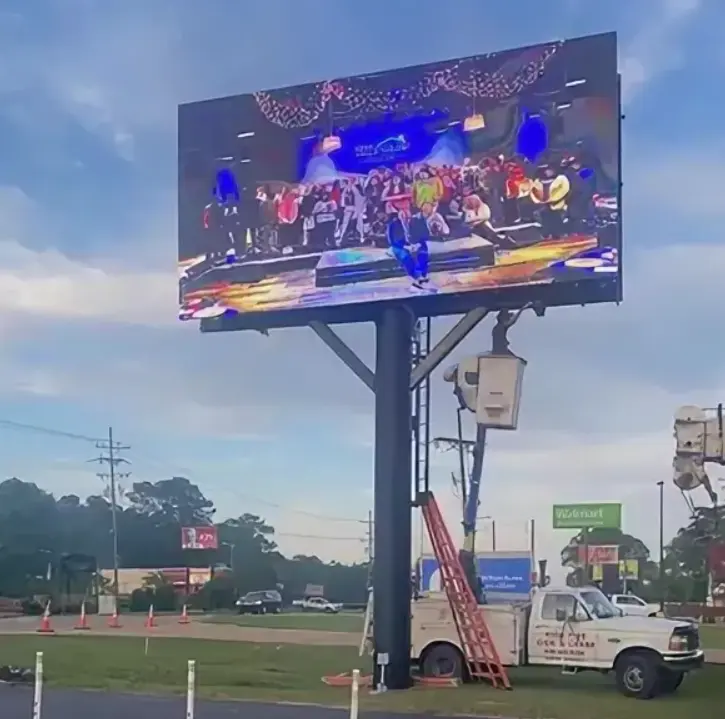
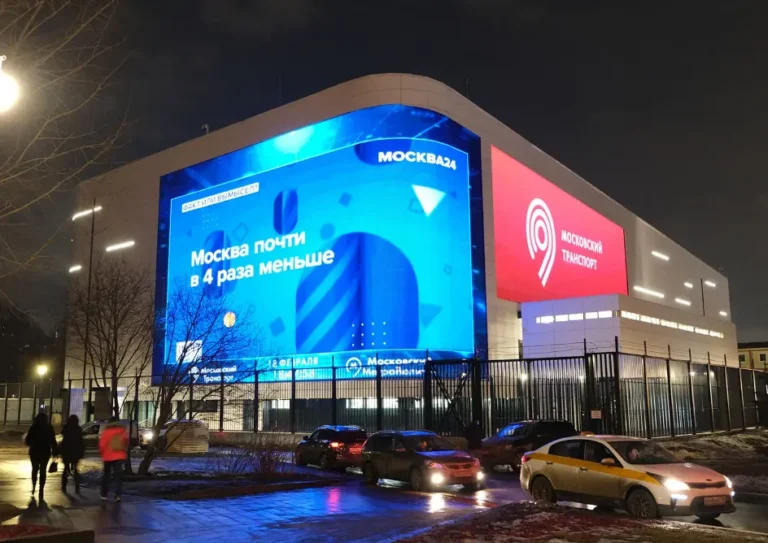
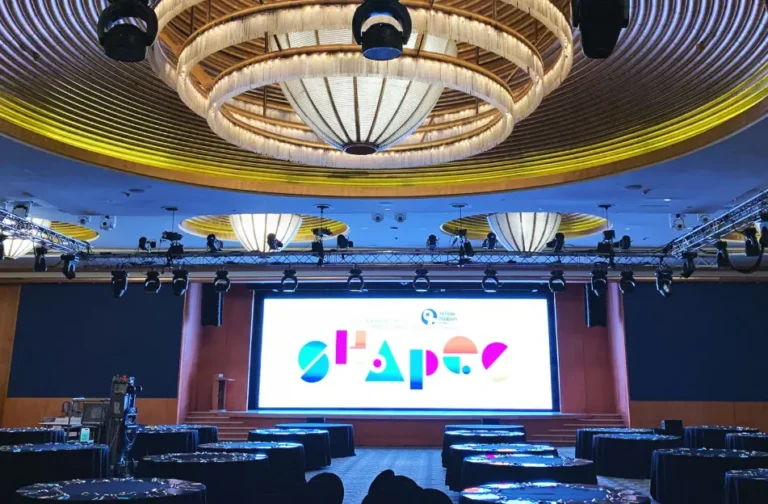
Estimates below reflect typical U.S. market pricing as of 2026 and are intended as planning benchmarks. Actual commercial LED billboard cost varies by region, vendor, and site conditions—always confirm with a site-specific quote before budgeting.
A commercial LED billboard typically costs between $15,000 and $150,000+, depending on size, resolution, and structural complexity. For reference:
| Billboard Size | Pixel Pitch | Estimated Price Range (USD) |
| Small format (6ft x 3ft) | P6–P8 | $15,000–$30,000 |
| Mid-size commercial (10ft x 5ft) | P8–P10 | $35,000–$65,000 |
| Large-format highway (20ft x 10ft+) | P10–P16 | $80,000–$150,000+ |
These figures cover the LED panel, cabinet, and control system only. Structural steel, permitting, and installation labor are quoted separately—and in most large-format projects, they add another 30–50% on top of the display cost itself. We’ll break that down in detail further in this guide.
If you’re evaluating a quote right now, the number that matters most isn’t the panel price—it’s the total installed cost per square foot, which for outdoor commercial billboards generally lands between $1,200 and $3,500 per square foot, all-in. Understanding what drives that spread is the first step to reading any billboard quote correctly.
What Factors Actually Determine the Price of a Commercial LED Billboard?

Two billboards of identical physical size can differ in price by 200–300%. That spread isn’t arbitrary—it comes from four variables that compound on top of each other. Understanding them is the difference between comparing quotes intelligently and getting quietly undercut on spec.
Pixel Pitch & Resolution (The Viewing Distance Formula)
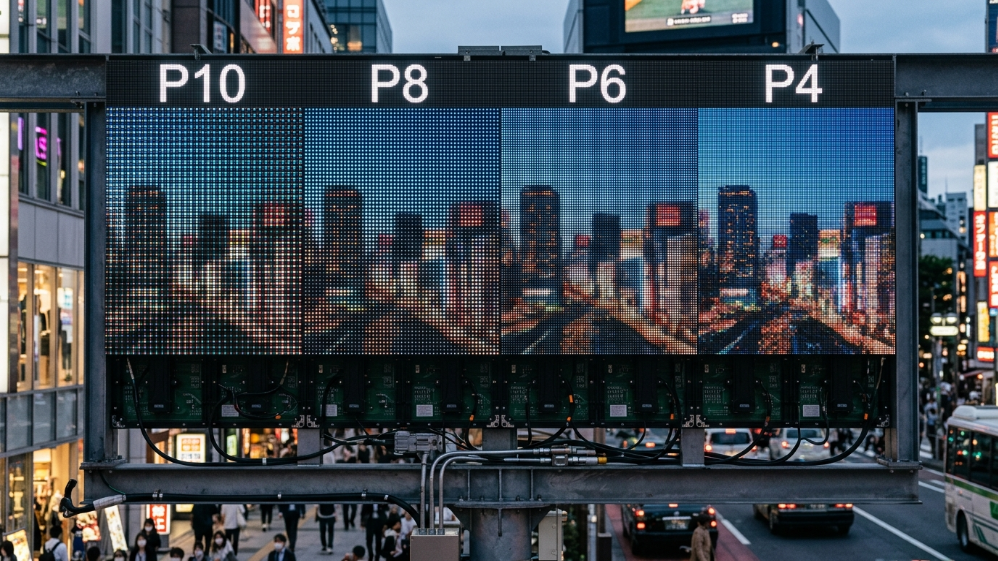
Pixel pitch—the distance in millimeters between adjacent LED clusters—is the single biggest driver of panel cost. Smaller pitch means more LEDs per square meter, which means higher chip cost, denser driver ICs, and tighter manufacturing tolerances.
-
P10–P16: Standard for highway billboards viewed from 100+ feet. Lower cost per square foot, adequate resolution at distance.
-
P6–P8: Used for urban/street-level digital billboards viewed from 30–80 feet. Meaningfully higher cost.
-
P4 and below: Rare in true billboard applications; typically reserved for close-viewing indoor commercial displays, not outdoor advertising structures.
The rule of thumb we use with clients: divide viewing distance (in feet) by 10 to get a reasonable minimum pixel pitch in millimeters. Buying a tighter pitch than your viewing distance requires is the single most common way buyers inflate their commercial LED billboard cost without any gain in visibility.
Brightness Requirements for Outdoor Daylight Visibility
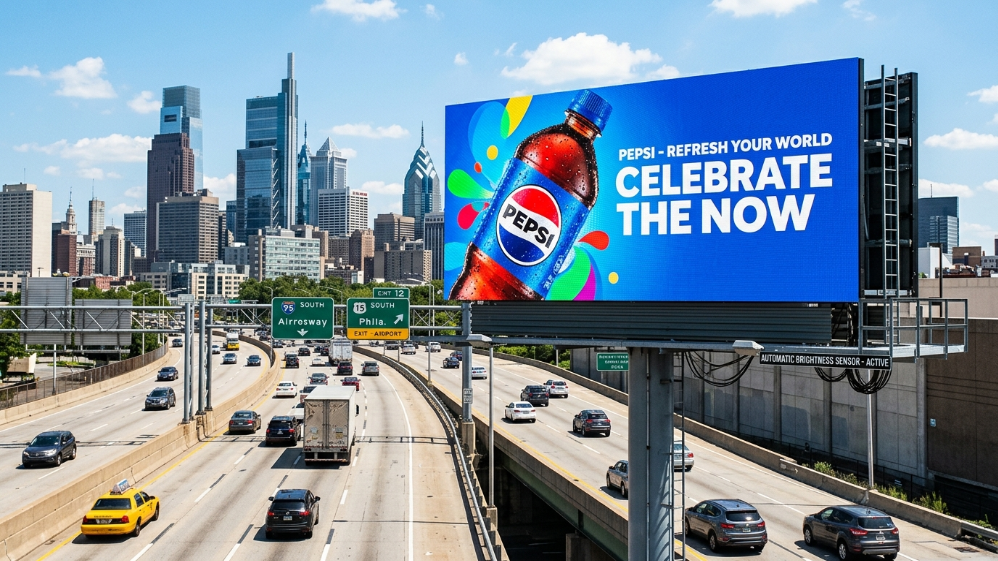
Outdoor billboards need to compete with direct sunlight, which indoor and semi-outdoor displays never have to do. This is a cost driver that’s frequently glossed over in vendor pricing sheets.
-
Daylight-readable outdoor billboards typically require 5,000–7,500 nits, sometimes up to 10,000 nits for south-facing installations in high-glare regions.
-
Higher nit output demands higher-grade LED chips, better thermal management, and more robust power supplies—all of which raise per-panel cost.
-
An automatic brightness sensor (adjusting output between day and night) is not optional at this scale; without it, you’re either burning excess power at night or under-lit at noon. Budget for it as a standard line item, not an add-on.
Structural Engineering & Steel Frame Cost—The Variable Most Vendors Underquote
This is where commercial LED billboards diverge sharply from indoor or storefront displays, and it’s the factor most likely to blow up a budget if it’s excluded from an initial quote.
-
Wind load rating: Large-format outdoor structures must be engineered to withstand regional wind speeds, often requiring a structural engineering certification stamped by a licensed engineer.
-
Foundation and footing: Concrete foundation costs scale with structure height and local soil conditions—this alone can run roughly $10,000–$40,000 for a full-size highway billboard, though soil surveys can shift this range significantly.
-
Steel gantry or monopole structure: A separate procurement line from the LED cabinet itself, frequently the most underestimated cost in a first-pass quote.
If a quote you’ve received doesn’t explicitly break out structural engineering and foundation costs as separate line items, that’s a signal—not a bargain.
Cabinet & Serviceability Type
-
Front-access cabinets cost more upfront but reduce long-term labor cost for module replacement, since technicians don’t need lift equipment or rear-panel access.
-
Rear-access cabinets are cheaper initially but assume open rear clearance, which isn’t always available on billboard structures mounted against buildings or in tight urban lots.
Average Price by Billboard Type & Application
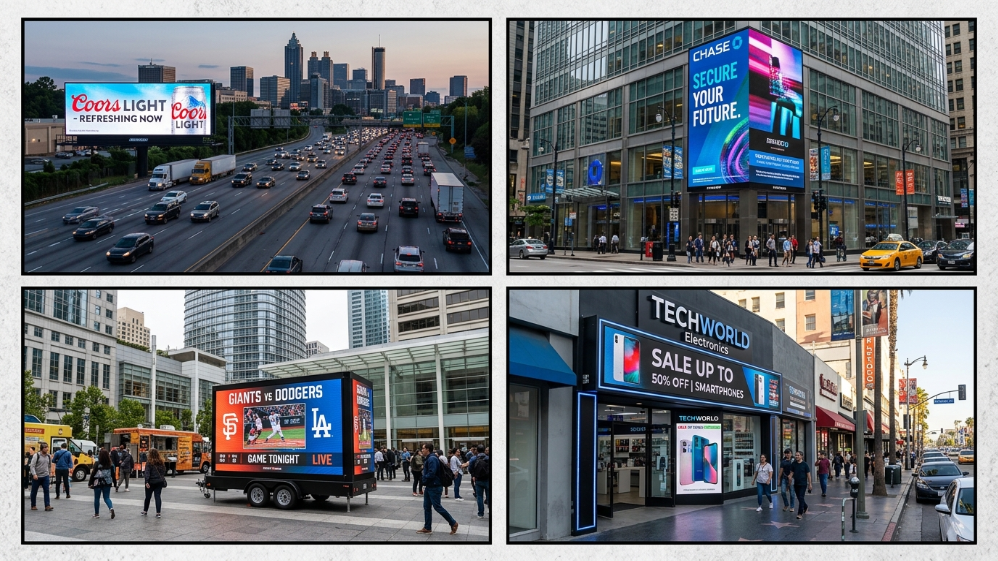
The four factors above don’t exist in isolation—in practice, they combine differently depending on where and how a billboard is deployed, which is why commercial LED billboard cost estimates should always be read alongside application type, not size alone.
| Application Type | Typical Size | Estimated Total Installed Cost |
| Highway/Freeway Billboard | 20ft x 10ft+ | $90,000–$180,000 |
| Urban Digital Out-of-Home (DOOH) | 8ft x 4ft–12ft x 6ft | $45,000–$90,000 |
| Mobile LED Trailer (event/rental use) | 10ft x 5ft | $30,000–$60,000 |
| Storefront/Monument Sign | 6ft x 3ft | $20,000–$40,000 |
A few practical notes worth flagging:
-
Highway billboards carry the highest per-unit cost primarily due to structural and permitting requirements—the same wind load and foundation factors discussed above, scaled up.
-
Mobile LED trailers trade a lower unit price for higher depreciation and more frequent maintenance, since they’re built for portability rather than permanence.
-
Urban DOOH displays often sit in a pricing middle ground but carry higher CMS (content management software) licensing costs due to multi-tenant ad-sales integration—a cost category covered in detail below.
These figures are directional rather than fixed quotes; the next section covers why the installed commercial LED billboard cost often ends up higher than any single-line panel price suggests.
The Hidden Costs Nobody Tells You About (True TCO Breakdown)

The sticker price on a vendor quote is rarely the number that determines whether a billboard investment makes sense. Over a 7–10 year operating lifespan, the costs that accumulate after installation frequently rival or exceed the original purchase price. Here’s what typically gets left off the initial proposal—and what tends to separate a realistic commercial LED billboard cost estimate from an optimistic one.
Permitting & Zoning Approval Costs
This is the cost category most unique to outdoor billboards—and the one general LED display guides never mention, because indoor screens don’t face it.
-
Sign permit fees vary enormously by municipality, ranging from a few hundred dollars to $15,000+ in jurisdictions with strict digital signage ordinances.
-
Many cities cap the number of new digital billboard permits issued per year, which can mean zoning variance applications, public hearings, and legal consulting fees before a single panel is installed.
-
Approval timelines commonly run 3–9 months, and in contested locations, longer. Any ROI projection that doesn’t account for this delay is incomplete.
-
Some municipalities also require luminance compliance testing post-installation—a recurring inspection cost, not a one-time fee.
Budget for permitting as its own line item—not a rounding error tucked into “installation.” Local requirements vary widely, so treat any figure here as a starting point for conversation with your municipality, not a guarantee.
Electrical Infrastructure & Power Consumption
-
A full-size outdoor billboard running at 6,000–8,000 nits can draw roughly 8–15 kW during peak daylight hours.
-
If the installation site lacks adequate service, electrical panel upgrades and utility trenching can add an estimated $5,000–$20,000 before the billboard ever powers on.
-
Ongoing electricity cost for a large-format billboard commonly runs $500–$1,500 per month, depending on regional utility rates and auto-brightness scheduling efficiency.
Content Management Software (CMS) & Ad Sales Platform Fees
-
Most commercial billboards run on a CMS subscription, typically $100–$500 per month, covering content scheduling, remote diagnostics, and playback verification.
-
If the billboard sells third-party ad space, a revenue management system (RMS) for ad-slot booking and proof-of-play reporting is a separate, often overlooked, monthly cost.
-
Buyout/perpetual software licenses exist but usually carry a higher upfront fee—worth comparing against 5-year subscription totals rather than year-one price alone.
Insurance, Liability & Structural Inspection
-
Large outdoor structures typically require elevated liability coverage beyond standard commercial property insurance, given the risk profile of a tall structure near roadways.
-
Many jurisdictions mandate periodic structural inspections (often annual) to confirm the steel gantry and foundation remain compliant—a recurring cost tied directly to the structural investment discussed earlier.
Maintenance Contracts & Module Failure Replacement
-
LED module failure rates are commonly cited in the 1–3% annual range under normal outdoor conditions, though this varies by manufacturer and climate exposure.
-
A preventive maintenance contract (quarterly cleaning, connector inspection, power supply checks) generally runs in the range of $150–$400 per module bank per visit.
-
Vendors offering “lifetime warranty” language should be pressed on whether that covers labor and lift equipment for module replacement—parts-only warranties are common and materially cheaper for the vendor to offer.
Simulated Scenario: What a Mid-Size Urban Billboard Might Cost Over 5 Years

To make the total cost of ownership concrete, consider a hypothetical 10ft x 5ft P8 digital billboard installed at a mid-traffic urban intersection. Figures below are a modeled illustration, not a quote:
| Cost Category | Year 1 | Years 2–5 (Annual) |
| LED panel, cabinet, control system | $45,000 | — |
| Structural steel & foundation | $18,000 | — |
| Permitting & zoning | $6,500 | — |
| Installation labor | $9,000 | — |
| Electricity | $7,200 | $7,200 |
| CMS/RMS software | $3,600 | $3,600 |
| Maintenance contract | $2,400 | $2,400 |
| Insurance | $1,800 | $1,800 |
| Year 1 Total | ~$93,500 | — |
| Years 2–5 Annual Recurring | — | ~$15,000/year |
Modeled 5-year total cost of ownership: approximately $153,500—roughly 3x the original panel price alone in this scenario. The exact multiple will differ by project, but the pattern holds broadly across the industry: buyers who compare only the initial commercial LED billboard cost line, without projecting 5-year TCO, tend to underestimate their real budget need.
Frequently Asked Questions
Q: Is it cheaper to rent or buy a commercial LED billboard?
A: Renting/mobile trailer options cost less upfront ($30,000–$60,000) but suit short-term campaigns. Buying tends to make more sense for permanent locations generating consistent ad revenue, with payback often estimated at 18–36 months for well-placed sites.
Q: How much does it cost to replace a broken LED billboard module?
A: A single module replacement typically costs $150–$600, including the part and labor. Costs rise significantly if lift equipment or lane closures are required for street-facing structures.
Q: Do I need a permit to install a commercial LED billboard?
A: Almost always, yes. Outdoor digital billboards require local sign permits and often zoning approval, with fees ranging from a few hundred dollars to over $15,000 depending on the municipality.
Q: How long does a commercial LED billboard last before needing replacement?
A: A well-maintained outdoor LED billboard typically lasts 8–10 years before full panel replacement becomes more cost-effective than continued module-level repairs, assuming standard SMD LED components and normal maintenance.
Final Thoughts: Why the Initial Quote Is Never the Real Number
The most expensive mistake in commercial LED billboard procurement isn’t overpaying for panels—it’s evaluating vendors solely on unit price while ignoring structural engineering, permitting timelines, and five-year software and maintenance costs. Two quotes that look $20,000 apart on paper can be nearly identical once total cost of ownership is factored in—or one can be a genuine trap once hidden line items surface mid-project.
Because installation environment, local permitting requirements, and viewing distance vary so significantly from project to project, published price ranges can only take a buyer so far. In most cases, a detailed, site-specific assessment is the only reliable way to arrive at an accurate commercial LED billboard cost for a given location—worth requesting before finalizing any budget.
Professional B2B Pricing Advice: When evaluating commercial LED display investments, commercial buyers should focus on Total Cost of Ownership (TCO) rather than hardware expenditure alone. Ensure vendor quotes explicitly detail structural engineering, utility requirements, software licensing, and post-warranty maintenance terms to accurately assess long-term ROI and avoid unexpected capital expenditure mid-project.
References:
International Sign Association (ISA) – Sign Industry Standards & Safety Resources
International Energy Agency (IEA) – Energy Efficiency Reports