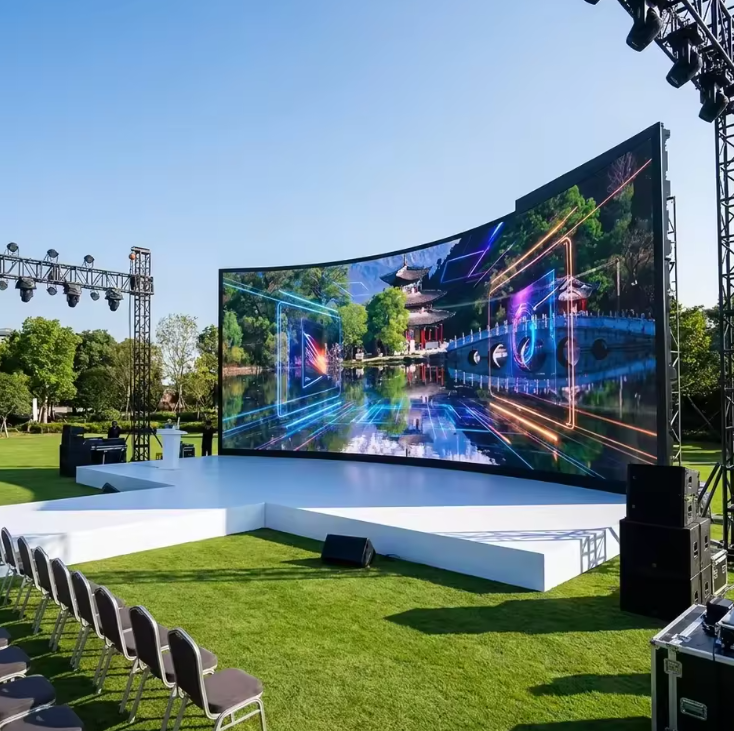
What Is the Price of a 10×10 Feet LED Wall Display Board?
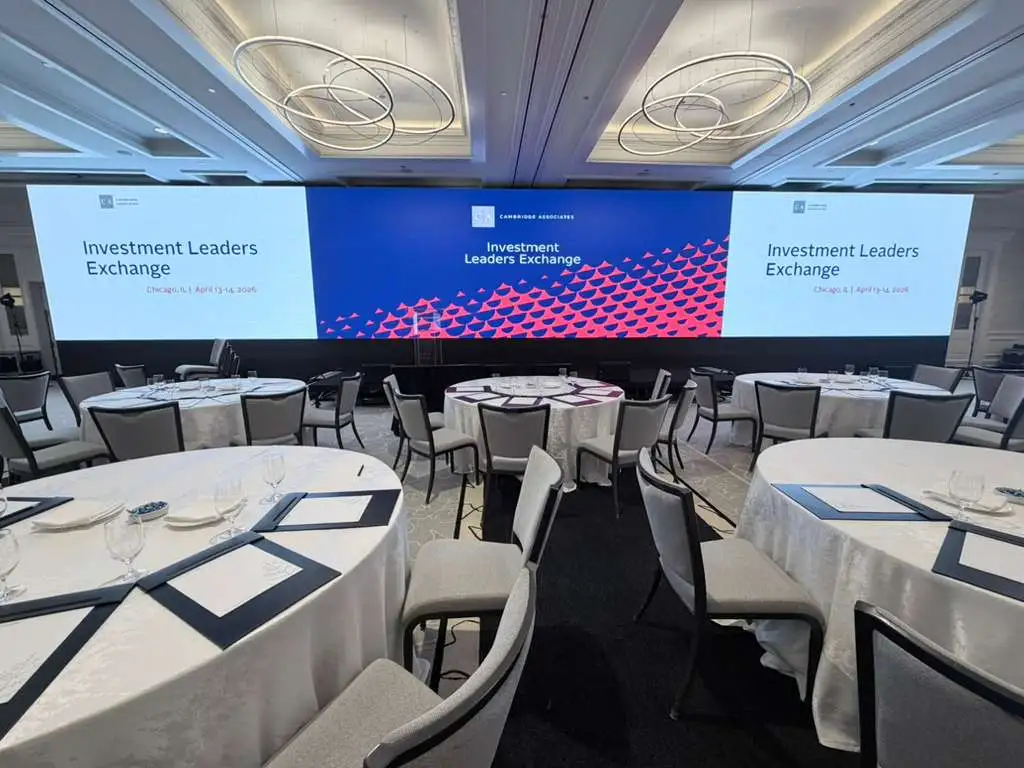
A 10×10 feet LED wall covers 100 sq ft, or approximately 9.29 m². In the U.S. market in 2026, a realistic budget for the LED hardware alone is typically around $7,000–$23,000+ ($70–$230/sq ft) for common indoor configurations, while a professionally installed fine-pitch system can move well beyond that range. Current market references put standard indoor LED video walls at roughly $700–$1,600/m², while higher-specification systems can reach several thousand dollars per square meter.
| 10×10 ft LED Wall Configuration | Typical Pixel Pitch | Approx. Hardware Budget | Typical Application |
|---|---|---|---|
| Entry-level indoor | P3.9–P4 | $7,000–$11,000 | Events, churches, basic presentations |
| Standard commercial indoor | P2.5–P3 | $11,000–$17,000 | Retail, corporate, exhibitions |
| Fine-pitch indoor | P1.8–P2 | $16,000–$25,000+ | Boardrooms, premium retail |
| Premium fine-pitch | P1.2–P1.5 | $25,000+ | Broadcast, XR, high-end visualization |
| Outdoor | P4–P10 | $8,000–$20,000+ | Advertising, public venues, outdoor events |
These figures should be treated as budgetary ranges rather than fixed quotations. A supplier’s price may cover only LED cabinets, while another quote may include processing, structure, installation, freight, commissioning and warranty support. That difference is often more important than the apparent price per square foot.
First: What Does “10×10 Feet” Actually Mean?
The first calculation is straightforward:
10 ft × 10 ft = 100 sq ft = 9.29 m²
But buyers should be careful with the terminology. A 10×10 ft LED wall describes the visible display area. It does not automatically mean a 10×10 ft trade-show booth, nor does it specify the number of cabinets required.
The physical cabinet configuration depends on the cabinet dimensions and pixel pitch.
For example, a rental LED cabinet may be approximately:
- 500×500 mm
- 500×1000 mm
- 640×480 mm
- 960×960 mm
A manufacturer will normally build the closest practical configuration to the requested dimensions rather than cutting individual LED cabinets to exactly 10×10 ft.
This matters because a quoted “10×10 wall” may actually be something such as 9.84×9.84 ft or another cabinet-compatible dimension. The difference is usually minor visually, but it affects the exact module count, cabinet count and quotation.
More importantly, ask whether the supplier is pricing:
- LED display surface only
- LED cabinets plus controller
- A complete display system
- A turnkey installed project
- A temporary rental package
Those are four different cost categories.
How Much Does a 10×10 LED Wall Cost by Pixel Pitch?
The most important technical variable is pixel pitch.
Pixel pitch is the distance, measured in millimeters, between the centers of adjacent LED pixels. A smaller pitch produces higher pixel density and therefore a sharper image at close viewing distances.
However, smaller pixel pitch also means more LEDs, more driver components and greater manufacturing complexity per square meter.
That is why a P1.5 LED wall can cost several times more than a P3.9 system, even when both occupy exactly 100 sq ft.
P3.9: The Cost-Conscious Event Configuration
A P3.9 LED wall is often suitable when viewers are several meters away, particularly for:
- Stage events
- Trade shows
- Churches
- Corporate events
- Rental applications
- Large presentation spaces
The advantage is straightforward: the larger pixel pitch requires fewer pixels across the same physical area.
For a 10×10 ft wall, that can substantially reduce the cost of the LED modules and associated electronics.
Current U.S. market examples show P3.91 indoor turnkey walls around the 8×5 ft class being offered for roughly $7,500–$8,500, illustrating why a 100-sq-ft P3.9 system can fall into the lower five-figure range once additional components are included.
P2.5: The Commercial Sweet Spot
For many permanent indoor applications, P2.5 is a more balanced specification.
It provides substantially higher pixel density than P3.9 without entering the cost territory of the finest-pitch LED products.
A P2.5 system is commonly considered when the screen will be viewed from relatively close distances, such as:
- Corporate reception areas
- Retail stores
- Conference rooms
- Churches
- Museums
- Exhibition environments
Current 2026 market references place mid-range indoor P1.5–P2.5 LED systems around $1,200–$2,500/m², although the final U.S. project price can be higher after logistics, integration and installation.
P1.8 and P1.5: Why the Price Rises Quickly
When the viewing distance becomes short, the economics change.
A P1.8 or P1.5 LED wall contains far more pixels within the same 100-sq-ft area. That means higher pixel density, tighter module manufacturing requirements and more demanding calibration.
The additional cost may also extend beyond the LED modules:
- Higher-resolution processing
- More demanding calibration
- Better flatness and cabinet tolerances
- Higher-quality LED packages
- More sophisticated maintenance requirements
- Potentially COB or other fine-pitch technologies
This is why choosing the smallest possible pixel pitch is usually a poor purchasing strategy.
The correct question is not “What is the smallest pixel pitch I can afford?” but “What pixel pitch matches the actual viewing distance?”
Why Pixel Pitch Changes the Price So Much
Consider two hypothetical 10×10 ft walls.
One uses P3.9. The other uses P1.5.
Both are still 100 sq ft. But the P1.5 wall has a dramatically higher pixel density.
That creates several cost effects:
- More LED pixels per square meter
- More LED packages
- Greater PCB and driver requirements
- More stringent manufacturing tolerances
- More data-processing requirements
- Higher calibration requirements
- Greater demand for uniform brightness and color
In other words, you are not simply paying for “smaller dots.” You are paying for a much denser electronic imaging system.
This is one reason published LED wall prices can vary from several hundred dollars to several thousand dollars per square meter. A broad 2026 industry range of approximately $800–$5,000/m² reflects differences in pixel pitch, brightness, application and customization rather than one standardized product category.
Indoor vs. Outdoor: The Same 100 Sq Ft Can Have a Very Different Price
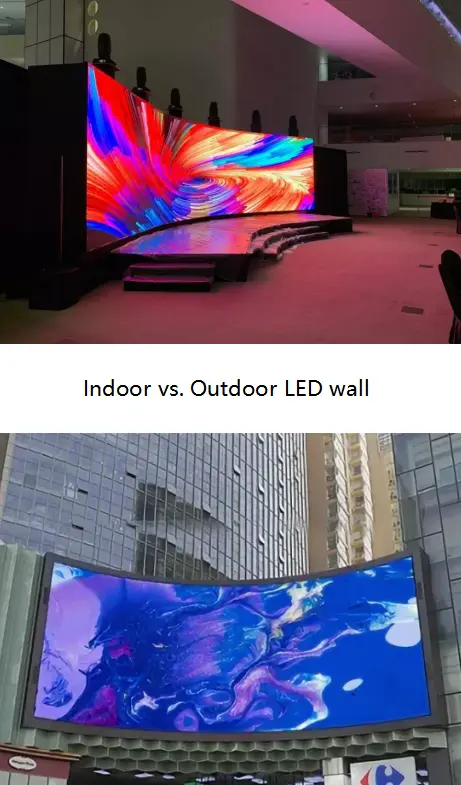
The second major price driver is the environment.
An indoor 10×10 ft LED wall does not normally need to survive rain, direct sunlight, wind-driven moisture or large outdoor temperature swings.
An outdoor system does.
Indoor LED Wall
Typical priorities include:
- Fine pixel pitch
- Moderate brightness
- Lightweight cabinets
- Front or rear maintenance
- Low operating noise
- High refresh rate
- Close viewing performance
Outdoor LED Wall
Outdoor applications require a different engineering approach:
- High brightness
- Weather-resistant construction
- Appropriate IP protection
- Outdoor-rated power supplies
- Thermal management
- Wind-load considerations
- Structural support
- Sunlight-readable content
An outdoor screen can therefore require more than a more expensive LED module. The supporting structure and site engineering can become significant parts of the project cost.
For a permanent outdoor installation in Los Angeles, for example, the project may also involve local building and electrical permitting. The Los Angeles Department of Building and Safety (LADBS) handles building and electrical permits, while the city’s sign regulations specifically address digital displays.
That is an important distinction: an outdoor 10×10 LED display is not simply an indoor LED wall placed outside.
Cabinet Design Also Changes the Price
The LED module itself is only one part of the display.
The LED cabinet determines how the modules, power supplies, receiving cards and mechanical structure are assembled.
A fixed-installation cabinet and a rental cabinet may use the same basic LED technology but have very different mechanical requirements.
Fixed Installation Cabinets
These generally prioritize:
- Structural rigidity
- Long-term reliability
- Serviceability
- Front or rear maintenance
- Cost efficiency
Rental LED Cabinets
Rental systems prioritize:
- Lightweight construction
- Fast assembly
- Quick locking mechanisms
- Frequent installation and dismantling
- Transportation efficiency
- Damage resistance
For a temporary 10×10 ft event wall, paying more for a lightweight rental cabinet can actually be economically rational because labor and handling time become part of the total project cost.
A cheap fixed cabinet may look attractive on a product quotation but become expensive when technicians have to spend significantly longer assembling, servicing or transporting it.
SMD, GOB and COB: When Are You Paying for More Than Marketing?
The LED package technology also affects pricing.
SMD remains common across many commercial LED displays because it provides a practical balance between image quality, manufacturing maturity and cost.
GOB adds a protective coating over the LED surface and can be valuable where the display faces greater physical contact or handling risk.
COB is particularly relevant to fine-pitch indoor applications because the LED package is integrated differently and can provide a more robust surface structure and high-density display solution.
But buyers should avoid paying extra simply because a quotation says “COB.”
Ask what problem the technology solves.
For a conference room viewed from 6–10 ft away, fine-pitch COB may have a rational technical justification. For a large event stage viewed from 30 ft away, spending heavily on ultra-fine pitch may provide little additional commercial value.
The specification should follow the viewing environment—not the other way around.
The Controller Can Add More Cost Than Buyers Expect
A 10×10 ft LED wall is not just a collection of LED panels.
It also needs a control system capable of receiving, processing and distributing image data.
A basic installation may require:
- Sending card
- Receiving cards
- Video processor
- Signal cables
- Control computer or media player
A more advanced installation may require:
- HDMI/SDI inputs
- Multiple signal sources
- Scaling
- Video switching
- Redundant signal paths
- High-refresh-rate processing
- Camera integration
For a simple advertising or presentation wall, an unnecessarily sophisticated processing chain is wasted money.
For live production, however, under-specifying the processor can create much more serious problems: scaling limitations, incorrect resolutions, synchronization issues or inadequate refresh performance.
Therefore, when comparing two 10×10 ft LED wall quotations, do not compare only the LED cabinet price. Compare the complete signal chain as well.
How to Calculate the Real Cost of a 10×10 ft LED Wall
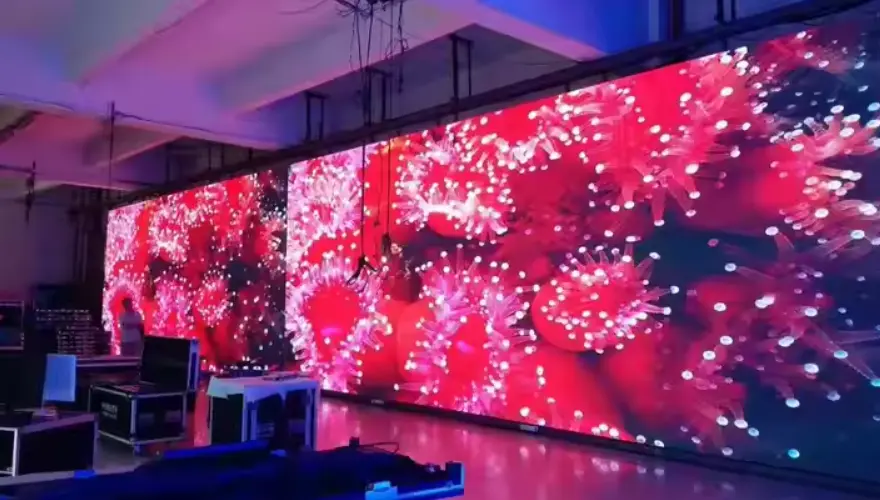
The initial LED panel quotation is only the first line of the budget. For a 100 sq ft LED wall, the more useful purchasing metric is the total cost of ownership (TCO) over the period you expect to operate the display.
A practical TCO model is:
TCO = LED hardware + control system + structure + installation + freight + electrical work + permits + maintenance + electricity + replacement parts − residual value
This matters particularly for permanent installations. A low-cost P3.9 display that requires difficult access for maintenance can become more expensive over several years than a better-engineered front-service system.
The Hidden Costs Behind a 10×10 LED Wall
For a commercial project, budget for the following items rather than assuming they are included in the LED supplier’s headline price:
- Mounting structure: Steel framing, brackets, truss or hanging hardware can add substantial cost.
- Electrical infrastructure: Dedicated circuits, distribution panels, breakers and cable runs may be required.
- Installation labor: A 100-sq-ft wall still needs physical assembly, alignment, commissioning and testing.
- Freight and handling: International freight is only one part of logistics; domestic delivery, liftgate service, warehouse handling and venue delivery can add additional charges.
- Spare parts: Budget for spare LED modules, power supplies, receiving cards and data cables.
- Video processing: A basic media player is not equivalent to a professional video processor.
- Content preparation: Existing video may need resizing or remapping to the LED wall’s native resolution.
- Maintenance access: A system that cannot be serviced from the front may require lifts, scaffolding or temporary removal.
- Downtime: For an advertising or retail display, lost operating hours can have a measurable commercial cost.
- Permits and engineering: Permanent or outdoor installations may require structural drawings, electrical review and sign approvals.
For example, in Los Angeles, building permits apply to signs and sign structures, while electrical work is subject to LADBS permitting requirements. Digital signs can also trigger additional planning or project-compliance requirements depending on location and sign type.
That means an outdoor 10×10 ft digital LED display should never be budgeted as simply “100 sq ft × LED price.”
A Realistic 10×10 ft LED Wall Cost Example
Consider a hypothetical commercial customer in Los Angeles purchasing a 10×10 ft indoor P2.5 LED video wall for a corporate presentation area.
Assume the customer wants a permanent installation and the viewing distance is approximately 8–15 ft.
A reasonable planning budget might look like this:
| Cost Component | Example Budget | Why It Matters |
|---|---|---|
| P2.5 LED cabinets | $13,000 | Main display hardware |
| LED controller/processor | $1,500 | Signal processing and scaling |
| Mounting structure | $1,500 | Wall/steel support |
| Electrical work | $1,000 | Dedicated circuit and distribution |
| Freight/local delivery | $1,000 | Transportation and handling |
| Installation & commissioning | $2,000 | Assembly, calibration and testing |
| Spare parts | $800 | Modules, PSU and receiving components |
| Initial project budget | ≈$20,800 | Before applicable taxes/permit-specific costs |
The important number here is not the $13,000 panel price.
The actual project budget is approximately $20,800, or about $208/sq ft installed under this hypothetical configuration.
A supplier offering the same screen for $130/sq ft may therefore not actually be cheaper. The difference could simply be that installation, structure, processing and logistics have been excluded.
What Happens Over Five Years?
Suppose the display operates 10 hours per day, 300 days per year.
If its average operating power is approximately 5 kW:
5 kW × 10 hours × 300 days = 15,000 kWh/year
At a hypothetical electricity rate of $0.25/kWh, annual energy cost would be approximately:
$3,750/year
Over five years:
$18,750
This illustrates an important engineering point: maximum power consumption and average power consumption are not the same thing. A quotation showing only maximum power does not tell you what the display will actually cost to operate.
Actual energy consumption depends on:
- Brightness setting
- Content composition
- Operating hours
- Pixel pitch
- Cabinet efficiency
- Power-supply efficiency
- Automatic brightness control
- Ambient-light conditions
For a permanent commercial LED wall, electricity can therefore become a meaningful part of TCO even though it is almost invisible during the initial purchasing decision.
Maintenance Can Change the Economics of a “Cheap” LED Wall
LED displays are modular, which is one of their major advantages. A failed module does not normally mean replacing the entire 100-sq-ft wall.
But the maintenance architecture still matters.
A front-service LED cabinet can allow technicians to replace components from the viewing side. A rear-service configuration may require:
- Access behind the wall
- Removal of surrounding equipment
- Ladders or lifts
- Additional technician hours
- Temporary shutdown
For a conference room, this may be inconvenient.
For a retail store operating seven days a week, it can become an operational problem.
For a commercial advertising screen generating revenue, downtime can become a direct financial loss.
When comparing quotations, ask:
- Is the cabinet front maintenance or rear maintenance?
- Are replacement modules readily available?
- How long is the warranty?
- Are power supplies field-replaceable?
- Does the supplier provide remote technical support?
- How quickly can replacement parts be shipped?
- Is color calibration required after module replacement?
A slightly higher purchase price can therefore be justified if it materially reduces maintenance labor and downtime.
Outdoor 10×10 LED Walls Have Another Layer of TCO
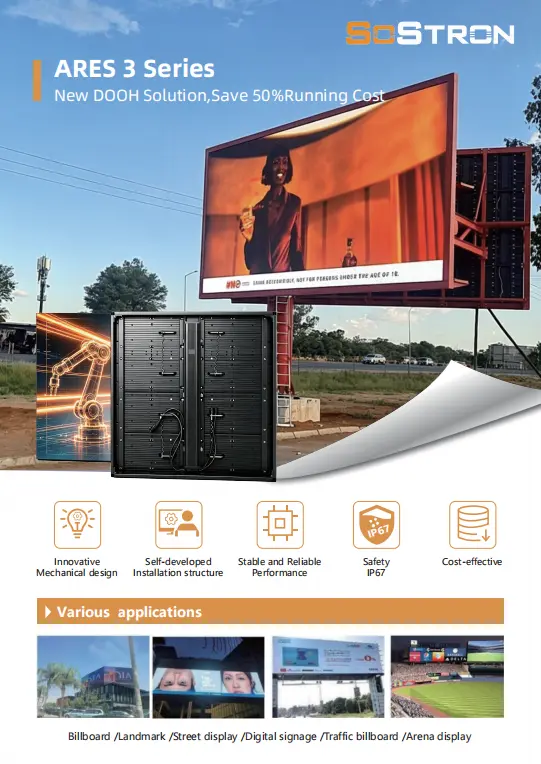
An outdoor 100-sq-ft display introduces costs that an indoor buyer may never encounter.
The physical environment matters.
In Los Angeles, for example, direct sunlight, heat, wind exposure and local permitting requirements can influence the engineering specification. An outdoor display may require substantially higher brightness than an indoor screen, along with weather-resistant cabinets and a properly engineered mounting structure.
The structural issue is particularly important.
A 10×10 ft LED wall is not merely a 100-sq-ft electronic product. Once mounted outdoors, it becomes a physical surface exposed to wind loads.
The project may therefore require:
- Structural calculations
- Anchoring
- Steel support
- Wind-load assessment
- Electrical inspection
- Building permit
- Sign approval
- Professional installation
LADBS states that building permits cover signs and sign structures, and electrical permits are required for electrical work.
For certain Los Angeles digital-display projects, planning compliance can also become part of the approval process.
Consequently, the same 10×10 ft LED display can have completely different installed costs in two cities even when the factory hardware is identical.
Buying vs. Renting a 10×10 LED Wall
The next question is whether purchasing is even the right financial decision.
For a one-off event, renting may be cheaper because the customer avoids:
- Long-term ownership
- Storage
- Maintenance
- Depreciation
- Spare-parts inventory
- Future technology obsolescence
For repeated events, the calculation changes.
Assume a company rents a comparable 10×10 ft LED wall for $4,500 per event including basic setup, but expects to use it six times annually.
Annual rental cost:
$4,500 × 6 = $27,000
If the company instead purchases a complete system for approximately $20,800, the simple purchase-versus-rental break-even point would be:
$20,800 ÷ $4,500 ≈ 4.6 events
That does not mean buying is automatically better after the fifth event. Ownership still creates maintenance, storage, transportation and depreciation costs.
But it demonstrates why usage frequency is one of the most important variables in the decision.
For a company using an LED wall once every two years, renting may remain rational.
For a venue using the same system every month, ownership becomes much easier to justify.
10×10 LED Wall FAQ
Q: How much does a 10×10 ft LED wall cost in the USA?
A: A 100-sq-ft indoor LED wall commonly requires roughly $7,000–$23,000+ for hardware, depending on pixel pitch and specifications. A complete installed system can cost considerably more after structure, processing, freight and labor.
Q: Is P2.5 worth the extra cost over P3.9 for a 10×10 LED wall?
A: P2.5 is worthwhile when viewers are relatively close, such as in corporate, retail or exhibition environments. If the audience is farther away, P3.9 can provide sufficient image quality at a lower cost without paying for unnecessary pixel density.
Q: What hidden costs should I include when budgeting a 10×10 LED display?
A: Include controller, mounting structure, electrical work, freight, installation, permits, spare parts, maintenance and energy consumption. For outdoor digital signage, also account for structural engineering and local sign approvals before comparing supplier quotations.
Q: Is it cheaper to buy or rent a 10×10 LED wall?
A: Renting is usually more economical for occasional events, while purchasing can make sense for venues or businesses with frequent use. Calculate the break-even point using the complete ownership cost, not only the LED panel purchase price.
The Bottom Line: Don’t Let the Lowest Price Win
The biggest mistake when buying a 10×10 feet LED wall display board is treating the quoted price per square foot as the final price.
A 100-sq-ft P3.9 rental wall, a P2.5 permanent commercial display, and a P1.5 fine-pitch wall may have exactly the same physical dimensions but completely different technical and financial requirements.
The correct purchasing sequence is:
Viewing distance → application → pixel pitch → cabinet design → brightness/environment → control system → installation → TCO.
Only after those variables are defined does the price become meaningful.
For a permanent installation, the cheapest LED wall can be the most expensive choice if it creates excessive energy consumption, difficult maintenance, inadequate processing or costly structural modifications. Conversely, an expensive fine-pitch system can be equally wasteful if the audience is far enough away that its additional pixel density provides little visible benefit.
Price should therefore be treated as the result of engineering decisions, not the starting point for them.
Because installation environments and viewing distances vary significantly from project to project, contact our engineering team for a precise, free customized quotation based on your actual 10×10 ft LED wall requirements.
Price Note
LED wall prices are provided for reference only and may vary according to pixel pitch, cabinet type, brightness, display size, control system, installation requirements, shipping, local permits, electrical work, taxes and other project-specific factors. The actual price should be confirmed through a customized quotation based on your installation environment, viewing distance, application and technical requirements.
References:
U.S. Department of Energy — Commercial & Industrial LED Efficiency
OSHA — Electric Signs and Outline Lighting