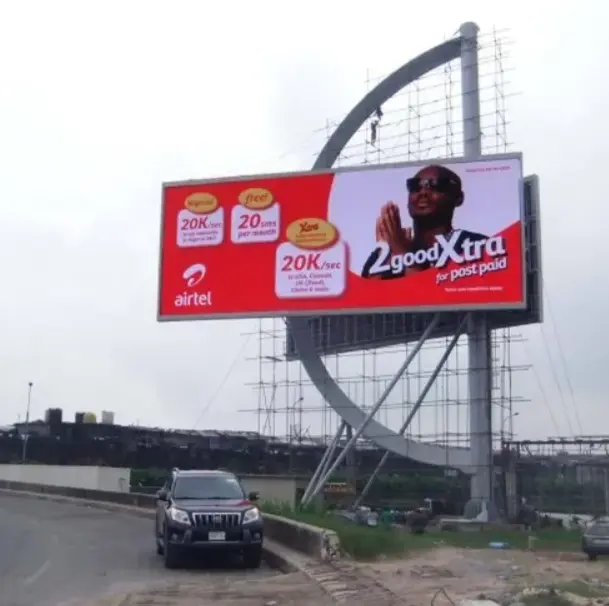
A small LED screen for a shop front is not simply a smaller version of a large outdoor billboard. For retailers, contractors, system integrators, and commercial display buyers, the right solution must balance screen size, pixel pitch, brightness, viewing distance, installation space, maintenance access, power consumption, and total project cost. For a compact storefront, a well-specified LED display can deliver stronger visibility and more flexible content than conventional signage without requiring a large video wall.
The best configuration depends primarily on where the screen will be installed and how far viewers will stand from it. An indoor retail display may prioritize fine pixel pitch and high image quality, while a street-facing storefront requires substantially higher brightness and environmental protection. Transparent LED can be a better option when the display must be installed across a glass window without completely blocking natural light.
What Is a Small LED Screen for a Shop Front?
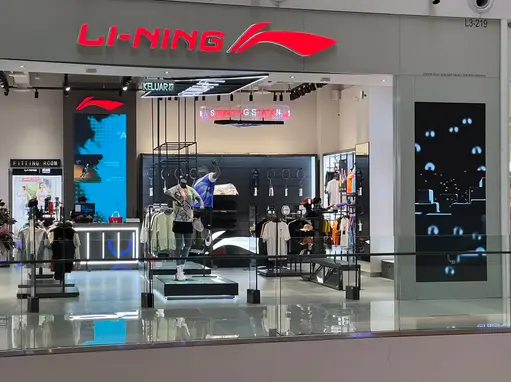
A small LED screen for a shop front is a compact, modular LED display designed for retail storefronts, entrances, windows, commercial facades, and other limited installation areas. Unlike a fixed-size LCD, an LED display can be assembled from multiple LED modules and cabinets, allowing buyers to customize the overall width and height according to the available space.
There is no universal industry definition of what qualifies as “small.” In practical B2B projects, the term usually refers to a display with a relatively limited screen area compared with a commercial billboard or large-format LED wall. The actual dimensions should therefore be determined by the storefront, viewing distance, advertising objective, and installation structure rather than by the word “small” alone.
How Small Can a Commercial LED Screen Be?
A compact storefront LED display can range from a single portrait-style LED poster to a custom-built screen covering several square meters. Common configurations include:
- LED poster displays for entrances and promotional campaigns
- Compact indoor LED walls for retail interiors and reception areas
- Window LED displays for storefront advertising
- Transparent LED screens installed behind or across glass
- Narrow LED displays integrated into storefront fascia
- Flexible LED displays for curved or creative architectural installations
For a small retail business, a 1–3 m² display may be sufficient to attract attention without overwhelming the storefront. A larger retail chain or flagship store may require several modular displays rather than one large screen.
The important consideration is not simply how much LED can fit into the available space, but whether the screen creates sufficient visual impact from the actual customer viewing distance.
Small LED Screen vs. LED Poster Display
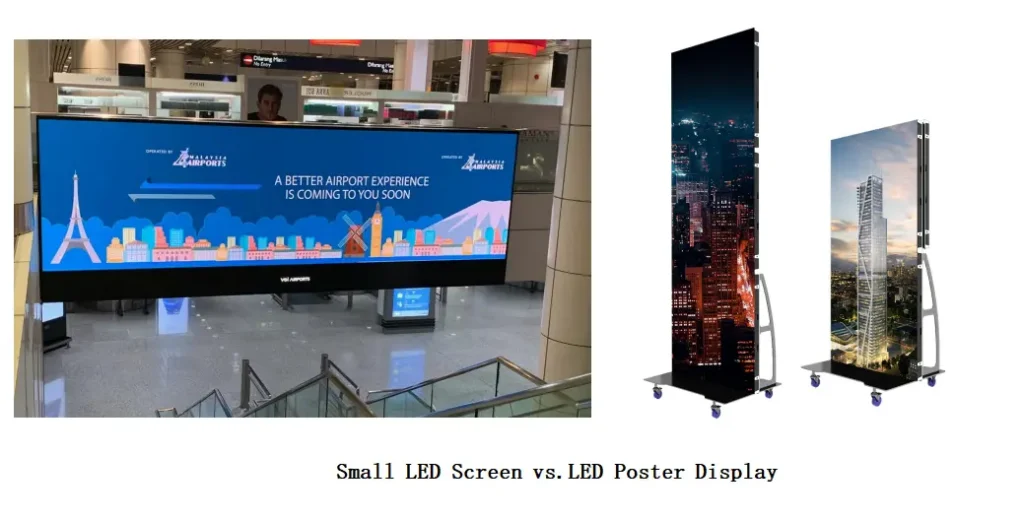
An LED poster is one of the most practical solutions when portability and rapid deployment are priorities. Its standardized form factor makes transportation and installation relatively simple, which can be useful for retail promotions, exhibitions, and temporary campaigns.
A modular LED wall provides greater customization. Buyers can specify the screen dimensions, aspect ratio, pixel pitch, cabinet structure, and maintenance method according to the project.
For B2B deployments, this distinction matters. An event company may prioritize portability, while a retail chain may prioritize standardized dimensions, spare parts, remote management, and long-term reliability.
Small LED Screen vs. LCD Digital Signage
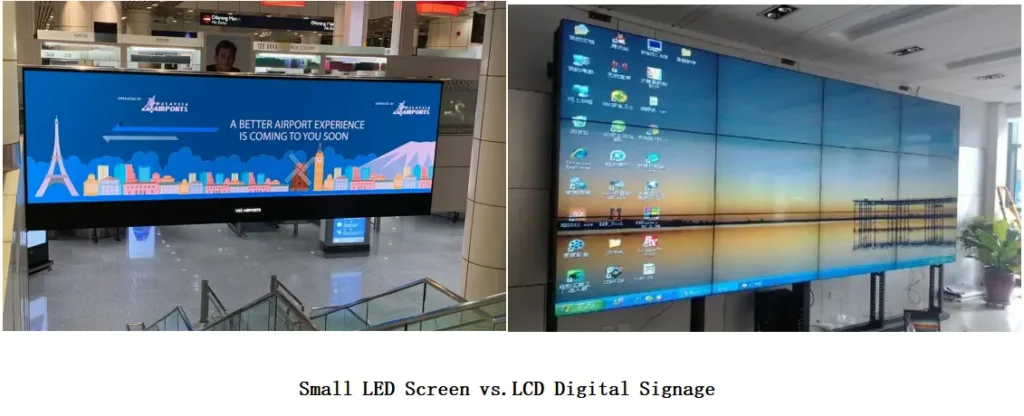
LCD displays remain suitable for many indoor retail applications, particularly where the screen is relatively small and the ambient light is controlled. However, LED displays can offer advantages in screen scalability, brightness, seamless large-format presentation, and customized aspect ratios.
For storefront applications exposed to strong ambient light, conventional indoor LCD signage may also struggle to provide the same visual impact as a properly specified LED display. The choice should therefore be based on the environment rather than assuming that the lowest hardware price is the best solution.
Which Type of Small LED Screen Is Best for Your Shop Front?
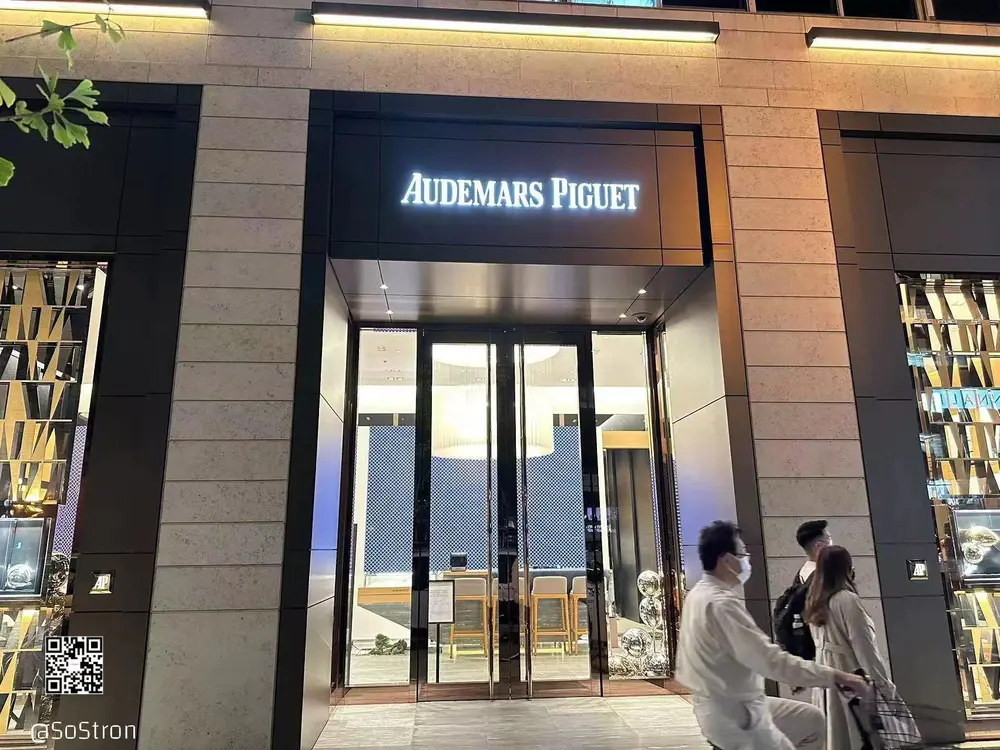
There are several LED technologies suitable for storefront applications, and each solves a different problem.
Small Indoor Fine-Pitch LED Display
For indoor shops, showrooms, corporate retail spaces, and reception areas, a fine-pitch LED display can provide high image quality at relatively close viewing distances.
Pixel pitches such as P1.5, P1.8, P2.0, and P2.5 are commonly considered for close-viewing commercial environments. The smaller the pixel pitch, the greater the pixel density and potential image detail.
However, smaller pixel pitch also generally increases the cost per square meter. A buyer should therefore avoid selecting the smallest available pitch without first calculating the actual viewing distance.
LED Poster Display for Shop Entrances
An LED poster can be a practical choice when a shop needs a compact promotional display without permanent structural modification.
Typical applications include:
- Store entrances
- Promotional campaigns
- Product launches
- Shopping centers
- Exhibition booths
- Temporary retail events
For businesses operating multiple locations, standardized LED poster units can also simplify deployment and replacement.
Transparent LED Screen for Glass Storefronts
A transparent LED display is particularly useful when the storefront contains large glass windows and maintaining visibility through the display is important.
Unlike an opaque LED wall, transparent LED allows a significant amount of light to pass through the display structure. This can help preserve the architectural appearance of a storefront while providing dynamic advertising content.
However, transparency involves trade-offs. Buyers should evaluate transparency, brightness, pixel pitch, viewing distance, installation structure, and content requirements together rather than treating transparency as the only specification that matters.
Outdoor Fine-Pitch LED for Street-Facing Shops
A storefront directly facing a street has very different requirements from an indoor retail display. Daylight can significantly reduce perceived contrast, making brightness a critical specification.
An outdoor LED display may also need appropriate weather protection, thermal management, structural support, and front or rear maintenance access.
For these projects, an outdoor-rated fine-pitch LED display can provide the visibility required without necessarily using an extremely large screen.
Flexible LED Display for Creative Storefronts
Flexible LED displays are useful when the storefront design includes curves, columns, arches, cylinders, or other non-flat surfaces.
They are particularly relevant for:
- Shopping malls
- Luxury retail
- Exhibition spaces
- Brand experience centers
- Stage and architectural installations
The key advantage is not simply flexibility. It is the ability to integrate the LED display into an architectural shape that would be difficult to achieve with conventional rigid cabinets.
What Size Small LED Screen Do You Need?
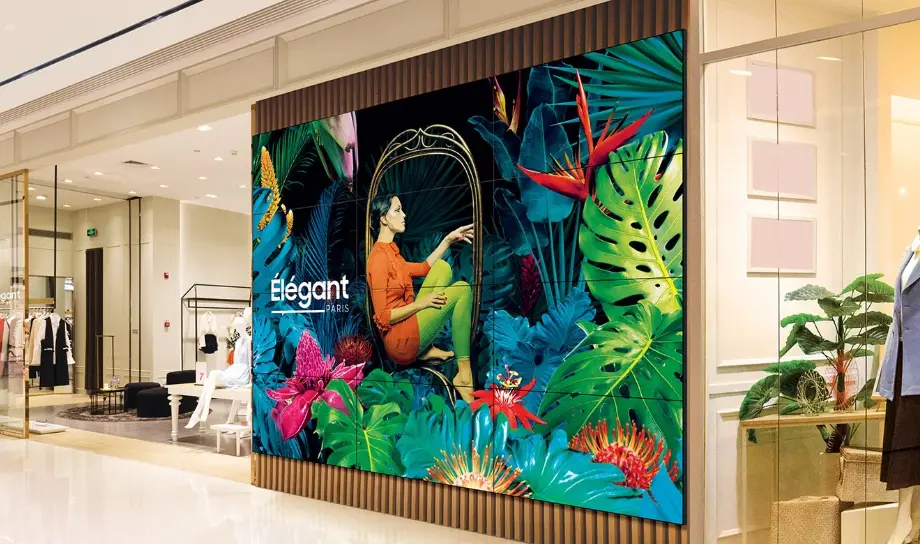
The correct screen size starts with the available installation area. Measure the usable width and height rather than simply selecting a standard cabinet size.
The basic calculation is:
Screen Area = Screen Width × Screen Height
For example, a 2 m wide × 1 m high storefront display has an area of 2 m².
However, screen area alone does not determine whether the display will be effective. A narrow storefront may benefit from a portrait screen, while a wide facade may perform better with a landscape configuration.
How to Calculate Screen Size From Storefront Width
Start by measuring:
- Available wall or window width
- Available installation height
- Distance between the screen and customers
- Distance between the screen and passing traffic
- Required content aspect ratio
- Available electrical capacity
- Maintenance access
For B2B projects, also consider whether multiple locations need the same screen dimensions. Standardizing screen configurations across a retail chain can simplify procurement, installation, spare parts, and maintenance.
When Should You Use Multiple Small LED Screens?
Multiple compact displays can be more effective than one large screen when storefront architecture contains pillars, entrances, windows, or separated advertising zones.
For example, a retail chain might use three vertically oriented LED posters rather than one large custom LED wall. This can provide independent content zones while reducing structural complexity.
The decision should ultimately be based on visibility, content strategy, installation constraints, and lifecycle cost, not simply the maximum screen area available.
What Pixel Pitch Is Best for a Small Shop Front LED Screen?
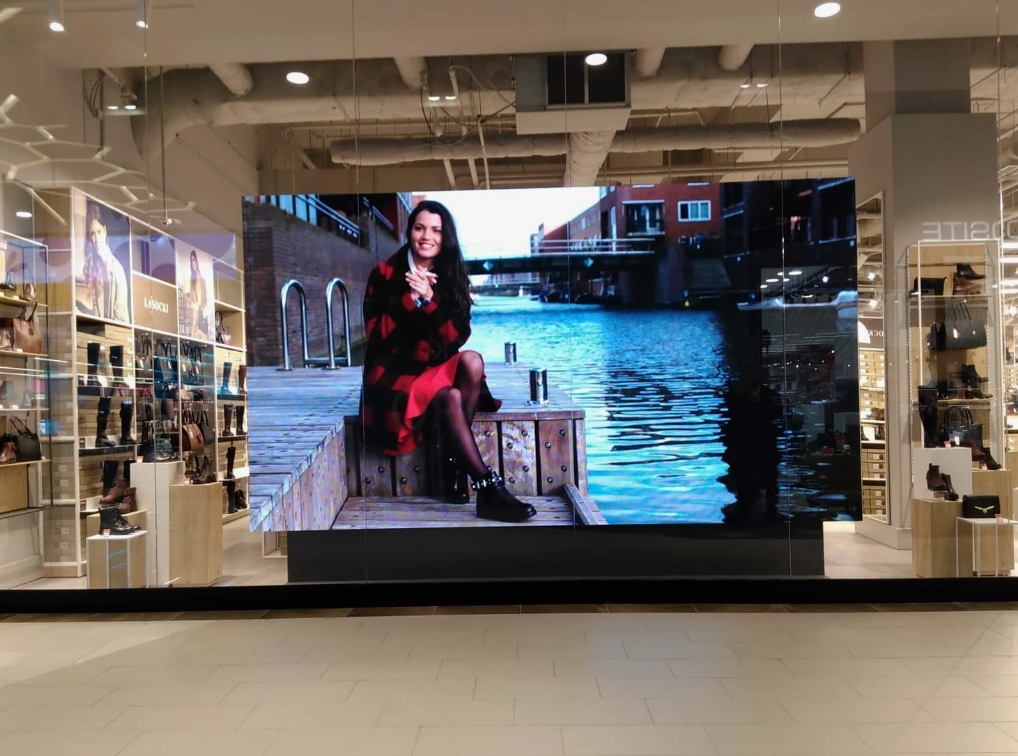
Pixel pitch is one of the most important specifications in an LED display purchase. It refers to the distance between the centers of two adjacent LED pixels, usually expressed in millimeters.
A smaller pixel pitch provides higher pixel density and can produce sharper images at close viewing distances. A larger pitch can be more economical when viewers are farther away.
P1.5 vs. P2.5 for Close Viewing
For indoor storefronts where customers may stand only a few meters away, P1.5–P2.5 can provide a strong balance between image detail and cost.
P1.5 is particularly useful when text, product imagery, logos, and detailed promotional video must remain sharp at close range. P2.5 can be more cost-effective when the audience is slightly farther away.
P2.5 vs. P3.9 for Storefront Advertising
P2.5 and P3.9 should not be selected simply according to which specification looks better on paper.
If viewers are close to the display, P2.5 may provide better perceived image quality. If the screen is primarily viewed from the street or across a larger open area, P3.9 may provide sufficient visual performance while reducing hardware cost.
How Viewing Distance Determines Pixel Pitch
A useful purchasing principle is:
The closer the viewer, the more important pixel density becomes.
Conversely, increasing the viewing distance reduces the practical benefit of an extremely fine pixel pitch.
For B2B buyers, the correct approach is therefore to provide the supplier with the minimum, typical, and maximum viewing distance before requesting a quotation. This gives the manufacturer enough information to recommend a technically appropriate pixel pitch rather than simply quoting the highest-resolution product.
Why the Smallest Pixel Pitch Is Not Always the Best Choice
A smaller pixel pitch generally means more LEDs and greater manufacturing complexity per square meter. If the audience cannot resolve the additional detail because of viewing distance, the extra investment may produce little commercial benefit.
The objective should be the lowest practical pixel pitch for the application, not the smallest pixel pitch available.
How Bright Should a Small LED Screen for a Shop Front Be?
Brightness must be matched to the installation environment.
An indoor display in a controlled retail environment has very different requirements from a screen installed behind a south-facing glass window or directly exposed to sunlight.
Indoor Retail Brightness
Indoor displays can use lower brightness because ambient lighting is relatively controlled. Excessive brightness may cause visual discomfort and unnecessary power consumption.
Storefront Window Brightness
Window displays require greater brightness when strong daylight enters the glass. The display must maintain sufficient contrast so promotional content remains readable during daytime operation.
Direct Sunlight and Daylight Visibility
For outdoor-facing applications, brightness should be considered together with:
- Contrast
- Automatic brightness adjustment
- LED package
- Viewing angle
- Content design
- Ambient light
- Heat dissipation
Simply choosing the highest-brightness product is not a complete solution. Excessive brightness can increase energy consumption and thermal load.
Why Automatic Brightness Adjustment Matters
A commercial storefront display does not operate under identical lighting conditions throughout the day. Automatic brightness control can adjust output according to ambient conditions, helping maintain visibility while avoiding unnecessary power consumption.
For long-term B2B deployments, this becomes an operating-cost issue rather than merely a picture-quality specification.
Small LED Screen for Shop Front: Size, Price & Buying Guide — Part 2
What Technical Specifications Should B2B Buyers Check?
Once screen size, pixel pitch, and brightness have been established, the next step is to evaluate the specifications that determine long-term performance and operating reliability. For B2B buyers, these details matter because a storefront LED display is not simply a visual product; it is a commercial system that must operate consistently throughout its service life.
What Refresh Rate Does a Retail LED Screen Need?
Refresh rate determines how frequently the LED display updates the image. For standard retail advertising, a sufficiently high refresh rate helps produce smooth motion and reduces visible scan artifacts when content is captured by cameras.
For normal promotional content, a standard commercial refresh rate may be sufficient. Applications involving professional photography, broadcast, livestreaming, or virtual production require greater attention to refresh rate, grayscale performance, and camera compatibility.
If the screen may later be used for promotional filming or social-media content, buyers should specify this requirement before production rather than attempting to solve camera-related issues after installation.
Why Do Viewing Angle and Color Uniformity Matter?
A storefront display is rarely viewed directly from the center. Customers may approach from either side, while pedestrians and passing vehicles can see the screen from different angles.
A suitable LED viewing angle helps maintain consistent brightness and color across the visible area. Color uniformity is equally important for brand-heavy content where logos, product photography, and corporate colors must remain visually consistent.
For retail chains, consistent calibration between screens is particularly important. A customer should not see noticeably different brand colors simply because two stores use different LED displays.
What IP Rating Should a Shop Front LED Screen Have?
Outdoor or semi-outdoor storefront applications require appropriate environmental protection. An IP rating indicates resistance to the ingress of solids and water.
For directly exposed outdoor installations, buyers commonly consider weather-protected LED cabinets designed for demanding environments. The exact protection level should be selected according to installation conditions, including rain exposure, humidity, dust, and cabinet orientation.
Do not select an IP rating solely because it appears higher on a specification sheet. The complete cabinet construction, drainage, connectors, power supply protection, and installation method also influence real-world reliability.
Should You Choose Front or Rear Maintenance?
Maintenance access can be a major issue for small storefront installations.
If the LED display is installed against a wall, inside a narrow storefront, or behind a constrained structure, rear access may be impractical. A front-maintenance LED display allows technicians to access modules and internal components from the viewing side.
For commercial projects, maintenance should be considered during the design stage. Saving a small amount on the initial cabinet configuration can become expensive if every future repair requires dismantling surrounding structures.
SMD vs. COB: Which LED Technology Is Better?
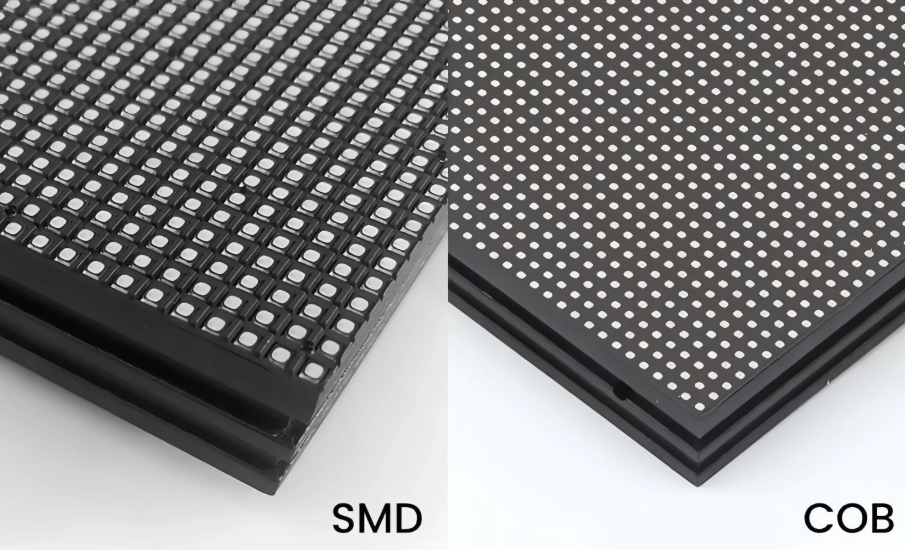
SMD and COB LED technology serve different application requirements.
SMD packages mount LED components onto the PCB and remain widely used across indoor and outdoor commercial displays. COB integrates LED chips directly onto the board and can provide a more protected display surface.
COB can be attractive for close-viewing applications such as conference rooms, command centers, premium retail spaces, and high-contact environments where surface protection is important.
The correct choice depends on the required pixel pitch, viewing distance, impact resistance, maintenance strategy, and budget rather than technology preference alone.
How Much Does a Small LED Screen for a Shop Front Cost?
There is no reliable single price for a small LED storefront display. A quotation should be based on the complete project specification rather than only the LED price per square meter.
The major cost variables include:
- Pixel pitch
- Screen dimensions
- LED package
- Brightness
- Cabinet type
- Controller
- CMS
- Structural support
- Power distribution
- Installation
- Shipping
- Spare parts
- Warranty requirements
How Does Pixel Pitch Change the Price?
Fine-pitch LED displays generally require greater component density and more sophisticated manufacturing. As a result, a P1.5 display will typically cost more per square meter than a larger-pitch product designed for longer viewing distances.
This is why buyers should first determine the viewing distance and then request pricing for suitable configurations.
What Additional Costs Should Be Included?
A realistic project budget should include more than the LED cabinets.
A useful calculation is:
Total Project Cost = LED Display + Controller + CMS + Structure + Power Distribution + Installation + Shipping + Spare Parts
For international B2B projects, packaging, export logistics, local installation, customs-related expenses, and site preparation may also influence the final delivered cost.
Why Should You Calculate Total Cost of Ownership?
The cheapest quotation is not necessarily the lowest-cost solution.
A display with higher power consumption, difficult rear maintenance, limited spare parts, or weak technical support may generate greater expenses over several years.
A better purchasing metric is Total Cost of Ownership (TCO), which considers acquisition cost, electricity, maintenance, downtime, replacement components, and technical support throughout the expected service period.
Small LED Screen vs. Other Shop Front Display Solutions
The best technology depends on the storefront rather than on a universal preference for LED.
Small LED Screen vs. LCD
LCD is often suitable for small indoor displays with controlled ambient lighting. LED becomes more attractive when buyers require greater brightness, customizable dimensions, seamless larger-format presentation, or stronger visibility in challenging environments.
Small LED Screen vs. LED Poster
An LED poster is typically easier to transport and deploy, making it suitable for temporary promotions and multiple small advertising locations.
A modular LED display offers greater customization and can be better suited to permanent commercial installations where dimensions, maintenance, and system integration matter.
Small LED Screen vs. Transparent LED
Transparent LED is particularly relevant to glass storefronts. It allows advertising content to coexist with the visibility and natural lighting of the window.
However, a conventional LED display may provide better image density and stronger visual impact when transparency is not required.
Which Solution Offers the Best Long-Term ROI?
ROI depends on the commercial objective.
A retail store focused on high-impact branding may benefit from a fine-pitch LED wall. A chain retailer may prioritize standardized LED posters and centralized CMS management. A luxury storefront with large glass windows may achieve greater architectural value from transparent LED.
The correct question is therefore not:
“Which LED display is cheapest?”
It is:
“Which display produces the required visibility and content impact at the lowest practical lifecycle cost?”
How to Install a Small LED Screen on a Shop Front
Installation should be included in the technical design before the LED display enters production.
Wall-Mounted Installation
Wall-mounted displays require an assessment of the wall structure, load capacity, mounting brackets, ventilation, power supply, and maintenance access.
Window-Mounted Installation
Window applications require additional consideration of glass structure, heat accumulation, sunlight exposure, transparency requirements, and access for servicing.
Power Distribution and Data Cabling
A commercial LED display requires reliable power distribution and data connectivity. Cable routing should be designed to minimize voltage drop, reduce interference, and maintain accessible service points.
Structural and Load Requirements
Outdoor storefront screens may require steel structures or custom brackets. Wind load, building structure, screen weight, local codes, and installation height should be assessed by qualified professionals.
Front-Service Maintenance Access
When space behind the screen is limited, front-service cabinets can simplify module replacement and routine maintenance. This can be particularly valuable in retail environments where prolonged downtime directly affects advertising operations.
How to Control Small LED Screens Across Multiple Stores
For a single small storefront display, local control may be sufficient. For a retail network, however, centralized management becomes much more valuable.
Local USB and Network Control
Basic systems can upload content locally through USB, network connections, or dedicated control devices. This approach can work for independent stores with infrequent content changes.
Cloud-Based CMS Management
A LED CMS can centralize content distribution and screen management across multiple locations.
Retail operators can schedule campaigns, update promotional content, and manage different screens without sending technicians to every store.
Remote Content Scheduling and Monitoring
A professional CMS can support:
- Remote content scheduling
- Multi-screen management
- Brightness monitoring
- Device status monitoring
- Campaign management
- Centralized content updates
For a growing retail chain, these functions can reduce operational workload and improve consistency across locations.
How to Choose a Reliable Small LED Screen Manufacturer
Choosing the manufacturer is as important as choosing the pixel pitch.
Check LED Display Manufacturing Capability
A qualified LED display manufacturer should be able to demonstrate product engineering, cabinet assembly, testing, quality control, and international project experience.
Evaluate Testing and Aging Procedures
Ask how the supplier tests LED modules, driver ICs, PCBs, power supplies, and assembled cabinets.
Aging tests can help identify early component failures before products leave the factory. Buyers should request actual quality-control procedures rather than relying only on general claims such as “high quality.”
Verify Warranty and Spare Parts Support
For B2B projects, warranty terms should clearly define:
- Warranty duration
- Covered components
- Response procedures
- Spare-parts availability
- Remote technical support
- Replacement process
Compare Total Project Capability
The strongest supplier is not necessarily the company offering the lowest initial quotation. For international projects, buyers should evaluate whether the supplier can support design, manufacturing, engineering, installation guidance, CMS integration, logistics coordination, and after-sales service.
For system integrators and retail chains, this one-stop capability can reduce coordination between multiple vendors and lower project risk.
Why Choose Sostron for Small Retail LED Display Projects?
Sostron operates as a global LED display manufacturer and commercial display solution provider, supporting projects from product selection and display design through manufacturing and technical support.
Its product architecture includes outdoor LED displays, indoor fine-pitch LED displays, rental LED displays, transparent LED displays, COB LED displays, flexible LED displays, and XR virtual production solutions.
For small shop-front projects, the appropriate solution may be a fine-pitch indoor display, compact outdoor LED display, transparent LED solution, LED poster, or flexible creative display depending on the installation environment.
The value of working with an integrated manufacturer is the ability to coordinate the complete project:
Project Consultation → Solution Design → Product Selection → Manufacturing → Testing → Delivery → Installation Guidance → Technical Support
This approach is particularly relevant to B2B buyers who need repeatable specifications across multiple commercial locations rather than a one-off display.
Small LED Screen Buying Checklist for B2B Buyers
Before requesting a quotation, prepare the following information:
| Specification | What the Buyer Should Confirm |
|---|---|
| Screen Size | Exact available width and height |
| Application | Indoor, window, semi-outdoor, or outdoor |
| Viewing Distance | Minimum and typical distance |
| Pixel Pitch | Recommended according to viewing distance |
| Brightness | Required according to ambient light |
| Cabinet | Fixed, poster, transparent, or flexible |
| Maintenance | Front or rear service |
| Refresh Rate | Based on content and camera requirements |
| IP Rating | Based on actual environmental exposure |
| CMS | Local or centralized remote control |
| Power | Maximum and average consumption |
| Warranty | Duration and coverage |
| Spare Parts | Availability and recommended quantity |
| Certification | Required market-specific compliance |
| Installation | Supplier or local contractor responsibility |
| Shipping | Packaging, Incoterms, and delivery scope |
Providing this information before requesting a quotation allows manufacturers to produce a much more accurate proposal.
FAQs About Small LED Screens for Shop Fronts
What Is the Best Size LED Screen for a Small Shop?
The best size depends on available storefront space, viewing distance, content requirements, and installation conditions. A compact 1–3 m² display can work well for many small retail applications, while larger stores may use multiple modular displays.
What Pixel Pitch Is Best for a Shop Front?
P1.5–P2.5 can be suitable for close-viewing indoor applications, while P2.5–P3.9 may be more appropriate for storefront environments with greater viewing distances. The actual selection should always be based on viewing distance.
How Much Does a Small LED Screen for a Shop Cost?
Pricing depends on pixel pitch, size, brightness, cabinet design, control system, installation, shipping, and other project requirements. A complete B2B quotation should therefore evaluate total project cost rather than only the LED price per square meter.
Can an LED Screen Be Installed Behind Storefront Glass?
Yes. Transparent LED and appropriately designed window LED solutions can be installed for glass storefront applications. The design must account for transparency, daylight, heat, brightness, structural support, and maintenance access.
Can Multiple Shop Screens Be Controlled Remotely?
Yes. With a suitable CMS, multiple LED screens can be centrally managed for content scheduling, device monitoring, brightness management, and campaign updates.
For B2B buyers, the most reliable purchasing strategy is to define the application, viewing distance, screen dimensions, brightness, pixel pitch, maintenance method, control requirements, and lifecycle budget before comparing manufacturers. A small storefront screen may have a small physical footprint, but it is still a complete commercial display system. Selecting the right configuration at the design stage can improve visibility, simplify maintenance, control operating costs, and produce a more predictable return on the investment.
Price Note
LED display prices can vary significantly depending on pixel pitch, screen size, brightness, cabinet design, control system, installation conditions, shipping destination, local labor, structural requirements, and other project-specific factors. The prices discussed in this guide should therefore be treated as general reference information rather than a fixed quotation. For an accurate project price, buyers should provide the required screen dimensions, application environment, viewing distance, brightness requirements, installation location, and control requirements before requesting a formal quotation.
References:
U.S. Department of Energy — Purchasing Energy-Efficient Displays and Monitors
OSHA — Commercial Sign Installation & Electrical Requirements