The Complete 2026 B2B Pricing Guide & Solution Matrix
Stop digging through vague supplier directories to find out how much flex screens cost. As of 2026, the B2B market rate for a commercial-grade flexible LED screen ranges from $800 to $4,500+ per square meter, depending heavily on the pixel pitch and application environment.
To give you immediate clarity for your project budgeting, here is our baseline cost matrix:
Table 1: 2026 Flexible LED Screen Quick Pricing Matrix (USD/sqm)
| Application Type | Recommended Pixel Pitch | Average Brightness (Nits) | IP Rating | Estimated Price Range (Per Sqm) |
| Indoor High-End Retail | P1.25 – P1.56 | 600 – 800 Nits | IP20 | $2,500 – $4,800+ |
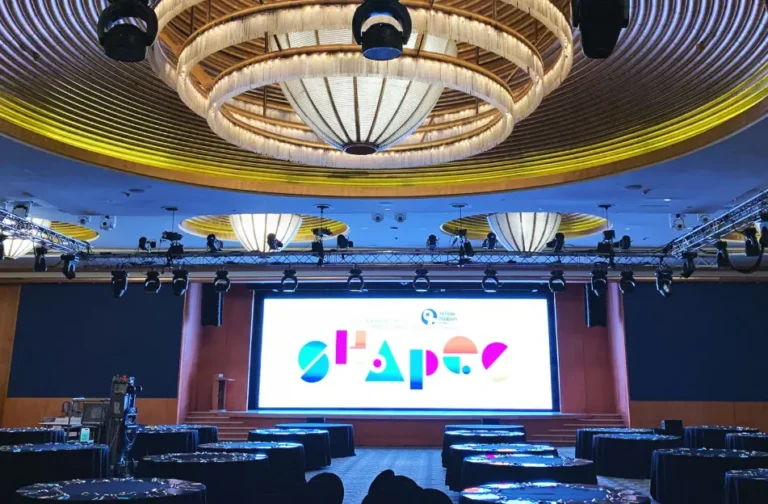
| Indoor Stage/Event | P2.0 – P2.5 | 800 – 1,000 Nits | IP20 | $1,200 – $2,200 |
| Indoor Commercial Space | P3.0 – P4.0 | 800 – 1,000 Nits | IP20 | $800 – $1,300 |
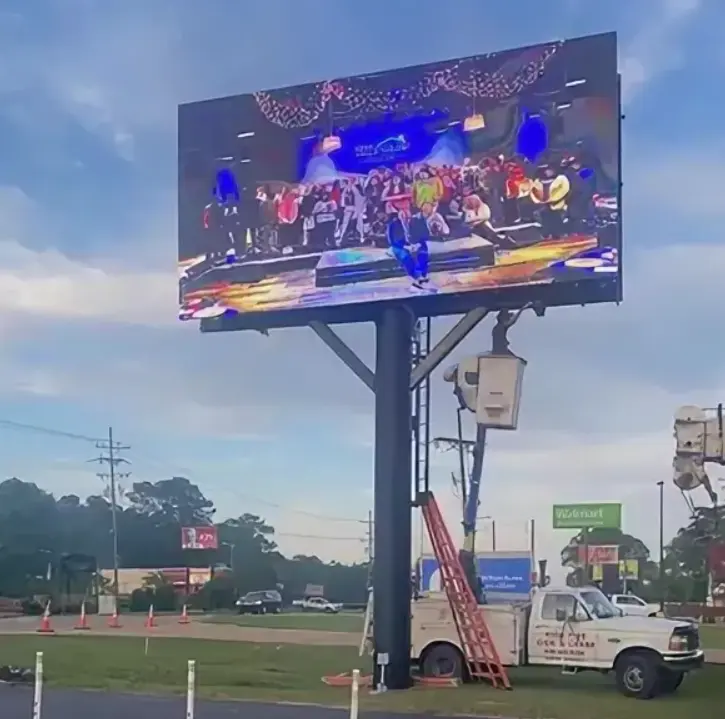
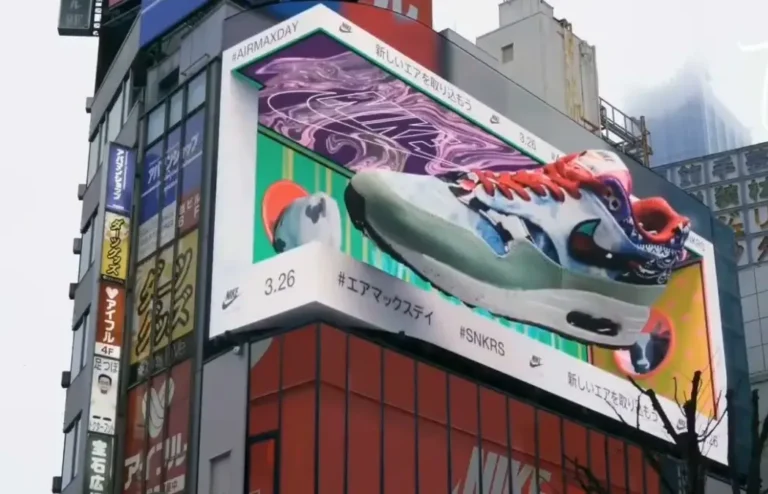
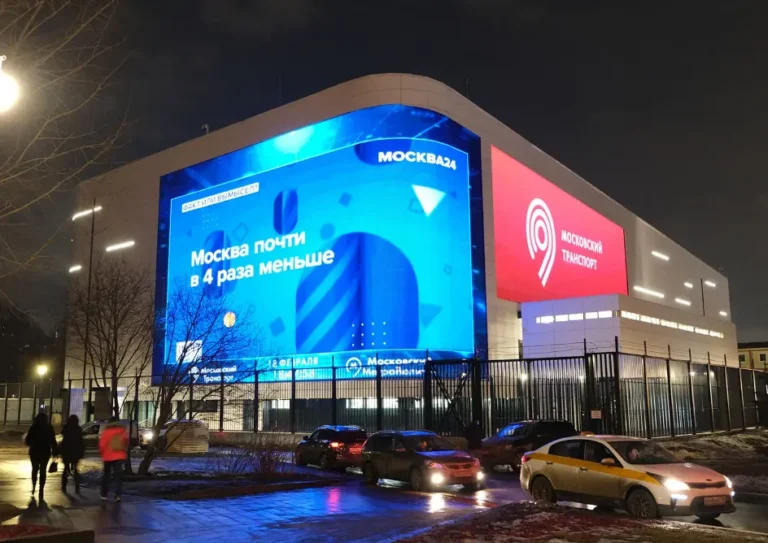
| Outdoor DOOH/3D Curved | P3.0 – P6.0 | 5,500 – 7,000 Nits | IP65 | $1,800 – $3,500 |
Note: Prices reflect standard B2B volume orders. Single prototype runs will incur a premium.
The Reality of Flexible LED Budgeting
Your client just handed you a rendering of a stunning, wave-shaped ceiling display or a 360-degree curved pillar. Now you have to make the math work. The reality is, most system integrators and DOOH advertisers severely miscalculate their budgets because they don’t understand the engineering behind soft panels.
Based on our experience with engineering over 400 custom curved display structures globally, the number one reason projects fail at the procurement stage is hidden structural and processing costs. According to 2026 DOOH hardware deployment data, nearly 35% of integrators experience budget overruns exceeding 20% simply because they conflated a “module price” with a functional screen price.
The Short Answer: Average Price Per Square Meter
As outlined in the matrix above, you are looking at a broad spectrum. But throwing a “per square meter” number at a procurement manager is useless without context. The physical environment where your screen lives dictates the baseline manufacturing cost.
Indoor vs. Outdoor Flex Screen Cost
-
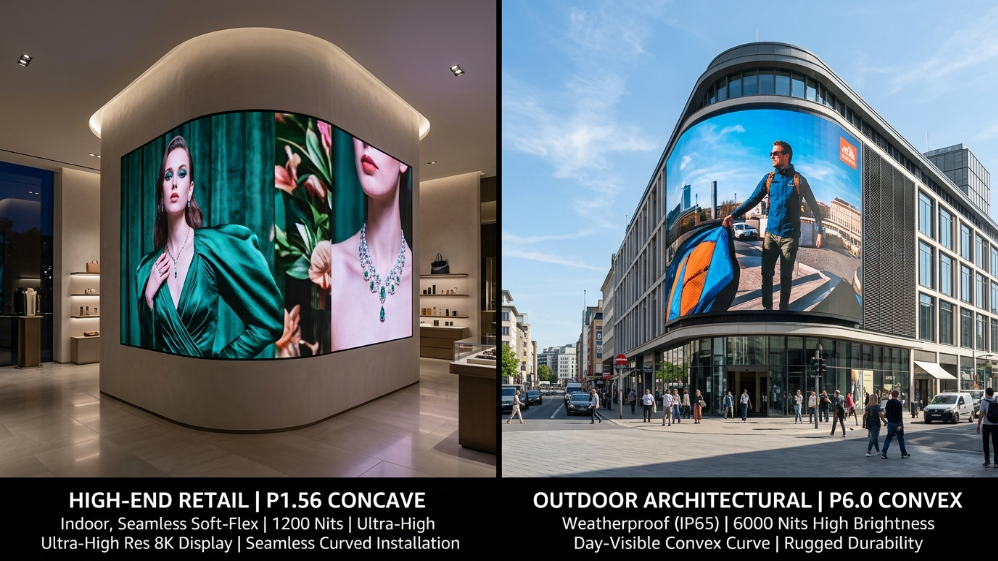
Indoor Soft Modules: Relatively straightforward. Operating at standard brightness (~800 nits) and IP20 rating, they don’t require extreme weatherproofing.
-
Outdoor Flexible Screens: A completely different engineering beast. To achieve an IP65 rating on a bendable surface, specialized UV-resistant glue and silicone masks are required. Furthermore, overpowering the sun requires 6,000+ Nits.
The Business Benefit: While an outdoor flex screen costs 40-60% more, this investment guarantees uninterrupted 24/7 revenue. Cutting corners on an IP65 rating for a curved billboard guarantees water ingress and catastrophic failure during the first heavy rainstorm.
Why Looking at the “Module Price” Only is a Mistake
If a supplier quotes you “$600 per square meter” for a P2.5 flex screen, run. They are quoting the bare-bones flexible FPC boards. They are deliberately omitting the heavy lifting:
-
Custom-rolled steel structures to hold the curve.
-
Receiving Cards and Control Systems (e.g., Novastar or Brompton).
-
Intricate Magnetic Suction Installation frameworks.
A screen is a system, not a pile of bendable tiles.
What Determines the Cost of a Flexible LED Display?
To accurately estimate your bid, you must understand the core pricing factors:
Pixel Pitch (P-Value)
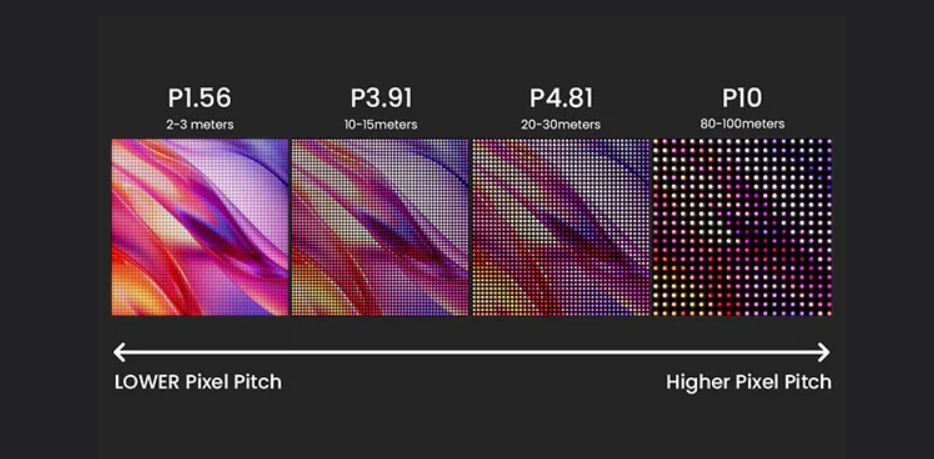
This is the single largest cost driver. Pixel pitch refers to the distance (mm) between the center of one LED bead to the next. You are paying for the density of the SMD Packaging.
Table 2: Pixel Density vs. Cost Correlation Matrix
| Pixel Pitch | LED Density (Pixels/sqm) | Optimal Viewing Distance | Cost Index Multiplier | Core Application |
| P1.25 | 640,000 | 1.2+ meters | 3.5x | Luxury retail close-ups |
| P1.86 | 288,906 | 1.8+ meters | 2.1x | Broadcast studios, museums |
| P2.5 | 160,000 | 2.5+ meters | 1.0x (Base) | Stage design, pillars |
| P4.0 | 62,500 | 4.0+ meters | 0.6x | Large ceiling waves |
The Business Benefit: Specifying the correct pitch prevents overpaying. If a wavy ceiling is 5 meters high, a P4.0 delivers the same visual impact as a P1.56 at a fraction of the cost.
Raw Materials: FPC Boards and Silicone Masks
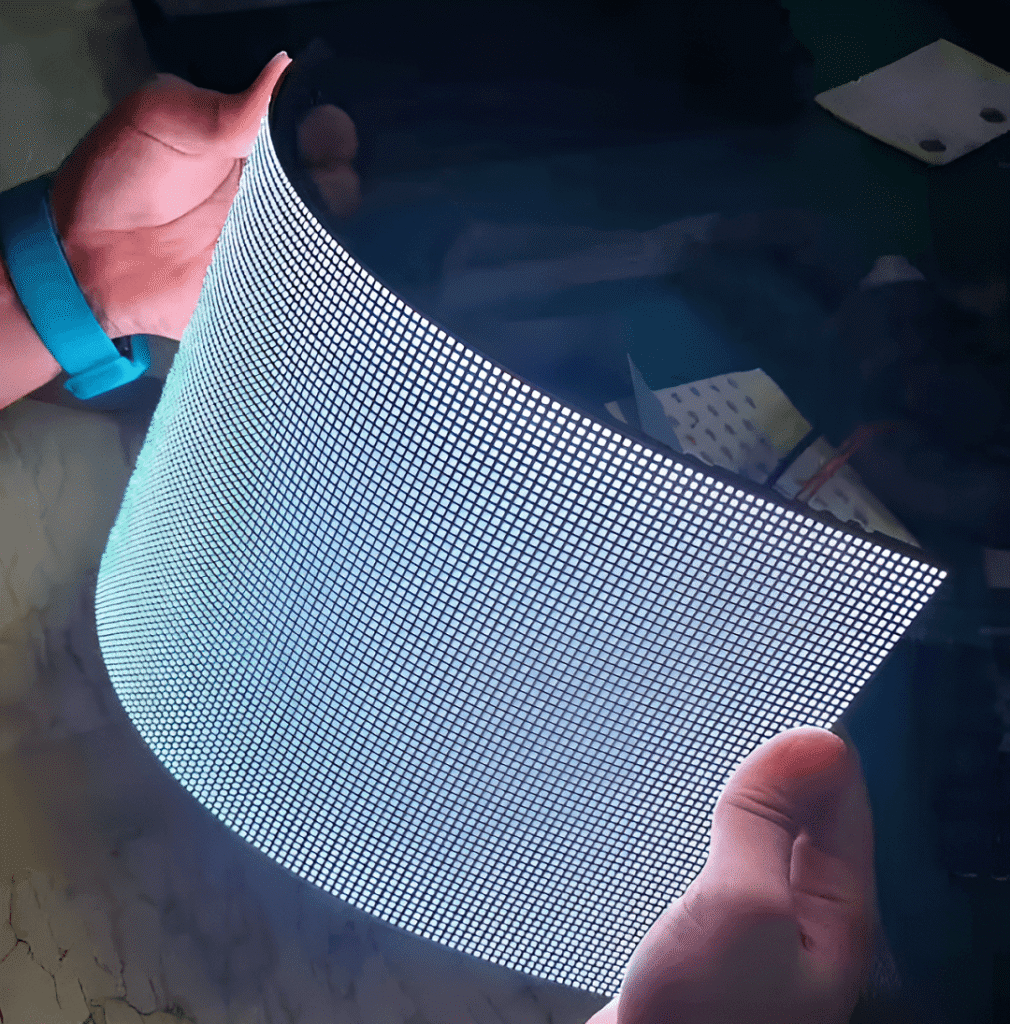
Flex screens rely on a Flexible FPC (Flexible Printed Circuit). Cheap manufacturers use 2-layer copper foils which fracture when bent. We use multi-layer, highly resilient FPCs and high-grade silicone masks.
Refresh Rate and IC Drivers: 3840Hz vs. 7680Hz
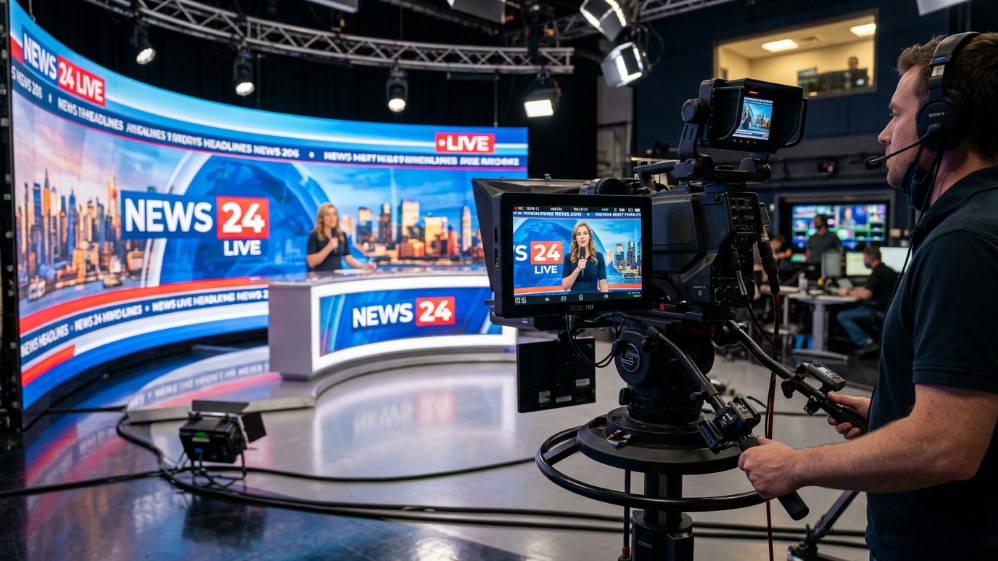
Standard displays run at 3840Hz. However, for broadcast or events, cameras are the real audience.
-
7680Hz Upgrade: Costs slightly more but eliminates scan lines and moiré patterns on camera. It is the cheapest insurance policy against a PR disaster during a live-streamed launch.
Custom Bending Radius Requirements
Every module has a Minimum Bending Radius (typically 300mm–400mm). If your design requires a tighter, extreme curve, it requires specialized tooling, custom ultra-flexible PCBs, and R&D, driving up manufacturing costs.
The Hidden Costs: Calculating Total Cost of Ownership (TCO)
Control Systems: The Brains Behind the Curve
A curved screen requires robust data mapping. High-end processors like the Novastar H-Series or Brompton Tessera can add $1,500 to $10,000+ to a project.
Custom Steel Structures and Mounting
Flex modules utilize Magnetic Suction Installation. Because every curve is bespoke, the metalwork is custom-fabricated. Precision CNC-machined back-frames ensure modules align with zero gaps.
Logistics: Packaging & Shipping
-
Wooden Boxes: Cheap ($100–$150) but single-use.
-
Flight Cases: Mandatory for touring/events ($250–$400 each).
-
Note: Air freighting a 20sqm system impacts landed cost significantly compared to ocean freight.
Real-World Scenarios: Project Budget Estimates
Table 3: Real-World Flexible LED Project Budget Estimator (TCO)
| Project Scenario | Dimensions & Specs | Estimated Total Cost | Hidden Cost Drivers |
| Retail Pillar Wrap | 5 sqm (Indoor P2.0), 360° | $9,500 – $14,000 | Precision cylindrical sub-frame; premium masking. |
| Stage Wavy Ceiling | 15 sqm (Indoor P3.0) | $16,000 – $22,000 | Lightweight rigging; 7680Hz ICs; Flight cases. |
| 3D DOOH Corner | 10 sqm (Outdoor P6.0, IP65) | $25,000 – $35,000 | 6,000 Nits LEDs; waterproof glue; UV masks. |
How Does it Work and Is It Worth the Investment?
Features That Make Flexible Modules Unique
The engineering marvel is the decoupling of rigidity. Using a soft PCB and silicone mask allows modules to convex or concave without severing electrical connections. Their front-serviceable magnetic design allows a technician to replace a module in under 60 seconds.
ROI Analysis: Why Pay the Premium?
B2B buyers invest the 20-40% premium because curved displays command immediate attention. For high-end retail, a seamless curve increases dwell time and ad recall. You are buying increased foot traffic and premium ad space valuation.
How to Choose a Reliable Manufacturer (Avoid These Traps)
-
Beware of Dead Pixels: Ensure the use of gold-wire SMD chips (e.g., Nationstar or Kinglight).
-
Warranty for Custom Shapes: Ensure the contract includes 3-5% spare parts from the original batch to avoid color mismatches during future replacements.
Frequently Asked Questions (FAQs)
Q1: Can I cut a flexible LED screen to fit my exact size?
No. Cutting the FPC board destroys the circuitry. Custom sizes must be engineered at the PCB manufacturing stage.
Q2: Are flexible LED screens durable?
Yes. Once mounted via magnetic suction to a frame, they are highly durable. However, they require careful handling during installation as they lack a rigid chassis.
Q3: What is the manufacturing lead time?
Typical production takes 15 to 20 working days. Extreme custom radii requiring new PCB tooling can take 35 to 45 days.
Q4: Why do two quotes for the same P2.5 screen differ by 30%?
The cheaper quote likely compromises on refresh rate (1920Hz vs 3840Hz), uses 2-layer FPCs, or excludes mounting frameworks and control systems.
The Engineer’s Verdict
Budgeting for a flexible LED display is about mitigating installation risks, not finding the lowest price. If your quote doesn’t detail the FPC layer count, refresh rate, and mounting substructure, you aren’t ready to buy. Focus on suppliers who engineer the framework alongside the modules.
References:
CIE Standards for LED Photometry and Color Consistency in Digital Displays.
NIST Technical Series: Mechanical Reliability and Stress Analysis of Flexible Electronic Systems.