Choosing the “best” pixel pitch is not about finding the smallest number; it is about finding the convergence point between human visual acuity and your project’s Capital Expenditure (CapEx).
If your audience is 10 meters away, paying a 300% premium for a P1.2 fine-pitch screen is a strategic financial error. Conversely, installing a P4.0 in a high-end boardroom will result in visible “screen door” effects that diminish your brand authority.
2026 Strategic Selection Matrix for B2B LED Displays
The table below provides the immediate engineering consensus for 2026 deployment standards:
| Pixel Pitch (mm) | Min. Viewing Distance | Optimal Viewing Distance | Primary B2B Application | Recommended Technology |
| P0.7 – P1.2 | 0.7m – 1.2m | 2m – 3m | Command Centers, XR Stages | Micro-LED / COB |
| P1.5 – P2.0 | 1.5m – 2.0m | 4m – 5m | Corporate Boardrooms, High-end Retail | Fine-Pitch SMD / COB |
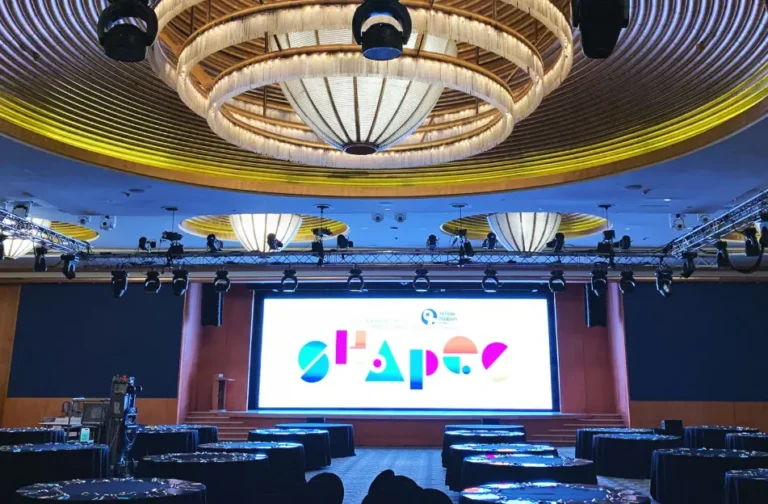
| P2.5 – P4.0 | 2.5m – 4.0m | 6m – 10m | Houses of Worship, Auditoriums | Standard SMD |
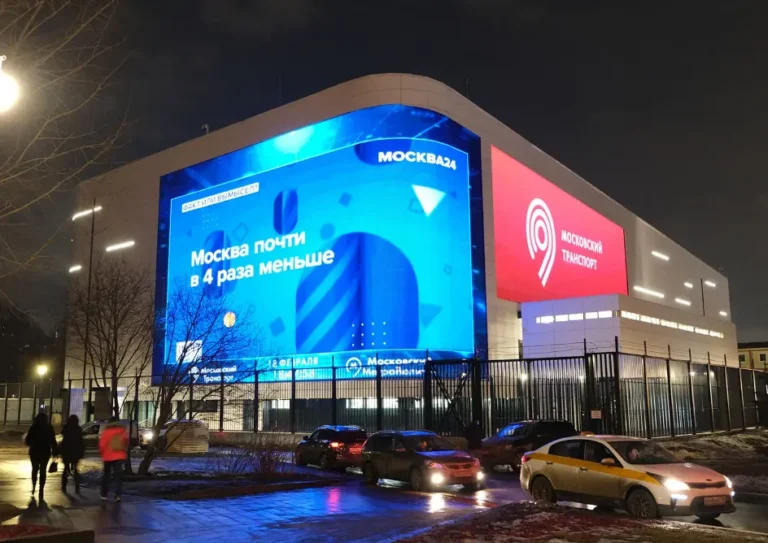
| P5.0 – P10.0 | 5m – 10m | 15m – 30m | DOOH Billboards, Sports Stadiums | Outdoor SMD / DIP |
Expert Insight: Based on over 500 large-scale integrations, the most common pitfall is over-speccing. We have seen CTOs burn 40% of their annual AV budget on ultra-fine pitches where the viewer never gets closer than five meters.
Understanding the Basics: What is Pixel Pitch?
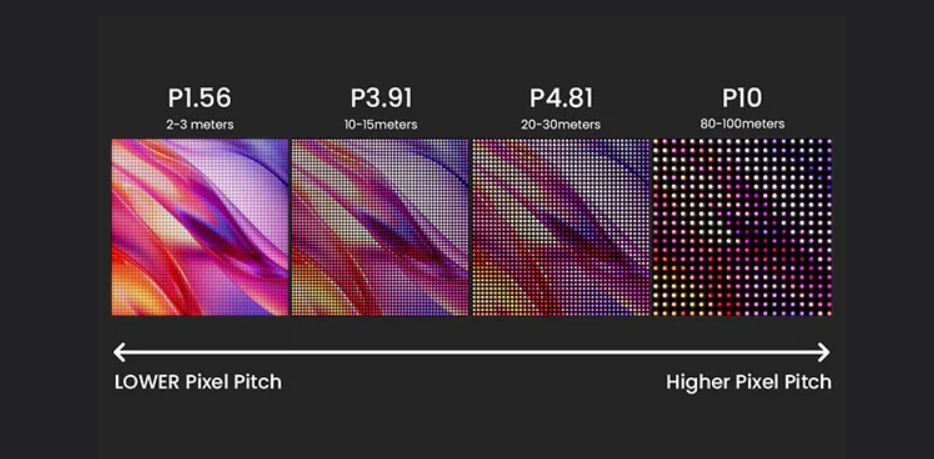
At its core, pixel pitch (often denoted as “P” followed by a number) is the distance from the center of one LED cluster to the center of the next, measured in millimeters.
The Relationship Between Density and Resolution
A smaller pixel pitch means higher pixel density. In a 2026 market dominated by 4K and 8K content, pixel pitch dictates how large your physical screen must be to reach a specific resolution. For instance, to achieve native 4K (3840 x 2160):
-
With P1.2: Your screen needs to be roughly 4.6 meters wide.
-
With P2.5: That same 4K resolution requires a massive 9.6-meter wide wall.
The Myth Debunked: Is Lower Always Better?
Short answer: No. While a lower pitch increases resolution, it introduces three major B2B challenges:
-
Exponential Cost Scaling: Moving from P2.5 to P1.2 often triples the price due to PCB complexity and lower diode yield rates.
-
Heat & Power Management: More LEDs generate more heat, requiring sophisticated thermal management and increasing utility costs.
-
Fragility: Fine-pitch LEDs (especially SMD) are significantly more prone to “dead pixels” during installation.
The Golden Rule: Calculating Viewing Distance
To ensure your investment delivers a seamless visual experience, you must calculate the Optimal Viewing Distance (OVD).
The Engineering Formula for 2026
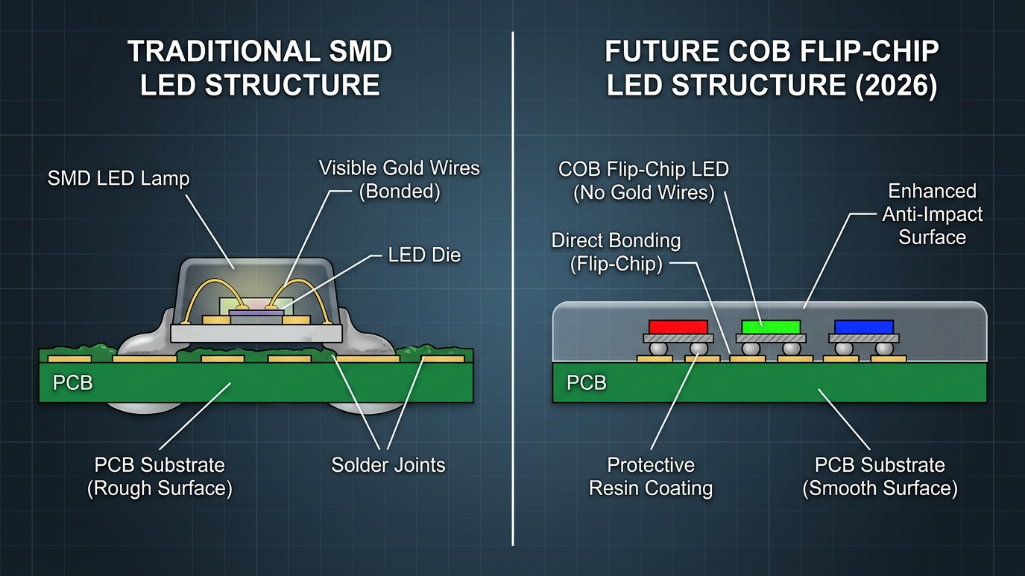
Modern high-contrast masking and COB (Chip-on-Board) technologies have refined these requirements:
-
Minimum Viewing Distance (MVD): Pixel Pitch × 1 meter. (Acceptable, but some grain may be visible).
-
Optimal Viewing Distance (OVD): Pixel Pitch × 2.5 meters. (The “sweet spot” for clarity).
Technical Comparison of Packaging Technologies (The FAB Framework)
| Feature | Benefit for the Buyer | Impact on Choice |
| SMD (Surface Mount) | Mature supply chain; lower initial CapEx. | Best for budget-conscious, large-scale projects (P2.5+). |
| COB (Chip-on-Board) | High durability (Impact resistant); superior blacks. | Critical for “touch” distances or high-traffic (P0.9-P1.5). |
| Common Cathode | 20-30% lower power consumption; cooler operation. | Reduces TCO for 24/7 mission-critical centers. |
Application-Based Selection
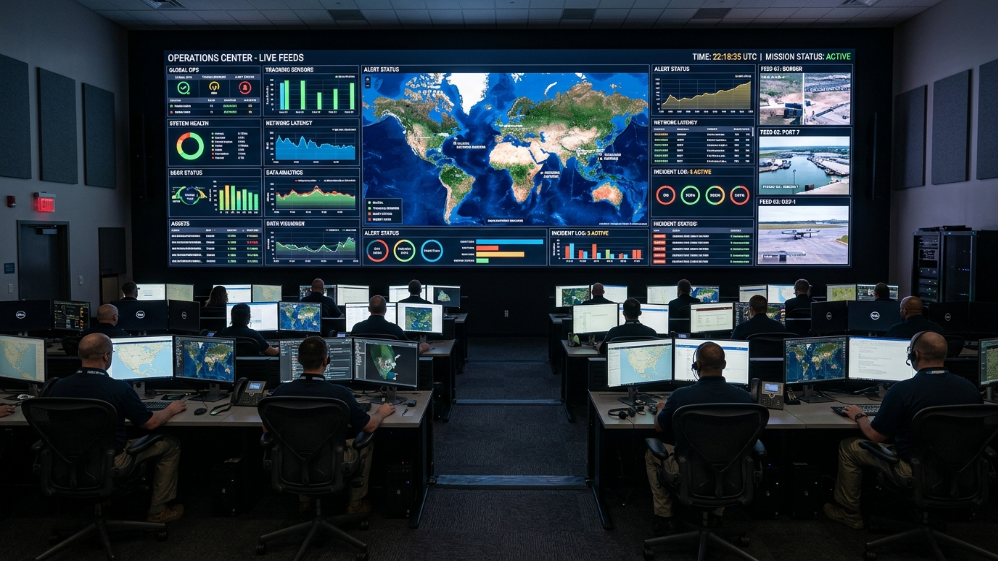
Fine-Pitch LED (P0.7 – P2.5)
-
Best For: Control Rooms & Corporate Lobbies.
-
Why it matters: In these environments, “Information Density” is key. You are viewing small-font data and high-res maps.
-
Engineering Tip: Prioritize a pitch that allows for native 4K resolution within your available wall space to prevent “scaling artifacts.”
Standard Indoor Displays (P2.5 – P4.0)
-
Best For: Retail & Events.
-
The FAB Factor: P2.5 SMD offers high brightness (800-1200 nits) and wide viewing angles (160°), capturing attention without the prohibitive cost of fine-pitch modules.
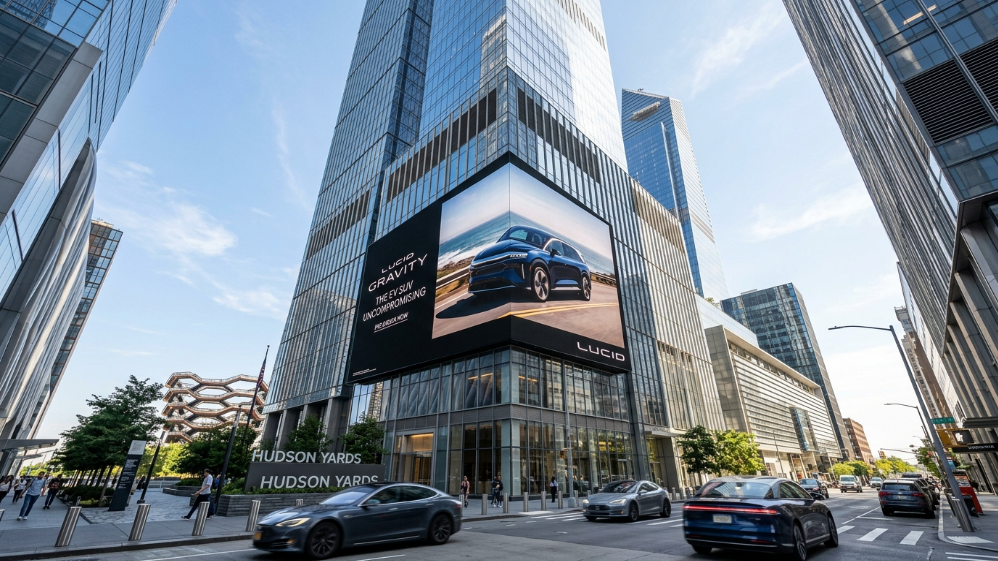
Outdoor DOOH Billboards (P6 – P10+)
-
Best For: Roadside Billboards & Stadiums.
-
ROI Logic: For an audience 20-100m away, P6 or P8 is the sweet spot. Finer pitches offer lower brightness; a P8 screen can push 8,000 to 10,000 nits to combat direct sunlight.
Virtual Production & XR Stages (P1.5 – P2.6)
-
Engineering Requirement: Here, we solve for the Moiré effect. XR stages require a pitch between P1.5 and P2.6, paired with a Refresh Rate of at least 7,680Hz to sync with cinema shutters.
Business Factors: The Economic Impact
The purchase price is only 40% of the Total Cost of Ownership (TCO).
| Pitch Selection | Initial CapEx | Installation Complexity | Energy Consumption | Maintenance Frequency |
| Under P1.2 | Ultra-High | Critical (Sub-mm alignment) | High | High (Fragile diodes) |
| P1.5 – P2.5 | Moderate | Standard Professional | Moderate | Low (If using COB) |
| P3.0 – P10.0 | Budget-Friendly | Low (Large modules) | Low | Minimal |
Real-World Head-to-Head: P2.5 vs. P3.0
-
Choose P2.5 if: You are in a high-traffic retail environment where customers stand within 2.5 meters.
-
Choose P3.0 if: The screen is mounted 4+ meters high (e.g., a church or ballroom). At that height, the human eye cannot perceive the difference, making the extra 30% cost a “zero-return” expense.
FAQ: Strategic Queries for B2B Buyers
-
Is a lower pixel pitch always better for image quality?
Technically yes for resolution, but no for “visual comfort.” If you sit too far from a low-pitch screen, you’ve wasted money on detail your eyes can’t resolve.
-
What is the best pixel pitch for a 4K LED wall?
For a 165-inch (3.6m wide) display, you need P0.9. For a 10-meter wall, P2.5 achieves 4K.
-
Can I use an indoor P2.5 screen for an outdoor event?
Never. They lack IP65 waterproofing and the 5,000+ nits of brightness required to compete with the sun.
-
Does COB technology make pixel pitch irrelevant?
No, but COB makes small pitches much more durable and provides a “seamless” feel that SMD cannot match.
The Expert Verdict
-
Mission-Critical Indoor: Stick to P1.2-P1.5 COB.
-
Commercial/Corporate: P2.5 remains the global “gold standard.”
-
Outdoor Advertising: P6 or P8 provides the best brightness-to-cost ratio.
Final Advice: Before signing a contract, calculate your audience’s average distance and request a side-by-side demo. If you can’t see the pixels from where your customers stand, you’ve found your pitch.
References:
DISCAS Standard (Display Image Size for 2D Content in Audiovisual Systems)
Information Display Journal: Progress and Challenges in Micro-LED and Fine-Pitch Packaging