If you are comparing an LED background wall, the right choice depends less on buying the largest or highest-resolution screen and more on matching pixel pitch, viewing distance, screen size, brightness, refresh rate, and installation requirements to the application. For a typical indoor event or stage, P2.6–P3.9 rental LED displays provide a strong balance between image quality and cost, while finer-pitch P1.5–P2.5 solutions are better for close viewing, photography, broadcasting, and premium corporate environments.
| Application | Typical Pixel Pitch | Typical Viewing Distance | Cost Position |
|---|---|---|---|
| Corporate events / conferences | P2.6–P3.9 | 3–10 m | Mid-range |
| Concerts / stage backdrops | P2.9–P4.8 | 5–15 m | Mid-range |
| Wedding / hotel ballroom | P2.6–P3.9 | 3–10 m | Mid-range |
| Broadcast / studio | P1.2–P2.5 | 1.5–6 m | Premium |
| Outdoor events | P3.9–P6.6 | 6 m+ | Application-dependent |
The most important point is simple: viewing distance should determine pixel pitch, while application determines the rest of the LED specification. Buying a finer pixel pitch than the audience can actually resolve may increase the project cost without producing a meaningful visual improvement.
What Is an LED Background Wall?
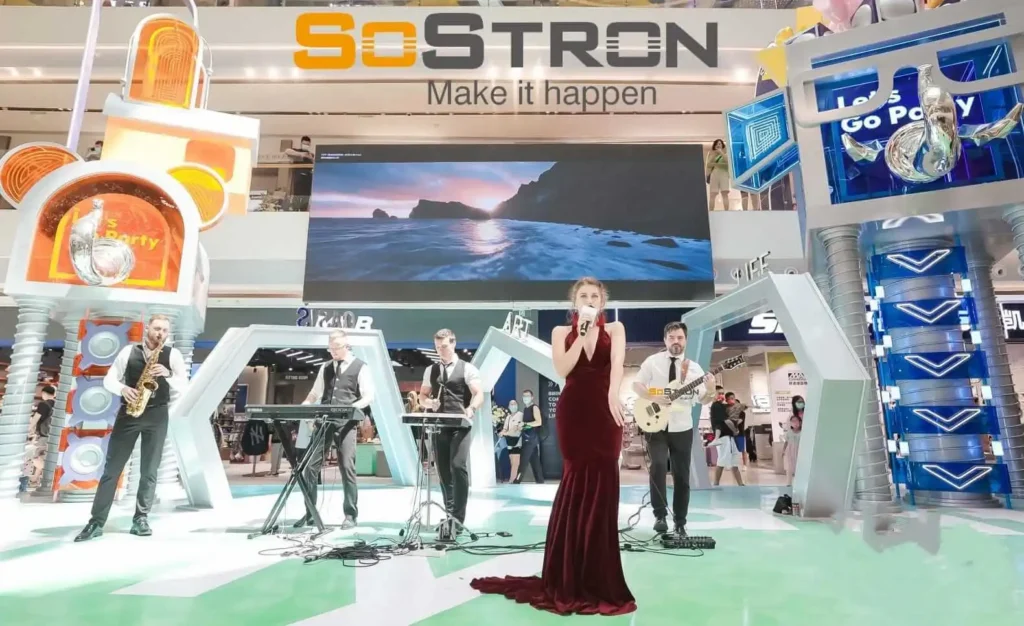
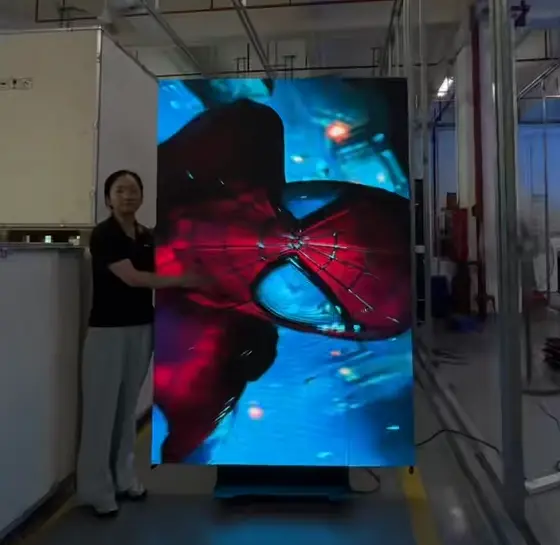
An LED background wall is a large-format direct-view LED display designed to provide a dynamic visual background for events, commercial spaces, stages, studios, and other environments.
Unlike a conventional projection system, an LED wall generates light directly from its LED pixels. This allows it to maintain strong contrast and visibility in environments where ambient lighting would reduce projector performance.
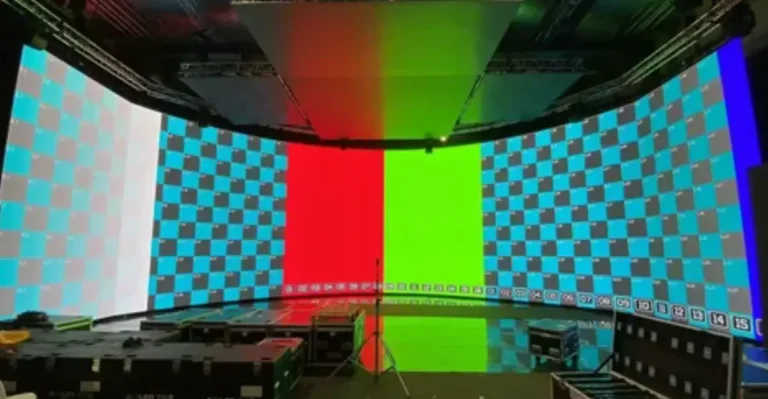
A modular LED background wall normally consists of LED cabinets, LED modules, receiving cards, power supplies, a control system, and a video processor. The cabinets can be assembled into different screen dimensions, making the system suitable for both permanent installations and temporary event applications.
For event production, rental-grade cabinets are particularly useful because they are designed for repeated assembly, transportation, stacking, and hanging.
Where Are LED Background Walls Used?
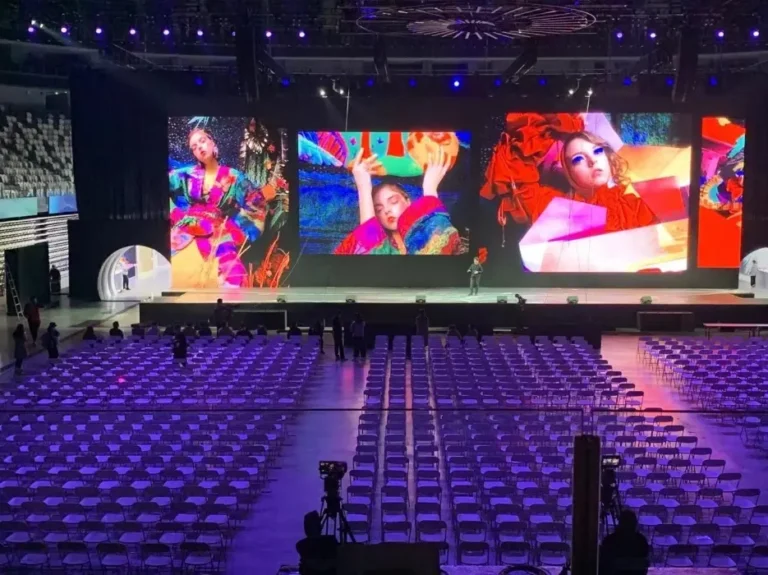
Stage and Concert Backdrops
Stage LED walls are widely used for concerts, festivals, performances, and touring productions. Instead of using a static printed backdrop, event producers can display video, animation, branding, live camera feeds, and synchronized graphics.
For large audiences, P3.9 or P4.8 can provide an economical balance between viewing distance and image quality. For smaller stages where the audience is closer to the screen, P2.6 or P2.9 may provide better visual detail.
Corporate Events and Conferences
Corporate conferences often require more than a decorative background. The screen may simultaneously display presentations, speaker graphics, sponsor content, videos, live feeds, and branding.
For this environment, color consistency, text readability, refresh rate, and reliable signal processing are more important than simply maximizing screen size.
Weddings and Hotel Ballrooms
An LED background wall can serve as the main stage backdrop while displaying names, photographs, videos, animations, and live camera feeds.
Rental LED cabinets are especially useful because the screen can be assembled, dismantled, transported, and reused for multiple events.
Exhibitions and Retail
At exhibitions, LED walls can create a high-impact visual focal point while reducing dependence on printed graphics. Retail stores and showrooms can also use LED backgrounds to create changing product environments and promotional displays.
Broadcast and Virtual Production
Camera-facing applications require a different specification strategy. Pixel pitch, refresh rate, scan behavior, grayscale performance, color calibration, and camera synchronization become critical.
Professional broadcast and virtual-production systems may require fine pixel pitches such as P1.2–P2.5, together with high refresh rates and camera synchronization technologies. Moiré is also an important consideration because the LED pixel matrix can interact with the camera sensor.
What Determines LED Background Wall Cost?
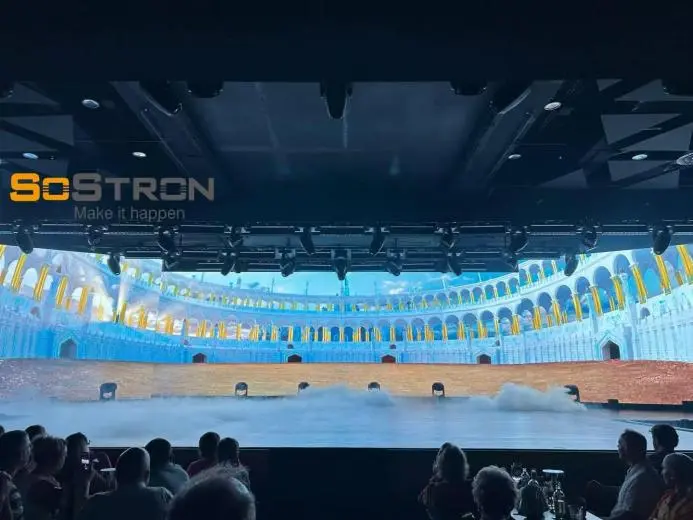
The LED background wall cost is not determined by screen area alone.
The major cost drivers include:
- Pixel pitch
- Screen size
- Indoor or outdoor specification
- Cabinet type
- Brightness
- Refresh rate
- LED package and encapsulation
- Control system
- Installation structure
- Transportation and logistics
- Maintenance requirements
- Rental or purchase model
LED Background Wall Cost by Pixel Pitch
As a general 2026 purchasing reference, indoor LED background wall hardware can vary substantially depending on pitch and configuration. Current market guides show that fine-pitch P1.5–P1.9 systems can command substantially higher installed prices than P3–P4 systems, while outdoor P4–P8 solutions generally target longer viewing distances and lower cost per area.
| Pixel Pitch | Typical Application | Relative Cost |
|---|---|---|
| P1.2–P1.9 | Broadcast, premium studio, close viewing | High |
| P2.5–P2.9 | Corporate, retail, premium events | Medium-high |
| P3.9–P4.8 | Stage, wedding, conference, rental | Medium |
| P5–P6.6 | Large venues and outdoor events | Lower |
These are planning ranges rather than fixed quotations. A complete project can cost considerably more than the LED panels themselves because installation, processing, structure, shipping, and local labor may be additional.
For example, current event-focused market references place standard P3.9 rental-grade systems around several hundred to roughly USD 1,100 per square meter depending on specification, while premium P2.5 systems can exceed USD 1,200 per square meter.
Hardware Price vs. Total Project Cost
One of the most common purchasing mistakes is comparing two supplier quotations solely by the LED panel price.
A complete LED background wall project may include:
- LED cabinets and modules
- Sending cards and receiving cards
- Video processor
- Control computer or media server
- Power distribution
- Steel or aluminum support structure
- Hanging or stacking hardware
- Cables
- Transportation
- Installation and commissioning
- Spare modules and power supplies
- Taxes, customs, or import costs
For example, a supplier may offer a low panel price but exclude the processor, structure, installation, or shipping. Another supplier may quote a higher initial price while including more components.
For B2B procurement, compare the complete system cost, not simply the USD/m² number.
How Pixel Pitch Affects Viewing Distance
Pixel pitch is the distance between the centers of adjacent LED pixels, measured in millimeters.
A smaller pixel pitch provides greater pixel density and finer image detail, but it also increases manufacturing complexity and cost.
A practical rule of thumb is:
Approximate comfortable viewing distance (meters) ≈ pixel pitch (mm) × 3
This is not a universal engineering formula, but it is useful for initial planning. Final pitch selection should also consider content type, screen size, camera use, audience position, and the actual venue.
For example:
- P2.6 → approximately 7.8 m as a simple reference
- P3.9 → approximately 11.7 m
- P4.8 → approximately 14.4 m
However, event applications often have people much closer than these simplified distances. In that situation, P2.6 or P2.9 may provide a better viewing experience.
The key purchasing principle is:
Do not buy the smallest pixel pitch simply because it has the highest resolution. Buy the pitch that matches the real viewing distance.
Refresh Rate: Why It Matters for Cameras
Refresh rate is especially important when an LED background wall will appear in photographs, livestreams, video recordings, or broadcast productions.
A refresh rate of 3,840Hz or higher is commonly preferred for professional camera-facing applications. Lower refresh rates can produce visible flicker, scan lines, or banding depending on camera frame rate and shutter settings.
However, refresh rate alone does not guarantee camera performance. Pixel structure, driver IC, scan mode, camera shutter, frame rate, processing, and synchronization can all influence the final image.
For demanding broadcast and virtual-production environments, camera testing before installation is a much safer approach than relying solely on a specification sheet.
Brightness and Indoor vs. Outdoor LED Walls
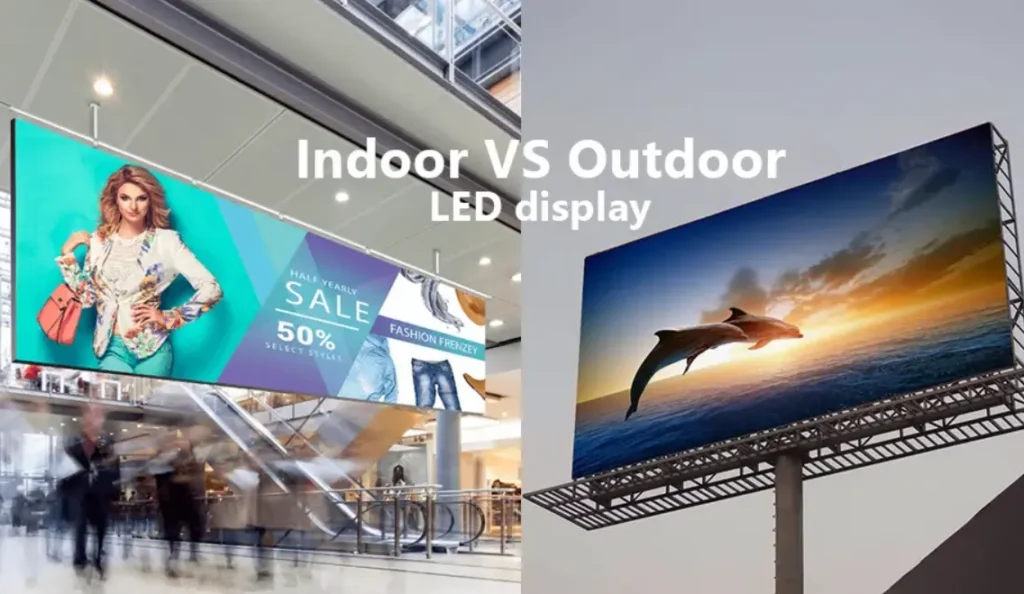
Brightness should be selected according to ambient light.
Indoor LED background walls normally require significantly less brightness than outdoor displays. Excessive brightness in a dark ballroom can create glare and reduce visual comfort.
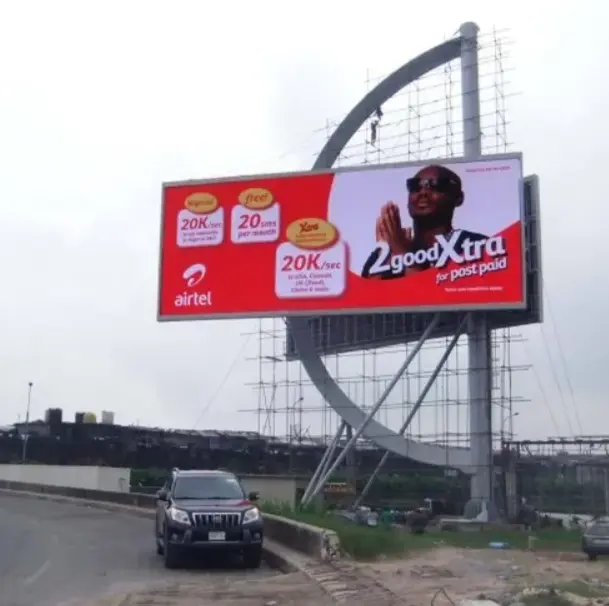
Outdoor LED walls require much higher brightness because direct sunlight can wash out the image.
For outdoor installations, also evaluate:
- IP protection
- Rain resistance
- Dust resistance
- Operating temperature
- Heat dissipation
- Wind load
- Cabinet structure
For example, Sostron’s Ares3 outdoor LED display is designed for fixed outdoor installations with high brightness and weather-resistant construction, while its Ares 2 series focuses additionally on power efficiency and operating-cost reduction.
Rental LED Background Wall vs. Fixed LED Wall
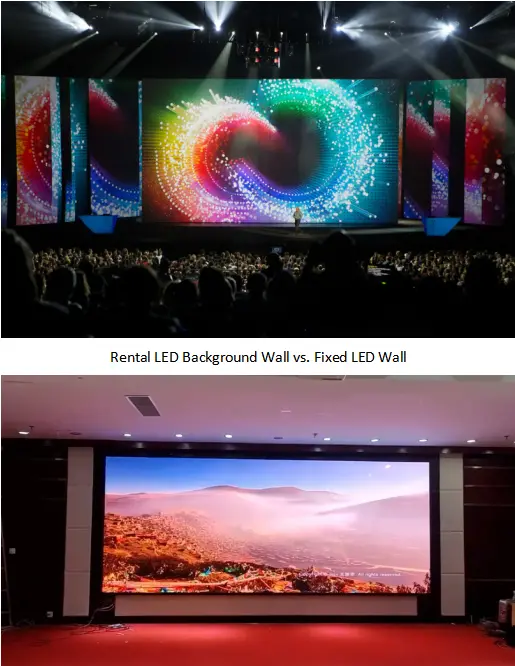
For temporary events, a rental LED background wall is usually the more practical choice.
Rental systems are designed around:
- Fast assembly
- Lightweight cabinets
- Frequent transportation
- Hanging and stacking
- Corner protection
- Front/rear maintenance
- Quick module replacement
A fixed LED wall, on the other hand, is better suited to installations that remain in the same location for years.
If an event company produces many events every year, purchasing can make sense because the same LED inventory can be reused across multiple projects. If the screen will only be used once or twice, rental may provide a lower upfront commitment.
The correct comparison is therefore not simply:
Purchase price vs. rental price
but:
Annual utilization × rental cost vs. purchase cost + maintenance + logistics + depreciation.
What Specifications Should You Check Before Buying?
A professional LED background wall quotation should clearly specify the following:
| Specification | Why It Matters |
|---|---|
| Pixel pitch | Determines pixel density and viewing distance |
| Cabinet size | Influences screen configuration and transportation |
| Brightness | Determines suitability for ambient lighting |
| Refresh rate | Important for camera and live video |
| Grayscale | Affects smooth gradients and dark scenes |
| Contrast ratio | Influences image depth |
| Viewing angle | Important for off-axis audiences |
| IP rating | Critical for outdoor installations |
| LED package | Affects reliability and visual performance |
| Maintenance access | Determines service efficiency |
| Controller/processor | Determines signal and content capabilities |
| Warranty | Reduces long-term procurement risk |
Do not evaluate these specifications independently. A P2.5 screen with poor calibration and unsuitable processing may perform worse in a real production environment than a properly engineered P2.9 system.
How to Calculate the Right LED Background Wall Size
Screen size should be determined from the stage, audience, content, and camera composition.
For a corporate presentation, a wide 16:9 configuration may be appropriate. For a concert stage, however, a custom ratio may provide better visual coverage.
Consider:
- Stage width
- Stage height
- First-row viewing distance
- Total audience size
- Content aspect ratio
- Camera framing
- Side-stage visibility
- Rigging or structural limitations
A larger screen is not automatically a better screen. If the additional area cannot be seen by the audience or camera, it may simply increase the project cost.
Maintenance and Total Cost of Ownership
The cheapest LED background wall is not necessarily the lowest-cost solution over five years.
Consider the Total Cost of Ownership (TCO):
TCO = Purchase + Installation + Transportation + Energy + Maintenance + Replacement + Downtime
Front-service LED modules can be particularly valuable where rear access is restricted. Rental companies should also pay attention to corner protection, cabinet strength, fast locks, spare parts availability, and module replacement time.
For rental operations, cabinet durability has a direct relationship with business profitability because the same inventory may be assembled and transported hundreds of times.
Sostron’s Hima rental series, for example, is designed around modular rental use, lightweight die-cast aluminum cabinets, fast installation, front/rear maintenance, and multiple pixel-pitch options for event applications.
Common LED Background Wall Buying Mistakes
Choosing Pixel Pitch Only by Price
A cheap P4.8 screen may look attractive until the first row is only three meters away.
Comparing Only USD/m²
Always confirm what the quoted price includes.
Ignoring Camera Performance
A screen that looks excellent to the naked eye may produce moiré or scan lines on camera.
Buying Excessive Brightness
More brightness is not always better, especially in indoor environments.
Forgetting Installation Costs
Structure, rigging, labor, power distribution, and commissioning can significantly affect the final project budget.
Ignoring After-Sales Support
For commercial LED systems, spare parts and technical support can be more valuable than a small initial discount.
Is an LED Background Wall Worth the Investment?
For businesses that regularly organize events, operate venues, provide AV rental services, or require permanent digital branding, an LED background wall can provide strong long-term value because one modular display can support multiple types of content and applications.
The investment becomes particularly attractive when the screen can be reused across conferences, exhibitions, concerts, weddings, product launches, and corporate events.
The objective should not be to buy the most expensive LED wall. It should be to build the lowest-risk system that meets the required visual performance and operating cycle.
Why Choose Sostron for an LED Background Wall?
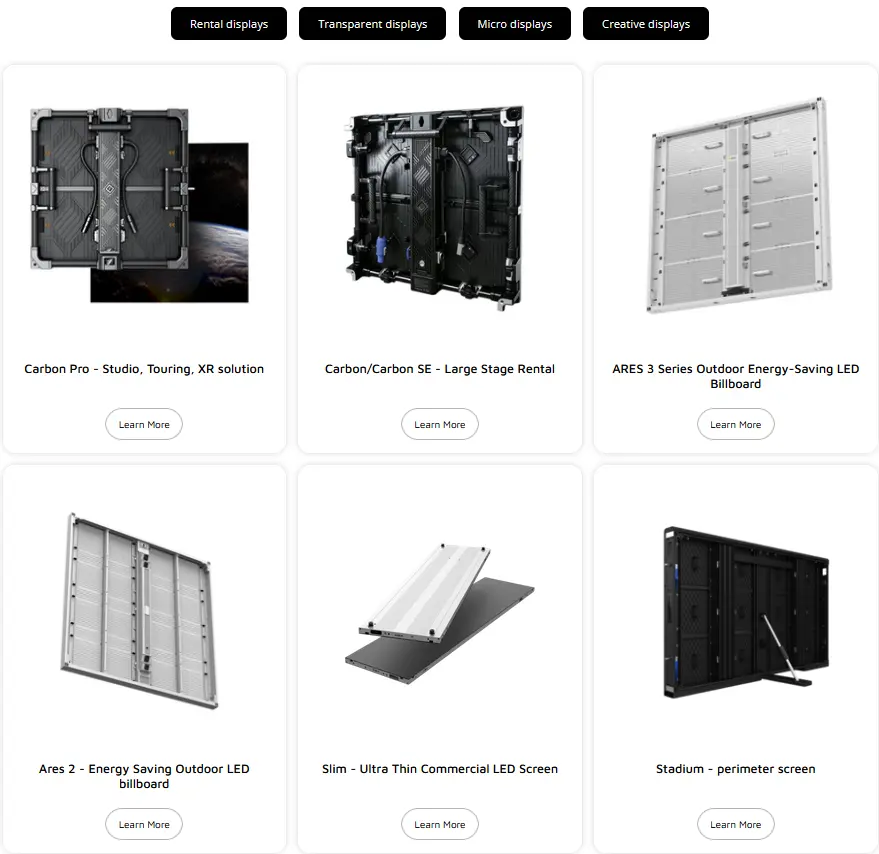
Sostron provides LED display design, manufacturing, engineering support, installation guidance, and after-sales technical service for commercial display projects. Its product portfolio covers indoor LED video walls, rental LED displays, outdoor LED billboards, fine-pitch displays, and customized LED solutions.
For event and stage applications, Sostron’s rental portfolio includes the Hima and sPad Pro series, with different pixel pitches and cabinet configurations for indoor, outdoor, curved, and camera-facing applications.
Instead of selecting an LED wall from a price list alone, Sostron can help match screen size, pixel pitch, brightness, refresh rate, cabinet design, installation method, and application requirements to the actual project.
If your project requires a rental LED wall for concerts, conferences, exhibitions, or stage production, explore Sostron’s rental LED display solutions to compare suitable cabinet designs and pixel-pitch options.
For outdoor advertising or large-format commercial installations, Sostron’s outdoor LED display solutions are designed around brightness, weather resistance, thermal management, and long-term operating efficiency.
Frequently Asked Questions
How much does an LED background wall cost?
The cost varies according to pixel pitch, size, cabinet type, application, and installation requirements. A small indoor system may cost several thousand dollars, while large professional installations can reach tens of thousands of dollars or more. Current 2026 market references show substantial price differences between P1.5–P1.9 fine-pitch systems and P3–P4 event systems.
What is the best pixel pitch for an LED background wall?
For many indoor events, P2.6–P3.9 provides a practical balance between image quality and cost. P1.2–P1.9 is more appropriate for close-viewing, broadcast, and virtual-production applications.
Is a rental LED background wall better than a fixed LED wall?
For temporary events and frequent relocation, rental LED cabinets are usually better. For permanent installations, fixed LED cabinets can provide a more suitable long-term solution.
What refresh rate should an LED background wall have?
For normal visual applications, 1,920Hz may be adequate, but 3,840Hz or higher is generally preferred for photography, livestreaming, and professional video production.
Can an LED background wall be used outdoors?
Yes. Outdoor applications require suitable brightness, IP protection, thermal management, structural engineering, and weather-resistant cabinets. The exact specification should be based on the installation environment.
References:
AVIXA — LED Video Wall Installation
USC Viterbi School of Engineering — LED Virtual Production