When buyers search “how much does a LED video wall cost?”, they often expect one number. In practice, there is no meaningful single price because an LED video wall is a configurable system rather than an off-the-shelf television.
For 2026 commercial projects, a useful starting point is to separate LED video wall hardware cost from the complete installed project cost. Hardware pricing can range from roughly $500 to $9,000+ per m² ($46–$836+ per sq. ft.), depending heavily on pixel pitch, indoor or outdoor specification, LED package, cabinet design and application. A turnkey project can be substantially higher once the video processor, structure, electrical work, installation, calibration, logistics and commissioning are included. Current market guides show similarly wide ranges, with fine-pitch indoor systems at the high end and larger-pitch outdoor systems at the lower end.
The more useful question is therefore not simply “What does an LED wall cost?”, but:
What specification does the application actually require, and what will the complete system cost to operate?
That distinction can prevent a surprisingly expensive procurement mistake.
How Much Does an LED Video Wall Cost?
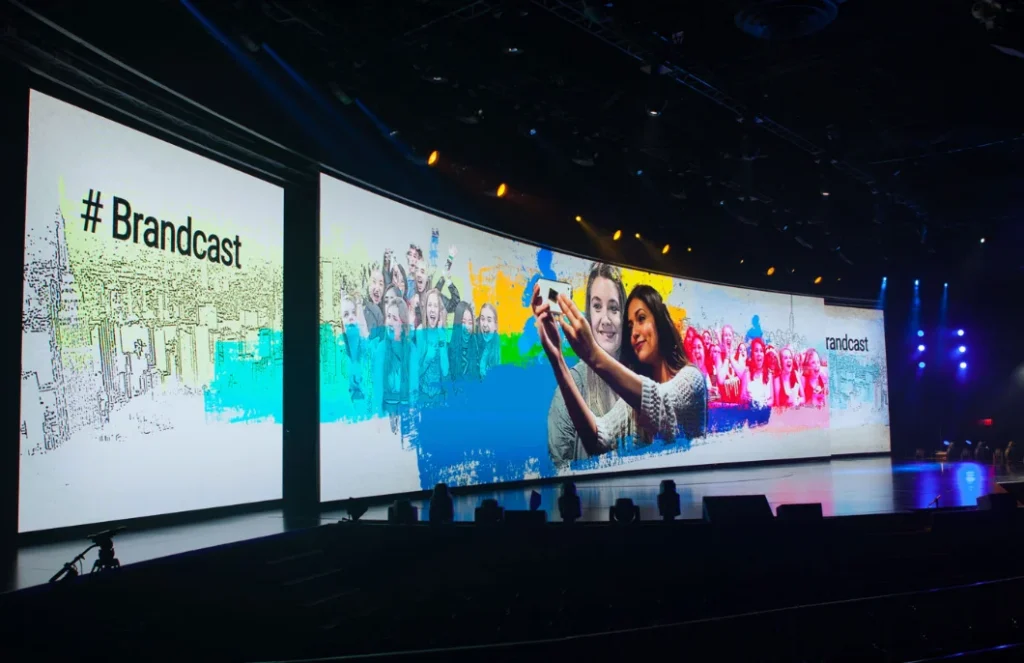
For early-stage budgeting, the following ranges are useful planning benchmarks rather than fixed quotations.
| LED Video Wall Type | Typical Pixel Pitch | Hardware-Only Budget | Typical Installed Budget |
|---|---|---|---|
| Large outdoor advertising | P8–P16 | $500–$1,500/m² | $800–$2,200+/m² |
| Standard outdoor display | P5–P8 | $1,200–$2,500/m² | $1,800–$3,500+/m² |
| Indoor event/stage | P2.5–P4 | $1,500–$4,000/m² | $2,000–$5,000+/m² |
| Fine-pitch indoor | P1.2–P2.0 | $3,500–$9,000+/m² | $4,500–$11,000+/m² |
| Premium COB / specialty LED | P0.7–P1.5 | $5,000–$10,000+ | $6,000–$12,000+ |
These ranges should be treated as budgetary benchmarks, not a substitute for a project quotation. Pixel pitch, order quantity, cabinet construction, LED package, brightness, processing requirements, installation location and service scope can materially change the final number. Current 2026 market guides show similarly broad ranges between coarse-pitch outdoor LED and fine-pitch indoor systems.
What Does an LED Video Wall Cost Per Square Foot?
For buyers working with U.S. contractors, pricing is often expressed per square foot rather than per square meter.
The conversion is:
1 m² = 10.764 sq. ft.
For example:
- $2,000/m² ≈ $186/sq. ft.
- $4,000/m² ≈ $372/sq. ft.
- $6,000/m² ≈ $557/sq. ft.
- $9,000/m² ≈ $836/sq. ft.
Be careful when comparing a $/sq. ft. hardware quote with an installed $/sq. ft. quote. They are not equivalent numbers.
Some current U.S. market guides quote several hundred to several thousand dollars per square foot for installed direct-view LED, particularly when fine-pitch products and complete integration are included.
How Much Do Just Video Walls Cost?
If by “just video walls” you mean the display hardware itself, the answer is considerably lower than a turnkey installation.
A hardware-only LED video wall quotation will normally include some combination of:
- LED cabinets or modules
- LED chips/packages
- Receiving cards
- Internal power supplies
- Internal data connections
- Cabinet hardware
It may not include:
- Video processor
- Sending card
- External control system
- Steel or aluminum mounting structure
- Electrical distribution
- Data cabling
- Installation labor
- Calibration
- Rigging
- Freight
- Permits
- Content creation
- Operator training
- Long-term maintenance
This distinction is increasingly important in the current SERP because buyers are specifically searching for the price of the screen itself, rather than the cost of a complete installed project.
Hardware-Only vs. Turnkey LED Video Wall
| Cost Item | Hardware-Only | Turnkey Project |
|---|---|---|
| LED cabinets/modules | ✓ | ✓ |
| Internal PSU | ✓ | ✓ |
| Receiving cards | Usually | ✓ |
| Video processor | Sometimes | ✓ |
| Mounting structure | No | ✓ |
| Electrical infrastructure | No | ✓ |
| Data cabling | Usually no | ✓ |
| Installation | No | ✓ |
| Calibration | Usually no | ✓ |
| Commissioning | No | ✓ |
| Freight | Sometimes | ✓ |
| Training | No | Often |
| Warranty/service | Limited scope | Defined contract |
A low hardware quote is therefore not automatically a low project cost.
What Determines the Cost of an LED Video Wall?
Six variables account for most of the difference between one LED wall quotation and another.
1. Pixel Pitch Is Usually the Biggest Variable
Pixel pitch is the distance between the centers of adjacent LED pixels, measured in millimeters.
A smaller pitch means more pixels are packed into the same physical area.
For example:
- P4 = 4 mm
- P2.5 = 2.5 mm
- P1.5 = 1.5 mm
- P1.2 = 1.2 mm
As pitch decreases, pixel density increases significantly, which normally raises manufacturing cost.
But the important procurement question is not:
“What is the smallest pixel pitch available?”
It is:
“What is the smallest pixel pitch my audience actually needs?”
AVIXA and other professional AV guidance similarly emphasize viewing distance as a central factor when selecting direct-view LED pixel pitch.
Practical Pixel Pitch Guide
| Application | Typical Viewing Distance | Starting Pitch Range |
|---|---|---|
| Broadcast / studio | 1–3 m | P0.9–P1.5 |
| Executive boardroom | 2–4 m | P1.5–P2.5 |
| Corporate lobby | 3–8 m | P2–P3 |
| Trade show | 3–8 m | P2.5–P4 |
| Concert stage | 5–20+ m | P3.9–P6 |
| Outdoor storefront | 5–15 m | P5–P8 |
| Stadium / billboard | 10–50+ m | P8–P16 |
These are starting points, not universal rules. Content type, target resolution, camera use and the actual dimensions of the LED wall should also be considered.
A professional supplier should therefore recommend pixel pitch after understanding the viewing environment, not simply because a finer-pitch product carries a higher selling price.
2. Indoor vs. Outdoor LED Video Wall Cost
Outdoor LED generally costs more at the same nominal pixel pitch because the product has to survive a much harsher environment.
Outdoor systems commonly require:
- Weather-resistant cabinet construction
- Higher brightness
- Thermal management
- UV resistance
- Water and dust protection
- Stronger mechanical construction
- Appropriate IP protection
For example, outdoor applications may require brightness in the several-thousand-nit range, while indoor installations normally operate at substantially lower brightness.
Outdoor LED cabinets are also commonly specified with IP65-class protection, depending on the design and installation requirements.
The important point is that you should not compare an indoor P4 panel directly against an outdoor P4 panel and assume the cheaper one is better value. They may be engineered for completely different operating environments.
3. LED Package and Component Quality
Two LED cabinets can have the same:
- Pixel pitch
- Brightness
- Cabinet dimensions
- Refresh rate
and still have significantly different prices.
The difference may come from:
- LED chip/package quality
- LED binning consistency
- Driver IC
- PCB design
- Power supply
- Cabinet material
- Thermal design
- Calibration quality
- Connector design
- Manufacturing consistency
For long-term commercial installations, component consistency matters because an LED wall is expected to maintain reasonably uniform brightness and color across thousands of modules.
The cheapest specification sheet is therefore not necessarily the cheapest system over its useful life.
4. Screen Size and Cabinet Configuration
LED walls are modular, so the total price generally scales with physical area.
A 10 m² wall and a 100 m² wall obviously require very different numbers of:
- LED modules
- cabinets
- power supplies
- receiving cards
- data connections
- structural components
However, large orders can sometimes benefit from better factory pricing because purchasing volume improves manufacturing and logistics efficiency.
Small custom projects may have disproportionately higher costs because engineering, packaging, control and shipping expenses are spread across fewer square meters.
5. Video Processing and Control System
The LED cabinets themselves cannot handle every video source.
Depending on the application, the system may require:
- Sending card
- Receiving cards
- Video processor
- Scaler
- Video switcher
- Fiber transmission
- Redundant signal paths
- Media server
- CMS
- Network management
A basic signage wall may need only a relatively simple control architecture.
A broadcast studio, command center or large event system can require considerably more sophisticated processing.
For camera-facing applications, the LED system also needs to be evaluated for refresh behavior, scan architecture, grayscale performance and camera compatibility rather than relying on brightness and resolution alone.
6. Installation Complexity
Installation is one of the most underestimated costs in an LED video wall project.
A simple indoor wall-mounted installation is very different from:
- A flown concert screen
- A freestanding outdoor billboard
- A curved LED wall
- A corner installation
- A building façade
- A high-rise installation
- A stadium display
The structural engineering, access equipment, rigging, electrical work and labor can significantly change the final quotation.
What Is Included in a Complete LED Video Wall Cost?
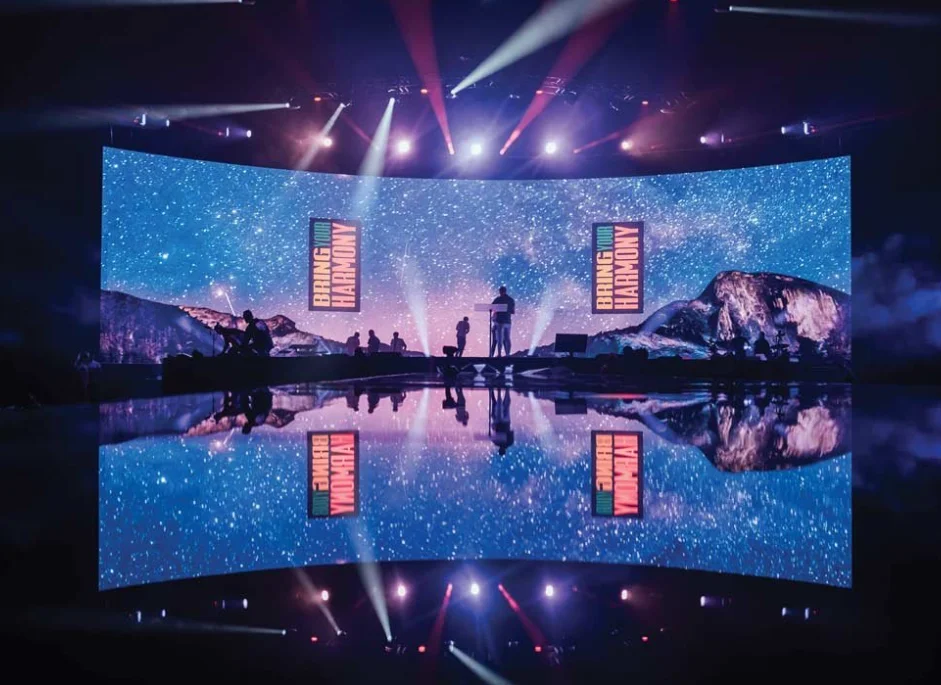
A professional project budget should normally separate the following categories.
LED Hardware
This is the visible part of the system:
- LED cabinets
- LED modules
- Receiving cards
- Power supplies
- Internal connectors
Control System
This may include:
- Video processor
- Sending card
- Receiving cards
- Media server
- CMS
- Signal distribution
Structural System
Depending on the application:
- Steel frame
- Aluminum frame
- Wall mounting system
- Rear support
- Ground support
- Rigging structure
- Seismic or wind-load engineering
Electrical Infrastructure
Possible requirements include:
- Dedicated circuits
- Distribution panels
- PDUs
- Breakers
- Power cables
- Conduit
- Grounding
- Electrical inspection
Installation and Commissioning
A complete installation should account for:
- Cabinet assembly
- Alignment
- Signal testing
- Power testing
- Brightness calibration
- Color calibration
- Configuration
- Operator training
Logistics
International projects may also involve:
- Factory freight
- Ocean or air shipping
- Customs clearance
- Import duties
- Local transportation
- Unloading equipment
- Protective packaging
LED Video Wall Cost Example: 15 m² Indoor Display
Consider a corporate conference room requiring a 15 m² P2.5 indoor LED video wall.
A realistic budget structure might look like this:
| Cost Category | Example Budget |
|---|---|
| LED hardware | $35,000–$50,000 |
| Video processor/control | $5,000–$10,000 |
| Mounting structure | $4,000–$7,000 |
| Installation/calibration | $4,000–$8,000 |
| Cabling/electrical | $2,000–$5,000 |
| Freight/logistics | $1,000–$3,000 |
| Estimated project total | $51,000–$83,000 |
The exact number depends on the specification and site.
The purpose of this example is to demonstrate the pricing structure—not to imply that every 15 m² P2.5 project should cost the same.
LED Video Wall Cost Example: 40 m² Outdoor Advertising Screen
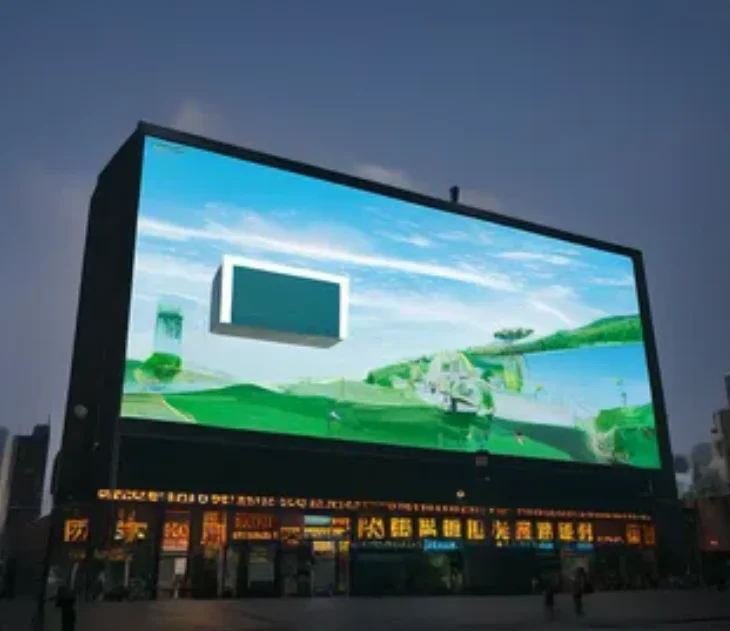
An outdoor advertising project has a different cost structure.
For example, a 40 m² P8 outdoor display may require:
- IP-rated cabinets
- High brightness
- Structural steel
- Dedicated power
- Outdoor cabling
- Video processor
- Installation equipment
- Electrical compliance
- Commissioning
A project like this can cost substantially more than the LED cabinet quotation alone.
One SoStron LED project model, for example, separates the outdoor LED hardware from structure, control, electrical infrastructure, installation, transportation and commissioning rather than treating the entire project as a single panel price.
That is the correct way for a procurement team to evaluate an LED wall quote.
LED Video Wall vs. LCD Video Wall: Which Is Cheaper?
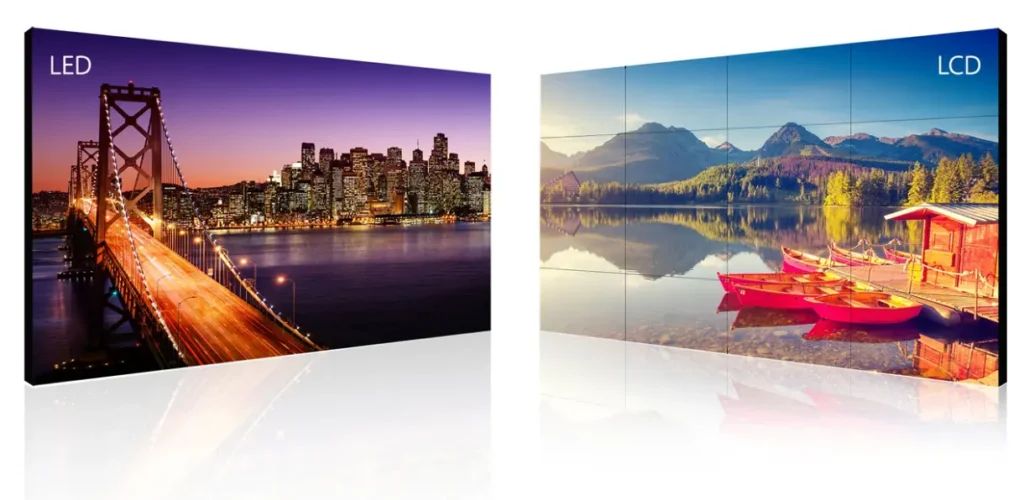
For smaller installations, LCD video walls can have a lower initial hardware cost.
LCD becomes particularly competitive when:
- The wall is relatively small
- Viewing distance is short
- Extremely high brightness is unnecessary
- Visible bezels are acceptable
- Standard rectangular formats are sufficient
Direct-view LED becomes more attractive when the project requires:
- Very large screen sizes
- Seamless appearance
- High brightness
- Flexible aspect ratios
- Unusual dimensions
- Wide viewing angles
- Long operating hours
- Large-format visual impact
Samsung’s professional video-wall guidance similarly distinguishes direct-view LED from LCD by emphasizing LED’s seamless modular canvas versus LCD’s visible bezel structure.
So the cheapest display technology is not necessarily the cheapest solution for the application.
Should You Buy or Rent an LED Video Wall?
The answer depends mainly on utilization.
Buying makes more sense when:
- The display is permanent
- It operates throughout the year
- The venue has recurring events
- The company needs consistent branding
- The screen will be used frequently
Renting makes more sense when:
- The event is temporary
- The screen is needed only a few times per year
- The screen size changes between events
- The organization does not want maintenance responsibility
- Transportation and storage would otherwise become expensive
For touring productions and events, rental LED systems are specifically designed around fast setup, lightweight cabinets, flight cases and repeated deployment.
The correct comparison is therefore:
Purchase CapEx + maintenance + storage + labor
versus
Rental fee × expected number of uses.
What About LED Video Wall Operating Costs?
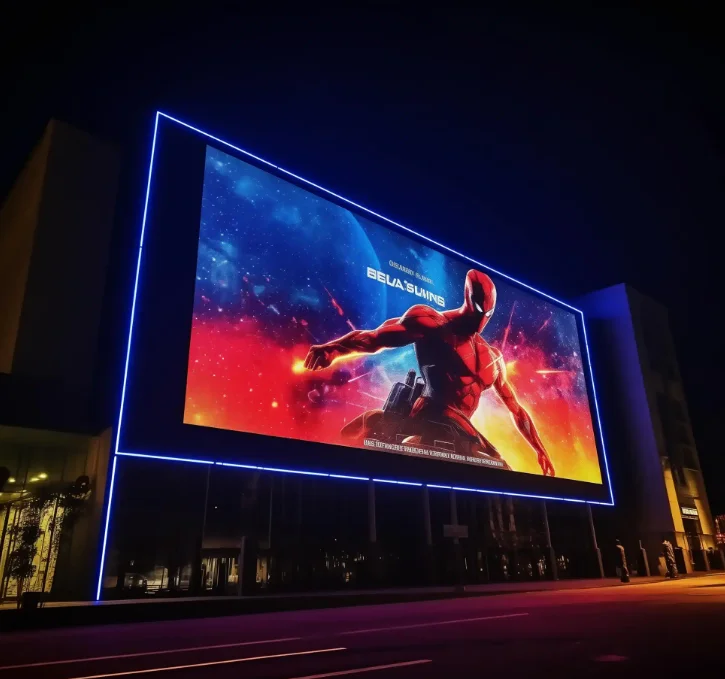
The purchase price is only part of the financial picture.
A commercial LED wall also consumes:
- Electricity
- Spare modules
- Power supplies
- Receiving cards
- Maintenance labor
- Calibration services
- Content production
- Software/CMS costs
Energy consumption varies considerably with:
- Screen area
- Brightness
- Pixel pitch
- Content
- Duty cycle
- Indoor/outdoor design
Maximum power consumption should not be confused with typical operating consumption.
For procurement, request both:
Maximum power consumption
and
Typical/average power consumption
from the supplier.
That gives the facilities team enough information to estimate the real electrical load.
LED Video Wall TCO: Look Beyond the Purchase Price
A better procurement method is to calculate Total Cost of Ownership (TCO) over five or ten years.
A simple model is:
TCO = Initial System Cost + Energy + Maintenance + Content + Spare Parts + Major Replacements
A lower-priced LED wall may become more expensive if it has:
- Higher energy consumption
- Poor thermal design
- Difficult maintenance access
- Shorter component life
- Expensive replacement modules
- Weak warranty support
Long-term LED cost studies likewise show that energy, maintenance and replacement reserves can become significant portions of lifetime expenditure.
How to Compare Two LED Video Wall Quotes
Never compare two suppliers using only the final price.
Ask both vendors to provide the same information.
| Specification | Supplier A | Supplier B |
|---|---|---|
| Pixel pitch | ||
| LED package | ||
| LED brand | ||
| Cabinet size | ||
| Cabinet weight | ||
| Brightness | ||
| Refresh rate | ||
| Grayscale | ||
| Viewing angle | ||
| IP rating | ||
| Power consumption | ||
| Driver IC | ||
| Receiving card | ||
| Video processor | ||
| Maintenance method | ||
| Calibration | ||
| Warranty | ||
| Spare parts | ||
| Installation | ||
| Freight | ||
| Electrical work | ||
| Commissioning | ||
| Training | ||
| Total installed cost |
This makes the comparison much more meaningful than asking:
“Who has the lowest price per square meter?”
Five Questions to Ask an LED Video Wall Supplier
1. Is this price hardware-only or turnkey?
This should be the first question.
A $2,000/m² cabinet quote and a $2,000/m² installed quote are obviously not equivalent.
2. What pixel pitch do you recommend and why?
A professional supplier should explain the recommendation based on:
- Closest viewer
- Typical viewer
- Content
- Screen dimensions
- Camera usage
- Target resolution
rather than simply recommending the finest available pitch.
3. What exactly is included in installation?
Clarify whether the quotation includes:
- Structure
- Electrical work
- Cabling
- Calibration
- Commissioning
- Rigging
- Equipment rental
4. How is the display maintained?
For permanent installations, ask whether the system supports:
- Front maintenance
- Rear maintenance
- Module replacement
- PSU replacement
- Receiving-card replacement
Maintenance access can affect the building design and long-term labor cost.
5. What does the warranty actually cover?
Ask for written terms covering:
- LED modules
- Power supplies
- Receiving cards
- Controller
- Brightness degradation
- Labor
- Shipping
- Response time
- Replacement parts
A “three-year warranty” means little if every defective component must be shipped back to the factory at the customer’s expense.
How to Reduce LED Video Wall Cost Without Sacrificing Performance
The best way to reduce cost is usually not to buy the cheapest cabinet.
Instead:
Match pixel pitch to viewing distance
Do not pay for P1.2 when viewers are 10 meters away if P3 or P4 already delivers the required visual quality.
Avoid unnecessary outdoor specifications indoors
Indoor applications generally do not need the same weatherproofing and brightness levels as outdoor displays.
Standardize cabinet dimensions
Custom cabinet sizes can increase manufacturing and replacement complexity.
Specify maintenance access early
A front-maintenance design can reduce future service complexity when rear access is unavailable.
Compare TCO, not only CapEx
A slightly more expensive display can make financial sense if it consumes less power and requires fewer service interventions.
Request an itemized quotation
An itemized quote makes hidden project costs visible before purchase.
When Is Fine-Pitch LED Worth the Extra Cost?
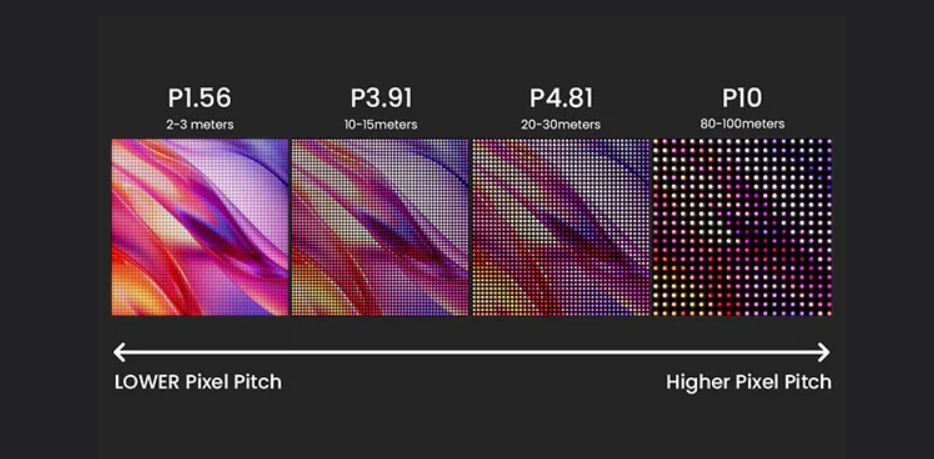
A finer pixel pitch is usually justified when viewers are close enough to see the pixel structure or when content demands high detail.
Typical applications include:
- Broadcast studios
- Executive boardrooms
- Command centers
- Premium retail
- Virtual production
- Camera-facing installations
- Detailed data visualization
For a large stage viewed from 15–20 meters, spending heavily on sub-2 mm LED may provide little practical benefit to the audience.
That is why viewing distance should determine pixel pitch—not the supplier’s most expensive product.
What Is a Reasonable LED Video Wall Budget in 2026?
For early planning, think in three layers:
Small commercial indoor wall
Approximately $30,000–$80,000+
Suitable for smaller:
- Corporate rooms
- Retail displays
- Lobby installations
- Meeting spaces
Medium commercial installation
Approximately $60,000–$200,000+
Common for:
- Large conference rooms
- Event spaces
- Churches
- Showrooms
- Stage applications
Large or premium installation
$200,000–$500,000+
Typical for:
- Large concert environments
- Premium corporate installations
- Stadiums
- Broadcast facilities
- Large outdoor advertising systems
The range becomes even wider for specialized MicroLED, XR, architectural or highly customized installations. Current 2026 market guides show project costs extending from tens of thousands to well above $200,000 depending on technology and scope.
FAQ: LED Video Wall Cost
How much does an LED video wall cost per square foot?
Depending on pixel pitch, environment and specification, hardware can range from tens to hundreds of dollars per square foot, while premium turnkey fine-pitch installations can reach several hundred dollars per square foot or more. Always confirm whether the quoted figure is hardware-only or installed.
How much do just video walls cost?
If you mean the LED cabinets only, expect substantially less than a turnkey project. Hardware pricing depends mainly on pixel pitch, screen area, indoor/outdoor specification, LED package and cabinet configuration. The processor, mounting structure, electrical work, installation and calibration may be excluded.
How much does a 10×10 LED video wall cost?
A 10×10 ft wall is approximately 9.3 m². Depending on pitch and application, the LED hardware could range from roughly the low tens of thousands of dollars to considerably more for fine-pitch products. Installation and control equipment need to be added separately.
Is LED cheaper than LCD?
For smaller video walls, LCD can have a lower initial cost. LED becomes more competitive as screen size increases or when the project requires a seamless, bright and highly customizable display.
How much does LED video wall installation cost?
Installation depends on wall size, mounting method, access, structural requirements, location, electrical work and labor. A simple indoor installation can be relatively straightforward, while outdoor, flown or large architectural installations can require engineering and specialized crews.
How long does an LED video wall last?
Commercial LED displays can have very long service lives, but the useful life of the complete system is determined by more than LED diode lifetime. Power supplies, receiving cards, modules, control hardware and mechanical components may require replacement earlier.
Should I buy or rent an LED video wall?
Buy when the screen will be used frequently or installed permanently. Rent when usage is occasional, temporary or highly variable. Storage, transportation, maintenance and technician costs should be included in the comparison.
Final Takeaway: What Should You Actually Budget?
The biggest mistake in LED procurement is asking only:
“How much does an LED video wall cost?”
The better question is:
“How much will this exact LED system cost from purchase through installation and operation?”
For 2026 planning, separate hardware-only pricing from turnkey installed pricing, choose pixel pitch from the actual viewing distance, and request an itemized quote covering control, structure, electrical work, installation, calibration, logistics and warranty.
If the application is permanent, add energy and maintenance to the calculation. If it is temporary, compare purchase against rental based on actual annual usage.
Expert verdict: Don’t buy the lowest $/m² LED wall. Buy the lowest-TCO specification that meets your viewing, brightness, reliability and maintenance requirements. That is where the real savings are.
These internal links are particularly relevant because SoStron’s current product portfolio explicitly covers indoor LED video walls, rental LED screens, fine-pitch displays and customized commercial LED solutions.
A Note About LED Video Wall Pricing
Please treat the prices in this guide as budgetary reference ranges, not fixed quotations. LED video wall pricing can change significantly based on pixel pitch, LED package, cabinet design, screen size, indoor or outdoor requirements, control equipment, order volume, installation conditions, shipping destination, and current component costs. A hardware-only quote may also look much lower than a turnkey project because it may exclude the video processor, mounting structure, electrical work, installation, calibration, freight, taxes, and commissioning. Current 2026 market guides show a particularly wide range of LED video wall prices, confirming that there is no single “standard” price for every project.
For an accurate budget, always compare like-for-like specifications. When requesting a quotation, ask the supplier to clearly separate LED display hardware, control system, structure, installation, logistics, and other project costs. This makes it easier to identify whether a lower price represents genuine cost efficiency or simply a less complete scope of supply.
Important: The final price of an LED video wall should be based on your actual screen dimensions, viewing distance, application, environment, and required performance—not on a generic price-per-square-meter figure alone.
References:
How to Choose the Right Pixel Pitch — AVIXA
Which Control Room Video Wall Technology Consumes Least Energy? — AVIXA