If you are budgeting for a commercial project, the one thing you most want to know is: What is the price of a 40-foot LED screen? The answer is not a mystery box. Under 2026 market standards, a standard aspect ratio (such as 16:9) LED display with a width of approximately 40 feet (about 12 meters) typically carries a hardware price range between $35,000 and $150,000.
To help you quickly acquire the data you need, please refer directly to the 2026 B2B Base Quote Matrix we have developed below (Benchmark price for screen only, excluding shipping and structure):
| Application Scenario | Recommended Pixel Pitch | Brightness (Nits) | IP Rating | Estimated Price Range (USD) | Target Buyer |
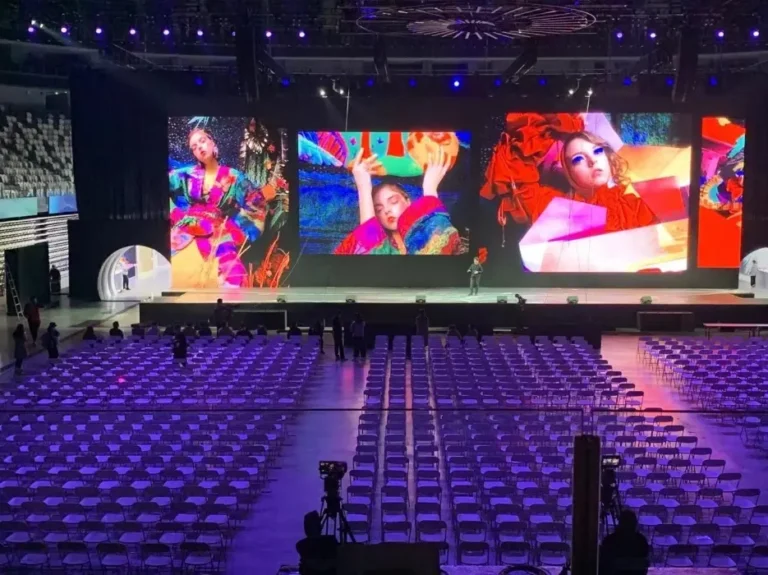
| Indoor High-end Rental/XR | P1.9-P2.6 (COB/SMD) | 1,000-1,200 | IP43 | $80,000-$150,000+ | Broadcast Studios, Large Corporate Launches |
| Indoor Fixed Installation | P2.6-P3.91 (SMD) | 800-1,000 | IP43 | $35,000-$65,000 | Mega-Churches |
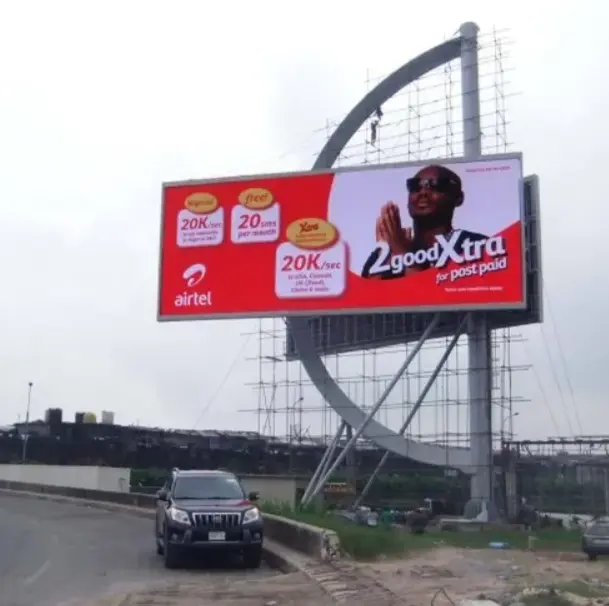
| Outdoor DOOH Advertising | P4.81-P6.67 (SMD/DIP) | 6,500-10,000 | IP68/IP65 | $45,000-$85,000 | Real Estate Developers, Outdoor Media Owners |
As a system integrator or event director needing to pitch a project to superiors or clients, you likely despise the “hidden costs” and “lack of quote transparency” provided by suppliers. This is completely understandable. Based on our experience delivering over 500 large-scale engineering projects globally, we have found that 80% of buyers focus only on the screen itself during initial budget planning, while ignoring the Total Cost of Ownership (TCO). A true commercial procurement decision is never as simple as multiplying length by width to get the area.
Next, as a Lead LED Display Engineer, I will peel back the layers of the cost core for this 40-foot giant screen for you.
Beyond the Display: 4 Core Parameters Driving the Price Difference of a 40-foot Giant Screen
For the same physical size of 40 feet, why would the quotes for two solutions differ by nearly one hundred thousand dollars? The core lies in the scaling of hardware parameters. In the field of LED technology, we never pay for “parameters”; we only pay for “commercial monetization capability.”
Pixel Pitch: Why P2.6 Costs Significantly More Than P3.91?
Pixel Pitch is the absolute dominant factor in determining price. It represents the distance between the centers of two LED lamp beads. The smaller the number, the higher the density, and the number of high-end lamp beads required increases exponentially.
-
Engineering Analysis: A screen 40 feet wide and 22.5 feet high would require approximately 5.5 million pixels if using P3.91. If upgraded to P2.6, the pixel count surges to over 12.5 million. Using the latest Flip-chip COB (Chip on Board) packaging technology compared to traditional SMD results in higher yield costs, but the “cool screen” touch and impact resistance are significantly improved. Providing you with P3.91 Outdoor HD Waterproof LED Display: 2026 Professional Guide.
-
Business Value (Benefit): Why should you spend double the money to choose P2.6? If your audience (such as VIPs in the front row of a large press conference or camera close-ups in a church) is only 3 to 5 meters from the screen, P3.91 will show obvious “pixelation” and moiré effects. P2.6 provides flawless, retina-level image quality. For high-end event planning companies, a perfect close-up visual experience means you can charge sponsors a premium of over 30% for brand display.
Brightness (Nits) & IP Rating: Indoor Compromise vs. Outdoor All-Weather Armor

The manufacturing logic for indoor and outdoor screens is completely different. According to industry data from the authoritative AVIXA (Audiovisual and Integrated Experience Association), the initial hardware cost of an outdoor screen is typically 25%-40% higher than an indoor screen of the same pitch.
-
Engineering Analysis: Indoor screens usually only need a brightness between 800-1,200 Nits. However, outdoor screens must face direct sunlight and must use customized high-brightness gold-wire lamp beads, with brightness reaching at least 6,000 or even 10,000 Nits to avoid being “washed out” by sunlight. Furthermore, to cope with extreme weather, outdoor screens must use independent waterproof modules or even glue-filling processes to achieve IP65 or even IP68 protection ratings.
-
Business Value (Benefit): What do high brightness (Nits) and IP68 mean? They mean your DOOH (Digital Out-of-Home) screen will not go dim in the midday summer sun, nor will it short-circuit and go black on a rainy day. For advertising operators, a screen that stays lit is cash flow. A high protection rating directly reduces downtime, ensuring the advertiser’s campaign reaches the audience around the clock and protecting your rental income (ROI).
Refresh Rate and Control System: The Invisible Lever Determining Success Before the Camera
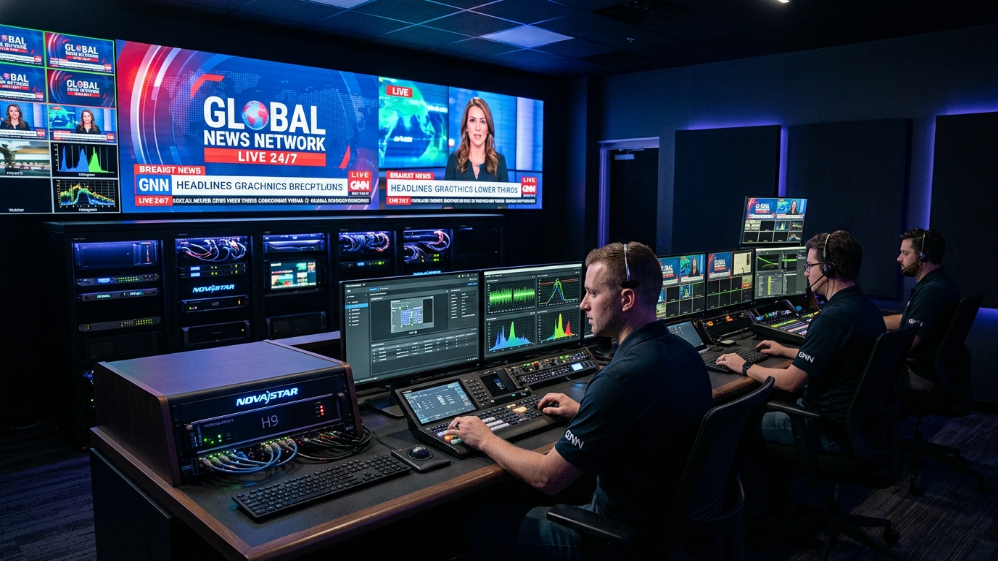
If you are buying this 40-foot large screen for virtual production (XR) or hosting an e-sports competition with global live streaming, do not save money on the refresh rate and control system.
-
Engineering Analysis: The basic refresh rate is typically 1,920Hz, while the broadcast-grade standard must be 3,840Hz. Top-tier XR solutions in 2026 even come standard with 7,680Hz. Along with a high refresh rate, you must employ a powerful Control System. The high-end market is almost dominated by two giants: Novastar, which balances cost-performance and functionality, and Brompton, which offers top-tier color reproduction (usually used for Hollywood-level film and television rentals).
-
Business Value (Benefit): A high refresh rate (3,840Hz+) combined with Novastar high-end sending cards ensures that under the fast pan-scanning of high-definition cameras, the screen will never show moiré effects or black field scan lines. For broadcasters and streaming platforms, broadcast-grade image quality means higher ratings and broadcast rights sale prices; conversely, low-quality flickering images will be an irrecoverable PR disaster.
Cabinet Material: Why Weight is Cost?
This giant screen is composed of dozens or even hundreds of “Cabinets” seamlessly spliced together.
| Cabinet Material | Application Scenario | Weight per Sqm (Est.) | Precision & Flatness | Impact on Total Project Cost (TCO) |
| Traditional Iron/Cold-rolled Steel | Outdoor Fixed Installation | 45-55 kg | Average | Screen is cheap, but requires a massive, expensive rear steel structure for support, increasing post-installation costs. |
| Die-cast Aluminum | Indoor/Rental/High-end Outdoor | 25-32 kg | Extremely High (CNC) | Molds are expensive, but extremely light. Significantly reduces steel structure costs, saving 50% on site hoisting and labor fees. |
-
Business Value (Benefit): Choosing Die-cast Aluminum cabinets may seem to increase the hardware unit price, but due to its extremely light weight and high splicing precision (with quick locks), 2 workers can complete the hoisting of this 40-foot giant screen in one day. It ultimately reduces your Total Cost of Ownership (TCO) by significantly cutting expensive European and American on-site labor hourly rates and heavy truss rental fees.
After mastering the logic of cabinet materials and core parameters, as a B2B decision-maker, you must realize: the screen hardware quote (EXW Price) is only the tip of the iceberg.
According to our tracking of global large-scale display engineering costs in 2026, hardware usually only accounts for 60%-70% of the total project budget. The remaining 30%+ is often hidden in those easily overlooked “soft expenses.”
Deep Breakdown: Besides the Screen, What Else is in Your 40-foot LED Project Bill?
To ensure you are not misled when facing a supplier’s quote, we have summarized this detailed cost composition list.
Video Processor and Distributed Control System (10%-15% of cost)
A 40-foot giant screen (assuming 12m x 6.75m) usually has a custom resolution far exceeding 4K. This means a basic playback box is insufficient. You need to configure high-performance video processors (such as the Novastar H series or Magnimage) to achieve seamless switching of multiple signal windows.
Steel Structure Engineering and Load-bearing Solutions (10% of cost)
The total weight of a standard 40ft outdoor screen may approach 2.5 tons. You need professional engineers to design the rear frame, maintenance walkways, and lightning protection grounding systems.
International Logistics and Customs Clearance (5%-8% of cost)
For projects shipped directly from China, shipping cost fluctuations in 2026 still require a buffer. Full Container Load (FCL) sea freight is the cost-effective choice, but do not ignore destination port duties (such as voluntary tariffs in the EU or relevant rates in the US).
Renting vs. Buying: Which Solution Brings Better ROI for Your B2B Project?
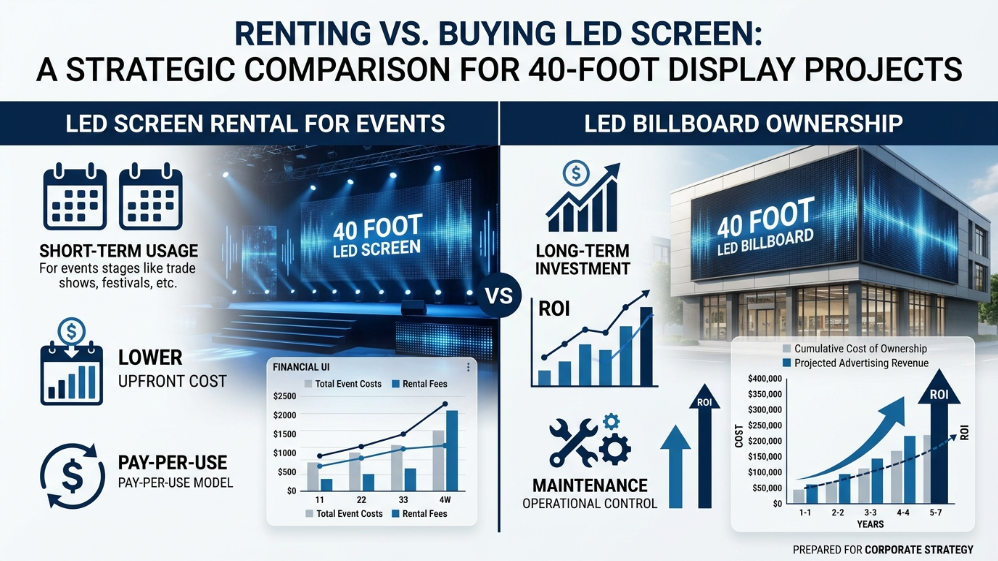
Many event planning companies, when inquiring about the “40-foot LED screen price,” often struggle between long-term procurement or direct rental. The following dimensional comparison will directly assist your financial decision:
| Decision Dimension | Long-term Procurement (Ownership) | Short-term Rental (Event Rental) |
| Initial Investment | High ($35,000-$150,000+) | Low (Daily rent is approx. 5%-8% of total price) |
| Maintenance Cost | Self-responsible; requires 1-2 technicians | Responsibility of rental company; includes on-site setup |
| Tech Update Cycle | 5-8 years (may face obsolescence after iterations) | Can use the latest P1.9 or COB technology every time |
| Application | Outdoor billboards, church fixed installs, flagship retail | Touring shows, exhibitions, product launches |
| Break-even Point | When annual usage exceeds 8-10 times, ROI far exceeds rental. | When holding only 1-2 large events per year, rental is the financial preference. |
Beware of Hidden Costs: Easily Overlooked “Hidden Cost” Traps
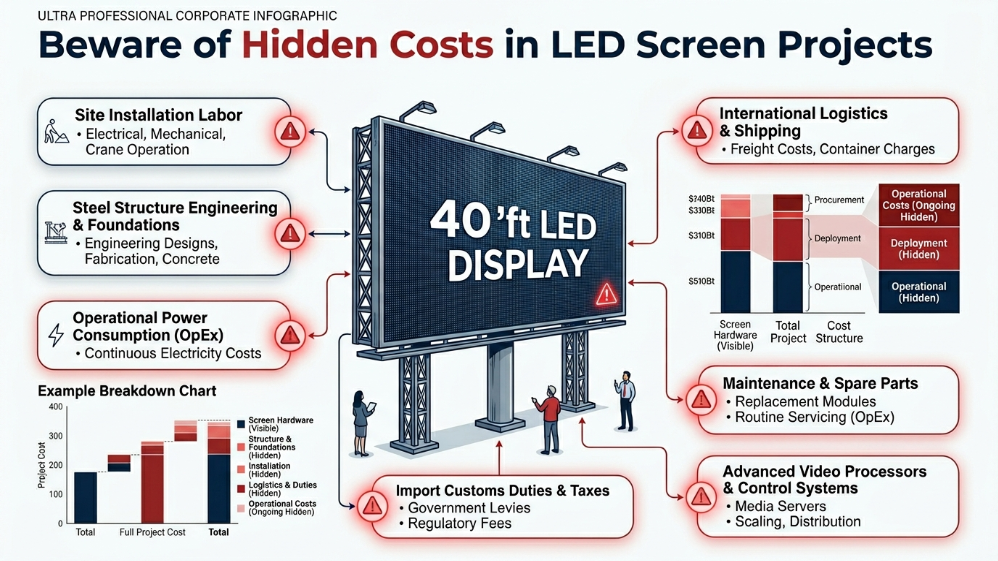
As an engineer, I must remind you to focus on the ongoing operational expenses after the screen is installed.
Power Consumption and Energy-saving Chips (The Power Bill)
A 40-foot outdoor screen at peak brightness can consume as much as 30-50 kWh per hour. In regions with high electricity prices like Europe, this is a huge sum.
-
Recommendation (Benefit): Pay a 10% premium at the time of purchase for “Common Cathode” energy-saving technology, which can reduce power consumption by more than 30%. This investment usually pays for itself entirely through electricity savings by the 18th month of operation.
Spare Parts and Maintenance Response
LEDs are perishable electronics. We recommend that B2B buyers insist that suppliers provide at least 3% module spares and 5% power supply and receiving card reserves. Without these spares, if the screen develops a “black block” during a critical event, your brand reputation loss will far exceed the price of the parts themselves.
For Different B2B Roles: How to Precisely Avoid Traps and Get the Best Solution?
-
For System Integrators: Focus on “Installation Friendliness.” Prioritize modules with “Auto-Calibration” and “Front Service” designs. This can reduce on-site debugging time by 40%.
-
For DOOH Advertisers: Focus on “Degradation Rate.” Ensure your contract specifies the lamp bead brand (such as Nationstar gold-wire beads) to guarantee that brightness after 3 years can still be maintained at over 70% of the initial value, thereby protecting your advertising premium capability.
5 Deep FAQs Regarding 40-foot LED Display Prices
Q: Can a 40-foot screen be made curved? Is there an extra charge?
A: Yes. By using flexible modules or 5-degree curved cabinet splicing. Usually, curved solutions increase hardware costs by 15%-20% because of the need for customized structural supports.
Q: Why is everyone talking about COB packaging in 2026? Is it worth the extra money?
A: If your 40ft screen is used indoors (such as a corporate lobby), the extremely high protection of COB (impact-proof, moisture-proof) and softer visual effects can significantly reduce post-purchase lamp failure rates. However, for pure outdoor high-brightness screens, mature SMD remains the king of cost-performance.
Q: How long does it usually take from procurement in China to the US/Europe, including shipping and installation?
A: The production cycle is about 15-20 days, and sea freight is about 30-45 days. We recommend starting the bidding process at least 3 months in advance.
Q: What kind of warranty terms are most beneficial for B2B buyers?
A: Reject “Return to Factory” repairs. Push for “Advanced Replacement” of spare parts or “On-site Support” within 2 years. While this slightly increases the initial quote, it is vital for large-scale engineering.
Q: Does a 40-foot screen need dedicated cooling air conditioning?
A: In high-temperature regions like the Middle East or Texas, outdoor screens must be installed with industrial-grade cooling air conditioning. If using advanced aluminum alloy cabinets (fast heat dissipation) and high-efficiency power supplies, centrifugal fans are sufficient in temperate regions.
Expert Verdict: Our Professional Advice
Purchasing a 40-foot LED screen is a major capital expenditure. If you are pursuing long-term stable operation for over 5 years (such as outdoor advertising), please ensure you invest in the “Gold-wire lamp beads + Energy-saving chips + Aluminum cabinet” combination from the start. This will allow you to reach the TCO (Total Cost of Ownership) downward inflection point by the 3rd year by reducing maintenance fees and electricity bills.
Conversely, if you are only handling a temporary project for 12 months, finding a supplier with a local warehouse and maintenance team for a rental is wiser than direct overseas procurement.
Do not be tempted by the lowest “unit price.” In the LED industry, stable lighting, no image degradation, and fast after-sales response are the true low costs.
References:
AVIXA (Audiovisual and Integrated Experience Association) – ANSI/INFOCOMM Standards
University of California Research Publications