There is no uniform fixed price for an 8×6 LED screen. Its final quotation is determined by multiple factors, including pixel pitch, indoor or outdoor application, brightness level, refresh rate, protection rating, and installation/maintenance solutions. The physical dimensions are typically approximately 2.44 meters × 1.83 meters, with a display area of about 4.46 square meters. According to 2026 industry market data, the reference price range for a typical complete system (including control system, power supply, and structural brackets) is: approximately $8,000–$15,000 for indoor models and $12,000–$25,000 for outdoor models. The actual price depends on the specific configuration. This article will systematically break down the price composition, influencing factors, and Total Cost of Ownership (TCO) to help users clearly define their budgets.
Size Specifications and Typical Application Scenarios of 8×6 LED Screens
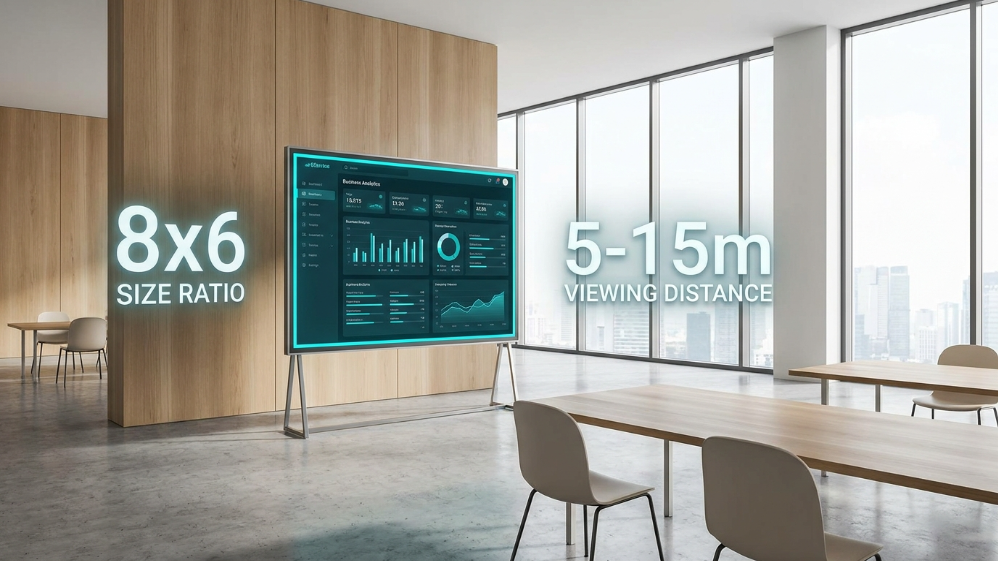
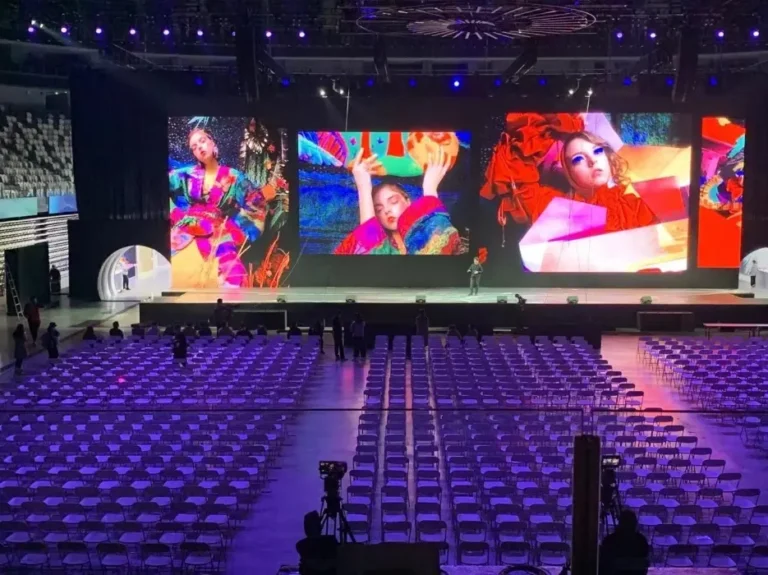
In the context of LED screens, the 8×6 size refers to the physical width-to-height ratio, often used for small to medium-sized billboards or event displays. The suggested actual viewing distance is within the range of 5–15 meters, making it suitable for retail storefronts, conference halls, or small outdoor advertising spaces. Users should first measure the installation space and then match it with the appropriate pixel pitch to ensure clarity.
Matching Common Application Scenarios with Viewing Distances
Indoor scenarios are mostly used for close-range viewing, while outdoor scenarios require consideration of ambient light and protection. Evaluating site conditions in advance can effectively avoid late-stage adjustment costs.
2026 8×6 LED Screen Price Range Reference
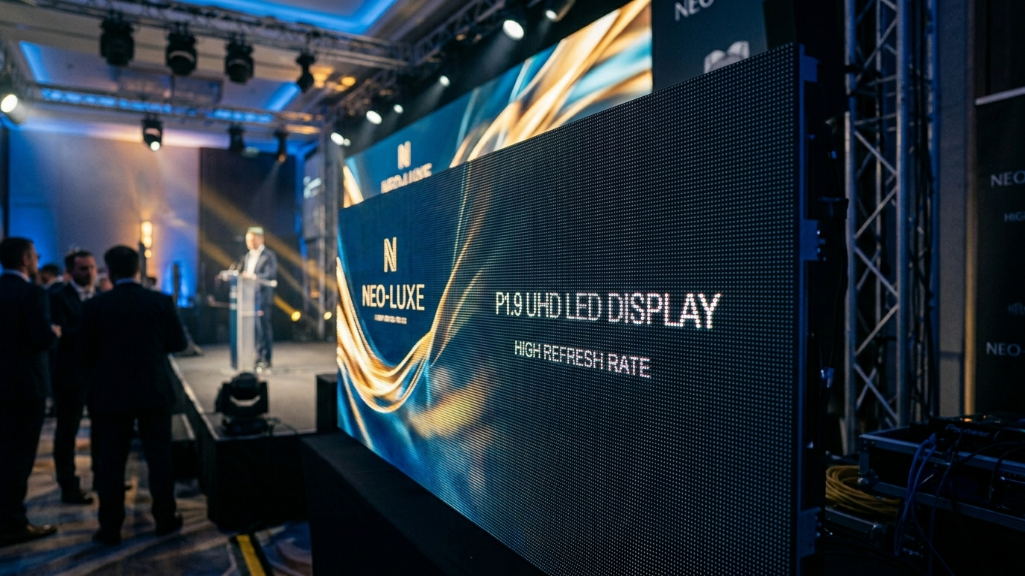
The price range varies significantly with configuration. Below is a typical reference (in USD, including the basic system):
| Type | Low-end Range (USD) | High-end Range (USD) | Main Differences |
| Indoor Type | 8,000–11,000 | 12,000–15,000 | Pixel pitch and brightness |
| Outdoor Type | 12,000–16,000 | 18,000–25,000 | Protection rating and refresh rate |
| Rental Type | 15,000–20,000 | 22,000–28,000 | Quick assembly/disassembly structure |
Indoor 8×6 LED Screen Price Range
Indoor products focus on color reproduction and low power consumption, and prices are relatively stable.
Outdoor 8×6 LED Screen Price Range
Outdoor use requires higher protection, and the cost increases accordingly.
Price Differences Between Rental vs. Fixed Installation
Rental versions focus more on portability, while fixed installations optimize for long-term stability.
Core Technical Factors Determining 8×6 LED Screen Prices
Pixel pitch is the core variable. P2–P4 is suitable for close distances, while P5 and above are suitable for long-distance viewing. Brightness and refresh rate directly affect outdoor adaptability, while material craftsmanship determines durability. Let me tell you what is the difference between P3 and P5 LED displays?
The following table shows the relationship between main factors and price:
| Technical Parameter | Low-Price Factors | High-Price Factors | Guidance for User Decision |
| Pixel Pitch | Above P6 | P2–P3 | Match viewing distance |
| Brightness/Refresh Rate | 4000 nits / 1920Hz | 8000 nits / 3840Hz | Ambient light adaptation |
| Protection Rating | IP43 | IP65 | Indoor/Outdoor selection |
| Control System | Basic Synchronous | Asynchronous + Smart Monitoring | Convenience of remote management |
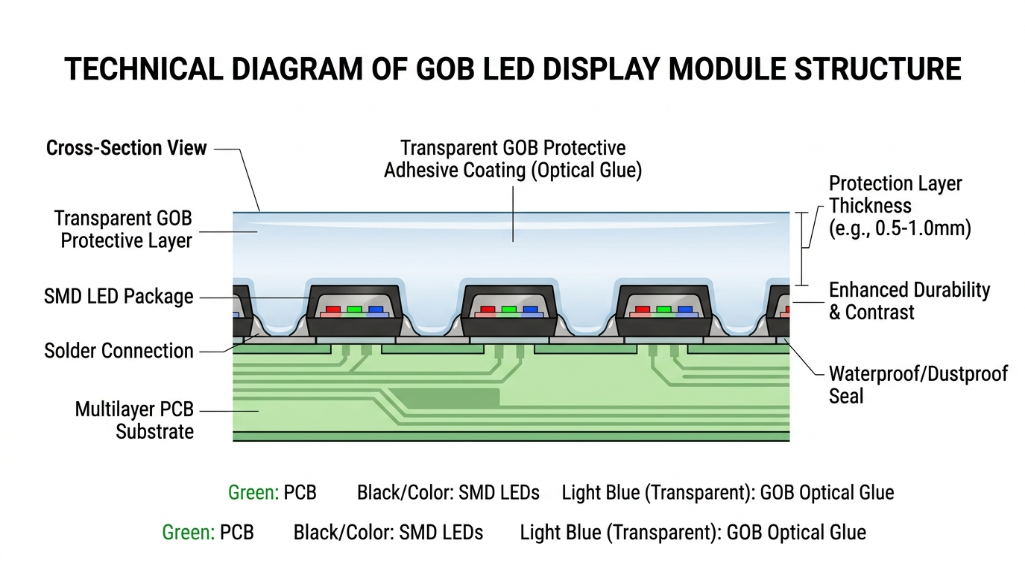
Some modules utilize GOB (Glue on Board) encapsulation technology as an example, which can improve protection and display consistency. Understanding these parameters helps users compare quotation sheets and avoid the pitfall of only looking at the total price.
Comprehensive Analysis of the Total Cost of Ownership (TCO) for 8×6 LED Screens
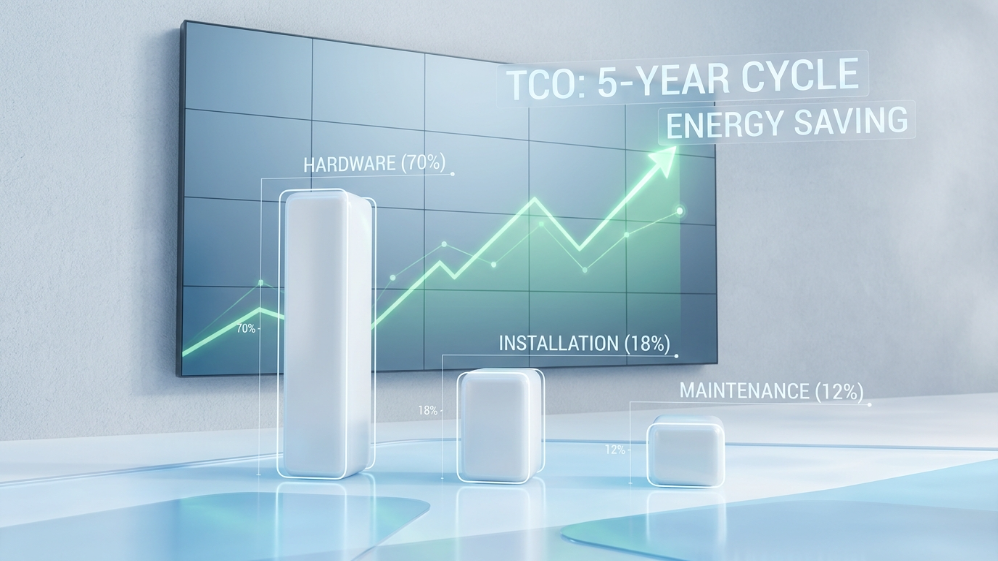
The initial purchase price only accounts for a portion of the total cost. In the long run, installation, transportation, energy consumption, and maintenance costs often determine the actual return on investment. In a typical TCO structure, hardware procurement accounts for about 70%, installation and commissioning for 15–20%, and five-year maintenance and energy consumption for 10–15%.
Below is an estimated TCO breakdown for an 8×6 screen (USD, 5-year cycle reference):
| Cost Category | Proportion | Estimated Range (USD) | Key Influencing Factors |
| Hardware Procurement | 70% | 8,000–20,000 | Pixel pitch and protection rating |
| Installation & Commissioning | 18% | 1,500–4,000 | Site environment and bracket solution |
| Energy & Maintenance | 12% | 1,000–2,500 | Refresh rate and power efficiency |
In the practice of 6,000+ delivered projects worldwide, high-stability configurations can usually reduce the frequency of late-stage maintenance by more than 30%. Calculating TCO in advance helps users avoid the common situation of being “able to afford the purchase but not the upkeep.”
How to Scientifically Obtain an Accurate Quotation for an 8×6 LED Screen and Avoid Common Pitfalls
Obtaining an accurate quote requires providing a complete list of requirements. It is recommended to first clarify the installation environment, viewing distance, and operating hours, and then request a detailed breakdown from the supplier.
Practical Quotation Checklist:
-
Specific parameters for pixel pitch, brightness, and refresh rate
-
Protection rating (IP value) and material specifications
-
Type of control system (Synchronous/Asynchronous)
-
Breakdown of installation methods, transportation, and commissioning costs
-
Warranty period and spare parts list
Common pitfalls include comparing only the total price while ignoring energy consumption, or failing to request third-party certifications. Checking the list item by item can effectively reduce decision-making risks.
Real Delivery Case Analysis
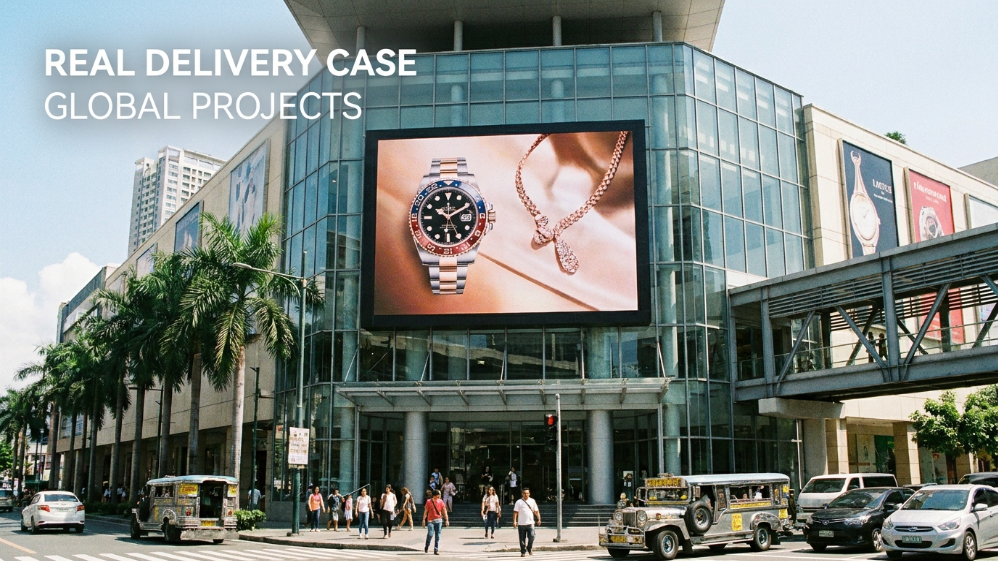
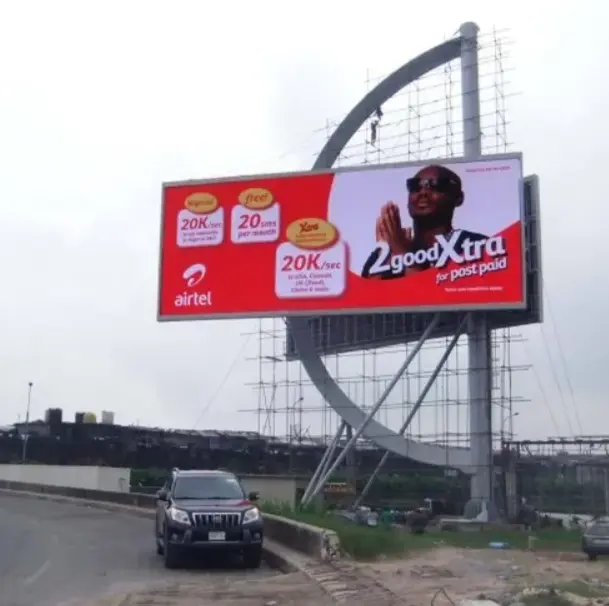
Taking the outdoor LED display project at a city shopping center in Manila, recorded on the official website, as an example: this project is an outdoor application installed at the entrance of a mall in Manila, Philippines. As a typical billboard deployment in a commercial district, this case demonstrates the performance of similar small-to-medium LED screens in an actual high-traffic environment.
Key Project Facts:
-
Outdoor full-color display, adapted to local climate conditions
-
24-hour stable operation, supporting remote content updates
-
Became one of the surrounding commercial landmarks
This delivery reflects the practical experience of projects exported to nearly 100 countries. Especially among the 200+ cases in the Asia-Pacific region, similar outdoor advertising screens have withstood the tests of high humidity and high temperatures, providing a real-world reference for users.
Technical Guarantees Behind High-Quality LED Screen Manufacturing
Leading industry manufacturers typically possess the following scale and capabilities:
-
15,000㎡ Shenzhen Intelligent Manufacturing Base
-
In-house Hardware/Software/Engineering R&D teams
-
10+ years of experience focusing on LED billboards
-
6,000+ global delivery projects
-
Exported to nearly 100 countries
-
Multiple international certifications such as CE/RoHS/FCC/UL
-
Product proprietary technology verified by real cases
These elements jointly guarantee product consistency and long-term reliability, providing a measurable technical foundation for price assessment.
FAQ
What is the price of the cheapest configuration for an 8×6 LED screen?
The minimum configuration starts at approximately $8,000, but it is necessary to confirm whether the basic parameters meet actual usage requirements.
Why can the price difference for the same 8×6 size vary by several times?
It mainly stems from differences in pixel pitch, protection rating, and control systems; technical specifications directly determine the cost.
How does pixel pitch affect the actual viewing effect and price of an 8×6 LED screen?
P2–P3 is suitable for close-range high definition, while P5 and above are for long distances; the smaller the pitch, the higher the price.
Where are the main price differences between indoor and outdoor 8×6 LED screens?
Outdoor screens require higher brightness and IP65 protection, with costs typically 30–50% higher.
Does the 8×6 LED screen price include installation, control systems, and transportation?
A complete quotation should clearly list these; some basic quotes do not include on-site installation.
How does the cost-effectiveness of renting an 8×6 LED screen compare to buying a fixed installation?
Renting is suitable for short-term events, while fixed installation is better for long-term use; comparisons should be made based on the usage cycle.
What are the main factors affecting the long-term operating costs of an 8×6 LED screen?
Energy consumption, refresh rate, maintenance frequency, and power supply stability are the core variables.
How to judge if an 8×6 LED screen quotation is reasonable?
Compare the TCO, request a detailed parameter sheet, and refer to the configuration consistency across multiple suppliers.
What is the approximate energy consumption and maintenance frequency for an 8×6 LED screen?
High-efficiency configurations consume about 0.5–1 kWh/㎡ daily on average, and high-quality products can have a maintenance cycle as long as once every 2–3 years.
What is the practical significance of international certifications for the price and quality of an 8×6 LED screen?
Certifications ensure safety and compatibility. Although they slightly increase costs, they significantly reduce late-stage compliance risks.
The core of an 8×6 LED screen price decision lies in matching the actual scenario and comprehensively evaluating the TCO. It is recommended that users prioritize drafting a requirement list, calculating the five-year total cost, and then formulating a final plan through multi-dimensional comparisons to achieve a rational and efficient procurement choice.
References:
ANSI/IES RP-7-20: Recommended Practice: Lighting Interior and Exterior Environments
ENERGY STAR Program Requirements for Displays and Signage – Eligibility Criteria