Quick Answer
An LED panel screen does not have one universal price per square meter. Published supplier prices vary substantially according to pixel pitch, indoor or outdoor requirements, brightness, LED package, cabinet design, application, and—most importantly—the scope of the quotation. A hardware-only price can look very different from a complete project price that includes the control system, structure, installation, shipping, taxes, commissioning, and spare parts.
For budgeting, the most useful starting point is the display area multiplied by a clearly defined hardware price per m², followed by the project-specific costs. For example, an 8 × 10 ft screen covers 80 ft², or approximately 7.43 m². The final budget therefore depends on both the selected LED configuration and what the supplier includes in the quotation.
For an 8 × 10 ft LED screen, the display area is 80 ft², or approximately 7.43 m². The correct way to estimate its price is therefore:
8 × 10 ft screen cost = 7.43 m² × applicable LED hardware price per m² + system and project costs
The most important point is that an LED screen does not have one fixed price. A P1.5 indoor fine-pitch wall, a P3.9 rental screen, and a high-brightness outdoor billboard of the same physical size can have very different prices because they are engineered for different environments and viewing distances.
If you are buying for a permanent commercial installation, compare the complete project cost and Total Cost of Ownership (TCO) rather than comparing panel prices alone.
What Determines the Price of an LED Panel Screen?
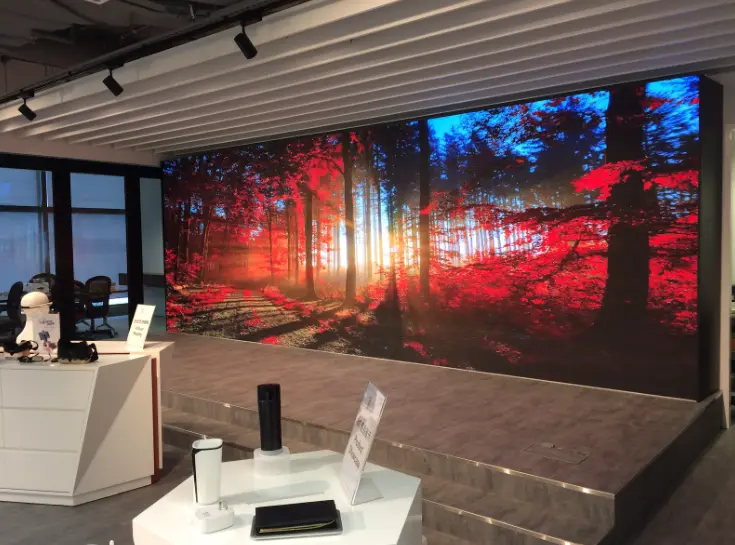
LED screen pricing is primarily determined by the relationship between screen area, pixel pitch, environment, performance requirements, cabinet construction, and project scope.
| Cost factor | Why it affects price | Buyer question |
|---|---|---|
| Pixel pitch | Smaller pitch requires higher pixel density | How close will viewers stand? |
| Screen size | More display area requires more cabinets/modules | What is the required image size? |
| Indoor/outdoor rating | Outdoor displays need weather and environmental protection | Where will the screen operate? |
| Brightness | Outdoor daylight requires substantially higher brightness | How much ambient light reaches the screen? |
| LED package | SMD, COB and other configurations have different characteristics and costs | What image and durability requirements apply? |
| Cabinet design | Weight, service access and materials affect both CapEx and installation | How will the screen be installed and maintained? |
| Control system | Processors, sending cards and receiving cards are part of the display system | What resolution and signal sources are required? |
| Installation | Structure, electrical work and labor vary by site | Is the screen wall-mounted, freestanding or suspended? |
| Logistics | International freight and local delivery can materially change project cost | Where is the project located? |
| Maintenance | Spare parts and service access affect lifecycle cost | How quickly must failures be repaired? |
This is why a supplier quote should never be evaluated from the price per panel alone.
How Much Does an LED Panel Screen Cost?
A useful 2026 starting point is to think in terms of hardware cost per square meter, rather than the price of an individual cabinet or module.
Current supplier pricing should be treated as configuration-specific rather than as one universal LED screen price. Published Sostron pricing examples and product guides show that the cost can vary significantly with pixel pitch, application, cabinet design, and project scope. For this reason, buyers should use a published price as a reference for its stated configuration rather than applying it to every LED screen.
For an accurate budget, request the supplier’s price basis in $/m² or $/ft², identify whether the figure is hardware-only or turnkey, and confirm which control equipment, structure, installation, logistics, taxes, and spare parts are included.
The lower end can apply to larger-pitch, less demanding configurations, while fine-pitch indoor systems and specialized configurations can reach several thousand dollars per square meter.
Why is the range so wide?
Because “LED panel screen” describes a product category, not a single specification.
Consider these examples:
- A large outdoor billboard viewed from 30–50 meters does not need the same pixel density as a boardroom display viewed from 3 meters.
- A rental cabinet may prioritize lightweight construction and fast setup.
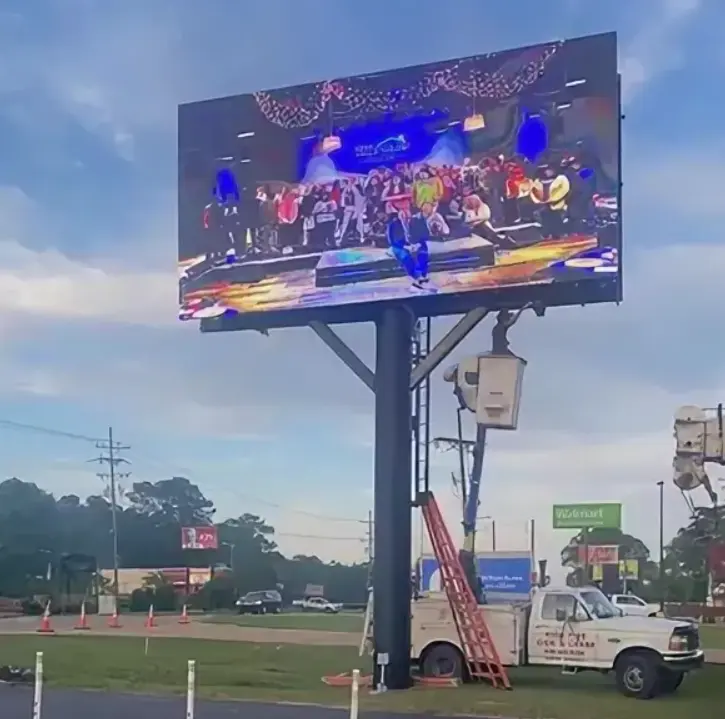
- A permanent outdoor billboard may prioritize weather resistance, brightness, heat management and serviceability.
- A fine-pitch indoor wall may require much higher pixel density and more sophisticated image processing.
- An XR or broadcast application can place additional demands on refresh rate, scan design and camera compatibility.
FACT: Pixel pitch, application and configuration materially influence LED display pricing.
ESTIMATE: Any generalized price range should be treated as a budgeting reference until a supplier receives the actual screen dimensions, application, location and technical requirements.
How Much Does an 8×10 LED Screen Cost?
An 8 × 10 ft LED screen has:
8 × 10 = 80 ft²
Using 1 m² ≈ 10.764 ft²:
80 ÷ 10.764 ≈ 7.43 m²
So the first step in an 8×10 LED screen calculation is:
7.43 m² × quoted hardware price per m²
For example, if a supplier provides a clearly defined hardware-only reference price of $1,000/m², the screen hardware portion would be:
7.43 × $1,000 = approximately $7,430
This is an EXAMPLE calculation only, not a Sostron quotation or a market price.
If another configuration is quoted at $2,000/m², the same physical 8×10 ft area would have a hardware estimate of approximately $14,860.
The difference comes from the specification, not from the dimensions.
What else must be added to an 8×10 LED screen budget?
Depending on the project, the quotation may also need to include:
- Video processor or controller
- Sending and receiving cards
- Power distribution
- Signal and power cables
- Mounting structure
- Electrical installation
- Mechanical installation
- Calibration and commissioning
- Shipping
- Customs duties and taxes
- Spare modules and power supplies
- Content or CMS equipment
- Local permits or engineering requirements
Therefore, an 8×10 LED screen does not have one universal price.
The area calculation gives you the starting point. The configuration determines the actual budget.
What Does “LED Panel” Mean on a Supplier Quote?
This question is more important than it looks.
Different suppliers may use “panel,” “cabinet,” “module,” or “screen” differently.
A typical LED display contains several levels:
LED chip/package → module → cabinet → complete display system
A cabinet may contain multiple LED modules, receiving electronics and power components. A complete screen then combines multiple cabinets into the required physical dimensions.
This distinction matters because a supplier saying:
“$800 per panel”
has not provided enough information for a meaningful comparison.
You need to know:
- What are the panel/cabinet dimensions?
- What is the pixel pitch?
- Is the price per cabinet, module, ft² or m²?
- Is the control system included?
- Is the power supply included?
- Are spare parts included?
- Is shipping included?
- Is installation included?
- Are taxes and duties included?
A price basis should always accompany a price.
How Does Pixel Pitch Affect LED Screen Cost?
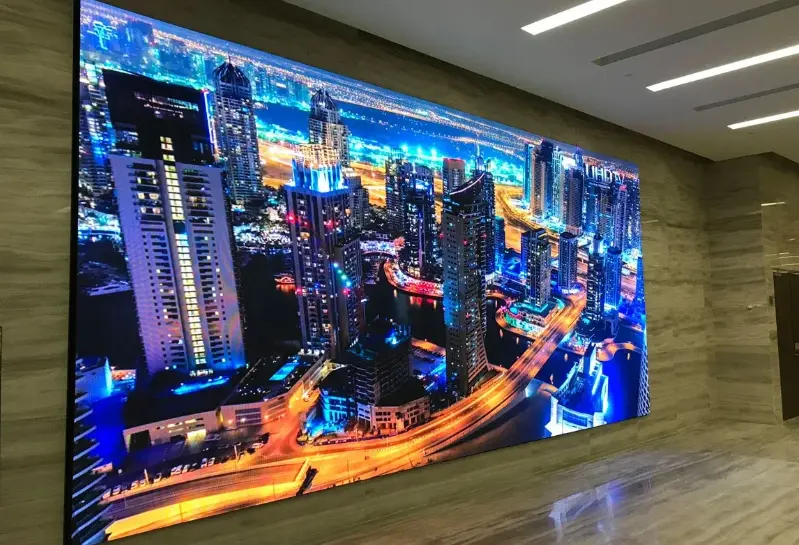
Pixel pitch is the distance between adjacent LED pixels, measured in millimeters.
A smaller pixel pitch places more pixels into the same physical area.
For example:
- P2.5 = 2.5 mm pixel pitch
- P3.9 = 3.9 mm pixel pitch
- P6 = 6 mm pixel pitch
- P10 = 10 mm pixel pitch
For the same physical screen area, a smaller pitch generally means substantially higher pixel density and more LED components.
The basic relationship is:
Pixel density increases as pixel pitch decreases.
If the pixel pitch is approximately halved, the number of pixels required per unit area increases by roughly four times, assuming comparable pixel geometry.
Why does this matter to a buyer?
Because buying the finest pitch available is not automatically the best financial decision.
If viewers will normally stand 20 meters away from an outdoor screen, spending heavily on an ultra-fine indoor pitch may provide little visible benefit.
Conversely, a P10 display may be inappropriate for a corporate boardroom where viewers sit only a few meters away.
The correct question is not:
“What is the smallest pixel pitch I can afford?”
It is:
“What pixel pitch provides the required image quality at the actual viewing distance?”
What Pixel Pitch Should You Choose?
Viewing distance should be the first input into the pitch decision.
Industry formulas vary because they are answering different questions, so no single viewing-distance formula should be treated as an absolute engineering law.
As a practical starting point, Sostron’s current guidance uses different ranges for different applications, while emphasizing that the final selection also depends on content, ambient light and viewing conditions.
| Typical situation | Approximate pitch range to investigate | Main consideration |
|---|---|---|
| Very close indoor viewing | P0.9–P1.5 | Fine detail and image smoothness |
| Corporate room / lobby | P1.5–P2.5 | Text clarity and viewing distance |
| Retail / auditorium | P2.5–P4 | Image quality vs. budget |
| Stage / rental | P2.6–P3.9 | Viewing distance, weight and handling |
| Outdoor advertising | P4–P10+ | Brightness, distance and durability |
These are selection ranges, not mandatory specifications.
For broadcast and XR applications, camera distance and camera behavior can become more important than ordinary audience viewing distance.
The buyer’s rule
Before requesting a quotation, provide the supplier with:
- Minimum viewing distance
- Typical viewing distance
- Maximum viewing distance
- Screen dimensions
- Application
- Content type
- Indoor/outdoor environment
This allows suppliers to quote a specification rather than simply selling the smallest pitch available.
Does Screen Size Affect LED Screen Price?
Yes, but not always in a simple linear way.
A larger screen requires more display area, cabinets, modules, power distribution and structural support.
However, the price per square meter can change with project size.
A larger commercial order may have different manufacturing, packaging, shipping and project economics from a small custom order.
The correct calculation is therefore:
Total hardware cost ≈ display area × applicable hardware price per m²
Then add the system-level and project-level costs.
For an 8×10 ft screen:
80 ft² ≈ 7.43 m²
For a 10×10 ft screen:
100 ft² ≈ 9.29 m²
This simple conversion makes supplier quotations much easier to compare.
Does Indoor or Outdoor Installation Change the Price?
Yes.
Outdoor LED displays normally require specifications that indoor screens do not.
Depending on the site, outdoor requirements can include:
- Higher brightness
- Weather protection
- Water and dust resistance
- Corrosion resistance
- Thermal management
- Stronger mechanical design
- Outdoor-rated power and cabling
- Structural engineering
- Wind-load considerations
Sostron’s Ares 3 outdoor series is a product-specific example: its published specifications include brightness of up to 10,000 nits, aluminum cabinet construction, front/rear maintenance access, and IP-rated outdoor protection. These figures describe the published Ares configuration and should not be treated as universal requirements for every outdoor LED project.
The engineering principle is more important than the individual product:
Outdoor pricing reflects the environment the display must survive, not simply the size of the image.
How Do Brightness and Power Affect LED Screen Cost?
Brightness is particularly important outdoors.
A display installed in direct sunlight has a very different visibility requirement from one installed inside a dark conference room.
But brightness should not be evaluated alone.
A buyer should also consider:
- Typical operating brightness
- Automatic brightness control
- Maximum power consumption
- Average power consumption
- Thermal management
- Operating schedule
- Local electricity price
Why average power matters
A specification showing only maximum power consumption does not necessarily represent actual electricity usage.
Conversely, using only a very low “average” number without defining operating conditions can make products difficult to compare.
Ask suppliers to identify:
Maximum power consumption
and
Typical/average operating power under defined conditions
before using power figures in a TCO calculation.
Does Cabinet Construction Affect LED Screen Cost?
Yes, and this is frequently underestimated.
Cabinet design influences:
- Weight
- Structural load
- Heat dissipation
- Installation labor
- Service access
- Replacement time
- Transportation
- Long-term maintenance
For example, Sostron’s Ares outdoor product page specifies an aluminum cabinet design and a cabinet weight of around 20–23 kg depending on the published product version. Those are Sostron product specifications, not universal industry benchmarks.
The buyer should therefore ask:
Will paying more for a lighter or more serviceable cabinet reduce another project cost?
Sometimes the answer is yes.
A lighter cabinet may reduce structural requirements or handling effort. A front-service design may reduce maintenance access requirements. A better thermal design may influence operating conditions.
But these benefits need to be evaluated against the actual installation.
What Is Included in the Total LED Screen Project Cost?
The LED cabinets are only one part of a commercial display system.
A useful project-budget framework is:
| Cost category | Typical scope |
|---|---|
| LED display hardware | Cabinets, modules, LED components |
| Control system | Sending card, receiving cards, processor |
| Power system | Power distribution, breakers, cabling |
| Structure | Steel/aluminum frame, brackets, anchors |
| Installation | Mechanical and electrical labor |
| Commissioning | Testing, calibration and configuration |
| Logistics | Packaging, freight, local delivery |
| Customs | Duties, taxes and clearance where applicable |
| Content/control | Media player, CMS or content system if required |
| Spare parts | Modules, power supplies, receiving cards and other critical parts |
| Maintenance | Labor, travel, replacement and service |
| Electrical infrastructure | Site-side upgrades where required |
Not every project needs every item.
That is why two quotations with the same LED pitch and screen area can still have very different totals.
What Hidden Costs Should an LED Buyer Budget For?
1. Structural work
A wall-mounted display may require:
- Structural inspection
- Steel subframe
- Anchoring
- Reinforcement
- Engineering review
A freestanding outdoor billboard can involve substantially different structural requirements.
Do not assume the structure is included in the LED cabinet price.
2. Electrical work
The screen may require:
- Dedicated circuits
- Distribution cabinets
- Protection devices
- Cable installation
- Grounding
- Site-side electrical upgrades
The supplier should identify the electrical requirements early.
3. Shipping and customs
International projects may involve:
- Ocean or air freight
- Local delivery
- Customs clearance
- Import duties
- VAT or other taxes
- Port charges
- Storage or handling
These costs depend heavily on destination and trade terms, so they should be quoted for the actual project rather than guessed.
4. Spare parts
A permanent commercial display should normally have a defined spare-parts strategy.
Potential spare items include:
- LED modules
- Power supplies
- Receiving cards
- Data cables
- Power cables
- Control components
The required spare inventory depends on screen size, operating environment, service agreement and business-criticality.
5. Maintenance access
A screen that is technically inexpensive but difficult to service can become expensive over its operating life.
Ask:
- Is maintenance from the front or rear?
- Can individual modules be replaced?
- Can power supplies be accessed without removing the entire cabinet?
- Are replacement parts readily available?
- Is remote diagnosis supported?
Should You Compare LED Screen Prices or Total Cost of Ownership?
For a permanent commercial installation, compare both.
CapEx
Initial capital expenditure can include:
- LED hardware
- Control equipment
- Structure
- Electrical work
- Installation
- Shipping
OpEx
Operating expenditure can include:
- Electricity
- Maintenance
- Spare parts
- Calibration
- Service labor
- Replacement logistics
- Cooling or HVAC where applicable
Sostron’s current TCO guidance similarly separates the initial hardware purchase from operating and maintenance costs rather than treating the panel quotation as the entire investment.
A simple TCO model
A useful calculation is:
TCO = Initial project cost + electricity + maintenance + spare parts + service/logistics over the selected period
This does not require pretending that every project has the same operating cost.
Electricity depends on:
- screen area
- operating hours
- brightness
- power efficiency
- electricity tariff
- content schedule
Maintenance depends on:
- screen environment
- cabinet design
- component quality
- accessibility
- service agreement
- local technician availability
When Is a More Expensive LED Configuration Justified?
A higher initial price can be justified when the specification solves a real project requirement.
Example 1: Close viewing distance
A boardroom with viewers only a few meters from the display may justify a finer pixel pitch.
Example 2: Direct sunlight
An outdoor billboard in strong daylight may require higher brightness and suitable environmental protection.
Example 3: 24/7 operation
A mission-critical display may justify additional attention to thermal management, redundancy and serviceability.
Example 4: Frequent transportation
A rental company may value lightweight cabinets, fast locks, protective flight cases and easy maintenance more than a permanent-installation buyer.
Example 5: High maintenance cost
A slightly higher hardware price may be economically reasonable if the configuration reduces service time or simplifies module replacement.
The principle is:
Pay more when the additional specification solves a measurable operational problem.
Do not pay more simply because a specification sounds more advanced.
How Do You Compare Two LED Screen Quotations?
Never compare the final price first.
Normalize the specifications first.
| Specification | Supplier A | Supplier B |
|---|---|---|
| Screen dimensions | ||
| Total area | ||
| Pixel pitch | ||
| Indoor/outdoor rating | ||
| Brightness | ||
| Refresh rate | ||
| LED package | ||
| Cabinet material | ||
| Cabinet weight | ||
| Service access | ||
| Maximum power | ||
| Typical/average power | ||
| Controller | ||
| Receiving cards | ||
| Power distribution | ||
| Structure | ||
| Installation | ||
| Shipping | ||
| Taxes/duties | ||
| Spare parts | ||
| Warranty | ||
| After-sales support | ||
| Total project price |
Only after completing this table should the buyer compare the totals.
Why this matters
Suppose Supplier A quotes $800/m² for hardware only.
Supplier B quotes $1,050/m² but includes:
- controller
- receiving cards
- cabling
- spare modules
- packaging
- commissioning
Supplier A is not necessarily cheaper.
The two quotations simply have different scopes.
This is one of the most common reasons buyers misunderstand LED display pricing.
What Specifications Matter Most When Buying an LED Screen?
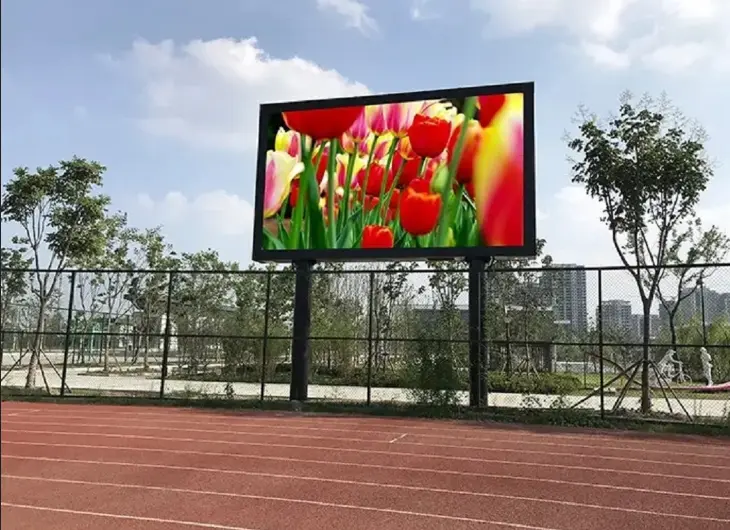
The answer depends on the application.
For an indoor corporate display
Prioritize:
- Viewing distance
- Pixel pitch
- Text/image clarity
- Brightness
- Refresh rate
- Serviceability
- Color performance
For an outdoor billboard
Prioritize:
- Viewing distance
- Brightness
- Environmental protection
- Cabinet construction
- Thermal management
- Structural requirements
- Power consumption
- Service access
For rental LED
Prioritize:
- Cabinet weight
- Fast installation
- Mechanical locking
- Transportation
- Serviceability
- Refresh rate
- Pixel pitch
- Spare inventory
For XR or camera-facing applications
Prioritize:
- Pixel pitch
- Refresh rate
- Scan behavior
- Camera distance
- Moiré performance
- Color and grayscale performance
- Calibration
The specification hierarchy should follow the use case, not the supplier’s product catalog.
Who Should Buy an LED Panel Screen?
LED displays are particularly suitable for organizations that need:
- Large-format digital communication
- High brightness
- Flexible screen dimensions
- Long operating hours
- Dynamic content
- Large viewing areas
- Modular maintenance
- Outdoor visibility
- Event or rental flexibility
Typical commercial applications include:
- DOOH advertising
- Retail
- Stadiums
- Churches
- Hotels
- Corporate environments
- Transportation hubs
- Events
- Exhibitions
- Outdoor billboards
Sostron currently provides LED solutions across outdoor, indoor, rental, transparent, fine-pitch and customized applications.
Who May Not Need an LED Screen?
An LED display may not be the right solution when:
- The viewing area is very small.
- The audience is always close to the screen but the budget does not support fine pitch.
- Static content is sufficient.
- The installation cannot support the required structure or electrical infrastructure.
- The business cannot support maintenance requirements.
- A smaller commercial display can satisfy the same communication objective.
The goal is not to buy the most sophisticated LED display.
The goal is to buy the lowest-cost configuration that reliably satisfies the actual application.
What Should You Ask an LED Display Supplier Before Buying?
Before requesting a quotation, provide the supplier with:
Project information
- Country and installation location
- Indoor or outdoor
- Screen width and height
- Minimum viewing distance
- Typical viewing distance
- Maximum viewing distance
- Operating hours
- Content type
- Fixed or rental application
- Installation method
Technical requirements
Ask for:
- Pixel pitch
- Resolution
- Brightness
- Refresh rate
- Maximum power consumption
- Typical power consumption
- Cabinet dimensions
- Cabinet weight
- IP rating where applicable
- Service method
- LED package
- Control system
- Warranty
- Spare-parts recommendation
Commercial requirements
Ask the supplier to clearly separate:
- Hardware
- Controller
- Structure
- Installation
- Shipping
- Customs/taxes
- Commissioning
- Spare parts
- Software/CMS
- Warranty/service
This makes quotations much easier to compare.
What Is the Most Accurate Way to Estimate Your LED Screen Budget?
Use this five-step process.
Step 1: Define the physical size
For example:
8 × 10 ft = 80 ft² ≈ 7.43 m²
Step 2: Define the viewing distance
Do not select pixel pitch before establishing where the audience will stand.
Step 3: Define the environment
Determine:
- Indoor/outdoor
- Ambient light
- Weather exposure
- Temperature
- Installation height
- Maintenance access
Step 4: Request a normalized quotation
Ask the supplier to identify exactly what is included.
Step 5: Calculate project cost and TCO
Use:
Project cost = hardware + control + structure + electrical + installation + logistics + applicable taxes/duties + commissioning
Then:
TCO = project cost + electricity + maintenance + spare parts + service costs over the selected operating period
This approach produces a much more useful budget than searching for a single “LED panel price.”
What Has Changed in LED Display Standards?
Buyers checking compliance documentation should also pay attention to the applicable standards for the actual product and market.
For example, IEC 62031:2026 was published on February 23, 2026 and replaced the 2018 edition. The current edition specifies safety requirements for LED modules within its stated scope and includes revisions covering electrical, thermal, mechanical and photobiological safety requirements. It does not define the performance characteristics of LED modules.
This is a good example of why buyers should request current compliance documentation rather than relying on an old specification sheet.
The applicable requirements still depend on the destination market and the product/system being supplied.
Real-World Project Evidence: What Can Sostron Demonstrate?
A price guide becomes more useful when buyers can verify that the supplier has experience with different applications.
Sostron’s published project portfolio currently includes examples such as:
- Kenya 80 m² P10.4 LED billboard
- Botswana 100 m² outdoor LED screen
- USA 100 m² P1.9 GOB LED wall
- France stadium LED display upgrade
- Brazil highway LED display
- Dongguan naked-eye 3D LED display
- Mexico P2.5 indoor LED display project
These are published Sostron case examples; they should not be interpreted as representative prices for every project.
The useful lesson for a buyer is that application changes the engineering requirements, and therefore changes the price.
A highway billboard, stadium perimeter screen and indoor corporate wall should not be compared simply by their dollars-per-square-meter figure.
FAQ: LED Panel Screen Cost
How much does an LED panel screen cost?
Commercial LED display hardware can range from roughly $500 to more than $9,000 per m² as a broad 2026 reference, depending on pixel pitch, application, indoor/outdoor requirements, LED package and cabinet design. This is a market reference rather than a fixed quotation. Installation, structure, control equipment, shipping, taxes and other project costs can increase the final budget substantially.
How much does an 8×10 LED screen cost?
An 8×10 ft screen is 80 ft², or approximately 7.43 m². Calculate the hardware estimate by multiplying 7.43 m² by the applicable hardware price per square meter, then add control equipment, structure, installation, logistics and other project-specific costs. The final price depends on pixel pitch, environment and configuration.
How much does an LED screen cost per square foot?
There is no universal price per square foot because LED screens use different specifications. As a simple conversion, $1,000/m² is approximately $92.90/ft², while $2,000/m² is approximately $185.80/ft². These are mathematical conversions of example prices, not market quotations.
What is included in an LED screen price?
A hardware quotation may include cabinets, LED modules, power supplies and receiving electronics, but the scope varies by supplier. Control equipment, structure, cabling, installation, shipping, customs, taxes, commissioning and spare parts may be quoted separately. Always request an itemized quotation.
Does a smaller pixel pitch always mean a better LED screen?
No. A smaller pixel pitch provides higher pixel density, but its value depends on viewing distance, content and application. For a distant outdoor billboard, an ultra-fine pitch may add cost without producing a meaningful visual benefit. For a close-viewing corporate or fine-pitch installation, the additional pixel density may be justified.
What is the biggest mistake when comparing LED screen prices?
Comparing the headline price without comparing the quotation scope. Two suppliers can quote different prices for the same screen size because one includes the controller, spare parts, structure or installation while the other does not. Normalize the technical specifications and commercial scope before comparing totals.
Should I focus on purchase price or TCO?
For a temporary rental deployment, purchase price and utilization economics may be particularly important. For a permanent commercial installation, TCO becomes more important because electricity, maintenance, spare parts and service can accumulate over years. Evaluate both CapEx and expected operating costs.
Final Buying Checklist
Before placing an LED display order, verify these points:
- Screen width and height confirmed
- Total area confirmed in m² and ft²
- Minimum and typical viewing distances confirmed
- Pixel pitch selected for the application
- Indoor/outdoor environment confirmed
- Brightness requirement confirmed
- Refresh-rate requirement confirmed
- Cabinet dimensions and weight confirmed
- Service access confirmed
- Maximum and typical power figures requested
- Controller specified
- Structure included or excluded
- Installation included or excluded
- Shipping terms confirmed
- Duties/taxes responsibility confirmed
- Spare parts defined
- Warranty terms confirmed
- After-sales support confirmed
- Applicable compliance documentation confirmed
- Total project cost calculated
- Long-term TCO considered
Sostron LED Display Solutions
Sostron is an LED display manufacturer providing product development, manufacturing, engineering support, customized display solutions, installation guidance and after-sales service for commercial LED projects.
Its current product portfolio includes outdoor LED billboards, indoor LED video walls, rental displays, fine-pitch LED displays, transparent displays and customized solutions. Its published case portfolio covers commercial, sports, entertainment, transportation and other applications.
For buyers, the most useful starting point is not simply asking:
“How much does an LED panel screen cost?”
Instead, provide the screen dimensions, viewing distance, application, environment and installation location. Those inputs allow an LED manufacturer or integrator to recommend an appropriate configuration and produce a quotation whose scope can actually be compared.
Price is the starting number. The specification, project scope and lifecycle cost determine whether that number is actually a good buy.
References:
U.S. Department of Energy — Lifetime and Reliability
IEC 62031:2026 — LED Modules Safety Requirements
New Mexico State University — Direct-View LED Technology