Project Location: Kenya
Application: Outdoor Digital Out-of-Home (DOOH) Advertising
Project Type: Large-format LED Billboard
Screen Area: Approximately 80㎡
Pixel Pitch: P10.4
Installation: Outdoor Unipole Billboard
Primary Use: Commercial Advertising and Brand Communication
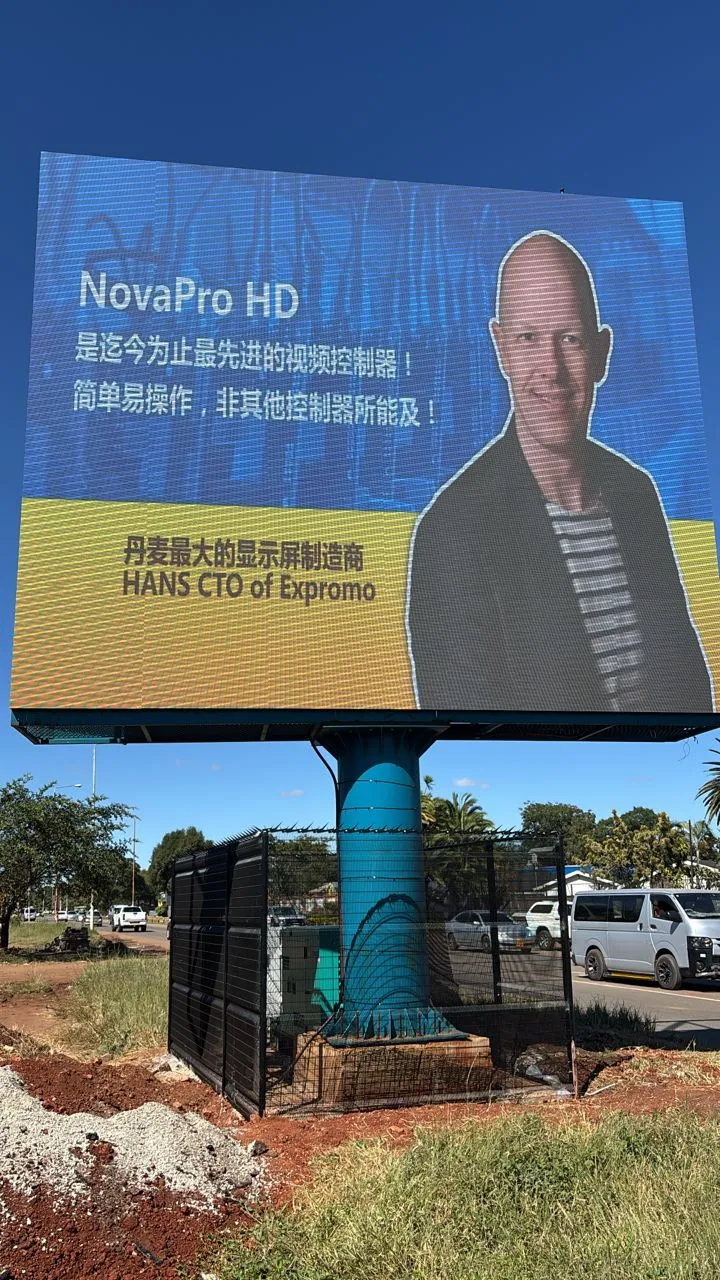
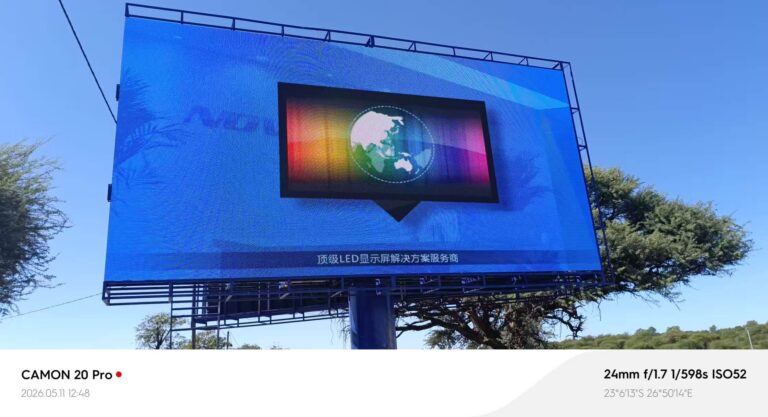
An 80㎡ outdoor LED billboard project was recently completed in Kenya, providing a large-format digital advertising platform for commercial brands in a high-traffic urban environment.
The project uses a P10.4 outdoor LED display installed on a unipole structure. Unlike traditional static billboards, the digital display allows advertising content to be changed electronically, enabling multiple campaigns to share the same advertising space.
The project demonstrates how large-format LED technology, appropriate pixel pitch selection and digital content management can be combined to support modern DOOH advertising operations.
Project Background and Requirements

Outdoor advertising displays in East African markets need to balance several factors, including viewing distance, screen size, sunlight visibility, weather exposure and long-term operating requirements.
For this Kenya project, the large screen was installed in an elevated roadside position and designed primarily for long-distance viewing.
The project therefore required an LED billboard solution capable of providing:
- High visibility in outdoor daylight
- Appropriate image quality for long-distance viewing
- Large-scale visual coverage
- Reliable outdoor protection
- Flexible digital advertising content
- Efficient commercial use of the advertising space
- Practical installation and maintenance
Based on these requirements, the project adopted an 80㎡ P10.4 outdoor LED billboard configuration.
Why P10.4 Was Selected for the 80㎡ Billboard
Pixel pitch is one of the most important parameters when designing a large outdoor LED billboard.
A smaller pixel pitch can provide higher pixel density, but it also increases the number of LEDs and components required for a given screen area.
For a large billboard viewed primarily from a relatively long distance, P10.4 provides a practical balance between screen scale, viewing distance and project investment.
Designed for Long-Distance Viewing
The billboard was installed at an elevated position where viewers typically see the display from roads and surrounding areas rather than at close range.
At these viewing distances, P10.4 provides sufficient pixel density for common DOOH content such as:
- Brand advertisements
- Product campaigns
- Promotional graphics
- Logos
- Large-format text
- Video advertising
The key consideration is not simply achieving the smallest possible pixel pitch, but selecting a pitch appropriate to the screen size and expected viewing distance.
Large Screen, Controlled Project Cost
An 80㎡ LED billboard represents a substantial investment in LED modules, cabinets, control systems and supporting infrastructure.
Using an appropriate outdoor pixel pitch helps balance visual performance with the total project budget.
For billboard operators, this can be more commercially practical than specifying an unnecessarily fine pixel pitch for a long-distance viewing environment.
Outdoor Visibility in Kenya’s Daylight Environment
Outdoor LED billboards must remain readable under changing natural-light conditions.
The Kenya project required the display to deliver clear advertising content during daytime operation while maintaining strong visual impact in the outdoor environment.
The selected outdoor LED configuration was designed around three key requirements:
High-Brightness Outdoor Display
Outdoor LED displays require substantially higher brightness than typical indoor displays because ambient daylight can reduce perceived image contrast.
For DOOH applications, brightness should be specified according to the installation environment, viewing direction and local lighting conditions rather than treated as an isolated specification.
High Contrast for Advertising Content
Commercial advertising relies heavily on strong contrast between text, graphics, logos and backgrounds.
High-contrast content helps maintain visual clarity when the billboard is viewed against a bright outdoor environment.
Content Designed for Roadside Viewing
The effectiveness of a roadside LED billboard depends not only on hardware.
Advertising content should also be designed around viewing time and distance.
For example:
- Large headlines are easier to read quickly.
- High-contrast graphics improve visibility.
- Simple layouts reduce visual processing time.
- Strong brand elements improve recognition.
- Short video messages are more suitable for passing traffic.
This combination of display hardware and content design is important for effective DOOH deployment.
From Static Billboard to Digital Advertising Platform
One of the most important commercial differences between this project and a traditional printed billboard is content flexibility.
A static billboard normally requires a physical replacement when the advertising campaign changes.
A digital LED billboard can display multiple campaigns through scheduled digital content.
One Screen, Multiple Advertising Campaigns
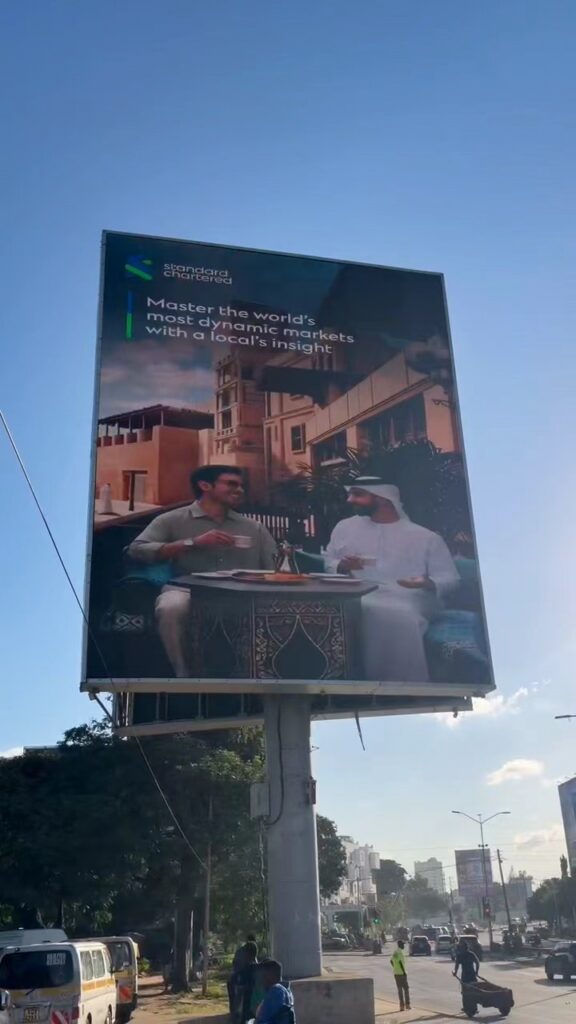
The Kenya project provides a large digital advertising surface that can be used by different brands and campaigns.
For example, the on-site content included advertising from brands such as Standard Chartered and Master Chef.
This demonstrates an important DOOH business model:
One physical LED billboard can provide advertising inventory for multiple campaigns.
Instead of treating the screen as a single static advertising surface, an operator can divide available display time among different advertisers.
Time-Based Advertising Inventory
A digital billboard can organize advertising content according to predefined schedules.
For example, an operator could allocate different time slots to:
| Advertising Slot | Potential Use |
|---|---|
| Morning | Retail / FMCG advertising |
| Daytime | Financial / corporate campaigns |
| Evening | Entertainment / consumer brands |
| Peak traffic periods | Premium advertising slots |
| Special campaigns | Events / promotions |
The actual commercial model depends on the operator’s traffic data, advertising contracts and audience measurement.
However, the digital format creates significantly more flexibility than a conventional printed billboard.
Outdoor Engineering for Long-Term Deployment
An 80㎡ outdoor LED billboard represents a large exposed surface area.
The LED display therefore needs to be designed for outdoor environmental conditions, including:
- Direct sunlight
- Rain
- Dust
- Temperature fluctuations
- Wind exposure
- Roadside pollution
Weather and Dust Protection
Outdoor LED cabinets should use an appropriate IP-rated enclosure to protect internal components from water and dust ingress.
For a roadside installation, protection against environmental exposure is particularly important because dust, vehicle emissions and weather can accumulate around the display over time.
The final IP rating should be selected according to the actual product configuration and installation requirements.
Thermal Management
Large outdoor LED displays generate heat during operation.
Effective thermal management helps maintain stable component performance and reduces the risk of excessive temperature buildup inside the cabinets.
For projects in warm climates, system design should consider:
- Ambient temperature
- Cabinet ventilation
- Power consumption
- Heat dissipation
- Controller configuration
- Maintenance access
These factors should be evaluated during the engineering stage rather than after installation.
80㎡ Billboard Installation
The project used a unipole billboard structure, placing the large LED display in an elevated roadside position.
For large-format LED billboard projects, installation involves more than assembling LED cabinets.
The engineering team must coordinate:
- Supporting structure
- Cabinet installation
- Power distribution
- Signal transmission
- Control system
- Grounding and electrical protection
- Content management
- Final display calibration
The LED display and supporting structure should be treated as an integrated engineering system.
Structural Considerations
An 80㎡ outdoor LED screen has considerable wind-loading implications because of its large surface area.
The supporting structure therefore needs to be engineered according to the local site conditions and applicable structural requirements.
Important factors include:
- Screen dimensions
- Installation height
- Local wind conditions
- Pole structure
- Foundation design
- Cabinet weight
- Maintenance access
The final structural design should always be verified by qualified structural engineers based on the actual installation site.
Project Application: DOOH Advertising
The completed LED billboard provides a digital platform for outdoor commercial communication.
Its primary applications include:
Brand Advertising
Large-format digital displays provide brands with a high-visibility platform for campaign launches, product promotions and brand awareness.
FMCG Advertising
Consumer goods companies can use digital billboard inventory to promote products and campaigns in high-traffic locations.
Financial Services Advertising
Financial institutions can use large-format outdoor LED displays for brand campaigns, product awareness and promotional messages.
Event and Seasonal Campaigns
Unlike static advertising, digital content can be changed according to events, holidays, promotions and campaign schedules.
Project Value for DOOH Operators
The Kenya project demonstrates several practical considerations for operators planning large-format LED advertising infrastructure.
1. Match Pixel Pitch to Viewing Distance
P10.4 can be a practical choice for large outdoor displays where the primary audience is positioned at longer viewing distances.
The correct pitch should be determined using the actual screen dimensions, viewing distance and content requirements.
2. Treat the LED Billboard as Advertising Infrastructure
The screen is not simply a display product.
A successful DOOH project also requires:
- Structural engineering
- Electrical design
- Content management
- Maintenance planning
- Advertising operations
- Audience and traffic analysis
3. Use Digital Content to Increase Inventory Flexibility
The ability to schedule multiple campaigns allows operators to sell different advertising periods on the same physical screen.
This creates a more flexible commercial model than static billboard advertising.
4. Consider Total Cost of Ownership
When selecting an outdoor LED billboard, operators should evaluate more than the initial purchase price.
Important TCO factors include:
- LED display cost
- Steel structure
- Installation
- Electrical infrastructure
- Power consumption
- Maintenance
- Spare parts
- Content management
- Expected operating life
A lower initial price does not necessarily represent the lowest long-term operating cost.
Project Results
The Kenya project delivered an approximately 80㎡ P10.4 outdoor LED billboard designed for large-format DOOH advertising.
The completed installation provides:
Large-scale visual coverage
An 80㎡ display creates a substantial digital advertising surface for roadside commercial communication.
Long-distance readability
The P10.4 configuration is appropriate for large-format outdoor applications where viewers are primarily positioned at longer distances.
Digital campaign flexibility
Multiple advertising campaigns can be scheduled on the same display, allowing operators to manage advertising inventory digitally.
Outdoor deployment capability
The system is designed for outdoor environmental exposure, with the final enclosure, brightness and structural configuration selected according to project requirements.
Multi-brand advertising potential
The on-site advertising content demonstrates how a single digital billboard can support campaigns from different commercial sectors.
Key Takeaways
The Kenya 80㎡ LED billboard project highlights an important principle in DOOH infrastructure:
The best LED billboard is not necessarily the one with the smallest pixel pitch or highest specification. It is the configuration that matches the viewing environment, commercial model and total project requirements.
For large roadside billboards, buyers should evaluate:
- Screen size
- Viewing distance
- Pixel pitch
- Brightness
- Outdoor protection
- Structural loading
- Power consumption
- Content management
- Maintenance access
- Total cost of ownership
For this project, the P10.4 configuration provided a practical solution for a large-format outdoor advertising environment, while the digital format created greater flexibility for managing multiple advertising campaigns.
About SoStron
SoStron is an LED display manufacturer providing indoor, outdoor, rental and customized LED display solutions for commercial, sports, event and advertising applications.
With manufacturing and R&D capabilities, SoStron supports projects from product selection and configuration to customized LED display deployment.
For large outdoor LED billboard projects, the recommended configuration should be based on screen size, viewing distance, installation environment, structural requirements, brightness, content type and operating model.
Planning an Outdoor LED Billboard Project?
Send us your:
- Screen dimensions
- Installation location
- Viewing distance
- Required pixel pitch
- Installation height
- Advertising application
- Expected operating hours
- Structural requirements
Our team can recommend a suitable outdoor LED billboard configuration and provide a project quotation.