Quick Answer: What Is an LED Curtain Wall?
An LED curtain wall is a building-facade display installation that integrates LED technology with a curtain-wall or glazed architectural surface. Transparent LED displays are one possible solution when preserving daylight and visibility through the glass is important. However, not every flexible LED display is suitable for a curtain-wall application. The appropriate system depends on the building structure, viewing conditions, required transparency, brightness, weather exposure, maintenance access, and local code requirements.
The cost of an LED curtain wall depends on the display technology, screen area, pixel pitch, brightness, transparency, mounting structure, site access, electrical work, control system, and commissioning requirements. Treat any price range as a budget estimate unless it is supported by a dated supplier quotation with a clearly defined scope. Confirm whether the quoted amount includes structural engineering, installation, shipping, taxes, permits, commissioning, spare parts, and warranty service before comparing suppliers.
LED curtain walls are worth considering for commercial buildings, shopping centers, hotels, offices, and advertising facades where digital content must coexist with architectural design. However, not every glass facade can support every transparent LED system. Structural suitability, local building requirements, access for maintenance, and daytime visibility must be evaluated before equipment selection.
| Decision factor | What buyers should check |
|---|---|
| Display technology | Transparent LED mesh, film, LED glass, or conventional LED |
| Image quality | Pixel pitch, viewing distance, content detail, and contrast |
| Transparency | Product-specific optical performance and remaining daylight |
| Installation | Existing facade compatibility, mounting, wind loads, and access |
| Project cost | Hardware, structure, installation, logistics, and commissioning |
| Long-term operation | Electricity, maintenance, spare parts, and downtime |
What Is an LED Curtain Wall, and How Does It Work?
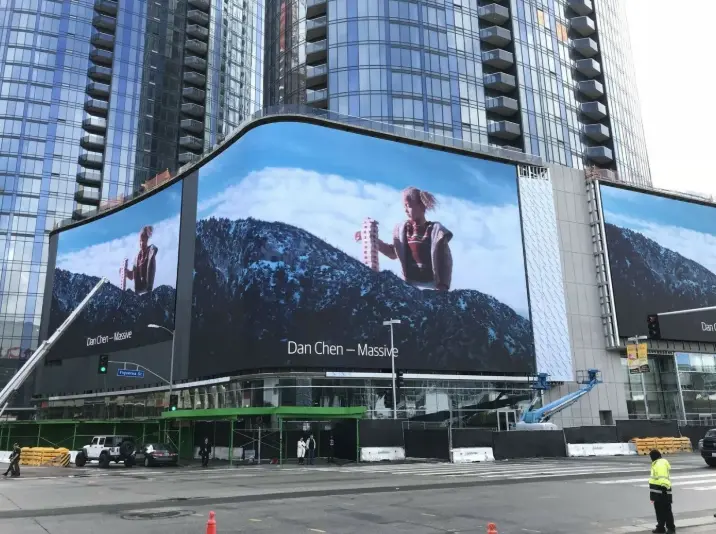
An LED curtain wall display combines digital signage with a building’s exterior or glazed facade. Unlike a conventional LED video wall, which generally forms a more continuous opaque display surface, a transparent LED system is designed to preserve some visibility through or around the display.
The exact appearance depends on the technology. Some systems use separated LED strips or grid-like structures; others use film-based elements or glass-integrated display components. Their transparency, image quality, installation requirements, and maintenance methods can differ substantially.
A typical system may include:
- LED display modules, strips, mesh, or other display elements.
- A supporting frame or mounting arrangement.
- Sending and receiving control hardware.
- Power distribution and electrical protection.
- Data cabling and signal distribution.
- Content playback or a content management system (CMS).
- Access provisions for inspection, cleaning, and component replacement.
The facade itself remains a separate engineering consideration. A display system’s specifications do not establish that the building’s existing glazing, framing, anchors, or supporting structure can accommodate the additional installation.
Where Are LED Curtain Walls Used?
Commercial buildings: Office towers and headquarters can use facade displays for branding, announcements, or architectural media.
Shopping centers: Transparent displays can support promotions and seasonal campaigns while allowing shoppers to retain some visual connection with interior spaces.
Hotels and entertainment venues: Media facades can display event information, brand content, and decorative visuals.
DOOH advertising: Building owners and media operators may use suitable facades for digital out-of-home advertising, subject to local advertising and building regulations.
Exhibition and cultural buildings: Transparent LED systems can combine digital content with architectural lighting and visual effects.
The appropriate solution depends on the building’s purpose. A display intended primarily for daytime advertising may require different brightness and image-density characteristics from a decorative display used mainly after dark.
How Much Does an LED Curtain Wall Cost?
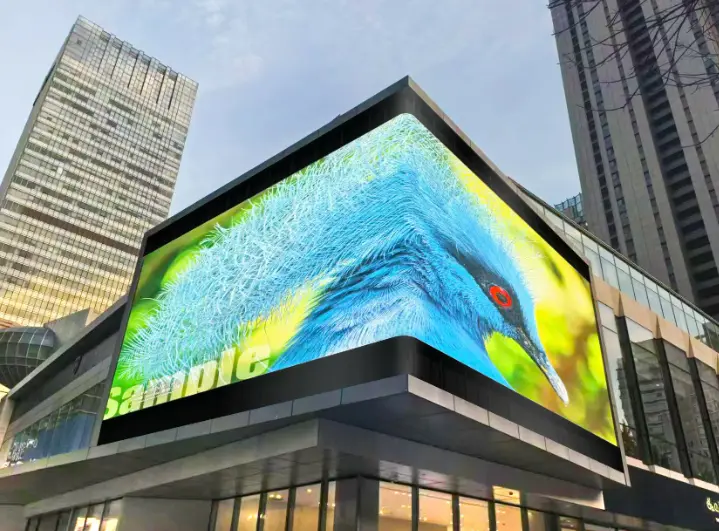
There is no defensible universal price for an LED curtain wall without knowing the display technology, specifications, installation conditions, and quotation scope.
A hardware-only quotation is not the same as a fully installed project price. Buyers should first establish exactly what is included before comparing supplier offers.
A project quotation should separate the following cost categories.
| Cost category | What it may include | What to verify |
|---|---|---|
| Display hardware | LED modules, strips, mesh, cabinets, or glass-integrated components | Exact model, quantity, pixel pitch, and performance |
| Control system | Controllers, receiving cards, playback hardware, and software | Included functions, compatibility, and licensing |
| Mounting structure | Frames, brackets, connectors, and custom supports | Design responsibility and structural approval |
| Installation | Labor, lifting equipment, access platforms, and assembly | Site conditions and installation scope |
| Electrical work | Distribution equipment, wiring, protection, and grounding | Local electrical requirements |
| Shipping and customs | Packaging, freight, insurance, duties, and clearance | Delivery terms and destination |
| Commissioning | Testing, calibration, configuration, and handover | Acceptance criteria and documentation |
| Maintenance | Inspection, repairs, spare parts, and service visits | Warranty exclusions and service arrangements |
What Determines the Price per Square Meter?
Several factors can materially affect the quoted price.
1. Display technology. Transparent mesh, film-based systems, and LED-integrated glass are not interchangeable products. Their construction, optical characteristics, installation methods, and maintenance requirements differ.
2. Pixel pitch and resolution. A smaller pixel pitch generally allows finer image detail at a given display area, but the appropriate specification depends on the intended viewing distance and content. Selecting unnecessarily fine pitch can increase cost without producing a meaningful improvement for distant viewers.
3. Transparency and brightness requirements. The optical structure, LED arrangement, and required daytime visibility affect product selection. A buyer should evaluate these factors together rather than choosing solely by a headline transparency percentage.
4. Custom dimensions and facade geometry. Curved surfaces, irregular boundaries, restricted mounting locations, and nonstandard dimensions can require additional engineering and fabrication.
5. Installation complexity. High-rise access, lifting arrangements, restricted work hours, electrical routing, and the need to protect occupied spaces can affect installation costs.
6. Structural adaptation. Additional frames, anchoring systems, or facade modifications may be needed. These requirements cannot be determined from the display area alone.
7. Delivery destination. Freight, insurance, customs duties, taxes, local handling, and inland transportation depend on the shipment and destination.
8. Service requirements. Warranty coverage, replacement modules, maintenance access, response times, and local technical support affect the long-term financial commitment.
How Can Buyers Compare LED Curtain Wall Quotations Fairly?
Ask every shortlisted supplier to quote against the same project specification.
At minimum, provide the display dimensions, intended location, desired viewing distance, content type, operating schedule, existing facade information, environmental conditions, installation responsibilities, and destination.
Then compare:
- The exact display model and technical configuration.
- The usable display area and resolution.
- Brightness and transparency specifications, including their measurement conditions.
- Rated maximum power and any documented typical operating-power data.
- Supporting structure and installation inclusions.
- Control hardware and software.
- Freight, customs, taxes, and commissioning exclusions.
- Warranty, spare parts, maintenance access, and acceptance criteria.
A lower equipment price may simply exclude work that another supplier has already included. The fairest comparison is between quotations with equivalent specifications, responsibilities, and delivery scope.
Which Transparent LED Technology Is Best for a Curtain Wall?
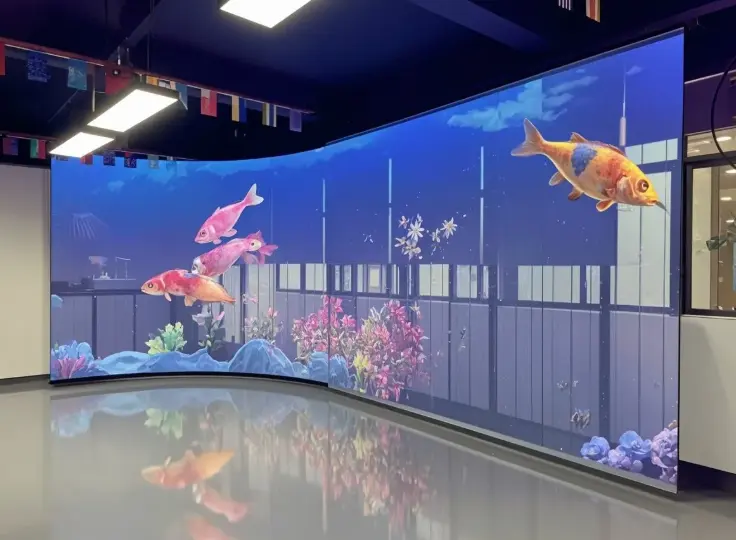
The term “LED curtain wall” can refer to different technical arrangements. Choosing a product by its marketing name alone can lead to the wrong purchase.
Transparent LED Mesh or Strip Displays
Transparent mesh and strip-based displays use spaced LED elements to create a display surface with openings between components.
Potential advantages
- Suitable for some large facade and architectural media applications.
- Can preserve a degree of visibility through the display.
- May be configured for large or irregular facade areas, depending on the product and mounting design.
Limitations to evaluate
- The grid structure can remain visible.
- Image density and close-up viewing quality depend on pixel arrangement and pitch.
- Mounting, cable routing, wind exposure, and maintenance access require careful planning.
These systems may suit large buildings where viewers generally observe the display from a distance and the design prioritizes facade coverage.
Transparent LED Film
Transparent LED film is designed for compatible glass surfaces and may provide a visually less intrusive display arrangement than a more substantial grid system.
However, “film” does not automatically mean that a product can be applied to every glass surface or installed without additional work.
Before specifying a film-based system, confirm the approved glass types, surface conditions, installation method, electrical connections, optical performance, maintenance procedure, and environmental limitations.
A product intended for indoor glass should not be assumed suitable for an exposed exterior facade.
LED Glass
LED glass integrates display functionality into a glass-based assembly. It may be appropriate for projects where the glazing and display can be coordinated during design or renovation.
The principal consideration is integration. Glass specifications, display performance, structural requirements, electrical connections, replacement procedures, and facade warranties need to be considered together.
For existing buildings, the feasibility and cost of modifying the glazing system may be more important than the display hardware price.
Transparent LED vs. Conventional LED Video Walls
| Factor | Transparent LED | Conventional LED video wall |
|---|---|---|
| Visual structure | Designed to preserve some transparency | Generally provides a more continuous display surface |
| Natural light | Can preserve some daylight, depending on the system | Usually blocks the area it covers |
| Image density | Depends on pixel pitch and LED arrangement | Often offers more options for dense, continuous imagery |
| Best-fit application | Suitable transparent facade and glazing applications | Opaque facade sections, indoor walls, and other solid display surfaces |
| Installation | Requires careful integration with the supporting facade | Requires suitable structural support and access |
| Maintenance | Depends on module design and access arrangements | Depends on cabinet construction and front or rear service access |
| Key trade-off | Transparency versus image density and visibility | Image continuity versus obstruction and structural requirements |
Neither option is universally superior. If the project requires high-detail content at close viewing distances, a conventional display may be more appropriate in some locations. If preserving visual openness is essential, a transparent solution may be preferable.
How Should You Choose Pixel Pitch, Transparency, and Brightness?
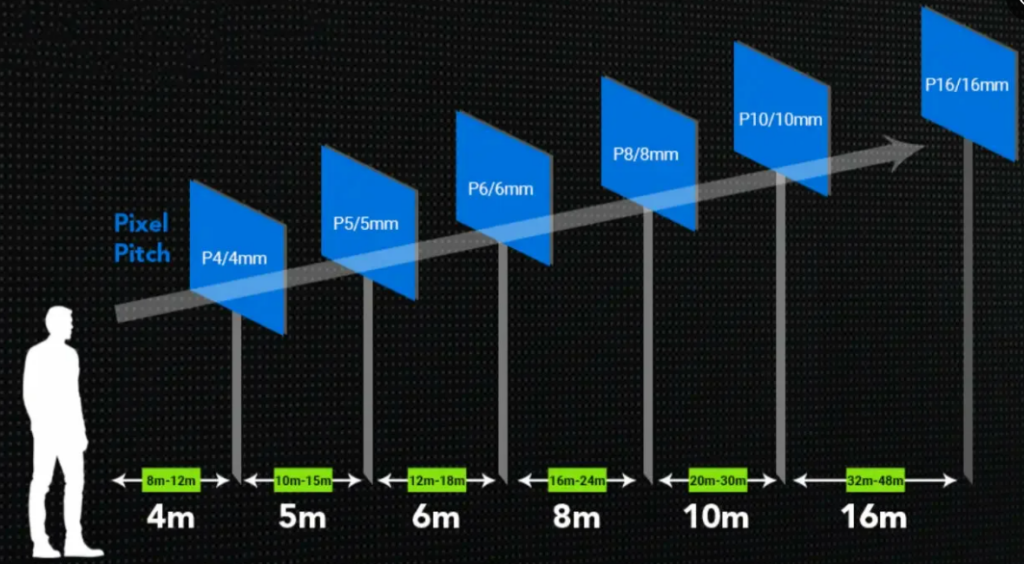
Technical specifications must work together. Optimizing one specification in isolation can undermine the overall result.
Pixel Pitch and Viewing Distance
Pixel pitch describes the distance between corresponding points on adjacent pixels, typically expressed in millimeters. A smaller pitch generally supports higher pixel density and finer image detail across the same display area.
For a building facade, the appropriate pitch depends on:
- The nearest and typical viewing distances.
- Whether content consists of text, logos, photography, video, or abstract graphics.
- The actual LED layout and resulting resolution.
- The viewing angles and expected content size.
- The budget available for the required image quality.
A facade viewed primarily from across a plaza may not need the same pixel density as a display intended for people standing close to a storefront.
Before approving a specification, request the actual pixel layout and resolution for the proposed display dimensions. Pixel pitch alone does not fully describe the resulting image quality.
Transparency and Natural Light
Transparency is one of the defining characteristics of transparent LED technology, but manufacturers may use different measurement methods and test conditions.
When comparing products, ask for:
- The stated transparency value and its measurement method.
- The exact model and configuration to which it applies.
- Whether the value represents the display component or a larger installed assembly.
- Photographs or demonstrations showing the display from both sides.
- Information about visible support structures, cabling, and mounting components.
A high advertised transparency value does not necessarily guarantee the same daylight transmission through the completed facade. Existing glass, reflections, framing, and installation details also influence the result.
For offices, retail spaces, and occupied buildings, evaluate the effect on daylight and visibility before finalizing the design.
Brightness and Ambient Light
Brightness requirements depend on the surrounding environment and intended use.
A display facing direct sunlight must contend with ambient light and reflections. A display mainly viewed at night may need a different operating strategy.
Ask suppliers to specify:
- The rated brightness for the exact product.
- The measurement conditions and relevant test documentation.
- Brightness adjustment and scheduling capabilities.
- How the display will be configured for daytime and nighttime operation.
- Any operational limits related to temperature or environmental conditions.
Avoid selecting a system solely because it advertises the highest brightness. Excessive brightness can increase power demand and may create visual or regulatory issues at night.
Power Consumption and Heat Dissipation
Maximum rated power and typical operating power are different measurements.
The maximum rating helps establish electrical infrastructure requirements. Actual energy use depends on content, brightness settings, operating hours, display configuration, and other operating conditions.
For budgeting, request both maximum power data and documented typical operating-power information when available.
Heat management also matters. The mounting arrangement, airflow, ambient temperature, solar exposure, and nearby building components can affect thermal conditions. The system should be assessed using the manufacturer’s installation requirements and the actual site environment.
Can an LED Curtain Wall Be Installed on Existing Glass?
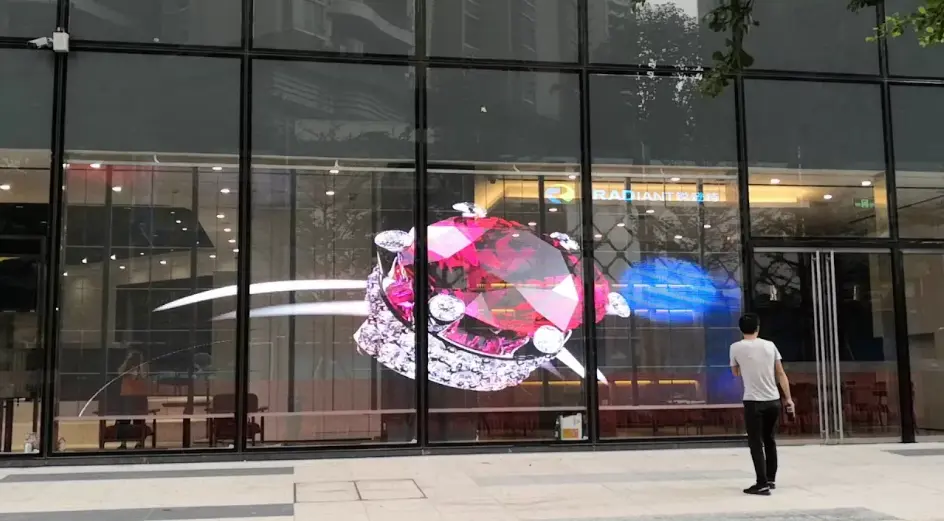
Sometimes, but compatibility must be established for the specific building and product.
A transparent display may be suitable for an existing facade if its mounting, weight, environmental requirements, electrical installation, and maintenance arrangements can be accommodated. Other projects may require additional structure, glass modifications, or a different technology.
Pre-Installation Assessment
Before ordering the display, confirm the following:
| Assessment area | Questions to resolve |
|---|---|
| Existing facade | What glazing, framing, supports, and connections are present? |
| Structural capacity | Can the supporting structure accommodate the proposed additional loads? |
| Wind exposure | What site-specific wind actions and design requirements apply? |
| Mounting | Where will the system connect to the building, and who designs the supports? |
| Weather protection | How will the display, cables, connectors, and electrical equipment be protected? |
| Electrical installation | What power supply, protection, grounding, and cable routing are required? |
| Maintenance | Can technicians safely access and replace components? |
| Building operations | Will installation affect occupants, tenants, access, or existing warranties? |
| Compliance | Which building, fire, electrical, advertising, and planning requirements apply? |
The assessment should involve the relevant facade consultant, structural engineer, electrical professional, and other qualified parties as required by the project and jurisdiction.
Do not assume that a display’s product-level ingress protection rating establishes the weather resistance of the complete installed facade.
Wind Loads and Structural Safety
Exterior displays can experience wind actions that depend on building height, site exposure, geometry, mounting arrangement, and applicable local design rules.
The relevant engineering review should address the display, supporting frame, anchors, connections, and the structure receiving those loads. The review must also consider the effects of adding components to an existing facade.
Applicable building codes and project-specific engineering requirements should be checked for the installation location. The International Code Council provides building-code resources, including exterior-wall provisions, but the governing requirements are the codes adopted by the relevant jurisdiction.
Weather Protection and Electrical Safety
Outdoor exposure can involve rain, dust, humidity, temperature changes, sunlight, and other site-specific conditions.
IEC 60529 defines the IP Code classification system for degrees of protection provided by enclosures. However, an LED display’s IP rating describes the enclosure’s protection against dust and water under the applicable test conditions; it does not, by itself, establish that the complete curtain-wall installation complies with building requirements. Before installation, the project team should assess attachment loads, wind exposure, weatherproofing, electrical safety, fire requirements, access for maintenance, and the building codes applicable at the site. The final design should be reviewed by appropriately qualified local professionals.
Before procurement, request the applicable test reports and installation instructions for the exact equipment. Confirm how exposed connections, power supplies, cable entries, and supporting components will be handled.
What Is the Total Cost of Ownership of an LED Curtain Wall?
The initial equipment purchase is only one part of the financial decision.
Total cost of ownership (TCO) includes the expenses required to install, operate, maintain, and eventually repair or replace the system over its service period.
Electricity and Operating Schedule
Energy use depends on actual operating power and the number of hours the display runs. Content brightness, scheduling, and operating conditions can affect consumption.
Use manufacturer power data and a realistic operating schedule when preparing a budget. If only maximum rated power is available, label the resulting calculation as a conservative scenario rather than a prediction of typical consumption.
Local electricity tariffs should also be used. A cost estimate based on another country’s electricity prices may be misleading.
Maintenance, Spare Parts, and Downtime
Maintenance costs depend on module construction, service access, environmental exposure, replacement procedures, and the availability of spare parts.
For elevated facade displays, access can be a major operational consideration. A system that is easy to service from the rear at ground level may require substantially different arrangements when installed across a high-rise exterior.
Ask the supplier to document:
- Recommended inspection and cleaning procedures.
- Available spare modules and critical components.
- Warranty coverage and exclusions.
- The recommended replacement process.
- Remote diagnostics and control capabilities, if provided.
- Technical support arrangements and response commitments.
Do not assume that a manufacturer’s stated product lifespan guarantees the same service life for every component or installation environment.
How Should Buyers Evaluate ROI?
Return on investment depends on the project’s actual business model.
For an advertising facade, relevant inputs may include available advertising inventory, occupancy or sell-through, advertiser revenue, operating costs, content production, maintenance, and regulatory restrictions.
For a corporate or retail facade, benefits may be less directly measurable and could relate to branding, communication, customer engagement, or venue operations.
A credible ROI assessment should use the owner’s own revenue assumptions and operating costs. Avoid treating hypothetical advertising income or an unverified payback period as an established result.
How Do You Evaluate an LED Curtain Wall Supplier?
A reliable supplier should provide more than a product brochure and a headline price.
Technical Documents to Request
Before committing to an order, ask for:
- The exact product model and technical datasheet.
- Pixel pitch, resolution, brightness, and transparency specifications.
- Maximum rated power and typical operating-power data, where available.
- Installation drawings and mounting requirements.
- Applicable environmental and ingress-protection documentation.
- Control-system specifications and software requirements.
- Maintenance procedures and spare-parts recommendations.
- Warranty terms, exclusions, and after-sales arrangements.
- Clear project scope, delivery terms, and acceptance criteria.
The documentation should correspond to the actual equipment being quoted. Generic brochures may not reflect a customized configuration.
How to Compare Supplier Proposals
Evaluate suppliers against the same technical requirements and commercial scope.
A structured comparison should cover display performance, engineering support, installation responsibilities, project documentation, spare parts, warranty, and delivery arrangements.
For building-integrated displays, also establish who is responsible for coordinating the display supplier with the facade contractor, structural engineer, electrical contractor, and building owner.
The supplier’s role in the project should be explicit. Manufacturing the display does not automatically mean that the manufacturer has designed or approved the building’s structural system.
Real Project Evidence
When evaluating a supplier’s experience, look for project information that can be independently checked.
Useful evidence includes actual installation photographs, project-specific specifications, technical drawings, commissioning records, and documented maintenance arrangements. The supplier should clarify which details are publicly shareable and which are confidential.
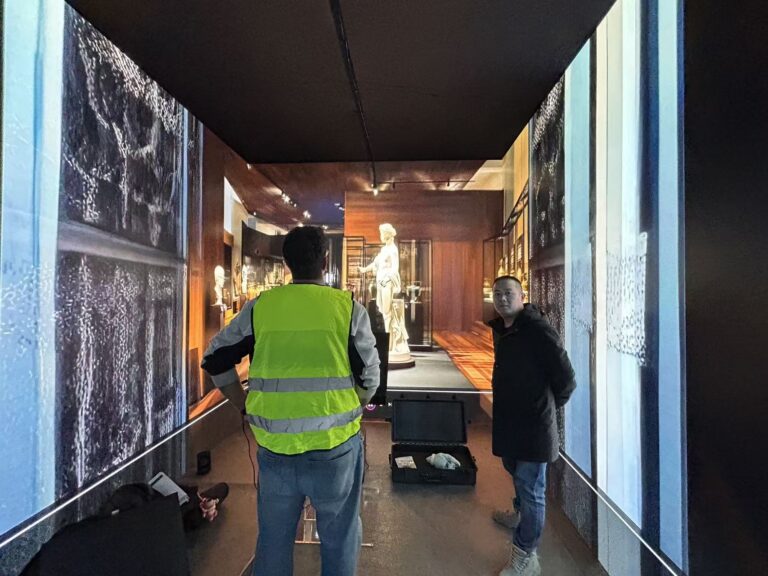
Sostron’s Dongguan mall atrium project provides a reference for integrating a transparent LED display into an indoor commercial space. It demonstrates how transparency and suspended mounting can be considered together when preserving sightlines is important. Because this is an indoor atrium installation, it should not be treated as direct proof of suitability for an exposed exterior curtain wall, where wind loads, weather protection, and building-code requirements may differ.
For further comparisons, consult Sostron’s transparent LED screen vs. traditional LED screen guide and its LED display project case library.
Frequently Asked Questions
How much does an LED curtain wall cost per square meter?
There is no single reliable price per square meter for all LED curtain walls. The price depends on the display technology, pixel pitch, dimensions, transparency, supporting structure, installation conditions, shipping, and quotation scope. Request an itemized quotation that separates hardware from engineering, installation, and other project costs.
Can transparent LED displays be installed on existing glass?
Some transparent LED products can be installed on compatible existing glass or facade structures, but suitability must be confirmed for the specific product and building. Structural capacity, mounting points, glass conditions, electrical routing, maintenance access, and local requirements must be assessed before installation.
Does an LED curtain wall block natural light?
A transparent LED system is designed to preserve some visibility or light transmission, but the actual result varies by technology and installation. LED layout, support structures, cables, existing glazing, and the product’s measurement method can affect the completed facade. Review product-specific data and the intended installation configuration.
Which pixel pitch should I choose for a building facade?
The appropriate pixel pitch depends on viewing distance, image detail, content type, display dimensions, and budget. Smaller pitch generally supports finer detail, but may not provide meaningful benefits when most viewers are far away. Request a proposed resolution and evaluate it against actual viewing conditions.
Is a transparent LED curtain wall suitable for outdoor use?
Only if the selected product and complete installation are designed for the intended outdoor conditions. Verify the manufacturer’s environmental limits, protection documentation, mounting requirements, thermal conditions, and maintenance instructions. The building’s structural and regulatory requirements must be evaluated separately.
How much electricity does an LED curtain wall consume?
Consumption depends on the display’s actual operating power, brightness settings, content, and operating schedule. Maximum rated power is useful for planning electrical capacity but should not automatically be treated as typical daily consumption. Ask the supplier for documented operating-power information.
How do you maintain an LED curtain wall?
Maintenance depends on the display design, installation height, access method, environmental exposure, and replaceable components. Confirm cleaning procedures, inspection requirements, spare-parts availability, warranty coverage, and safe access for technicians before finalizing the system.
What should an LED curtain wall quotation include?
A complete quotation should identify the equipment and specifications, control system, supporting structure, installation scope, electrical work, shipping, customs where applicable, commissioning, warranty, spare parts, and exclusions. Comparing equivalent scopes helps prevent apparently cheaper offers from concealing additional project costs.
Expert Verdict: Is an LED Curtain Wall Right for Your Building?
An LED curtain wall is worth evaluating when a building needs digital facade content while retaining some transparency or architectural openness. The best solution is not necessarily the one with the highest advertised brightness or transparency, nor the lowest initial hardware price.
Start with the building’s actual conditions and the display’s intended purpose. Define the viewing distance, content requirements, acceptable visual obstruction, environmental exposure, installation constraints, maintenance access, and total project budget. Then compare technologies and supplier quotations against those requirements.
Before approving the purchase, ensure that product specifications, structural design, electrical installation, local compliance, maintenance arrangements, and commercial responsibilities are clearly documented.
About Sostron
Sostron is a global LED display manufacturer and commercial display solution provider based in Shenzhen, China. Its business covers LED display product development and manufacturing, customized display solutions, engineering support, installation guidance, and after-sales technical service.
For projects involving transparent displays or building-integrated LED systems, the appropriate starting point is a review of the building conditions, intended display performance, technical requirements, and delivery scope. These details help establish whether a proposed system is suitable and what information is needed for a meaningful quotation.
References:
IEC 60529 — Degrees of Protection Provided by Enclosures (IP Code)
2025 California Building Code, Chapter 14 — Exterior Walls